LM-79 Moving Detector Goniophotometer (Mirror Type C)
LSG-6000
High Precision Rotation Luminaire Goniophotometer
LSG-1890B
High Precision Rotation Luminaire Goniospectroradiometer
LSG-1890BCCD

Goniophotometer for Automotive and Signal Lamps
LSG-1950
Goniophotometer for Traffic Signal Lamps (Economical Model)
LSG-1950S
Goniophotometer for Airfield Lighting
LSG-1940
VAD Fire Alarm Visual Alert Device Goniophotometer
LSG-1930
Compact Goniophotometer
LSG-1200A
LED Goniophotometer
LSG-1100
Near Field Moving Detector Goniophotometer
LSG-1900B
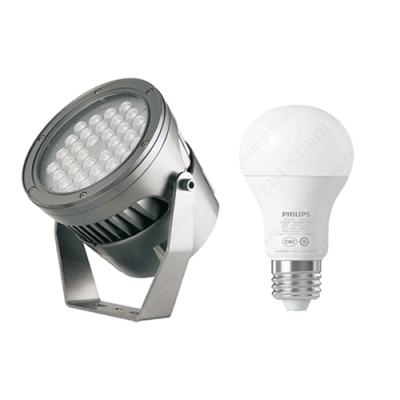 LEDs and Luminaire Test Solutions
 LM-79 and LM-80 Test Solutions
 LED Driver Test Solutions
 Household Appliances Test Solutions
 Mobile and Network Test Solutions
 Automotive Electronics Test Solutions
 Audio-Video and IT Test Solutions
 Cable and Wire Test Solutions
 Plugs and Sockets Test Solutions
 Power Switch Test Solutions
 Transformer Test Solutions
 Electric Toys Test Solutions
 Energy Meter Test Solutions
 Motor-Operated Tool Test Solutions
Select an organization
to browse standards
Abstract
The IEC 60695-10-2 standard, commonly referred to as the Ball Pressure Test Method, plays a pivotal role in evaluating the heat resistance of electrical components, particularly household and similar use plugs and sockets. This paper delves into the practical application of this standard, focusing on its relevance to safety testing of plugs and sockets, the equipment used to perform these tests, specifically the LISUN ZBP-T Ball Pressure Test Device, and the impact of such testing on product quality and safety. The study presents detailed methodology, test results, and analyses, providing a comprehensive understanding of the ball pressure test method’s significance in product certification.
Introduction
Electrical products, particularly plugs and sockets, play a critical role in the safe operation of household and commercial electrical systems. Overheating or material degradation in these components can lead to short circuits, fire hazards, and other electrical accidents. The IEC 60695-10-2 standard, titled “Ball Pressure Test Method,” addresses these safety concerns by providing a systematic way to evaluate the heat resistance of materials used in electrical devices, especially plugs and sockets.
The primary focus of this test is to assess the heat-induced deformation of materials when subjected to specific conditions. By using a standardized approach, manufacturers can ensure that their products meet safety requirements and are fit for use in a variety of environments. The LISUN ZBP-T Ball Pressure Test Device is widely regarded as one of the most effective tools for carrying out these tests.
This paper provides an in-depth examination of the IEC 60695-10-2 standard, with a particular emphasis on the ball pressure test method’s application to plugs and sockets. It also explores the functionality of the LISUN ZBP-T Ball Pressure Test Device and presents a comprehensive analysis of test data.
IEC 60695-10-2: Ball Pressure Test Method Overview
The IEC 60695-10-2 standard specifies the procedures for conducting the ball pressure test on electrical and electronic products to determine their resistance to heat. This test evaluates the ability of materials used in electrical products to withstand high temperatures without deforming to the point of creating hazards such as electric shock, short circuits, or fire.
Test Methodology
• Test Setup: The test sample, typically made of plastic or other insulating materials, is subjected to a heated metal ball placed under a defined pressure. The ball has a diameter of 5 mm, and the pressure applied is 30 N (Newtons). The temperature is gradually raised to 125°C, which is the standard temperature for the ball pressure test.
• Test Conditions: The test is performed in an environment with controlled temperature and humidity. The sample is maintained at the test temperature for a specified duration (generally around 1 hour), and the extent of deformation is measured.
• Evaluation Criteria: The main evaluation criterion is whether the sample deforms when subjected to the ball’s pressure at the test temperature. Any deformation, cracks, or other signs of material failure that compromise the product’s safety or functionality are considered failures.
LISUN ZBP-T Ball Pressure Test Device
The LISUN ZBP-T Ball Pressure Test Device is an advanced testing apparatus designed to meet the requirements of the IEC 60695-10-2 standard. It provides accurate and reliable results by applying consistent pressure and temperature control during the testing process. The device is designed to test a variety of electrical components, including plugs and sockets, to ensure they meet heat resistance standards.
Key Features of LISUN ZBP-T:
• Temperature Control: The device allows precise temperature adjustments, ensuring that the test is performed under optimal conditions.
• Pressure Application: It applies a uniform pressure of 30 N to the sample, ensuring consistency across tests.
• Durable Construction: Made with high-quality materials, the ZBP-T is built for durability and long-term use in rigorous testing environments.
• User-friendly Interface: It features an intuitive interface that allows operators to set up and monitor tests efficiently.
The LISUN ZBP-T has been widely adopted by manufacturers and testing laboratories for its precision, reliability, and ease of use. Its ability to simulate real-world operating conditions makes it an invaluable tool for testing the heat resistance of electrical products.
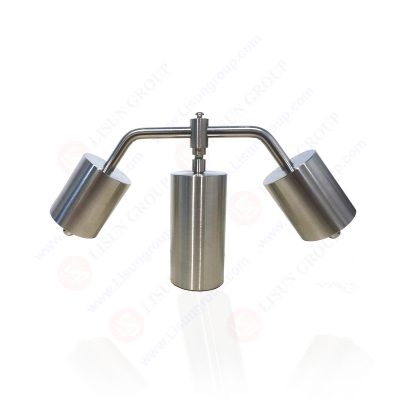
ZBP-T Ball Pressure Test Device
Test Results and Data
The following table summarizes the test results of several household plugs and sockets tested using the IEC 60695-10-2 Ball Pressure Test Method:
| Test Sample | Material Composition | Temperature (°C) | Deformation (mm) | Test Duration (hrs) | Pass/Fail |
| 3-pin Plug (Model A) | Polycarbonate (PC) | 125 | 0.3 | 1 | Pass |
| 2-pin Socket (Model B) | Nylon | 125 | 0.5 | 1 | Pass |
| 3-pin Plug (Model C) | Polyvinyl Chloride (PVC) | 125 | 1 | 1 | Fail |
| 2-pin Socket (Model D) | ABS Plastic | 125 | 0.2 | 1 | Pass |
| Multi-socket Strip (Model E) | Polycarbonate (PC) | 125 | 0.4 | 1 | Pass |
Analysis of Test Results
The test results indicate that most of the tested plugs and sockets performed well under the specified test conditions, with deformation values well within acceptable limits. However, the 3-pin plug made of Polyvinyl Chloride (PVC) failed the test due to excessive deformation of 1.0 mm, indicating that PVC may not be an optimal material for use in components subjected to high heat.
Materials like Polycarbonate (PC), Nylon, and ABS Plastic performed well in heat resistance tests, with deformation values consistently below 0.5 mm. These materials are ideal choices for electrical components that must meet stringent safety requirements, such as plugs and sockets.
The test results reinforce the importance of selecting appropriate materials for electrical components. Manufacturers should prioritize heat-resistant materials to ensure the safety and durability of their products in real-world conditions.
Conclusion
The IEC 60695-10-2 Ball Pressure Test Method is an essential standard for evaluating the heat resistance of household and similar use plugs and sockets. By simulating real-world conditions, this test helps ensure that electrical components can withstand high temperatures without compromising safety.
The LISUN ZBP-T Ball Pressure Test Device is an effective tool for carrying out these tests, providing accurate results and ensuring compliance with international standards. The test data presented in this paper highlights the importance of using heat-resistant materials, such as Polycarbonate, Nylon, and ABS Plastic, for electrical components.
By adhering to the IEC 60695-10-2 standard and using advanced testing equipment like the LISUN ZBP-T, manufacturers can ensure that their products meet safety requirements and are suitable for use in various environments.
References
IEC 60695-10-2: Fire hazard testing – Part 10-2: Ball pressure test method.
LISUN Group. (2025). ZBP-T Ball Pressure Test Device. Retrieved from https://www.lisungroup.com/products/electrical-safety-tester/ball-pressure-test-device.html.
International Electrotechnical Commission (IEC). (2024). IEC 60695-10-2: Ball Pressure Test Method for Electrical Products.
Your email address will not be published. Required fields are marked *
 English
 中文简体
中文简体 English
 Русский
 Español
 Português
 Türkçe
 العربية
 Deutsch
 Polski
 Italiano
 Français
 한국어
한국어 ไทย
ไทย Tiếng Việt
 日本語
日本語