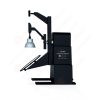
LM-79 Moving Detector Goniophotometer (Mirror Type C)
LSG-6000
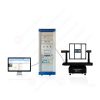
High Precision Rotation Luminaire Goniophotometer
LSG-1890B
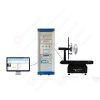
High Precision Rotation Luminaire Goniospectroradiometer
LSG-1890BCCD

Goniophotometer for Automotive and Signal Lamps
LSG-1950
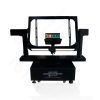
Goniophotometer for Traffic Signal Lamps (Economical Model)
LSG-1950S
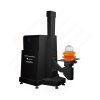
Goniophotometer for Airfield Lighting
LSG-1940
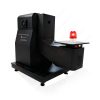
VAD Fire Alarm Visual Alert Device Goniophotometer
LSG-1930
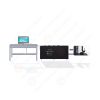
Compact Goniophotometer
LSG-1200A
LED Goniophotometer
LSG-1100
Near Field Moving Detector Goniophotometer
LSG-1900B
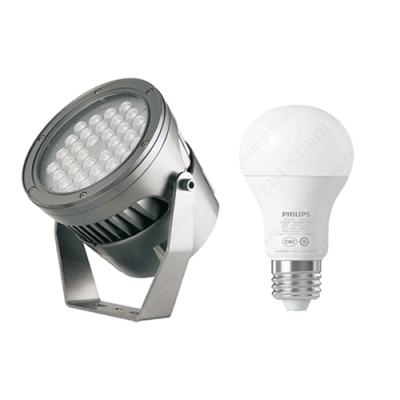 LEDs and Luminaire Test Solutions
 LM-79 and LM-80 Test Solutions
 LED Driver Test Solutions
 Household Appliances Test Solutions
 Mobile and Network Test Solutions
 Automotive Electronics Test Solutions
 Audio-Video and IT Test Solutions
 Cable and Wire Test Solutions
 Plugs and Sockets Test Solutions
 Power Switch Test Solutions
 Transformer Test Solutions
 Electric Toys Test Solutions
 Energy Meter Test Solutions
 Motor-Operated Tool Test Solutions
Select an organization
to browse standards
Abstract: In electronic engineering and environmental reliability evaluation systems, the Ingress Protection (IP) rating is an internationally recognized standard for measuring products’ defense capabilities against solid foreign object intrusion. The dust test machine, as the core experimental platform for verifying IP5X (dust-protected) and IP6X (dust-tight) ratings, derives its technical value from simulating extreme arid and high-concentration dust conditions through controlled fluid mechanics environments.
This article aims to deeply analyze the physical mechanisms of sand and dust intrusion, explain the relationship between vacuum negative pressure and the “breathing effect” in the 8-hour testing protocol, and discuss the determination logic referring to authoritative standards such as IEC 60529 and ISO 20653. Combined with the engineering data of LISUN’s SC-015 series dustproof detection system, this article provides a comprehensive theoretical and practical guide for laboratories to construct sand and dust testing environments compliant with international standards.
In industrial fields or natural environments, the threat of micron-level dust particles to electronic equipment extends beyond physical accumulation to intrusion through electromagnetic adsorption or pressure differentials into the enclosure interior.
Electronic devices generate heat during operation, and temperature decreases when operation stops. This periodic thermal cycle causes the air inside the enclosure to expand and contract, thereby creating instantaneous pressure differential  at the sealing interface.
According to the ideal gas law , when internal temperature decreases, if volume remains constant, pressure necessarily decreases, forming negative pressure inside the enclosure that “inhales” dust-laden air from outside into the device. This is the physical basis for simulating vacuum extraction in dust protection testing.
The distribution of sand and dust particles in the test space follows aerodynamic characteristics. To reproduce real environments, the dust test machine must be capable of maintaining dust in suspension and achieving uniform distribution. If wind speed is too low, particles settle too quickly due to gravity; if too high, it may create unrealistic kinetic energy impact.
The severity of dust protection testing is determined by the rating defined in standards, primarily covering consumer electronics, industrial equipment, and road vehicles.
According to IEC 60529:2013 and GB/T 4208-2017:
For automotive components, standards such as ISO 20653:2023 and GB/T 30038-2013 introduce IP5KX and IP6KX ratings. These ratings typically impose higher requirements on dust circulation volume and blowing pressure to simulate intense sand and dust impact encountered during high-speed vehicle operation.
In most dust protection testing, the test duration is typically set to 8 hours, a setting grounded in deep experimental rationale.
According to the sealing characteristics of the enclosure, standards classify samples into two categories:
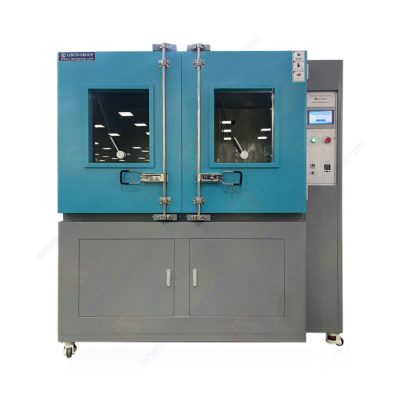
For samples requiring vacuum extraction, LISUN SC-015 provides precise parameter adjustment capabilities:
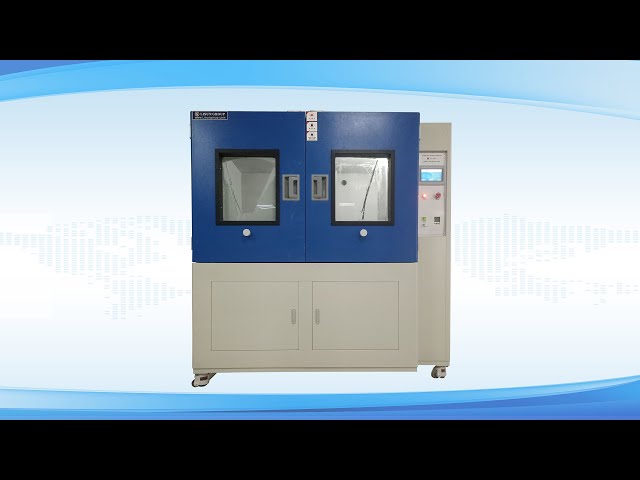
Sand and dust testing imposes strict requirements on the particle size distribution of test dust. LISUN SC-015 uses dry talcum powder as the medium, with quantity controlled at .
Standards specify that test dust must be capable of passing through metal square-mesh screens.
To efficiently and repeatably complete the 8-hour protocol, LISUN SC-015 achieves multiple optimizations in electromechanical architecture.
The LISUN SC series dustproof test equipment can be customized to different volumes according to user requirements. Core models are as follows:
| Specification Item | Detailed Parameters |
| Typical Model | SC-015 (Double-door design) |
| Chamber Dimensions | 1000 × 1500 × 1000 mm |
| Temperature Control | RT+10 ∼ 60°C (with mica heating system) |
| Vacuum System | Vacuum degree 0 ∼ 10 kPa / Extraction rate 0 ∼ 4800 L/H |
| Control Center | 7-inch full-color touchscreen + Industrial-grade Panasonic PLC control |
| Time Control | 0 ∼ 999 H adjustable, accuracy ± 1 s |
| Construction Material | Exterior: High-quality steel plate with baked finish / Interior: SUS304 stainless steel |
| Special Functions | Adjustable vibration function (prevents dust wall adhesion) / Bottom 100% convenient dust change |
Due to the physical adsorption characteristics of talcum powder, it tends to accumulate on test chamber walls. SC-015 integrates a circulating dust blowing system and adjustable vibration module. Through the synergistic effect of high-frequency vibration and directional airflow, the system ensures that dust in the test chamber always remains in an active circulating suspension state, thereby ensuring that every surface of the sample receives uniform dust exposure.
After completion of the 8-hour test, determination conclusions must combine electrical performance with physical condition.
The dust test machine is not only a detection tool for verifying product protection ratings but also an important R&D platform for optimizing product sealing structures and enhancing reliability under complex operating conditions. Through strict implementation of the 8-hour testing protocol and deep compliance with authoritative determination standards such as IEC 60529 and ISO 20653, enterprises can effectively avoid circuit failure risks in sand and dust environments.
The LISUN SC-015 Dustproof Test Chamber, with its precise temperature and humidity compensation, stable vacuum extraction system, and screen control meeting standard requirements, provides scientific and rigorous compliance testing solutions for the electronics, automotive electronics, and lighting industries. Its dual safety protection mechanisms and 7-inch PLC intelligent operation not only ensure safety during long-duration testing but also significantly improve the repeatability of experimental data, helping products cross the technical threshold of environmental adaptability in global market competition.
Tags:SC-015Your email address will not be published. Required fields are marked *

 English
 中文简体
中文简体 English
 Русский
 Español
 Português
 Türkçe
 العربية
 Deutsch
 Polski
 Italiano
 Français
 한국어
한국어 ไทย
ไทย Tiếng Việt
 日本語
日本語