LM-79 Moving Detector Goniophotometer (Mirror Type C)
LSG-6000
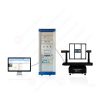
High Precision Rotation Luminaire Goniophotometer
LSG-1890B
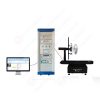
High Precision Rotation Luminaire Goniospectroradiometer
LSG-1890BCCD

Goniophotometer for Automotive and Signal Lamps
LSG-1950

Goniophotometer for Traffic Signal Lamps (Economical Model)
LSG-1950S
VAD Fire Alarm Visual Alert Device Goniophotometer
LSG-1930
Goniophotometer for Airfield Lighting
LSG-1940
Compact Goniophotometer
LSG-1200A
LED Goniophotometer
LSG-1100
Near Field Moving Detector Goniophotometer
LSG-1900B
 LEDs and Luminaire Test Solutions
 LM-79 and LM-80 Test Solutions
 LED Driver Test Solutions
 Household Appliances Test Solutions
 Mobile and Network Test Solutions
 Automotive Electronics Test Solutions
 Audio-Video and IT Test Solutions
 Cable and Wire Test Solutions
 Plugs and Sockets Test Solutions
 Power Switch Test Solutions
 Transformer Test Solutions
 Electric Toys Test Solutions
 Energy Meter Test Solutions
 Motor-Operated Tool Test Solutions
Select an organization
to browse standards
Abstract:
This paper takes metal testing equipment — LISUN EDX-2 series Energy Dispersive X-ray Fluorescence Spectrometer (EDXRF) as the research object. It systematically elaborates on the technical principle, quantitative method and practical application of determining element content by comparing the intensity of element spectral lines. Combined with model parameters and limit standard data, this paper illustrates the value of this instrument in three scenarios: RoHS hazardous substance screening, alloy/precious metal elemental analysis and coating thickness measurement.
1 Introduction
In the fields of electronic and electrical industry, metal processing and material testing, rapid and non-destructive determination of element content in samples is the core task of metal testing equipment. X-ray Fluorescence Spectroscopy (XRF) is widely adopted as the key technology for metal testing equipment because of its non-destructive testing, fast detection speed and simple operation. The LISUN (Shanghai LISUN) EDX-2 series energy dispersive X-ray fluorescence spectrometer is such a kind of metal testing equipment. A single instrument integrates three functions: RoHS hazardous substance testing, alloy/precious metal elemental analysis and coating thickness measurement.
2 Basic Principle of Quantitative Determination via Spectral Line Intensity Comparison
When X-rays irradiate the sample, inner-shell electrons of elements in the sample are excited and transition. Characteristic X-rays with specific energy will be emitted during de-excitation. Since elements have different atomic numbers, the wavelength (energy) of their characteristic X-rays varies. Therefore, the characteristic X-ray wavelength can be used to qualitatively identify which elements are contained in the sample. The intensity of the characteristic spectral line of a certain element is proportional to the content of this element in the sample. **By comparing the intensity (peak area or peak height) of characteristic spectral lines of different elements, the content of each element in the sample can be quantitatively determined**, which is the fundamental basis for elemental quantification realized by Energy Dispersive X-ray Fluorescence Spectrometer (EDXRF).
In actual quantitative analysis, standard samples with known content are used to establish the calibration curve of “spectral line intensity vs. content”. Then the content can be calculated inversely according to the spectral line intensity of the sample to be tested. To eliminate matrix effect and instrument drift, the instrument adopts automatic setting of tube voltage and tube current, and is equipped with high-resolution detectors (such as Si-pin and SDD) to improve peak resolution.
3 Correspondence Example between Spectral Line Intensity and Content
The table below shows the corresponding relationship between relative spectral line intensity and element content in a standard series (schematic data for illustrating quantitative logic):
| Element | Characteristic Line Energy (keV) | Standard Sample Content (%) | Relative Spectral Line Intensity (cps) |
| Fe-Kα | 6.4 | 5 | 1520 |
| Fe-Kα | 6.4 | 10 | 3055 |
| Fe-Kα | 20 | 6100 | |
| Cu-Kα | 8.04 | 15 | 4320 |
| Zn-Kα | 8.63 | 3 | 940 |
It can be seen from the table that the spectral line intensity of the same element increases approximately linearly with its content. Multi-element simultaneous quantification can be realized by comparing the spectral line intensity of different elements.
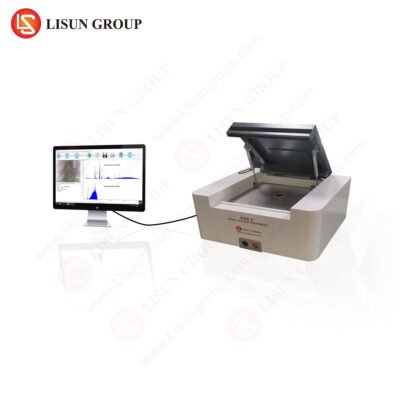
EDX-2A_RoHS Testing Equipment
4 Main Specifications of LISUN EDX-2 Series Metal Testing Equipment
The EDX-2 series includes five models: EDX-2A, EDX-2AC, EDX-2AB, EDX-2ABC and vacuum type EDX-2T. The comparison of key parameters is as follows:
| Parameter | EDX-2A / 2AC / 2AB / 2ABC | EDX-2T |
| Type | Benchtop non-vacuum model | Benchtop vacuum model |
| Testing Time | 200 s | 100 s |
| Detector | Si-pin | SDD |
| Resolution | 149 eV | 129 eV |
| Tube Voltage / Current | 50 KV / 600 μA (automatic setting) | 50 KV / 600 μA (automatic setting) |
| Content Analysis Range | 2 ppm – 99.99% | 2 ppm – 99.99% |
| Sample Type | Solid, liquid, powder | Same as non-vacuum type; vacuum mode for solid |
| Analyzable Alloy Elements | 16-S to 92-U | 11-Na to 92-U |
5 Typical Applications
(1) RoHS Hazardous Substance Screening
EU RoHS Directive restricts six substances in electronic and electrical products: Lead (Pb), Mercury (Hg), Cadmium (Cd), Hexavalent Chromium (Cr⁶⁺), Polybrominated Biphenyls (PBBs) and Polybrominated Diphenyl Ethers (PBDEs). SJ/T 11365-2006 specifies XRF as a rapid screening method. The EDX-2 series realizes rapid quantification by comparing the characteristic spectral line intensity of the above elements:
| Restricted Substance | Limit Content |
| Lead (Pb) | 1000 ppm |
| Mercury (Hg) | 1000 ppm |
| Cadmium (Cd) | 100 ppm |
| Hexavalent Chromium (Cr⁶⁺) | 1000 ppm |
| Polybrominated Biphenyls (PBBs) | 1000 ppm |
| Polybrominated Diphenyl Ethers (PBDEs) | 1000 ppm |
(2) Alloy and Precious Metal Elemental Analysis
EDX-2AB/ABC/2T can analyze the absolute element content of iron, copper, stainless steel, gold, platinum and other materials, which meets the judgment requirements of metal testing equipment in quality inspection and recycling.
(3) Coating Thickness Measurement
EDX-2AC/ABC/2T calculates the absolute coating thickness according to the spectral line intensity change of coating elements and substrate elements, which is used for process control of electroplating and surface treatment.
6 Conclusion
Based on the principle of determining content by comparing the spectral line intensity of different elements, the LISUN EDX-2 series energy dispersive X-ray fluorescence spectrometer is equipped with high-resolution detector, automatic tube voltage and tube current setting, and wide content analysis range (2 ppm – 99.99%). It realizes rapid, non-destructive and simultaneous multi-element quantification for RoHS hazardous substances, alloy composition and coating thickness. It is an efficient and reliable laboratory analytical instrument among metal testing equipment.
Tags:EDX-2AYour email address will not be published. Required fields are marked *

 English
 中文简体
 English
 Русский
 Español
 Português
 Türkçe
 العربية
 Deutsch
 Polski
 Italiano
 Français
 한국어
 ไทย
 Tiếng Việt
 日本語