LM-79 Moving Detector Goniophotometer (Mirror Type C)
LSG-6000
High Precision Rotation Luminaire Goniophotometer
LSG-1890B
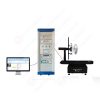
High Precision Rotation Luminaire Goniospectroradiometer
LSG-1890BCCD

Goniophotometer for Automotive and Signal Lamps
LSG-1950
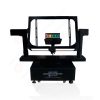
Goniophotometer for Traffic Signal Lamps (Economical Model)
LSG-1950S
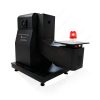
VAD Fire Alarm Visual Alert Device Goniophotometer
LSG-1930
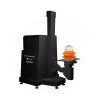
Goniophotometer for Airfield Lighting
LSG-1940
Compact Goniophotometer
LSG-1200A
LED Goniophotometer
LSG-1100
Near Field Moving Detector Goniophotometer
LSG-1900B
 LEDs and Luminaire Test Solutions
 LM-79 and LM-80 Test Solutions
 LED Driver Test Solutions
 Household Appliances Test Solutions
 Mobile and Network Test Solutions
 Automotive Electronics Test Solutions
 Audio-Video and IT Test Solutions
 Cable and Wire Test Solutions
 Plugs and Sockets Test Solutions
 Power Switch Test Solutions
 Transformer Test Solutions
 Electric Toys Test Solutions
 Energy Meter Test Solutions
 Motor-Operated Tool Test Solutions
Select an organization
to browse standards
Abstract
When coatings and paints are exposed to outdoor environments for long periods, they are continuously subjected to solar ultraviolet radiation, rain wash, dew infiltration and temperature cycling, which gradually lead to aging failures such as gloss loss, discoloration, chalking, cracking and peeling. Although natural outdoor exposure tests produce results close to real service conditions, the full test cycle often lasts for several years and cannot meet the efficiency requirements of coating formulation development, product iteration and compliance testing. The UV Accelerated Weathering Test Chamber is important equipment for artificial simulated accelerated weathering testing. Its test principle is based on simulated environmental accelerated aging: UV lamps simulate sunlight irradiation, condensed moisture simulates rain and dew. Materials are placed in cyclic programs alternating between light exposure and moisture, and undergo accelerated aging at specified temperatures to quickly obtain weather resistance data. Centered on the LISUN UV-263LS UV Accelerated Weathering Test Chamber, this paper describes the working principle and hardware composition of the UV Accelerated Weathering Test Chamber. Combined with relevant standards in the coating and paint industry, it introduces the complete test workflow including sample preparation, cycle programming and post-aging performance evaluation, and analyzes the practical application of this equipment in various coating categories such as exterior architectural paints, wood coatings and automotive topcoats. It provides references for coating R&D laboratories and quality inspection institutions to evaluate weathering durability.
As surface protection and decorative materials, coatings and paints are widely used in exterior building walls, outdoor wood products, automotive exterior parts, steel structure anti-corrosion and other fields. The weathering durability of coating layers directly determines product service life and appearance. Ultraviolet rays in natural sunlight are the core cause of degradation of organic coatings. UV photons break molecular chains of polymer resins and trigger photo-oxidation reactions. Meanwhile, dew condensation and rainfall infiltration caused by day-night alternation bring high-humidity hydrolysis, and high temperature further accelerates the rate of photochemical reactions. Multiple factors work together to gradually degrade coating films. Traditional outdoor exposure tests require test panels to be placed in open-air test sites. It takes months or even years to observe obvious aging phenomena, so it is difficult to quickly compare weather resistance differences between different additives and resin systems in the formulation screening stage.
Artificial accelerated weathering technology can reproduce major outdoor destructive factors in laboratories and shorten test cycles. Among such equipment, the UV Accelerated Weathering Test Chamber mainly simulates three key environmental factors: UV irradiation, condensation high humidity and temperature variation. Compared with xenon arc weathering chambers, it focuses more on UV-band photodegradation effects and is highly suitable for evaluating aging phenomena such as chalking, gloss loss and cracking of organic coatings. The LISUN UV-263LS UV Accelerated Weathering Test Chamber is a fluorescent UV aging device. It can be programmed for alternating cycles of UV light, condensation and water spray to complete accelerated weathering tests under controlled temperature conditions. Within several weeks, it can replicate coating aging damage that would occur outdoors over months or even years. The UV Accelerated Weathering Test Chamber can execute domestic and international coating weathering standards including GB/T 23987-2009, GB/T 16422.3-2022, ASTM G154 and ISO 11507, adapting to various scenarios such as formulation R&D comparison, incoming quality inspection and product certification testing.
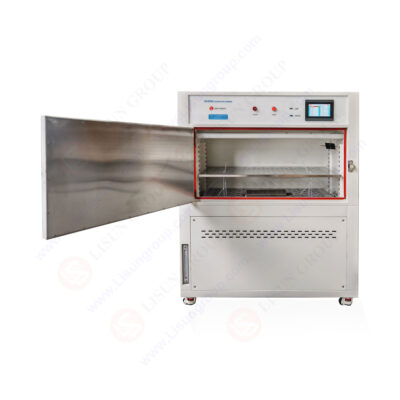
UV-263LS_UV Aging Test Chamber
The test principle of the UV Accelerated Weathering Test Chamber is based on simulated environmental accelerated aging: UV lamps simulate sunlight irradiation, condensed moisture simulates rain and dew. Materials are placed in cyclic programs alternating between light exposure and moisture, and undergo accelerated aging at specified temperatures to quickly obtain weather resistance data. The entire aging process is coordinated by three modules: UV irradiation, condensation humidification and temperature control. The UV irradiation module uses fluorescent UV lamps to output ultraviolet rays of specific wavebands. UVA-340 lamps have spectra matching the UV region of outdoor sunlight and are suitable for conventional weathering simulation; short-wave UVB-313 lamps deliver higher radiant energy for high-intensity accelerated screening tests. UV photons bombard polymers inside coating films, break resin chemical bonds, generate free radicals and initiate photo-oxidative degradation, leading to surface changes such as gloss reduction and color shift.
The condensation module generates water vapor by heating a water tank at the bottom of the chamber. After temperature difference forms inside the cabinet, water vapor condenses into liquid water film on cooled sample surfaces to simulate morning dew. Some models are equipped with a water spray system to simulate outdoor rain wash. Moisture from dew and rain penetrates microscopic pores of coatings and accelerates hydrolysis, amplifying aging damage caused by UV light, which is a non-negligible environmental factor for outdoor coating failure. All test procedures are carried out within controlled temperature ranges. Corresponding temperatures are set for the light exposure phase and condensation phase to simulate environmental characteristics of summer solar exposure and day-night temperature difference. The UV Accelerated Weathering Test Chamber runs cyclic programs written according to standards. Samples alternately go through UV irradiation and high-humidity condensation phases in repeated cycles, compressing aging damage accumulated over long periods in natural environments into short laboratory test cycles. It should be noted that the UV Accelerated Weathering Test Chamber mainly simulates the coupling effect of ultraviolet light and moisture, and cannot fully replicate special outdoor factors such as atmospheric pollutants, sand erosion and biological attack. Test results are mainly used for relative performance comparison between samples.

The LISUN UV-263LS UV Accelerated Weathering Test Chamber adopts a square inner chamber structure. The outer cabinet is made of high-quality cold-rolled steel plate with electrostatic spraying treatment. The inner cavity is corrosion-resistant and easy to clean. The equipment is fitted with 8 pieces of 40W UVA-340 fluorescent UV lamps. Irradiance can be continuously adjusted from 0.35 to 1.2 W/㎡. An irradiance monitoring assembly is equipped to monitor UV output intensity in real time and compensate for lamp light decay over service time. The temperature control system manages black panel temperature of the chamber within the range of ambient temperature +10℃ to 70℃. Condensation is realized by heating the water tank to generate water vapor, and relative humidity inside the chamber can reach above 75%RH. The device is equipped with a programmable liquid crystal controller, which allows free editing of light duration, condensation duration, spray duration and total cycle count. Test time can be set from 0 to 999 hours, and complete operational data can be recorded. The sample holder fits standard coating test panels and can hold multiple groups of samples simultaneously, ensuring stable distance between samples and lamps so that each test panel receives consistent UV irradiance and reduces test dispersion error. The table below lists key specifications of major models in the LISUN UV-263 series UV Accelerated Weathering Test Chamber.
| Parameter Item | UV-263LS | UV-263LV | UV-263LT |
|---|---|---|---|
| Chamber Structure | Square inner chamber | Trapezoidal inner chamber | Benchtop cabinet |
| Inner Chamber Dimension (W×D×H mm) | 550×1140×450 | 450×1140×500 | 500×400×400 |
| Outer Chamber Dimension (W×D×H mm) | 650×1300×1750 | 600×1325×1500 | 930×460×630 |
| Lamp Configuration | 8 pcs UVA-340, 40W | 8 pcs UVA-340, 40W | 3 pcs UVA-340, 20W |
| Irradiance | 0.35‑1.2 W/㎡ adjustable | 0.35‑1.2 W/㎡ adjustable | 0.35‑1.0 W/㎡ adjustable |
| Temperature Range | RT+10℃~70℃ | RT+10℃~70℃ | RT+10℃~70℃ |
| Humidity Condition | ≥75%RH | ≥75%RH | ≥75%RH |
| Test Time Setting Range | 0‑999H programmable | 0‑999H programmable | 0‑999H programmable |
Before conducting weathering durability tests for coatings and paints with the UV Accelerated Weathering Test Chamber, test panels shall be prepared in accordance with corresponding standards. Suitable substrates are selected based on coating types: cement boards are generally used for exterior architectural paints, corresponding wood substrates for wood coatings, and cold-rolled steel plates for industrial topcoats. Spraying or brushing is performed strictly following construction specifications of coating products, dry film thickness is controlled, and full curing is completed under standard environments to ensure complete hardening of coating films. Multiple parallel panels are prepared for each test group. Some panels are used for sampling and detection at staged intervals, while unaged original reference panels are retained for gloss and color difference comparison after aging. Panel surfaces must remain clean, free of oil stains and fingerprints to avoid introducing extra interference factors.
Prepared test panels are neatly mounted on the sample rack of the UV Accelerated Weathering Test Chamber, with light-facing sides toward the lamps. Gaps shall be reserved between panels and overlapping shielding is not allowed. The test program is set according to the selected standard. Taking GB/T 23987-2009 Paints and varnishes — Artificial weathering exposure of coatings — Exposure to fluorescent UV lamps and water as an example, set temperature and duration for UV irradiation phase, temperature and condensation duration for condensation phase, define complete cycle periods and total test hours. Start equipment operation. The UV Accelerated Weathering Test Chamber automatically alternates UV irradiation and condensation processes. During operation, regularly check irradiance and temperature parameters and monitor water tank water level to ensure sufficient water supply for condensation. At time points specified in the test plan, take out corresponding panels, let them stabilize under standard environmental conditions, then test coating gloss retention rate, color difference ΔE, chalking grade, crack grade, adhesion and other indicators. Record all data and compare with original reference panels to evaluate coating aging degree.
In addition to architectural coatings, the UV Accelerated Weathering Test Chamber is also applicable to many organic coating systems such as wood paints, plastic topcoats and anti-corrosion coatings. In the R&D stage, the UV Accelerated Weathering Test Chamber can quickly compare weather resistance differences between different UV-resistant additives and resin formulations to screen formulations with better performance. In quality inspection, it verifies whether finished coatings meet technical specification requirements. It must be clarified that results obtained from the UV Accelerated Weathering Test Chamber are relative weather resistance values. If real outdoor service life of materials is required, correlation calibration shall be combined with natural exposure tests.
Maintenance of the UV Accelerated Weathering Test Chamber directly affects reliability of coating weathering test data. Fluorescent UV lamps suffer light decay with cumulative operating hours. Irradiance shall be monitored regularly. When UV output fails to meet standard requirements, lamps must be replaced promptly; lamp status of simple illumination cannot be used to judge serviceability. The condensation water tank needs regular water replacement and cleaning to prevent limescale and microbial accumulation, avoiding water vapor contamination of samples. Clean the sample chamber after each test to remove fallen coating debris. Keep the equipment operating environment well ventilated with ambient temperature controlled at 5‑35℃ to ensure stable operation of the temperature control system. Testers shall fully record lamp replacement time, irradiance calibration records, equipment running programs and sample detection data at all stages to form complete test files satisfying traceability requirements of test reports. Standard cycle parameters shall not be modified arbitrarily. Changes in light temperature, condensation temperature and duration of each segment will directly alter aging stress and render test results incomparable.
Weathering durability of coatings and paints is a key indicator for evaluating quality of outdoor coating products. Traditional natural exposure tests have long cycles and can hardly match the rapid R&D iteration rhythm of modern coating products. The UV Accelerated Weathering Test Chamber uses UV lamps to simulate sunlight irradiation and condensed moisture to simulate dew and rain, realizing accelerated aging under programmable cyclic sequences. It can compare weather resistance differences of different coatings within a short period. The LISUN UV-263LS UV Accelerated Weathering Test Chamber features adjustable irradiance and stable temperature & humidity control. It is compatible with multiple domestic and international coating weathering test standards and can complete accelerated weathering evaluation for exterior architectural paints, wood coatings, industrial topcoats and various other paints and coatings, providing test support for formulation development, product quality inspection and compliance testing. In practical testing work, testers shall standardize panel preparation, strictly follow standards to set test cycles, perform regular equipment calibration and maintenance, fully understand the capability boundary of the UV Accelerated Weathering Test Chamber, and cross-reference accelerated aging data with natural exposure results, so as to scientifically and objectively evaluate weathering durability of coatings and paints.
Tags:UV-263LSYour email address will not be published. Required fields are marked *

 English
 中文简体
 English
 Русский
 Español
 Português
 Türkçe
 العربية
 Deutsch
 Polski
 Italiano
 Français
 한국어
 ไทย
 Tiếng Việt
 日本語