LM-79 Moving Detector Goniophotometer (Mirror Type C)
LSG-6000
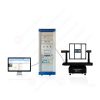
High Precision Rotation Luminaire Goniophotometer
LSG-1890B
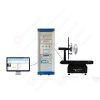
High Precision Rotation Luminaire Goniospectroradiometer
LSG-1890BCCD

Goniophotometer for Automotive and Signal Lamps
LSG-1950
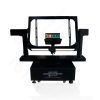
Goniophotometer for Traffic Signal Lamps (Economical Model)
LSG-1950S
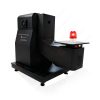
VAD Fire Alarm Visual Alert Device Goniophotometer
LSG-1930
Goniophotometer for Airfield Lighting
LSG-1940
Compact Goniophotometer
LSG-1200A
LED Goniophotometer
LSG-1100
Near Field Moving Detector Goniophotometer
LSG-1900B
 LEDs and Luminaire Test Solutions
 LM-79 and LM-80 Test Solutions
 LED Driver Test Solutions
 Household Appliances Test Solutions
 Mobile and Network Test Solutions
 Automotive Electronics Test Solutions
 Audio-Video and IT Test Solutions
 Cable and Wire Test Solutions
 Plugs and Sockets Test Solutions
 Power Switch Test Solutions
 Transformer Test Solutions
 Electric Toys Test Solutions
 Energy Meter Test Solutions
 Motor-Operated Tool Test Solutions
Select an organization
to browse standards
Abstract
Salt spray corrosion is one of the most destructive corrosion forms in marine and industrial atmospheric environments. Chloride ions can damage protective layers on metal surfaces and trigger quality failures such as product rusting, short‑circuiting and structural damage. As an environmental simulation device for artificially simulating salt‑spray corrosion conditions, the salt corrosion chamber (salt spray test chamber) can conduct accelerated corrosion reliability tests to evaluate the anti‑corrosion performance of metal coatings, paint films, electronic components and finished products within a short period. Taking LISUN YWX/Q‑010 salt spray corrosion tester as the research object, this paper describes the working principle, structural parameters and functional features of the salt corrosion chamber. It analyzes test modes, applicable standards and practical application scenarios across industries, and discusses how the salt corrosion chamber quickly identifies material protection defects and product structural vulnerabilities, so as to provide experimental support for material selection, product R&D and quality improvement.
1 Introduction
In coastal regions, outdoor working conditions and industrially polluted atmospheres, corrosion induced by salt spray seriously shortens the service life of products in hardware, electronics, new‑energy, home appliance and other industries. Natural salt‑spray corrosion proceeds extremely slowly. Field outdoor exposure tests may take months or even years, which cannot satisfy the testing requirements for fast‑iterating modern product development. Therefore, the industry widely adopts the **salt corrosion chamber** to perform accelerated salt‑spray simulation tests. Corrosion conditions similar to marine and industrial salt‑spray service environments are reproduced in laboratories to simulate corrosion failures that products may encounter during long‑term field operation within a compressed time frame.
The YWX/Q‑series salt corrosion chamber developed by LISUN is specially designed for material corrosion resistance testing. Among this series, the YWX/Q‑010 salt spray corrosion tester is a widely‑adopted medium‑large‑size model. Equipped with precise control over temperature, salt spray deposition rate and solution pH value, it supports three mainstream corrosion test types: Neutral Salt Spray (NSS), Acetic Acid Salt Spray (AASS) and Copper‑Accelerated Acetic‑Acid Salt Spray (CASS). It efficiently exposes coating pinholes, blistering and cracking of paint films, sealing‑structure defects and other failures. It is extensively used for reliability verification in electronic‑electrical, hardware‑processing, coating and new‑energy sectors.
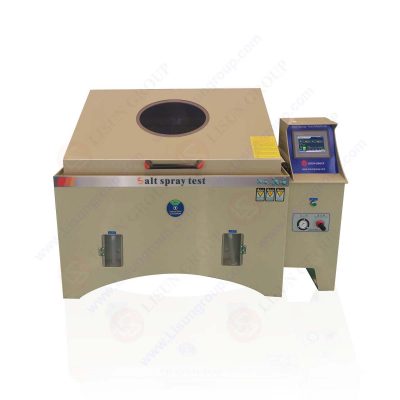
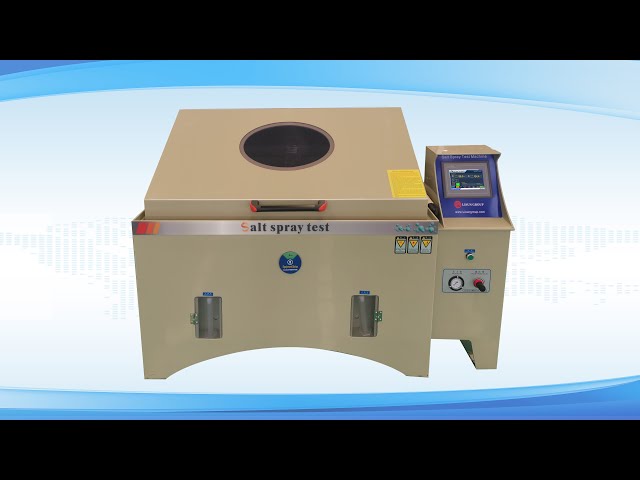
YWX/Q-010_Salt Spray Test Machine
2 Structural Composition and Key Technical Parameters of YWX/Q‑010 Salt Corrosion Chamber
The chamber body of YWX/Q‑010 salt corrosion chamber is integrally fabricated from imported corrosion‑resistant PP sheets without welded joints to prevent brine leakage. It is equipped with high‑precision temperature‑control modules and automatic spray assemblies, together with multi‑channel safety alarm functions for low water level, over‑temperature and low air pressure with audible‑visual alerts. The test timer ranges from 0 to 9999 hours. Continuous spray, intermittent spray and programmable cyclic spray modes are available to meet testing requirements for laboratory samples and batch specimens.
Table 1 Key technical parameters of YWX/Q‑010 salt spray corrosion tester
| Parameter Category | Specification |
| Inner chamber dimension | 1200mm×800mm×500mm |
| Outer cabinet dimension | 1700mm×1150mm×1200mm |
| Test chamber volume | 480L |
| Brine tank volume | 32L |
| Power supply | 3‑phase AC 380V/50HZ (60Hz optional) |
| Rated power | 2.5 KW |
| Available sample space | 1000mm×600mm×300mm |
| Door opening method | Stainless steel gas‑spring assisted |
| Test chamber temperature range | Ambient ~ +55℃ |
| Saturator tank temperature range | Ambient ~ +70℃ |
| Temperature performance | Temperature uniformity ≤2℃, temperature fluctuation ≤±0.5℃ |
| Salt spray deposition rate | 1‑2 ml / 80 cm²/h (average over 16‑hour test) |
| Supported test types | NSS, AASS, CASS |
| Safety protection | Low‑water alarm, dual over‑temperature protection, low‑pressure alarm |
| Sample rack accessories | V‑shaped supports, O‑shaped rods; sample mounting angle 20°±5° |
Optional accessories for this salt corrosion chamber include the LS‑EU800W2‑55L air compressor for test air source, and the YWX/Q‑ETD salt‑spray exhaust‑gas treatment unit. The exhaust processor neutralizes and filters salt and acid mist emissions to enable clean indoor discharge, protecting lab equipment and operators from corrosive exhaust.
3 Applicable Standards and Test Modes of Salt Corrosion Chamber
The YWX/Q‑010 salt corrosion chamber complies with major domestic and international salt‑spray test standards, including GB/T 2423.17‑2021, GB/T 10125‑2021, GB/T 1771‑2021, ASTM B117‑2022, ISO 9227:2017, IEC 60068‑2‑11:2013 and DIN 50021‑2018. Parameters such as salt‑solution formulation, pH value, temperature and deposition rate differ among specifications. Test conditions shall be confirmed according to product specifications before testing.
Three standard salt‑spray test modes are supported:
1. Neutral Salt Spray (NSS): 5 % sodium‑chloride solution, pH 6.5‑7.2. Suitable for general steel, galvanized workpieces and coating performance evaluation; the most commonly‑used test mode.
2. Acetic‑Acid Salt Spray (AASS): Sodium‑chloride‑acetic‑acid mixed solution, pH 3.1‑3.3. Higher corrosion intensity for accelerated evaluation of aluminum alloys and high‑grade coatings.
3. Copper‑Accelerated Acetic‑Acid Salt Spray (CASS): Cupric‑chloride‑added acetic‑salt solution with the fastest corrosion rate, applied for rapid screening of electroplated layers and decorative hardware parts.
Accelerated testing with a salt corrosion chamber reveals two typical defect categories. The first category refers to intrinsic material protection defects such as coating pinholes and insufficient paint‑film adhesion. The second category covers product structural design vulnerabilities, for instance excessive housing sealing gaps and defective drainage structures, which allow salt mist ingress and cause internal component corrosion and short‑circuiting.
4 Industry‑Specific Applications of YWX/Q‑010 Salt Corrosion Chamber
4.1 Electronic & Electrical Industry
Test specimens include connectors, chip pins, sensors, power adapters, circuit breakers and other components or complete units. The salt corrosion chamber simulates salt‑laden humid environments for coastal computer rooms and outdoor distribution boxes. It verifies housing protection and plating reliability, and identifies risks of contact failure, insulation degradation and short‑circuiting induced by salt‑mist penetration. Tests are performed in accordance with GB/T 2423.17‑2021, EIA‑364‑26 and other standards to provide data support for reliability design of outdoor electronic equipment.
4.2 Metal‑Hardware Processing Industry
Screws, springs, hinges, aluminum profiles and bicycle components mostly rely on galvanizing, chromium‑plating and passivation for rust resistance. Tests in the salt corrosion chamber compare salt‑spray durability among different plating processes, select anti‑corrosion solutions and assess service life under coastal humid conditions, helping manufacturers control quality of electroplating and surface‑treatment workflows.
4.3 Coating & Surface‑Treatment Industry
Paint and powder‑coating panels are placed inside the salt corrosion chamber. Operators observe blistering, delamination and rust propagation to evaluate coating corrosion resistance and adhesion for automotive and furniture coatings, complying with GB/T 1771‑2021 for neutral salt‑spray performance measurement.
4.4 Home Appliance and New‑Energy Industry
Outdoor air‑conditioner casings, exterior lamps, photovoltaic module frames and wind‑turbine components operate under long‑term outdoor exposure. The salt corrosion chamber reproduces salt‑mist erosion conditions to validate the effectiveness of enclosure structures and eliminate safety hazards caused by corrosion for outdoor new‑energy equipment reliability validation.
5 Operational Notes for Salt Corrosion Chamber
First, users shall prepare the air source by themselves. Inlet pressure shall exceed 0.4 MPa, and spray pressure shall be maintained at 0.07‑0.17 MPa. Matching manufacturer‑specified air compressors are recommended. Second, ambient lab temperature should stay within 5‑30 ℃ and relative humidity below 80 %RH. Cooling and ventilation shall be arranged for high‑temperature laboratory environments. Third, monitor brine‑tank water level during long‑duration continuous tests and utilize the low‑water‑level alarm function to avoid test interruption. Fourth, salt‑spray exhaust gas is corrosive. The YWX/Q‑ETD exhaust‑gas treatment unit is strongly recommended for indoor installation instead of direct discharge. Fifth, test type, duration and pH parameters shall be defined in advance according to relevant product standards to guarantee valid test results.
6 Conclusion
The salt corrosion chamber (salt spray corrosion tester) is an indispensable environmental‑simulation instrument for material corrosion‑reliability research. Featuring anti‑corrosion PP chamber body, high‑precision temperature‑control & spray system and multi‑fold safety protection, LISUN YWX/Q‑010 salt corrosion chamber performs NSS, AASS and CASS salt‑spray tests compliant with major domestic and international standards. It accelerates laboratory‑simulated salt‑spray corrosion and efficiently detects protective defects of plating and paint films as well as sealing vulnerabilities in product structures.
This instrument serves testing requirements across electronic‑electrical, hardware, coating and new‑energy industries. It supports comparative screening during new‑material R&D as well as incoming‑material inspection and finished‑product quality control. In practical deployment, test parameters shall be configured strictly in line with corresponding product standards. Air compressors and exhaust‑gas treatment units should be selected as required. Routine equipment maintenance ensures stable performance indicators including salt‑spray deposition rate and temperature uniformity, generating valid test data for corrosion‑resistance improvement and structural optimization of end products.
Tags:YWX/Q-010Your email address will not be published. Required fields are marked *

 English
 中文简体
中文简体 English
 Русский
 Español
 Português
 Türkçe
 العربية
 Deutsch
 Polski
 Italiano
 Français
 한국어
한국어 ไทย
ไทย Tiếng Việt
 日本語
日本語