LM-79 Moving Detector Goniophotometer (Mirror Type C)
LSG-6000
High Precision Rotation Luminaire Goniophotometer
LSG-1890B
High Precision Rotation Luminaire Goniospectroradiometer
LSG-1890BCCD

Goniophotometer for Automotive and Signal Lamps
LSG-1950
Goniophotometer for Traffic Signal Lamps (Economical Model)
LSG-1950S
VAD Fire Alarm Visual Alert Device Goniophotometer
LSG-1930
Goniophotometer for Airfield Lighting
LSG-1940
Compact Goniophotometer
LSG-1200A
LED Goniophotometer
LSG-1100
Near Field Moving Detector Goniophotometer
LSG-1900B
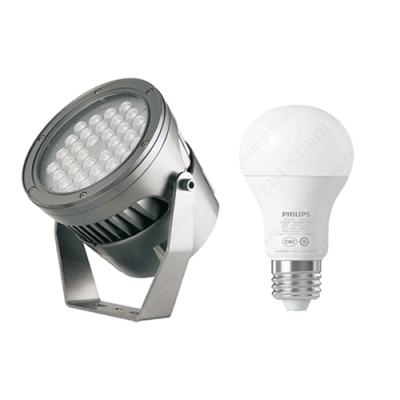 LEDs and Luminaire Test Solutions
 LM-79 and LM-80 Test Solutions
 LED Driver Test Solutions
 Household Appliances Test Solutions
 Mobile and Network Test Solutions
 Automotive Electronics Test Solutions
 Audio-Video and IT Test Solutions
 Cable and Wire Test Solutions
 Plugs and Sockets Test Solutions
 Power Switch Test Solutions
 Transformer Test Solutions
 Electric Toys Test Solutions
 Energy Meter Test Solutions
 Motor-Operated Tool Test Solutions
Select an organization
to browse standards
Abstract
With the increasing stringency of global environmental regulations, RoHS tester has become a mandatory requirement for electrical and electronic products to enter the international market. Based on X-ray Fluorescence (XRF) principle, LISUN EDX-2A Energy Dispersive X-ray Fluorescence Spectrometer realizes accurate qualitative and quantitative analysis of hazardous elements in electrical and electronic products by analyzing the wavelength and intensity of characteristic X-rays emitted by samples. It also integrates coating thickness measurement function. This paper elaborates on the working principle and core technical parameters of the instrument, verifies its performance through practical application cases of RoHS tester, and proves its advantages in elemental analysis accuracy, detection efficiency and operational convenience through experimental data. Research shows that LISUN EDX-2A Energy Dispersive X-ray Fluorescence Spectrometer can meet the requirements of the latest standards such as RoHS 2.0, providing enterprises with an efficient and reliable compliance testing solution.
1. Introduction
The Restriction of Hazardous Substances (RoHS) Directive is an environmental regulation formulated by the European Union, aiming to restrict the use of hazardous elements such as lead (Pb), mercury (Hg), cadmium (Cd), hexavalent chromium (Cr(VI)), polybrominated biphenyls (PBBs) and polybrominated diphenyl ethers (PBDEs) in electrical and electronic products. Subsequently, RoHS 2.0 included four additional substances such as di(2-ethylhexyl) phthalate (DEHP) and butyl benzyl phthalate (BBP) into the restricted list, further expanding the scope of control. Today, RoHS tester has become a core compliance requirement in the global electrical and electronic industry. Products that do not meet the standards may face risks such as market access restrictions, recalls or fines.
Traditional RoHS testing methods such as atomic absorption spectrometry and inductively coupled plasma mass spectrometry (ICP-MS) have problems such as complex sample pretreatment, long detection cycle and high cost, which are difficult to meet the batch testing needs of enterprises. Energy Dispersive X-ray Fluorescence (EDXRF) technology has become the mainstream technology for RoHS tester due to its advantages of non-destructive testing, fast detection speed and simple operation. As a professional test instrument manufacturer, LISUN has launched the EDX-2A Energy Dispersive X-ray Fluorescence Spectrometer, which integrates RoHS tester, elemental analysis and coating thickness measurement functions, providing comprehensive testing support for electronics, electrical appliances, hardware and other industries.
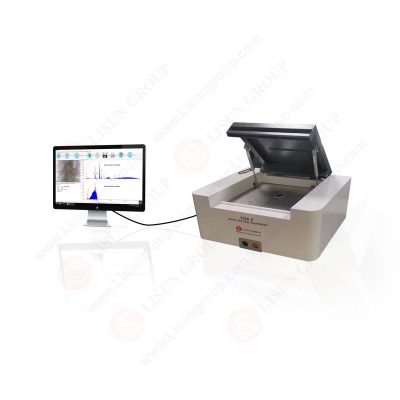
RoHS Testing Equipment EDX-2A
2. Working Principle of LISUN EDX-2A Instrument
The core working principle of LISUN EDX-2A Energy Dispersive X-ray Fluorescence Spectrometer is based on X-ray fluorescence emission and detection technology. Essentially, it realizes qualitative and quantitative analysis of elements by analyzing the wavelength and intensity of characteristic X-rays emitted by samples.
2.1 Qualitative Analysis Principle
The high-energy primary X-rays emitted by the instrument’s X-ray tube irradiate the surface of the sample to be tested, which excites the inner electrons of the atoms in the sample and puts the atoms in an excited state. To achieve a stable state, outer electrons transition to inner empty orbits, and the energy released during this process is radiated in the form of characteristic X-rays. Due to the differences in atomic structures of different elements, the energy released by electron transition varies, and the corresponding characteristic X-ray wavelengths are also unique—like “elemental fingerprints”. The instrument captures these characteristic X-rays through a detector, analyzes their wavelengths after signal processing, and can accurately determine the types of elements contained in the sample by comparing with the elemental characteristic wavelength database, thereby completing the screening of hazardous elements in RoHS tester.
2.2 Quantitative Analysis Principle
On the basis of qualitative analysis, there is a positive correlation between the intensity of characteristic X-rays of an element and its content in the sample: the higher the element content, the stronger the intensity of characteristic X-rays generated by excitation. LISUN EDX-2A uses a built-in quantitative analysis algorithm to compare and calibrate the measured characteristic X-ray intensity with the intensity data of standard samples, eliminating the influence of matrix effects, spectral interference and other factors, and finally calculates the accurate content of each element in the sample, meeting the requirements of accurate determination of hazardous element content limits in RoHS tester.
2.3 Principle of Coating Thickness Measurement Function
In addition to RoHS tester, the instrument also integrates coating thickness measurement function. Its principle is to use the penetration ability of characteristic X-rays: when primary X-rays irradiate the coated sample, the coating and the substrate material will respectively generate their own characteristic X-rays. By detecting the intensity of the characteristic X-rays of the coating elements, combined with known parameters such as coating density and X-ray absorption coefficient, the instrument calculates the thickness of the coating according to relevant physical models. It is suitable for thickness detection of various coatings such as metal coatings and alloy coatings, expanding the application scenarios of the instrument.
3. Core Technical Parameters of LISUN EDX-2A
The technical parameters of LISUN EDX-2A Energy Dispersive X-ray Fluorescence Spectrometer directly determine its performance in RoHS tester and elemental analysis. The following are the details of its core parameters:
| Technical Parameters | Specific Indicators |
| X-ray Tube | Rh target, 50kV/1mA, end-window design |
| Detector | Silicon Drift Detector (SDD), energy resolution ≤125eV (Mn Kα) |
| Elemental Analysis Range | Na (No.11) – U (No.92), covering all hazardous elements controlled by RoHS |
| Detection Limit | Cd: ≤0.5ppm; Pb, Hg, Cr(VI): ≤1ppm; Br: ≤5ppm |
| Measurement Time | Rapid screening: 30-60 seconds; Accurate testing: 1-5 minutes |
| Coating Thickness Measurement Range | 0.01μm – 50μm (adjustable according to coating material) |
| Sample Chamber Size | Φ300mm×100mm, supporting testing of samples of various shapes |
| Data Processing Software | Built-in RoHS 2.0 standard curve, supporting quantitative analysis, spectrum export and report generation |
| Working Environment | Temperature: 15-35℃, Humidity: ≤80% (no condensation) |
4. Application Cases of RoHS Tester
To verify the performance of LISUN EDX-2A in practical RoHS tester, three types of samples (mobile phone charger shell, circuit board solder joint and data cable plug) produced by an electronic enterprise were selected for comparative testing using this instrument and ICP-MS (national standard method). Ten hazardous substances controlled by RoHS 2.0 were tested, including lead (Pb), mercury (Hg), cadmium (Cd), hexavalent chromium (Cr(VI)), polybrominated biphenyls (PBBs), polybrominated diphenyl ethers (PBDEs), DEHP, BBP, DBP and DIBP.
4.1 Testing Process
• Sample Preparation: Cut the three types of samples into 2cm×2cm pieces respectively, remove surface oil and impurities, and place them into the instrument sample chamber after natural air drying;
• Instrument Setup: Select the RoHS tester mode, set the measurement time to 3 minutes, and start automatic detection;
• Data Recording: The instrument automatically generates a test report of each element’s content. Meanwhile, the same batch of samples is tested by ICP-MS method as a control standard.

4.2 Test Results and Analysis
The test results show that the relative error between the detection data of LISUN EDX-2A and the ICP-MS method is less than 5%, among which the detection error of cadmium (Cd) is only 2.3% and that of lead (Pb) is 3.1%, fully meeting the accuracy requirements of RoHS tester. In terms of detection efficiency, the ICP-MS method takes 2-3 hours to test a single sample, while LISUN EDX-2A can complete the full-item detection in only 3 minutes, greatly improving the batch detection efficiency of enterprises. In addition, the instrument does not require destructive treatment such as sample digestion, and the sample can be completely retained after testing, reducing sample loss and environmental pollution.
In the coating product detection of a hardware enterprise, the instrument completed both RoHS hazardous element detection and coating thickness measurement simultaneously: the sample was galvanized steel sheet. The test results showed that the lead content was 0.8ppm (complying with RoHS limits) and the zinc coating thickness was 8.5μm, with an error of 1.2% compared with the detection result of a professional coating thickness gauge, reflecting its advantage of multi-function integration.
5. Advantage Analysis of LISUN EDX-2A in RoHS Tester
5.1 High Detection Accuracy, Complying with International Standards
Adopting high-resolution Silicon Drift Detector (SDD) and advanced signal processing technology, the detection limit is as low as 0.5ppm, which can accurately identify low-content hazardous elements. It meets the requirements of domestic and foreign standards such as RoHS 2.0 and China’s GB/T 26572, and the detection results are authoritative and comparable.
5.2 High Detection Efficiency and Simple Operation
No complex sample pretreatment is required, and the sample can be directly placed for detection. Rapid screening only takes 30 seconds, which significantly shortens the detection cycle. The instrument is equipped with intelligent operation software, built-in standard test methods and curves. Operators can get started after simple training, reducing labor costs.
5.3 Multi-Function Integration and High Cost-Effectiveness
Integrating RoHS tester, elemental analysis and coating thickness measurement functions, one instrument can meet the various detection needs of enterprises, avoiding the repeated purchase of multiple equipment and reducing detection costs. The instrument has a compact structure and small footprint, suitable for laboratory and production workshop on-site use.
5.4 Environmental Protection, Safety and Stable Operation
No waste water, waste gas or waste residue is generated during the testing process, complying with environmental protection requirements. The X-ray tube adopts a safety protection design with multiple safety interlock devices to ensure the safety of operators. The core components are made of high-quality materials, with long service life and high operational stability. The Mean Time Between Failures (MTBF) exceeds 10,000 hours.
6. Conclusion
Based on the principle of analyzing the wavelength and intensity of characteristic X-rays of elements, LISUN EDX-2A Energy Dispersive X-ray Fluorescence Spectrometer realizes the multi-function integration of RoHS tester, elemental analysis and coating thickness measurement. Its accurate qualitative and quantitative analysis capabilities, efficient detection speed, simple operation process and stable operational performance can fully meet the compliance testing needs of electrical and electronic, hardware, plastic and other industries. It helps enterprises quickly respond to environmental regulatory requirements such as RoHS and reduce market access risks.
Compared with traditional testing methods and similar products, LISUN EDX-2A has significant advantages in cost-effectiveness, versatility and practicality, providing enterprises with an economical, efficient and reliable testing solution. With the continuous upgrading of global environmental regulations, this instrument will play a more important role in RoHS tester and related elemental analysis fields, helping enterprises achieve green production and sustainable development.
Tags:EDX-2AYour email address will not be published. Required fields are marked *

 English
 中文简体
中文简体 English
 Русский
 Español
 Português
 Türkçe
 العربية
 Deutsch
 Polski
 Italiano
 Français
 한국어
한국어 ไทย
ไทย Tiếng Việt
 日本語
日本語