LM-79 Moving Detector Goniophotometer (Mirror Type C)
LSG-6000
High Precision Rotation Luminaire Goniophotometer
LSG-1890B
High Precision Rotation Luminaire Goniospectroradiometer
LSG-1890BCCD

Goniophotometer for Automotive and Signal Lamps
LSG-1950
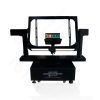
Goniophotometer for Traffic Signal Lamps
LSG-1950S
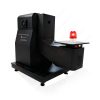
VAD Fire Alarm Visual Alert Device Goniophotometer
LSG-1930
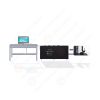
Compact Goniophotometer
LSG-1200A
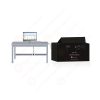
LED Goniophotometer
LSG-1100
 LEDs and Luminaire Test Solutions
 LM-79 and LM-80 Test Solutions
 LED Driver Test Solutions
 Household Appliances Test Solutions
 Mobile and Network Test Solutions
 Automotive Electronics Test Solutions
 Audio-Video and IT Test Solutions
 Cable and Wire Test Solutions
 Plugs and Sockets Test Solutions
 Power Switch Test Solutions
 Transformer Test Solutions
 Electric Toys Test Solutions
 Energy Meter Test Solutions
 Motor-Operated Tool Test Solutions
Select an organization
to browse standards
Abstract
Leakage tracking testing is a crucial evaluation method used to determine the resistance of insulating materials to electrical tracking under various environmental conditions. This paper explores the significance of the Tracking Test Chamber, focusing on the LISUN TTC-1 Tracking Test Chamber | Leakage Tracking Test Apparatus. The study provides an in-depth analysis of the working principle, technical specifications, test procedures, and key applications of the chamber. Additionally, a set of experimental data is presented to illustrate its effectiveness in assessing material properties.
1. Introduction
Electrical insulation plays a vital role in ensuring the safety and reliability of electrical and electronic equipment. When insulation is exposed to high voltages and environmental contaminants, such as dust and moisture, it can degrade over time, leading to leakage current and eventual failure. The Tracking Test Chamber is designed to evaluate the comparative tracking index (CTI) and proof tracking index (PTI) of solid insulating materials.
The LISUN TTC-1 Tracking Test Chamber | Leakage Tracking Test Apparatus is one of the most advanced testing devices in this field. It is designed to comply with international standards such as IEC 60112, ASTM D3638, and UL 746A. This study discusses the chamber’s specifications, test methodology, and the importance of leakage tracking testing.
The Tracking Test Chamber is an electrical safety testing apparatus that applies high voltage to the surface of an insulating material while introducing a conductive contaminant to assess its resistance to electrical tracking.
The LISUN TTC-1 Tracking Test Chamber is specifically designed to measure the CTI and PTI of insulating materials. Some of its key features include:
• Voltage Range: Adjustable from 100V to 600V.
• Electrode System: Platinum electrodes with precise spacing.
• Contaminant Supply: Controlled drop rate system.
• Safety Features: Enclosed chamber with ventilation and exhaust.
• Compliance: Meets IEC 60112, ASTM D3638, and UL 746A standards.
The test is conducted by placing a sample between two electrodes, applying a specified voltage, and introducing a contaminant liquid in a controlled manner. The resistance to tracking is determined by evaluating when electrical breakdown occurs.
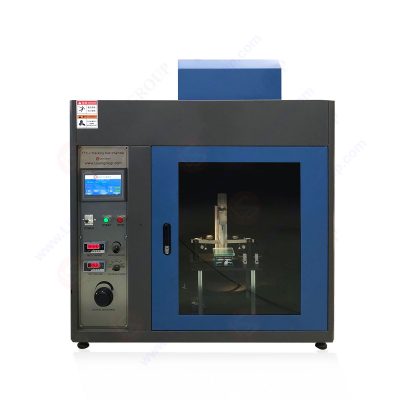
TTC-1 Tracking Test Chamber
The Tracking Test Chamber operates on the principle of simulating real-world environmental conditions to assess the breakdown characteristics of insulating materials.
• Sample Preparation: A rectangular test specimen (50mm × 20mm × 3mm) is prepared.
• Electrode Placement: Two platinum electrodes are placed on the specimen at a fixed distance.
• Voltage Application: A specific voltage (100V – 600V) is applied across the electrodes.
• Contaminant Introduction: A conductive electrolyte (0.1% NH₄Cl solution) is dripped at a controlled rate.
• Observations: The time taken for tracking failure or the resistance of the material is recorded.
A material is considered to have failed if:
• A persistent current of 0.5A or more flows for two seconds.
• Visible carbonized tracking paths are formed.
A set of experiments was conducted using the LISUN TTC-1 Tracking Test Chamber to determine the CTI and PTI values for different insulating materials.
• Voltage: 250V to 600V
• Electrolyte: 0.1% NH₄Cl solution
• Drop Rate: 0.1 ml per 30 seconds
• Electrode Material: Platinum
• Sample Types: Epoxy resin, PVC, Polycarbonate, PTFE
| Material | Applied Voltage (V) | Failure Time (s) | CTI Value (V) | PTI Value (V) |
| Epoxy Resin | 600 | No Failure | >600 | >600 |
| PVC | 300 | 45 | 300 | 250 |
| Polycarbonate | 450 | 120 | 450 | 400 |
| PTFE | 600 | No Failure | >600 | >600 |
4.3 Discussion
• Epoxy Resin and PTFE exhibited the highest tracking resistance with CTI >600V, making them suitable for high-voltage insulation applications.
• PVC showed early failure at 300V, indicating its lower resistance to electrical tracking.
• Polycarbonate had a moderate resistance level, failing at 450V.
These results demonstrate that the Tracking Test Chamber is effective in evaluating the insulation performance of various materials.

5. Importance of Leakage Tracking Testing
Leakage tracking testing using a Tracking Test Chamber is critical for multiple applications, including:
• Electrical Safety: Prevents insulation failures that could lead to short circuits and fire hazards.
• Material Selection: Helps manufacturers choose appropriate insulation materials for electrical components.
• Regulatory Compliance: Ensures that materials meet international safety standards.
The LISUN TTC-1 Tracking Test Chamber | Leakage Tracking Test Apparatus is widely used in industries such as:
• Electronics and Semiconductor Manufacturing
• Automotive and Aerospace
• Power Distribution and Transmission
• Household Appliances
6. Conclusion
This study highlights the significance of the Tracking Test Chamber in assessing the resistance of insulating materials to electrical tracking. The LISUN TTC-1 Tracking Test Chamber | Leakage Tracking Test Apparatus proves to be an essential tool for evaluating CTI and PTI values, ensuring material reliability and compliance with international standards.
The experimental data presented confirms that materials such as Epoxy Resin and PTFE have excellent tracking resistance, while PVC has lower performance under electrical stress. The Tracking Test Chamber thus plays a crucial role in ensuring the safety and longevity of electrical insulation materials.
Tags:TTC-1Your email address will not be published. Required fields are marked *

 English
 中文简体
中文简体 English
 Русский
 Español
 Português
 Türkçe
 العربية
 Deutsch
 Polski
 Italiano
 Français
 한국어
한국어 ไทย
ไทย Tiếng Việt
 日本語
日本語