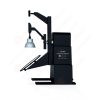
LM-79 Moving Detector Goniophotometer (Mirror Type C)
LSG-6000
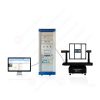
High Precision Rotation Luminaire Goniophotometer
LSG-1890B
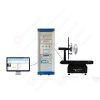
High Precision Rotation Luminaire Goniospectroradiometer
LSG-1890BCCD

Goniophotometer for Automotive and Signal Lamps
LSG-1950
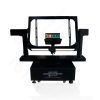
Goniophotometer for Traffic Signal Lamps (Economical Model)
LSG-1950S
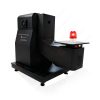
VAD Fire Alarm Visual Alert Device Goniophotometer
LSG-1930
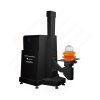
Goniophotometer for Airfield Lighting
LSG-1940
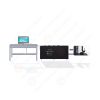
Compact Goniophotometer
LSG-1200A
LED Goniophotometer
LSG-1100
Near Field Moving Detector Goniophotometer
LSG-1900B
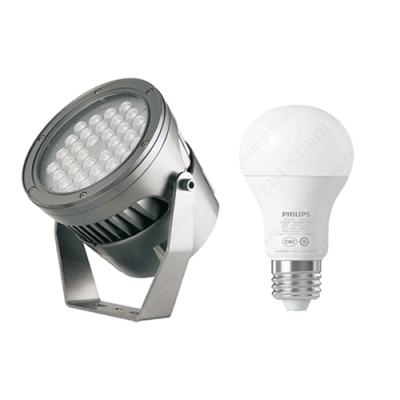 LEDs and Luminaire Test Solutions
 LM-79 and LM-80 Test Solutions
 LED Driver Test Solutions
 Household Appliances Test Solutions
 Mobile and Network Test Solutions
 Automotive Electronics Test Solutions
 Audio-Video and IT Test Solutions
 Cable and Wire Test Solutions
 Plugs and Sockets Test Solutions
 Power Switch Test Solutions
 Transformer Test Solutions
 Electric Toys Test Solutions
 Energy Meter Test Solutions
 Motor-Operated Tool Test Solutions
Select an organization
to browse standards
Abstract
Glow wire testing serves as a core fire safety detection method to simulate ignition of surrounding non-metallic materials triggered by overheated components inside electrical and electronic products. The accuracy of test conditions directly determines the effectiveness of flame retardancy evaluation. Taking the LISUN ZRS-3H glow wire tester as the research object, this paper illustrates the technical advantages of the equipment for glow wire testing in accordance with the latest domestic and international fire safety standards GB/T 5169 and IEC 60695 series. The equipment can accurately reproduce core test conditions specified by standards including 960℃ glow wire temperature and 1N contact force. It is equipped with intelligent functions such as automatic timing, automatic recording of ignition and extinction time, and automatic separation of the glow wire from the specimen after heating. These functions effectively eliminate manual operation errors and ensure accuracy and repeatability of test data, providing reliable test support for product material selection, structural optimization and safety compliance certification.
For household appliances, lighting fixtures, industrial control components, new energy electrical products, long-term operation may lead to high-temperature hot spots caused by circuit overload and poor contact. Fire risks exist when high-temperature heat sources contact plastic insulating housings, connectors and other parts. Glow wire testing simulates faulty heat sources by electrically heating nickel-chromium alloy wires to assess the resistance to ignition and flame spread of materials, which is a mandatory item for domestic and international safety certification. Conventional simple glow wire devices rely on manual control of contact duration and visual judgment of ignition and flame extinction. Temperature and pressure control fluctuate greatly with heavy human intervention, resulting in obvious dispersion of data from parallel tests, which fails to meet strict requirements of glow wire testing. Targeting the above pain points, the LISUN ZRS-3H glow wire tester has achieved overall optimization. Its hardware parameters and automatic control logic comply with current domestic and international fire safety standards. It can steadily carry out three types of glow wire testing including GWFI, GWIT and GWEPT, and is widely adopted in enterprise R&D laboratories and third-party testing institutions.
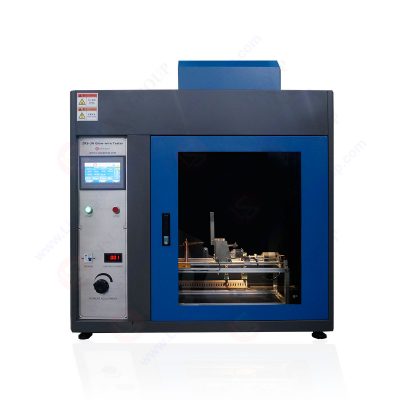
ZRS-3H Glow-wire Test Apparatus
Accurate Reproduction of Standard Test Conditions
Glow wire testing imposes strict tolerance requirements on temperature, contact force and penetration depth. The ZRS-3H adopts a nickel-chromium alloy glow wire with 4 mm diameter, equipped with sheathed K-type thermocouple for real-time temperature measurement. The temperature control range covers ambient temperature to 1100℃, which can stably maintain the test temperature of 960℃ with temperature error controlled within a reasonable range. The mechanical transmission mechanism can steadily output contact force from 0.95N to 1.05N to meet the standard requirement of 1N contact force. A 7 mm penetration limit is set to prevent the glow wire from excessively pressing into the specimen and altering combustion status. The whole hardware structure fully complies with IEC 60695-2-10 and GB/T 5169.10 specifications, eliminating interference of hardware deviation on glow wire testing results.
Intelligent Control System Reducing Human Errors
Under manual operation, testers conduct timing and glow wire withdrawal manually, and record ignition and extinction moments by naked eyes. It is easy to encounter delayed time recording and deviation of withdrawal timing. The ZRS-3H integrates an automatic control system. After program startup, it automatically completes glow wire heating and stable feeding to contact the specimen. During testing, ignition time and flame extinction time are automatically recorded with timing accuracy up to ±0.1s. Upon reaching the preset heating duration, the mechanism automatically drives the glow wire away from the specimen without manual intervention. Such automatic workflow ensures consistent operation timing for every glow wire testing and improves data repeatability of parallel experiments.
Comparison of Working Conditions for Different Types of Glow Wire Testing
The table below lists test objectives and typical working conditions of three mainstream glow wire testing types, which intuitively reflects application differences among various glow wire testing items:
| Test Type | Test Specimen | Typical Test Temperature | Key Observation Indicators |
| Glow Wire End Product Test (GWEPT) | Complete machines and assembled components | 750℃, 850℃, 960℃ | Flame duration after glow wire removal, whether drips ignite silk paper |
| Glow Wire Flammability Index (GWFI) | Plastic raw materials and semi-finished specimens | 500℃~960℃ gradient heating | The highest temperature for passing three consecutive tests |
| Glow Wire Ignition Temperature (GWIT) | Insulating plastic materials | 500℃~960℃ gradient heating | Critical temperature for the first stable ignition of specimen |
• Specimen pretreatment: Conduct temperature and humidity conditioning as required by standards, remove oil stains and impurities on specimen surfaces, and fix specimens on equipment clamps;
• Parameter configuration: Select corresponding glow wire testing program on touch interface, set target temperature and glow contact duration, and confirm contact force and penetration limit;
• Temperature stabilization: Energize and heat the glow wire, and wait until temperature stabilizes at the set value and maintains sufficient balancing time;
• Automatic testing: Start testing, the glow wire moves toward the specimen at constant speed and keeps contact. The system automatically captures ignition signals and records relevant time parameters;
• Automatic separation: When reaching preset contact duration, the glow wire automatically retreats from the specimen, and flame status is continuously observed until extinction;
• Result recording: Save complete test data, observe silk paper ignition status, and complete pass/fail judgment for glow wire testing in accordance with standards.
The complete procedure conforms to current fire safety standards, and test records can be directly applied for product R&D verification and certification application.

In the R&D stage, engineers can rapidly screen flame retardant materials via glow wire testing, compare ignition resistance of plastics with different formulations and modified materials, and optimize material selection for components around heating areas such as connectors and housings. During mass production quality control, standardized test conditions unify evaluation criteria for incoming sampling inspection and finished product type tests, steadily maintaining fire safety standards of products. For export manufacturers, relying on the equipment’s compliance with international standards, one single tester can complete glow wire testing required for domestic and overseas markets and reduce investment in multiple testing devices. The equipment fits glow wire testing demands of many industries including household appliances, LED lighting, industrial controllers, charging piles and wire harness connectors. Reliable data obtained from glow wire testing helps enterprises identify fire safety design defects in advance and lower fire hazards during product service life.
As an indispensable testing item for fire safety assessment of electrical products, glow wire testing requires consistent test conditions and reliable data. The LISUN ZRS-3H glow wire tester strictly complies with the latest domestic and international fire safety standards. Its hardware system can accurately reproduce key conditions including 960℃ glow wire temperature and 1N contact force. With intelligent functions of automatic timing, automatic recording of ignition and extinction time, and automatic separation of glow wire from specimens after heating, human-induced uncertainties are minimized to guarantee accurate and repeatable results of glow wire testing. The equipment meets demands of both material screening during R&D and type testing of finished goods. It provides a standardized test platform for flame retardancy verification, quality control and international safety certification of various electrical and electronic products, helping improve fire safety performance of electrical products under fault overheating conditions.
Tags:ZRS-3HYour email address will not be published. Required fields are marked *

 English
 中文简体
中文简体 English
 Русский
 Español
 Português
 Türkçe
 العربية
 Deutsch
 Polski
 Italiano
 Français
 한국어
한국어 ไทย
ไทย Tiếng Việt
 日本語
日本語