LM-79 Moving Detector Goniophotometer (Mirror Type C)
LSG-6000
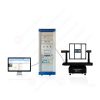
High Precision Rotation Luminaire Goniophotometer
LSG-1890B
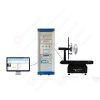
High Precision Rotation Luminaire Goniospectroradiometer
LSG-1890BCCD

Goniophotometer for Automotive and Signal Lamps
LSG-1950
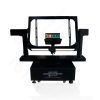
Goniophotometer for Traffic Signal Lamps (Economical Model)
LSG-1950S
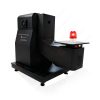
VAD Fire Alarm Visual Alert Device Goniophotometer
LSG-1930
Goniophotometer for Airfield Lighting
LSG-1940
Compact Goniophotometer
LSG-1200A
LED Goniophotometer
LSG-1100
Near Field Moving Detector Goniophotometer
LSG-1900B
 LEDs and Luminaire Test Solutions
 LM-79 and LM-80 Test Solutions
 LED Driver Test Solutions
 Household Appliances Test Solutions
 Mobile and Network Test Solutions
 Automotive Electronics Test Solutions
 Audio-Video and IT Test Solutions
 Cable and Wire Test Solutions
 Plugs and Sockets Test Solutions
 Power Switch Test Solutions
 Transformer Test Solutions
 Electric Toys Test Solutions
 Energy Meter Test Solutions
 Motor-Operated Tool Test Solutions
Select an organization
to browse standards
Abstract:
Salt mist corrosion is a major cause of failure for metallic materials and coatings in coastal and industrial environments. The salt mist test chamber can artificially replicate a saline atomized environment to conduct accelerated corrosion tests, providing an important experimental method for evaluating material protection performance. Taking the LISUN YWX/Q‑010 salt mist test chamber as the research object, this paper describes the electrochemical principle of salt spray corrosion testing, key technical parameters of the equipment, mainstream test modes and industrial applications. It offers references for corrosion resistance verification in electronics, hardware, coating and other industries.
Introduction:
Marine atmosphere and industrial areas contain abundant sodium chloride salt mist. Chloride ions can destroy the passive protective layer on metals, trigger electrochemical corrosion and lead to rusting of components, coating failure and poor circuit contact, which directly reduce product service life and safety. Natural salt mist corrosion progresses slowly, and outdoor exposure tests may take months or even years. The salt mist test chamber simulates a salt fog environment in the laboratory to greatly shorten the test cycle and rapidly assess the corrosion resistance of plating, coatings and metal substrates. It serves as core environmental test equipment for reliability verification. The LISUN YWX/Q‑010 salt mist test chamber supports NSS, AASS and CASS standard salt spray corrosion tests and is widely used for quality inspection in multiple industries.
1 Fundamental Principle of Salt Spray Corrosion Testing
Salt mist corrosion is essentially electrochemical corrosion. When atomized sodium chloride deposits on the sample surface, a conductive salt water film forms. Chloride ions feature small radius and strong penetration capacity, which can break down the passive oxide film on metal surfaces and form tiny galvanic cells locally. The metal substrate acts as an anode and undergoes oxidative dissolution, while oxygen is reduced at the cathode. Rust products are continuously generated, resulting in pitting corrosion, coating blistering and peeling.
The salt mist test chamber uses compressed air to atomize sodium chloride solution. Constant temperature, salt mist deposition rate and pH value are maintained inside the sealed test chamber to amplify corrosion stress artificially. The corrosion effect equivalent to months or years of natural exposure can be reproduced within tens to hundreds of hours. After testing, samples are inspected for rust, blistering and discoloration to judge the corrosion resistance grade of materials or protection processes.
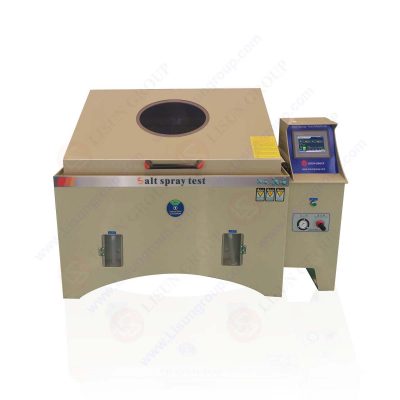
YWX/Q-010_Salt Spray Test Machine
2 Main Technical Parameters of LISUN YWX/Q‑010 Salt Mist Test Chamber
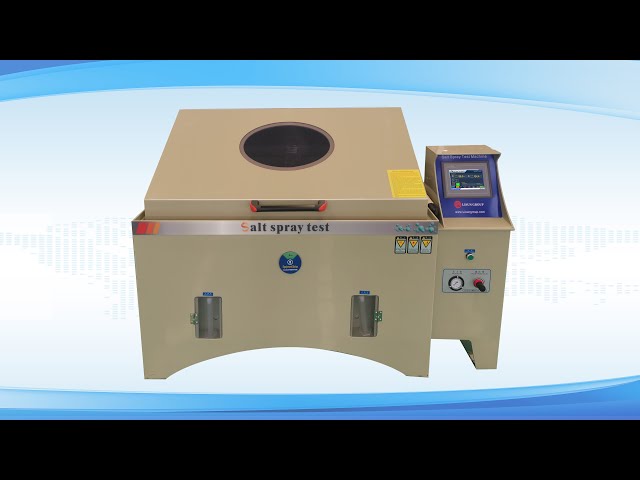
The chamber body of LISUN YWX/Q‑010 salt mist test chamber is integrally formed with imported PP anti-corrosion plates without welding seams to prevent salt water leakage. It is equipped with high-precision temperature control and spray systems, multi-channel audible and visual alarms for water shortage, over-temperature and low air pressure, and supports continuous and programmable intermittent spray. It can perform neutral, acetic acid and copper-accelerated salt spray tests. Key parameters are shown in Table 1.
Table 1 Key Technical Parameters of LISUN YWX/Q‑010 Salt Mist Test Chamber
| Item | Specification |
| Internal chamber dimension | 1200×800×500mm |
| Chamber volume | 480L |
| Brine tank volume | 32L |
| Power supply & power | 3-phase AC380V/50Hz, 2.5KW |
| Chamber temperature range | Ambient ~ +55℃ |
| Saturation barrel temperature range | Ambient ~ +70℃ |
| Temperature uniformity | ≤2℃ |
| Temperature fluctuation | ≤±0.5℃ |
| Salt mist deposition rate | 1‑2ml/80cm²/h (average over 16h) |
| Test modes | NSS neutral, AASS acetic acid, CASS copper-accelerated salt spray |
| Spray type | Continuous, programmable intermittent spray |
| Safety protection | Water shortage alarm, dual over-temperature protection, low air pressure alarm |
| Door opening | Stainless steel gas spring assisted opening |
This salt mist test chamber complies with mainstream domestic and international salt mist test standards including GB/T 2423.17‑2021, GB/T10125‑2021, ASTM B117‑2022 and ISO9227, and meets inspection specifications of various industries.
3 Comparison of Three Types of Salt Spray Corrosion Test Modes
The salt mist test chamber supports three standard salt spray corrosion tests with obvious differences in corrosion intensity and applicable objects, as shown in Table 2.
Table 2 Comparison of NSS, AASS and CASS Salt Spray Test Modes
| Test Mode | Abbreviation | Environmental Characteristics | Applicable Objects |
| Neutral Salt Spray Test | NSS | 5% NaCl solution, pH 6.5‑7.2, 35℃, mild corrosion | Hardware parts, electronic components, common coatings, general basic corrosion resistance test |
| Acetic Acid Salt Spray Test | AASS | Acetic acid added to adjust pH to 3.1‑3.3, 35℃, enhanced acidic corrosion | Decorative electroplating layers, anodized aluminum films |
| Copper-Accelerated Acetic Acid Salt Spray Test | CASS | Cupric chloride added, pH 3.1‑3.3, 50℃, strongest acceleration | Automotive chrome plating, high-end outdoor decorative coating rapid screening |
4 Industrial Applications of Salt Mist Test Chamber
The salt mist test chamber is widely applied in electronic and electrical, hardware processing, coating surface treatment, home appliance, new energy outdoor equipment and other fields. In the electronics industry, it tests connectors, chip pins and power housings to avoid short-circuit faults caused by salt mist in coastal environments. For hardware, screws, springs and hinges are tested to verify the protection performance of galvanizing, chrome plating and passivation processes. In the coating industry, paint and powder coatings are checked for blistering and rust resistance. In new energy sectors, it assesses outdoor corrosion resistance of photovoltaic frames, fan components and communication equipment enclosures.
In practical operation, an air compressor can be matched to supply air for atomization. Optional YWX/Q‑ETD salt mist waste gas treatment unit neutralizes salt and acid mist exhaust to realize compliant indoor emission and protect operators and surrounding instruments.
5 Conclusion
Salt spray corrosion testing is an indispensable method to evaluate the corrosion resistance of materials and products in marine and industrial atmospheres. The salt mist test chamber conducts accelerated corrosion verification through environmental simulation. The LISUN YWX/Q‑010 salt mist test chamber features high precision in temperature and salt mist deposition control, supports NSS/AASS/CASS multiple test types and adapts to batch inspection of various samples. It provides objective test data for material selection, surface process improvement and product reliability validation. In actual testing, test modes shall be selected according to product service conditions, and corresponding national standards shall be followed to ensure reliable and valid salt spray corrosion test results.
Tags:YWX/Q-010Your email address will not be published. Required fields are marked *

 English
 中文简体
中文简体 English
 Русский
 Español
 Português
 Türkçe
 العربية
 Deutsch
 Polski
 Italiano
 Français
 한국어
한국어 ไทย
ไทย Tiếng Việt
 日本語
日本語