LM-79 Moving Detector Goniophotometer (Mirror Type C)
LSG-6000
High Precision Rotation Luminaire Goniophotometer
LSG-1890B
High Precision Rotation Luminaire Goniospectroradiometer
LSG-1890BCCD

Goniophotometer for Automotive and Signal Lamps
LSG-1950
Goniophotometer for Traffic Signal Lamps (Economical Model)
LSG-1950S
Goniophotometer for Airfield Lighting
LSG-1940
VAD Fire Alarm Visual Alert Device Goniophotometer
LSG-1930
Compact Goniophotometer
LSG-1200A
LED Goniophotometer
LSG-1100
Near Field Moving Detector Goniophotometer
LSG-1900B
 LEDs and Luminaire Test Solutions
 LM-79 and LM-80 Test Solutions
 LED Driver Test Solutions
 Household Appliances Test Solutions
 Mobile and Network Test Solutions
 Automotive Electronics Test Solutions
 Audio-Video and IT Test Solutions
 Cable and Wire Test Solutions
 Plugs and Sockets Test Solutions
 Power Switch Test Solutions
 Transformer Test Solutions
 Electric Toys Test Solutions
 Energy Meter Test Solutions
 Motor-Operated Tool Test Solutions
Select an organization
to browse standards
Abstract:
The Ball Pressure Test serves as a core testing method for evaluating the heat resistance performance of electrical insulating components, which is widely applied in the quality control of electrical products such as household and similar-use plugs, sockets, lamps and electrical switches. Taking the LISUN ZBP-T Ball Pressure Test Apparatus as the research object, this paper elaborates on the applicable standards, equipment parameters, operating procedures and judgment criteria of the Ball Pressure Test. Combined with actual test data, it illustrates the application value of this test in heat resistance testing of plugs and sockets, providing references for electrical manufacturers and quality inspection laboratories to carry out relevant detection work.
1. Introduction
Household and similar-use plugs and sockets are basic electrical accessories with extremely high daily usage frequency, whose insulating housings are mostly made of thermoplastics. Heat will be generated during the operation of electrical appliances. Rising ambient temperature and long-term heat accumulation from power-on may cause softening, deformation and collapse of plastic insulating parts. In mild cases, poor contact will occur; in severe cases, short circuits, electric leakage, fires and other safety accidents may be triggered. Therefore, national standards clearly stipulate that heat resistance tests shall be conducted on the insulating components of plugs and sockets, and the Ball Pressure Test is the designated test item to verify the anti-deformation capacity of plastic insulating parts under high temperature.
The LISUN ZBP-T Ball Pressure Test Apparatus is special testing equipment developed in accordance with mainstream domestic and international electrical standards, specially matching the Ball Pressure Test requirements of products such as plugs and sockets. A complete set of heat resistance testing process can be realized when matched with the GW-225 High Temperature Oven. At present, it has been widely adopted by numerous electrical manufacturers, third-party quality inspection laboratories and market supervision departments, acting as key equipment to ensure compliance of plugs and sockets with product safety standards.
2. Applicable Standards and Technical Parameters of Ball Pressure Test
2.1 Applicable Standards for Ball Pressure Test
The Ball Pressure Test of household plugs and sockets shall be implemented in strict accordance with domestic national standards and international IEC standards. The ZBP-T Ball Pressure Test Apparatus fully covers the clauses of current valid standards, and the specific standards and corresponding clauses are shown in Table 1. In addition to standards related to plugs and sockets, this equipment can also meet the Ball Pressure Test requirements of similar electrical products including lamps, appliance switches and appliance couplers, featuring strong versatility.
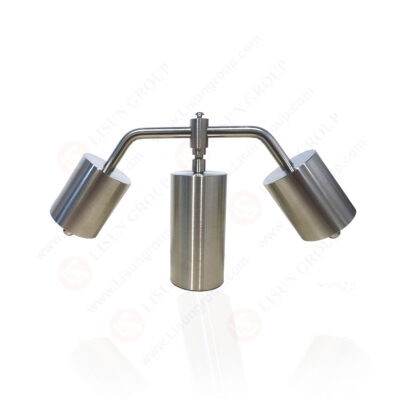
ZBP-T_Ball Pressure Test Device
2.2 Core Parameters of LISUN ZBP-T Ball Pressure Test Apparatus
The overall frame of ZBP-T Ball Pressure Test Apparatus is made of steel with electroplated surface treatment, which is wear-resistant, high-temperature resistant and rust-proof, adapting to the test environment inside high-temperature ovens. The core equipment parameters are as follows: the diameter of the test steel ball is 5mm (radius R2.5mm), and the total test pressure is stably controlled at 20N ± 0.2N; the matched sample support is a solid steel cylinder with a diameter of 50mm and a length of 100mm, which can stably hold plugs and socket samples of various specifications. This equipment must be used together with the GW-225 High Temperature Oven, which creates a constant-temperature test environment specified by standards to ensure that the environmental conditions of the Ball Pressure Test meet standard requirements.
Table 1 Applicable Standards and Corresponding Clauses for Ball Pressure Test
| Standard Category | Standard Number & Name | Corresponding Test Clause | Applicable Products |
| Domestic National Standard | GB/T 2099.1-2021 Plugs and Sockets for Household and Similar Purposes – Part 1: General Requirements | Clause 25.2, 25.3 | Household Plugs and Sockets |
| Domestic National Standard | GB 7000.1-2023 Luminaires – Part 1: General Requirements and Tests | Clause 13.2.1 | Luminaires Insulating Components |
| Domestic National Standard | GB/T 15092.1-2020 Appliance Switches – Part 1: General Requirements | Clause 21.1 | Appliance Switches |
| International Standard | IEC 60884-1:2022 Plugs and Socket-outlets for Household and Similar Purposes – General Requirements | Clause 25.2, 25.3 | Import & Export Plugs and Sockets |
| International Standard | IEC 60598-1:2024 Luminaires – Part 1: General Requirements and Tests | Clause 13.2.1 | Export Luminaires |
3. Operating Procedures of Ball Pressure Test
The Ball Pressure Test for household plugs and sockets shall be carried out following standardized procedures strictly, which are divided into four links: equipment preheating, sample fixing, constant-temperature pressure application, cooling and measurement. Three core variables including temperature, duration and pressure shall be controlled throughout the whole process, and detailed steps are listed as below.
First, equipment preheating. Place the entire LISUN ZBP-T Ball Pressure Test Apparatus into the GW-225 High Temperature Oven and keep constant temperature for a long time, ensuring that the temperature of the apparatus body is consistent with the set temperature of the oven, avoiding low equipment temperature interfering with test results.
Second, sample fixing. Select the plastic insulating housing of plugs and sockets as the test part, place the sample steadily on the steel support base to achieve full fitting between the sample and the support. Meanwhile adjust the sample posture to keep the tested surface horizontal, which is the foundation to guarantee vertical force application of the steel ball on the sample surface.
Third, constant-temperature pressure application. Under the high-temperature environment specified by standards, vertically press the steel ball with a radius of 2.5mm on the horizontal surface of the sample, apply a constant pressure of 20N ± 0.2N and maintain the pressure for 60 minutes (allowable error: +2min / 0min). The whole pressure application process shall be completed inside the high temperature oven.
Fourth, cooling and inspection. After the test duration expires, remove the steel ball within 10 seconds, take out the sample and immediately immerse it in normal-temperature water at 20℃±5℃ for 6 minutes for cooling. After taking the sample out of water, measure the indentation diameter within 3 minutes to judge whether the heat resistance performance of the sample passes the test.
4. Test Result Judgment and Actual Case Analysis
4.1 Judgment Rules
The pass judgment basis of the Ball Pressure Test relies on the indentation diameter: if the indentation diameter formed by the steel ball on the plastic surface of plugs and sockets is ≤2mm, the sample is judged to pass the test with qualified heat resistance, and the insulating part can be put into normal use; if the indentation diameter exceeds 2mm, it indicates that the plastic is prone to softening and deformation under high temperature, the product fails the heat resistance test with potential safety hazards, and shall be judged unqualified. This judgment rule is uniformly applicable to national standards and IEC standards, acting as a mandatory index for type tests and factory inspection of plugs and sockets.
4.2 Actual Test Data and Analysis
Three types of plastic housings of common single-phase two-hole sockets on the market were selected as test samples. The LISUN ZBP-T Ball Pressure Test Apparatus matched with GW-225 High Temperature Oven was adopted to conduct the Ball Pressure Test. The test temperature was set in accordance with GB/T 2099.1-2021, and test data are shown in Table 2.
Table 2 Actual Measurement Data of Ball Pressure Test on Plugs and Sockets
| Sample No. | Sample Material | Test Temperature (℃) | Pressure Holding Duration (min) | Indentation Diameter (mm) | Test Result |
| 1 | Flame-retardant PC Plastic | 120 | 60 | 1.42 | Pass |
| 2 | Ordinary ABS Plastic | 120 | 60 | 2.18 | Fail |
| 3 | Modified Flame-retardant PP Plastic | 120 | 60 | 1.85 | Pass |
It can be seen from the test data that material is the core factor affecting the results of the Ball Pressure Test. Flame-retardant PC and modified flame-retardant PP plastics feature strong high-temperature resistance and anti-deformation capacity, with indentation diameters less than 2mm, meeting the application requirements of plugs and sockets. Ordinary ABS plastic has poor heat resistance and obvious deformation under high temperature and pressure, with indentation exceeding the limit value, so it cannot be used as insulating parts of plugs and sockets. Manufacturers must strictly select compliant plastic raw materials to control product quality.
5. Conclusion
The Ball Pressure Test is an indispensable test item for inspecting the heat safety of household and similar-use plugs and sockets, which is directly related to product service safety. The LISUN ZBP-T Ball Pressure Test Apparatus delivers accurate parameters and high stability, fully complying with current domestic and international standards, and can accurately complete the Ball Pressure Test of various electrical products including plugs, sockets, lamps and switches.
From the perspective of test procedures and actual measurement results, standardized operation processes, precise equipment parameters and qualified raw materials are three key factors to guarantee accurate Ball Pressure Test data and qualified product quality. For plug and socket manufacturers, the Ball Pressure Test shall be incorporated into routine quality inspection links, with strict control from raw material sampling inspection and semi-finished product testing to finished product delivery inspection. For quality inspection institutions, standardized test equipment such as ZBP-T can effectively improve detection efficiency and data credibility.
With continuous updating of electrical safety standards, higher heat resistance requirements are put forward for electrical products, making the Ball Pressure Test increasingly important. In the future, relevant enterprises and inspection institutions shall continuously implement standards rigorously, conduct heat resistance testing relying on professional test equipment, eliminate electrical safety accidents caused by high-temperature deformation of plastic parts from the source, and ensure the safe use of civil electrical products.
Tags:ZBP-TYour email address will not be published. Required fields are marked *

 English
 中文简体
中文简体 English
 Русский
 Español
 Português
 Türkçe
 العربية
 Deutsch
 Polski
 Italiano
 Français
 한국어
한국어 ไทย
ไทย Tiếng Việt
 日本語
日本語