LM-79 Moving Detector Goniophotometer (Mirror Type C)
LSG-6000
High Precision Rotation Luminaire Goniophotometer
LSG-1890B
High Precision Rotation Luminaire Goniospectroradiometer
LSG-1890BCCD

Goniophotometer for Automotive and Signal Lamps
LSG-1950
Goniophotometer for Traffic Signal Lamps (Economical Model)
LSG-1950S
Goniophotometer for Airfield Lighting
LSG-1940
VAD Fire Alarm Visual Alert Device Goniophotometer
LSG-1930
Compact Goniophotometer
LSG-1200A
LED Goniophotometer
LSG-1100
Near Field Moving Detector Goniophotometer
LSG-1900B
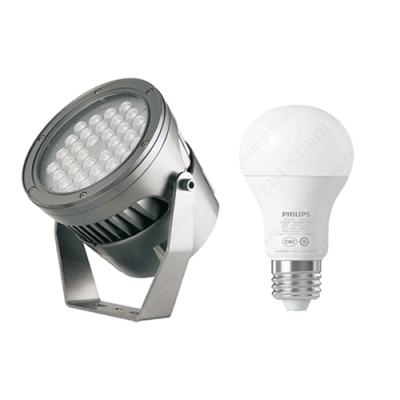 LEDs and Luminaire Test Solutions
 LM-79 and LM-80 Test Solutions
 LED Driver Test Solutions
 Household Appliances Test Solutions
 Mobile and Network Test Solutions
 Automotive Electronics Test Solutions
 Audio-Video and IT Test Solutions
 Cable and Wire Test Solutions
 Plugs and Sockets Test Solutions
 Power Switch Test Solutions
 Transformer Test Solutions
 Electric Toys Test Solutions
 Energy Meter Test Solutions
 Motor-Operated Tool Test Solutions
Select an organization
to browse standards
Abstract
The light wavelength meter is the core testing equipment for the optical performance detection of light sources, widely applied in lighting, display, plant lighting, ultraviolet detection, light health safety and other fields. It can accurately obtain key parameters such as wavelength distribution, peak wavelength, dominant wavelength and spectral power distribution. Taking LISUN LMS‑6000 series portable spectrometer as the research object, this paper systematically expounds the working principle, technical indicators, model configuration, testing capacity and industrial application of the light wavelength meter. Combined with measured data and standard specifications, it analyzes the technical advantages of this light wavelength meter in high precision, portability and integrated multi-functional detection, providing equipment selection and application reference for light source R&D, production quality control, on-site detection and compliance certification.
1. Introduction
Against the background of the upgrading of the lighting industry, the popularization of healthy lighting, the large-scale development of plant factories and the expanded application of ultraviolet disinfection, the wavelength parameters of light sources directly determine luminous efficiency, color quality, visual comfort, biological safety and photosynthetic efficiency. By means of light splitting and photoelectric detection, the light wavelength meter decomposes composite light into monochromatic light, measures the light intensity of each wavelength, and outputs spectral curves, peak wavelength, dominant wavelength, half-bandwidth, chromaticity coordinates, color temperature, color rendering index and other core data. It is an essential instrument for full-process quality control of light sources from research and development to mass production.
Traditional desktop spectrometers feature high precision but large volume and complex wiring, making them difficult for rapid on-site detection. Portable CCD spectrometers balance precision and flexibility and have become the mainstream choice in the industry. As a mature commercial light wavelength meter, the LISUN LMS‑6000 series has been applied for more than ten years, covering visible light, ultraviolet and near-infrared bands. It integrates extended functions including illuminance, luminance, flicker, blue light hazard, plant lighting PAR/PPFD and TLCI, meeting the one-stop testing demands of multiple scenarios. This paper conducts technical analysis and application research centering on this light wavelength meter to provide practical references for the industry.
2. Working Principle and Technical Basis of Light Wavelength Meter
The core composition of a light wavelength meter (spectrometer) includes a spectroscopic system, photoelectric detector and data processing module. It disperses incident light by wavelength, collects light intensity of each wavelength through a CCD array, and restores spectral distribution via calibration and algorithms to calculate wavelength-related, photometric and chromaticity parameters.
The LMS‑6000 adopts a long-focus asymmetric cross CT spectroscopic system, featuring stable optical structure, excellent stray light suppression and high wavelength linearity, which ensures measurement consistency within a wide range. The wavelength testing process is as follows: incident light → slit → collimation → grating dispersion → focusing → CCD detection → AD conversion → MCU calculation → data output on screen or software.
Key indicators of the light wavelength meter determine measurement reliability, including wavelength coverage range, wavelength accuracy, optical resolution, stray light level and photometric linearity.
The LMS‑6000 achieves wavelength accuracy of ±0.5 nm, optical resolution of ±0.2 nm and scanning interval of ±0.1 nm. Its stray light is less than 0.015% at 600 nm and less than 0.03% at 435 nm, reaching laboratory-grade precision and fully meeting the requirements of mass production sampling inspection and certification testing.
3. Model and Parameter Configuration of LISUN LMS‑6000 Light Wavelength Meter
Based on the light wavelength meter as the core platform, the LMS‑6000 series has derived multiple versions to adapt to different testing requirements, with a wavelength coverage of 200–950 nm. It expands functions from basic spectral and chromaticity testing to ultraviolet detection, flicker analysis, blue light hazard assessment, plant lighting monitoring and industrial interface connection. The model specifications and core parameters are shown in the table below:
Table 1 Models and Core Parameters of LMS‑6000 Series Light Wavelength Meter
| Model | Product Name | Core Testing Parameters | Wavelength Range |
| LMS‑6000 | Handheld CCD Spectrometer | Illuminance, Ee, Tc, Duv, CCT, chromaticity coordinates, CRI, TM‑30, peak/dominant wavelength, half-bandwidth, spectrum diagram | 380–780 nm |
| LMS‑6000C | Economy Version | Same as LMS‑6000, excluding TM‑30 and PC software | 380–780 nm |
| LMS‑6000UV | UV Version | UVA/UVB/UVC, ultraviolet irradiance, ultraviolet hazard, peak/start-end wavelength, spectrum diagram | 200–400 nm |
| LMS‑6000F | Flicker Testing Version | LMS‑6000 with flicker detection function | 380–780 nm |
| LMS‑6000L | Luminance Testing Version | Luminance (0.1–500000 cd/m²), fL, full chromaticity parameters | 380–780 nm |
| LMS‑6000B | Blue Light Hazard Version | LMS‑6000 with retinal blue light hazard test (GB/T 20145/CIE S009) | 350–800 nm |
| LMS‑6000BF | Blue Light & Flicker Version | LMS‑6000B with flicker testing | 350–800 nm |
| LMS‑6000P | Plant Lighting Version | LMS‑6000 with PAR/PPFD/YPFD, band irradiance, red-blue ratio | 350–850 nm |
| LMS‑6000S | Plant & Blue Light Version | LMS‑6000P with blue light hazard testing | 350–950 nm |
| LMS‑6000SF | Full-Function Version | LMS‑6000S with flicker testing | 350–950 nm |
| LMS‑6000TLCI | Professional TLCI Version | LMS‑6000 with TLCI film and television lighting quality detection | 380–780 nm |
| LMS‑6000I | Industrial Version | LMS‑6000 with I/O control and RS485 interface | 380–780 nm |
Centered on the light wavelength meter, this series realizes multi-function integration through modular expansion, effectively reducing equipment investment and operational complexity for users.
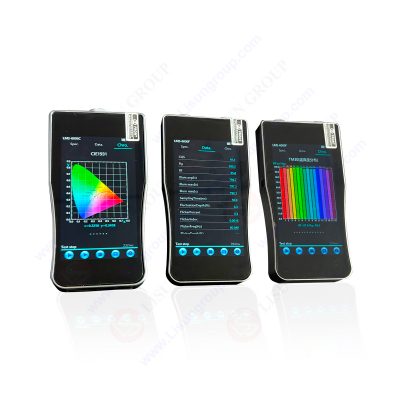
LMS-6000 Portable CCD Spectroradiometer
4. Core Technical Indicators and Performance of LMS‑6000 Light Wavelength Meter
As a high-precision light wavelength meter, the LMS‑6000 complies with CIE, IEC, GB and other international and domestic standards to ensure authoritative and reliable data output:
• Spectral Platform: Long-focus asymmetric cross CT spectroscopic system
• Wavelength Accuracy: ±0.5 nm; Optical Resolution: ±0.2 nm; Scanning Interval: ±0.1 nm
• Chromaticity Coordinate Accuracy (Δx,Δy): ±0.005
• Color Temperature Range: 1500–100000 K, Accuracy: ±0.6%
• Illuminance Range: 0.1–500000 lx
• Color Rendering Index: 0–100.0, Accuracy: ±(0.3%rd±0.3)
• Photometric Linearity: ±0.6%; Stray Light: <0.015% (600 nm)
• Integration Time: 0.1 ms–5 s
• Display Screen: 5-inch high-definition IPS capacitive touch screen
• Battery Capacity: 4000 mAh, Continuous Working Time: about 20 hours
• Storage Space: 8 GB, supporting 5,000 to 100,000 test reports
• System Compatibility: Upper computer software for Win7/8/10/11
In the actual test of a white LED light source by the LMS‑6000 light wavelength meter, the measured data are as follows: peak wavelength 447.6 nm, CCT 5064 K, Duv 0.01742, chromaticity coordinates (0.3464, 0.3896), Ra 66.8. The complete spectral curve and stable wavelength positioning enable the test data to be directly applied to product certification and factory inspection reports.
5. Typical Applications of Light Wavelength Meter in Light Source Detection
5.1 Quality Inspection of General Lighting Sources
The light wavelength meter is used to measure the wavelength distribution, peak wavelength, dominant wavelength and half-bandwidth of LEDs, fluorescent lamps, HID lamps and other light sources, so as to evaluate spectral continuity and color purity. Combined with color rendering index, TM‑30 and color tolerance, it evaluates light color quality, guides the ratio design of fluorescent powder and chip selection, and improves the consistency and comfort of lighting products.
5.2 Health and Safety Assessment
The LMS‑6000B/BF light wavelength meter can test the weighted irradiance of retinal blue light hazards, in line with GB/T 20145 and CIE S009/E:2002. It is widely used in compliance testing of desk lamps, flat panel displays, classroom lights and other products to control the exposure risk of short-wave blue light. The flicker testing module analyzes flicker depth, modulation depth and frequency, reducing visual fatigue and related health hazards.
5.3 Customized Spectrum Detection for Plant Lighting
The LMS‑6000P/S/SF light wavelength meter provides core photosynthetic parameters including PAR, PPFD, YPFD, multi-band irradiance and red-blue light ratio. With a wavelength coverage of 350–950 nm, it meets the spectral formula customization demands of seedling raising, leafy vegetables, flowers and medicinal crops, realizing accurate spectral regulation and energy efficiency optimization.
5.4 Detection of Ultraviolet Light and Disinfection Light Sources
The LMS‑6000UV light wavelength meter covers the 200–400 nm ultraviolet band, which can accurately detect UVA/UVB/UVC irradiance and ultraviolet radiation hazards. It is suitable for quality control of ultraviolet curing lamps, sterilization lamps and insect trap lamps, ensuring qualified output intensity and safe application.
5.5 On-Site Rapid Detection and Industrial Integration
The portable design supports production line sampling inspection, engineering acceptance, as well as synchronous testing in laboratories and construction sites. The 5-inch touch screen realizes one-click data output with data storage and export functions. The industrial version LMS‑6000I is equipped with RS485 and I/O interfaces, which can be integrated into automatic production lines to realize online monitoring and data uploading of the light wavelength meter.
6. Selection and Operation Guidelines for Light Wavelength Meter
First, select the model with wavelength coverage matching the effective band of the tested light source: 380–780 nm for visible light products, 200–400 nm for ultraviolet equipment, and above 350–850 nm for plant lighting scenarios.Second, the selected light wavelength meter shall have wavelength accuracy better than ±0.5 nm and resolution better than ±0.5 nm to guarantee the authenticity of peak wavelength data.Third, select functional modules such as flicker detection, blue light hazard assessment and TLCI testing according to actual testing needs.Fourth, conduct regular wavelength and photometric calibration to maintain long-term equipment stability and data accuracy.Finally, prioritize portable light wavelength meters with touch control, large-capacity storage, long battery life and Windows system compatibility to improve on-site testing efficiency.
7. Conclusion
The light wavelength meter is an indispensable testing device in the modern light source industry, supporting the whole process of product research and development, quality control, certification and on-site application. Centered on the light wavelength meter, the LISUN LMS‑6000 series integrates high-precision spectroscopic technology, high-sensitivity CCD sensor, multi-functional expansion and portable design. With a wavelength range of 200–950 nm, it covers lighting, ultraviolet testing, plant lighting, light health safety, film and television lighting, industrial automation and other fields, fully meeting the requirements of CIE, IEC, GB and other industry standards.
With the intelligent, healthy and professional upgrading of the lighting industry, higher requirements have been put forward for the precision, portability, multi-function and digital performance of the light wavelength meter. Through continuous technical iteration, the LMS‑6000 series provides users with an all-in-one optical testing solution, which has important practical significance for improving light source quality, ensuring light health and promoting the high-quality development of the lighting industry.
Tags:LMS-6000Your email address will not be published. Required fields are marked *

 English
 中文简体
中文简体 English
 Русский
 Español
 Português
 Türkçe
 العربية
 Deutsch
 Polski
 Italiano
 Français
 한국어
한국어 ไทย
ไทย Tiếng Việt
 日本語
日本語