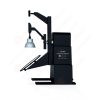
LM-79 Moving Detector Goniophotometer (Mirror Type C)
LSG-6000
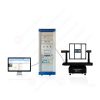
High Precision Rotation Luminaire Goniophotometer
LSG-1890B
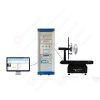
High Precision Rotation Luminaire Goniospectroradiometer
LSG-1890BCCD

Goniophotometer for Automotive and Signal Lamps
LSG-1950
Goniophotometer for Traffic Signal Lamps (Economical Model)
LSG-1950S
VAD Fire Alarm Visual Alert Device Goniophotometer
LSG-1930
Goniophotometer for Airfield Lighting
LSG-1940
Compact Goniophotometer
LSG-1200A
LED Goniophotometer
LSG-1100
Near Field Moving Detector Goniophotometer
LSG-1900B
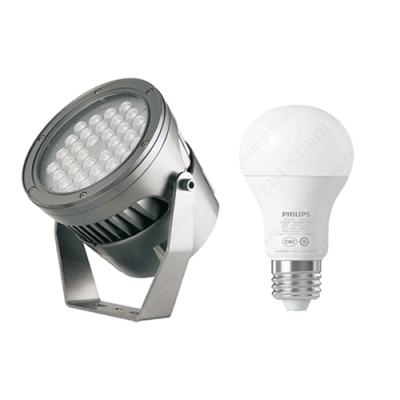 LEDs and Luminaire Test Solutions
 LM-79 and LM-80 Test Solutions
 LED Driver Test Solutions
 Household Appliances Test Solutions
 Mobile and Network Test Solutions
 Automotive Electronics Test Solutions
 Audio-Video and IT Test Solutions
 Cable and Wire Test Solutions
 Plugs and Sockets Test Solutions
 Power Switch Test Solutions
 Transformer Test Solutions
 Electric Toys Test Solutions
 Energy Meter Test Solutions
 Motor-Operated Tool Test Solutions
Select an organization
to browse standards
Abstract
An Electrodynamic Vibration Generator System adopts the electromagnetic excitation principle to reproduce vibration environments under various practical working conditions, so as to verify the vibration resistance, operational stability and working reliability of components and finished products throughout their life cycle. The complete set of equipment is equipped with a dedicated controller to uniformly manage test procedures, adjust operating parameters as well as record and store test data. Taking the LISUN LVD‑100KG Electrodynamic Vibration Shaker Test System (Pre‑Certification) as the research objec, this paper illustrates the working principle, equipment configuration and test implementation workflow of the Electrodynamic Vibration Generator System. It analyzes how to carry out sine vibration environmental tests specified in IEC 60068‑2‑6 with this system, and explains the key points for parameter setting, specimen mounting requirements, data acquisition and result judgment during testing, which provides practical references for vibration reliability verification of electrical and electronic products.
During production, transportation, installation and long‑term service, electrical and electronic products are inevitably subjected to periodic mechanical vibration. Continuous vibration may lead to structural loosening, solder joint cracking, connector detachment and drift of electrical performance, which will directly affect product safety and service life. As a fundamental environmental test standard released by the International Electrotechnical Commission, IEC 60068‑2‑6 is equivalent to GB/T 2423.10‑2019 in China. It specifies the complete implementation method for sine vibration tests to evaluate the capacity of specimens to withstand sine vibration environments, and is widely adopted in industries such as lighting fixtures, industrial electronic control assemblies, automotive components and energy‑storage modules. A well‑matched Electrodynamic Vibration Generator System is required to finish the test items defined by the standard. This type of equipment simulates vibration conditions via electromagnetic force to determine the vibration resistance, stability and reliability of various parts and finished products during their service life. The built‑in controller manages all operations and enables recording and saving of complete test data. The LISUN LVD‑100KG Electrodynamic Vibration Shaker Test System includes two versions: the LVD‑100KG four‑degree‑of‑freedom vibration shaker and the LVD‑100KG‑6D six‑degree‑of‑freedom vibration shaker. The former supports vibration output in vertical and horizontal directions, while the latter enables independent vibration in vertical, front‑rear horizontal and left‑right horizontal axes, meeting the basic requirement of multi‑orthogonal‑axis vibration tests defined in IEC 60068‑2‑6.
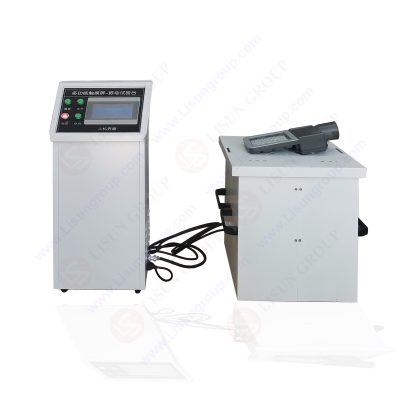
Electrodynamic Vibration Generator System LVD-100KG
The core operating principle of the Electrodynamic Vibration Generator System is electromagnetic induction. The energized drive coil generates excitation force within a magnetic field to drive the shaker table and test specimens to produce controllable mechanical vibration. As the central unit of the whole system, the controller generates vibration waveforms, adjusts frequency, performs closed‑loop control for amplitude and acceleration, executes swept‑frequency and programmable test sequences, and synchronously collects and stores raw test data including frequency, acceleration and duration. Operators can directly configure all test parameters to reduce operational difficulties. The LVD‑100KG Electrodynamic Vibration Shaker Test System is a pre‑certified test instrument compatible with multiple domestic and international standards. Apart from the IEC 60068 series, it also conforms to GB/T13309‑91, GB/T 4857, ASTM D999 and other vibration‑related specifications. For CNAS‑certified formal vibration tests, the LISUN LVD‑AT10 electrodynamic vibration test system is recommended. The table below lists the core technical specifications of the Electrodynamic Vibration Generator System of the LVD‑100KG series.
| Parameter Item | Technical Specification | Supplementary Description |
|---|---|---|
| Model | LVD‑100KG (4‑DOF); LVD‑100KG‑6D (6‑DOF) | The 6D version supports independent vibration output on three axes |
| Shaker Table Dimension | 500mm×500mm | Custom‑sized tables are available according to specimen dimensions |
| Amplitude Adjustment Range | 0~5mm | Suitable for low‑frequency, large‑displacement sine vibration conditions |
| Output Vibration Acceleration | 0~20g | Covers common severity levels for industrial product vibration tests |
| Operating Frequency Range | 1‑600Hz | Supports swept‑frequency and segmented programmable cyclic testing |
| Frequency Accuracy | Display: 0.01Hz, Control Accuracy: 0.1Hz | Facilitates accurate capture of specimen resonant frequencies |
| Maximum Specimen Load | 100KG | Applicable for medium‑sized assemblies, lighting fixtures and battery modules |
| Output Vibration Waveform | Sine Wave (Half‑wave, Full‑wave) | Meets the basic sine waveform requirements of IEC 60068‑2‑6 |
| Programmable Function | 1‑15 customizable segments with cyclic operation support | Enables test sequences such as low‑to‑high‑frequency and reciprocating cycles |
The sine vibration test defined by IEC 60068‑2‑6 mainly consists of six stages: pre‑test preparation, specimen clamping, equipment parameter configuration, test execution, data acquisition and post‑test specimen inspection. The Electrodynamic Vibration Generator System plays a critical role in each stage.
The first stage is pre‑test preparation. Operators shall define the severity level corresponding to the product under test, and confirm the test frequency range, amplitude or acceleration, sweep rate, test duration for each axis and the number of vibration axes. The standard generally requires testing along three orthogonal X, Y and Z axes separately instead of simplifying the procedure with combined‑axis testing. Check the specimen weight to ensure it does not exceed the maximum load capacity of the Electrodynamic Vibration Generator System. The maximum load of the LVD‑100KG model is 100KG. Overloading will cause vibration waveform distortion and invalidate the test. Inspect the controller, sensors and fixtures to confirm the equipment is in normal working condition.
The second stage is specimen mounting and clamping. Specimens shall be rigidly fixed on the shaker table using dedicated fixtures to simulate real‑world installation conditions. Insufficient rigidity of fixtures will introduce extra resonance and interfere with test results. The LVD‑100KG‑6D six‑degree‑of‑freedom version can conveniently switch between vertical, front‑rear horizontal and left‑right horizontal orientations for multi‑axis testing. For the LVD‑100KG four‑degree‑of‑freedom model, adjust the specimen mounting posture to complete tests on different axes. Acceleration sensors shall be placed at the control reference point to feed vibration signals back to the controller of the Electrodynamic Vibration Generator System for closed‑loop regulation.
The third stage is equipment parameter configuration. Operators input settings on the controller interface of the Electrodynamic Vibration Generator System, select the sine vibration mode, configure upper and lower frequency limits, amplitude and acceleration values, and define sweep‑frequency or programmable segmented modes. IEC 60068‑2‑6 covers swept‑frequency tests and fixed‑frequency dwell tests. Sweeping is adopted to search for critical resonant frequencies of specimens. After identifying resonance points, fixed‑frequency dwell tests can be performed for fatigue evaluation. The sweep function of the LISUN LVD‑100KG Electrodynamic Vibration Shaker Test System allows flexible configuration of frequency boundaries and duration. The programmable function supports up to 15‑segment parameter setup to realize complex test sequences specified in the standard. Displacement control is preferred for low‑frequency conditions while acceleration control is activated at high frequencies to guarantee that vibration stress complies with standard requirements across the full frequency band.
The fourth stage is test execution. After parameter confirmation, start the Electrodynamic Vibration Generator System. The controller drives the shaker table to output sine vibration. During operation, operators observe the physical condition of specimens while the controller monitors real‑time frequency, amplitude and acceleration data. The test shall be stopped immediately in case of vibration overshoot or specimen loosening. The controller of the whole system automatically records and saves all test data without continuous manual transcription to reduce human‑induced errors.
The fifth stage is post‑test inspection. After vibration tests on all axes are completed, remove the specimen and carry out visual inspection, mechanical structure examination and electrical functional testing. Compare the specimen status before and after testing to check for shell damage, fastener loosening, internal component displacement or functional failure, so as to judge whether the specimen satisfies IEC 60068‑2‑6 requirements. Export the raw test data stored by the Electrodynamic Vibration Generator System and organize vibration duration, frequency curves and acceleration records to form a complete test document.
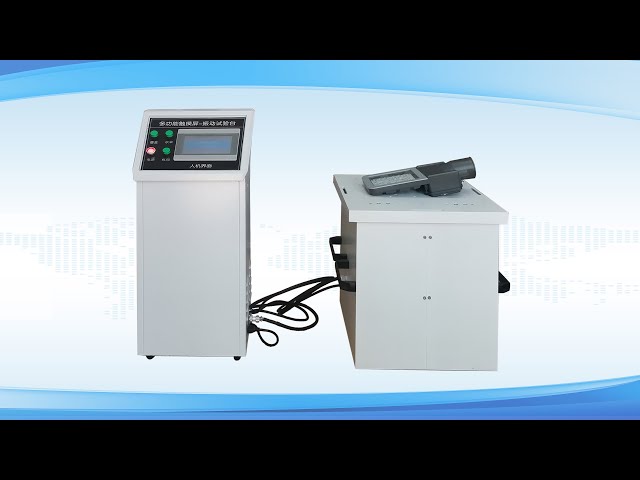
When performing IEC 60068‑2‑6 tests with an Electrodynamic Vibration Generator System, note that the LVD‑100KG series is a pre‑certified instrument suitable for research‑and‑development verification and preliminary evaluation. The LVD‑AT10 electrodynamic vibration test system shall be selected if formal reports with CNAS accreditation are required. The load on the shaker table must not exceed the rated value. The total weight of the specimen plus fixtures shall stay below the nominal maximum load, otherwise vibration waveform distortion and inaccurate measurement will occur. Resonance dwell testing is an essential part of IEC 60068‑2‑6, and the Electrodynamic Vibration Generator System must provide sufficient frequency control accuracy. The 0.1Hz control precision of the LVD‑100KG allows accurate locking of resonant frequencies for durability dwell tests. In addition, different products correspond to different severity levels. Unified parameters cannot be applied directly, and the frequency range, vibration magnitude and test duration shall be defined according to product specifications.
The Electrodynamic Vibration Generator System reproduces vibration environments through electromagnetic force and serves as the core hardware to conduct sine vibration environmental tests in accordance with IEC 60068‑2‑6. The LISUN LVD‑100KG Electrodynamic Vibration Shaker Test System (Pre‑Certification) features reasonable load capacity, available frequency output range as well as sweep‑frequency and programmable testing capabilities. Its controller manages the whole test workflow and records test data automatically. It can complete most pre‑validation test items required by IEC 60068‑2‑6. In practical testing activities, follow standard procedures strictly, implement proper specimen clamping, parameter configuration, real‑time monitoring and post‑test inspection, and give full play to the capacity of the Electrodynamic Vibration Generator System to simulate real‑world vibration conditions. This helps assess the vibration resistance, stability and reliability of parts and finished products throughout their service life effectively, enables enterprises to identify vibration‑related defects at the product development stage, optimizes structural design and improves environmental adaptability of products.
Tags:LVD-100KGYour email address will not be published. Required fields are marked *


 English
 中文简体
中文简体 English
 Русский
 Español
 Português
 Türkçe
 العربية
 Deutsch
 Polski
 Italiano
 Français
 한국어
한국어 ไทย
ไทย Tiếng Việt
 日本語
日本語