LM-79 Moving Detector Goniophotometer (Mirror Type C)
LSG-6000
High Precision Rotation Luminaire Goniophotometer
LSG-1890B
High Precision Rotation Luminaire Goniospectroradiometer
LSG-1890BCCD

Goniophotometer for Automotive and Signal Lamps
LSG-1950
Goniophotometer for Traffic Signal Lamps (Economical Model)
LSG-1950S
VAD Fire Alarm Visual Alert Device Goniophotometer
LSG-1930
Goniophotometer for Airfield Lighting
LSG-1940
Compact Goniophotometer
LSG-1200A
LED Goniophotometer
LSG-1100
Near Field Moving Detector Goniophotometer
LSG-1900B
 LEDs and Luminaire Test Solutions
 LM-79 and LM-80 Test Solutions
 LED Driver Test Solutions
 Household Appliances Test Solutions
 Mobile and Network Test Solutions
 Automotive Electronics Test Solutions
 Audio-Video and IT Test Solutions
 Cable and Wire Test Solutions
 Plugs and Sockets Test Solutions
 Power Switch Test Solutions
 Transformer Test Solutions
 Electric Toys Test Solutions
 Energy Meter Test Solutions
 Motor-Operated Tool Test Solutions
Select an organization
to browse standards
Abstract
Relays and switches are basic switching components inside low‑voltage distribution, household appliances and industrial control equipment. Electric arcs tend to be generated during contact breaking and closing. Under circuit short‑circuit and overload fault conditions, tiny flames may occur and ignite surrounding plastic insulating housings and base materials, further resulting in electrical fire accidents. Needle Flame Tester is an important testing instrument for simulating such fault fire sources. The needle‑flame test apparatus is fire‑safety testing equipment designed by LISUN for electrical‑electronic, household appliance, lighting and information‑technology equipment industries. It simulates “tiny flames” caused by circuit short‑circuits and component overheating inside equipment to evaluate fire resistance and fire safety performance of products and insulating materials under small‑flame ignition scenarios. With directional flame application to specimens via standard needle‑shaped burner, this equipment precisely detects specimen ignition status, flame persistence time and flame spreading condition. It provides test data complying with international and domestic standards for product R&D, factory outgoing quality inspection and third‑party certification, and helps enterprises meet market‑access fire‑safety requirements. Taking LISUN ZY‑3 Needle Flame Tester as research object, this paper describes test principle and key equipment parameters of Needle Flame Tester, complete test procedure for relay and switch components, result evaluation criteria, and also analyzes common problems encountered in practical testing. It offers practical references for component manufacturers and third‑party testing laboratories to carry out fire‑safety verification for relays and switches.
In daily operation of relays and switches, arc discharge appears from frequent contact closing and opening. When poor contact, overload or short‑circuit faults happen, arc energy rises and produces local tiny flames, which directly act on non‑metallic insulating parts such as relay housings, switch panels and terminal bases. If components have insufficient flame‑retardant capacity, tiny flames may ignite specimens, trigger continuous flame propagation, and molten drips may ignite adjacent cables and other assemblies and cause whole‑unit fire hazards. The glow‑wire test mainly assesses thermal stress brought by high‑temperature thermal radiation, while needle‑flame test focuses more on ignition scenarios directly induced by small arcs inside components. These two tests complement each other to complete full fire‑hazard evaluation for low‑voltage components.
The corresponding domestic standard is GB/T 5169.5‑2020 and the equivalent international standard is IEC 60695‑11‑5:2016. This set of standards specifies hardware construction of Needle Flame Tester, flame confirmatory test method, specimen preconditioning, flame application procedure and result‑judgement guidelines. Product standards for switches and sockets GB/T 2099.1‑2021 and relevant low‑voltage relay specifications reference this needle‑flame test method, which is a critical fire‑safety item for CCC, CQC, CE and other market‑access certifications. By conducting tests with Needle Flame Tester during product R&D phase, enterprises can screen formulation of insulating materials, optimize internal structural layout of relays and switches, identify potential fire hazards in advance and avoid safety risks after product launch.
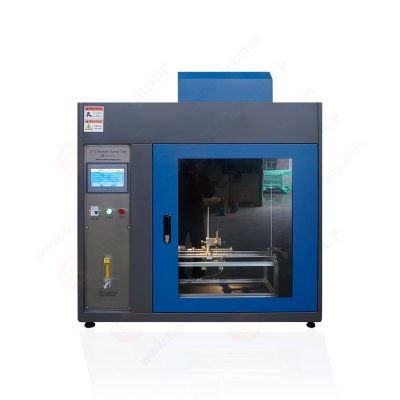
ZY-3 Needle Flame Test
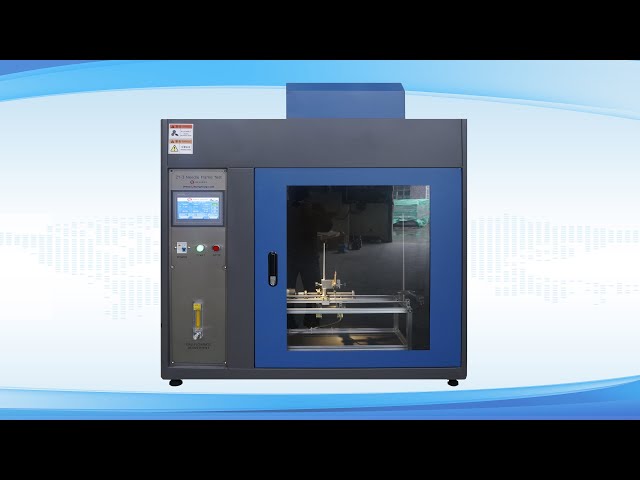
LISUN ZY‑3 Needle Flame Tester is fully developed according to hardware requirements of GB/T 5169.5‑2020 and IEC 60695‑11‑5:2016. Adopting modular structure, the unit integrates functional modules for flame temperature confirmation, automatic timing and combustion‑status data recording. The burner angle is freely adjustable; flame height and flame temperature‑rising rate satisfy all conditions of standard confirmatory test. Equipped with dual operation modes including LCD touch‑screen and remote control, it allows testers to stay away from combustion chamber and improve operational safety in high‑temperature fire‑safety tests. This instrument has two variants: cabinet‑equipped ZY‑3 and cabinet‑free ZY‑3S to adapt to different laboratory conditions. Core technical parameters are shown in Table 1.
| Parameter Item | ZY‑3 (with test cabinet) | ZY‑3S (without test cabinet) |
|---|---|---|
| Burner Angle | Adjustable, 45° for testing, vertical for calibration | Adjustable, 45° for testing, vertical for calibration |
| Flame Application Time | 0~999.9s (±0.1s), 30s as recommended default, customisable | 0~999.9s (±0.1s), 30s as recommended default, customisable |
| Burning Duration Recording | 0~999.9s (±0.1s), auto‑marking, manual pause supported | 0~999.9s (±0.1s), auto‑marking, manual pause supported |
| Flame Height | 12mm±1mm | 12mm±1mm |
| Test Gas | Butane ≥95%, optional electronic gas flowmeter | Butane ≥95%, optional electronic gas flowmeter |
| Temperature Measuring Range | 0~1000℃ | 0~1000℃ |
| Flame Temperature‑Rising Specification | Heating from 100℃±2℃ to 700℃±3℃ within 23.5s±1s | Heating from 100℃±2℃ to 700℃±3℃ within 23.5s±1s |
| Thermocouple Specification | Φ0.5 mm armored K‑type thermocouple | Φ0.5 mm armored K‑type thermocouple |
| Flame Application Mode | Single / continuous multiple flame application configurable | Single / continuous multiple flame application configurable |
| Gross Weight of Equipment | 180kg | 40kg |
According to standard requirements, Needle Flame Tester shall perform periodic confirmatory tests to verify flame temperature‑rising rate and flame height. The burner nozzle is a consumable component. Long‑time combustion may change nozzle aperture and cause deviation of flame energy, which will directly affect test results of relay and switch specimens. Therefore regular inspection and replacement are required. The machine body adopts high‑temperature coated steel structure to resist corrosive flue gas from plastic combustion and is suitable for long‑term non‑stop fire‑safety testing in laboratories.
Before formal needle‑flame test for relays or switches, operators shall study GB/T 5169.5‑2020 and corresponding product specifications and confirm flame application time. The conventional flame application time for relay and switch components is 30s. For some low‑risk components, 10s or 20s can be selected according to product standards. Specimen preconditioning shall be completed: specimens shall be stored for no less than 24 hours under ambient temperature 15℃‑35℃ and relative humidity 45%‑75% to eliminate humidity interference on combustion performance of plastic materials.
Step one: flame confirmation and debugging for Needle Flame Tester. Feed butane gas with purity no less than 95%, set burner to vertical position, adjust gas flow and calibrate flame height to 12mm±1mm. Execute flame confirmatory test by K‑type thermocouple to verify heating time from 100℃ to 700℃ meets 23.5s±1s. Confirm normal operation of timing module and burning‑duration recording function. Place standard cotton padding on white pine board below specimen station as base layer to check whether molten drips ignite surrounding combustibles. After flame confirmation, adjust burner to 45° test posture and keep stable flame status for several minutes.
Step two: clamping and positioning relay and switch specimens. Keep specimens in fully assembled state as far as possible without arbitrary disassembly to simulate real‑world service conditions. Firmly fix specimens onto sample holder and align flame tip to positions most vulnerable to arc flame attack. For relays, test points are housing near contacts and terminal bases; for switches, test points are plastic parts around contacts and inner side of switch panels. Avoid specimen edges and other positions without practical reference value, and maintain standard clearance between burner tip and specimen surface.
Step three: apply needle flame directionally. Start test program of Needle Flame Tester. The burner moves forward and brings tip of standard needle flame into contact with specimen surface and maintains specified flame application duration, normally 30s. During whole flame‑application cycle and post‑flame observation period, operators record ignition status, ignition moment, burning duration and flame spreading range of specimens, and observe whether cotton padding underneath is ignited by burning drips from specimens. Upon completion of flame application time, instrument automatically retracts burner and continues observing after‑flame and smoldering phenomena of specimens. Repeated burning on same test point is prohibited and brand‑new specimens shall be adopted for each test group.
Step four: data sorting after test completion. Fully record all phenomena including ignition status, burning duration, existence of molten drips and whether base‑layer cotton padding is ignited. After finishing all parallel specimen tests, summarise all data and judge pass/fail status of relay or switch specimens against standard clauses.
Referring to judgment rules of GB/T 5169.5‑2020, relay and switch specimens are regarded as passing needle‑flame test if either of following conditions is satisfied. First, no flame or glowing phenomenon occurs on specimens during whole needle‑flame application process and bottom cotton padding is not ignited. Second, after removal of needle flame, flame and glowing on specimens self‑extinguish within 30 seconds without complete burnout of components, and base‑layer cotton padding is not ignited by drips. If specimens keep burning longer than 30 seconds or molten drips ignite cotton padding, the specimen fails the test, indicating fire risk under tiny‑flame scenarios caused by fault arcs for such relay or switch.
In case of test failure, enterprises need to implement rectification measures, such as adopting engineering plastics with higher flame‑retardant grade, increasing housing wall thickness and adding structural barriers to prevent flame propagation to adjacent components. After material or structural modification, re‑test shall be performed with Needle Flame Tester until fire‑safety requirements of standards are satisfied.
Many enterprises directly use standard material bars instead of fully assembled relay and switch components for needle‑flame test. Pass result of material bar testing does not guarantee assembled components can pass needle‑flame test. Assembly gaps, component thickness variation and internal stress may change actual combustion behaviour. Fully assembled components should be adopted as test specimens. Flame confirmatory test for Needle Flame Tester cannot be omitted. After each gas replacement or burner nozzle replacement, flame height and temperature‑rising curve must be re‑calibrated; otherwise test results will be invalid and cannot be used for certification reports.
Ventilation shall be guaranteed in laboratory test environment. Although instrument is equipped with closed test cabinet, fire‑extinguishing protection devices shall still be prepared to cope with emergency situations such as violent specimen combustion. Remote‑control function of LISUN ZY‑3 Needle Flame Tester allows operators to finish whole test procedure away from high‑temperature flame chamber and improves personnel safety during testing. Passing needle‑flame test does not complete full fire‑hazard assessment for components. Additional safety tests such as glow‑wire test and tracking index test shall be combined to comprehensively evaluate overall fire hazard level of relays and switches.
Relays and switches are massive‑volume basic components in electrical systems, whose fire‑safety performance directly affects overall safety of household appliances, industrial control equipment and distribution systems. Needle Flame Tester can reproduce real‑world working conditions of tiny flames generated by component fault arcs under laboratory environment. The needle‑flame test apparatus is fire‑safety testing equipment designed by LISUN for electrical‑electronic, household appliance, lighting and information‑technology equipment industries. With directional flame application to specimens via standard needle‑shaped burner, this equipment precisely detects specimen ignition status, flame persistence time and flame spreading condition. It provides test data complying with international and domestic standards for product R&D, factory outgoing quality inspection and third‑party certification. LISUN ZY‑3 Needle Flame Tester fully satisfies all equipment requirements of GB/T 5169.5‑2020 and IEC 60695‑11‑5:2016 and can stably complete needle‑flame fire‑resistance test for relay and switch components. In phases of product R&D, component selection and certification submission, component manufacturers who properly utilise Needle Flame Tester can identify fire hazards of insulating parts, optimise material formulation and product structure, improve fire‑safety level of relays and switches and guarantee service safety of end‑user electrical equipment.
Tags:ZY-3Your email address will not be published. Required fields are marked *

 English
 中文简体
 English
 Русский
 Español
 Português
 Türkçe
 العربية
 Deutsch
 Polski
 Italiano
 Français
 한국어
 ไทย
 Tiếng Việt
 日本語