LM-79 Moving Detector Goniophotometer (Mirror Type C)
LSG-6000
High Precision Rotation Luminaire Goniophotometer
LSG-1890B
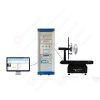
High Precision Rotation Luminaire Goniospectroradiometer
LSG-1890BCCD

Goniophotometer for Automotive and Signal Lamps
LSG-1950
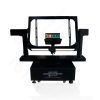
Goniophotometer for Traffic Signal Lamps
LSG-1950S
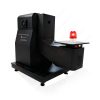
VAD Fire Alarm Visual Alert Device Goniophotometer
LSG-1930
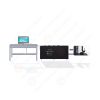
Compact Goniophotometer
LSG-1200A
LED Goniophotometer
LSG-1100
 LEDs and Luminaire Test Solutions
 LM-79 and LM-80 Test Solutions
 LED Driver Test Solutions
 Household Appliances Test Solutions
 Mobile and Network Test Solutions
 Automotive Electronics Test Solutions
 Audio-Video and IT Test Solutions
 Cable and Wire Test Solutions
 Plugs and Sockets Test Solutions
 Power Switch Test Solutions
 Transformer Test Solutions
 Electric Toys Test Solutions
 Energy Meter Test Solutions
 Motor-Operated Tool Test Solutions
Select an organization
to browse standards
Abstract:
Electromagnetic interference (EMI) is a key factor restricting the electromagnetic compatibility (EMC) of electrical and electronic products. Quantitative measurement of conducted interference and radiated interference is critical for product compliance, market access, and performance optimization. This paper takes the LISUN EMI‑9K series EMI Receiver as the research object, systematically analyzes its technical architecture, core parameters and functional characteristics, explains its application principles in quantitative measurement of conducted/radiated interference and interference source location, and demonstrates its technical support for EMC compliance testing based on industry standards and practical testing requirements. The results show that the EMI‑9K series EMI Receiver features wide frequency band, high precision and full automation, fully meets mainstream international and domestic EMC standards, and provides reliable testing methods for R&D, certification and quality control of electrical and electronic products.
1. Introduction
With the rapid development of digital and intelligent technologies, the integration and operating frequency of electrical and electronic products are continuously increasing. Electromagnetic interference generated during equipment operation has become an important factor affecting product reliability, safety and market access. Electromagnetic interference is mainly divided into conducted interference and radiated interference. The former propagates through conductive media such as power cables and signal lines, while the latter radiates through space in the form of electromagnetic waves. Both can cause abnormal equipment functions, interference to peripheral systems, and even safety accidents.
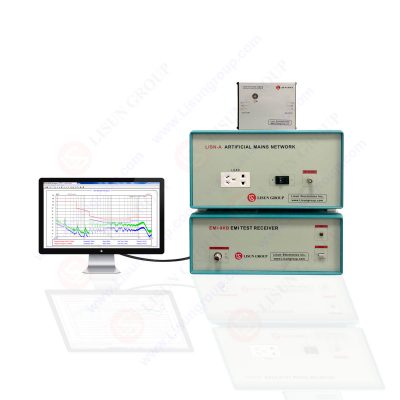
EMI-9KB EMI Test Receiver
According to the China Electronics Standardization Institute, products recalled due to non-compliance with EMC requirements accounted for 23% of domestic recalls in 2024, with direct economic losses exceeding 5 billion yuan. Major economies worldwide have made EMI testing mandatory for product launch. Products that fail the test cannot obtain CCC, CE, FCC certifications and face risks such as customs detention and market recall.
The EMI Receiver is the core equipment for quantitative measurement and compliance judgment of electromagnetic interference. Its accuracy, frequency coverage and standard compatibility directly determine the reliability of EMC test results. As a mature automatic test system in the industry, the LISUN EMI‑9K series EMI Receiver is specially optimized for conducted and radiated interference characteristics of electrical and electronic products, fundamentally solving the problem of self-interference in traditional test equipment. It supports quantitative interference measurement in the full frequency band from 9 kHz to 1 GHz, and the measurement results comply with international standard report formats, providing comprehensive technical support for EMC compliance certification and interference source location. This paper conducts a comprehensive analysis of the EMI‑9K series EMI Receiver from the aspects of system architecture, core technical parameters, functional applications and industrial value.
2. Core Architecture and Standard Adaptability of the LISUN EMI‑9K Series EMI Receiver
2.1 Overall System Architecture
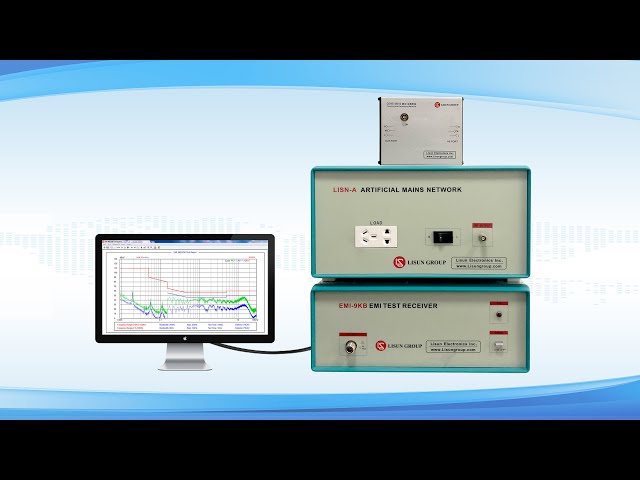
The LISUN EMI‑9K series EMI Receiver includes three sub-models: EMI‑9KA, EMI‑9KB and EMI‑9KC. All adopt an integrated architecture of “receiver + auxiliary test units + supporting software”, with differentiated configurations for conducted and radiated interference testing in different frequency bands. All sub-models are equipped with a fully enclosed EMI receiver, with a highly conductive material casing for excellent shielding performance. Advanced technology and processes eliminate the influence of equipment self-interference on test results, a long-standing industry problem.
The core configuration is designed around key links of conducted and radiated interference testing:
• The receiver is the core detection unit for acquisition, amplification and analysis of electromagnetic interference signals.
• The LISN (Line Impedance Stabilization Network) isolates grid interference and accurately collects conducted interference on the power line of the device under test.
• The CDNE‑M316 coupling/decoupling network is a key component for radiated interference testing, designed in accordance with the latest CISPR15:2018 standard, enabling accurate radiated interference testing for electrical lighting equipment in the 30 MHz–300 MHz band.
• Auxiliary units such as isolation transformers, attenuators and coaxial cables ensure stable signal transmission and standardized test environments.
2.2 Compliance with International and Domestic Standards
The EMI Receiver must be consistent with mainstream EMC standards. The LISUN EMI‑9K series EMI Receiver fully complies with CISPR, GB, FCC, EN and other series standards, covering testing requirements for various electrical and electronic products including lighting, information technology and household appliances.
Applicable standards include:
• CISPR16‑1: Specification for radio disturbance and immunity measuring apparatus and methods
• CISPR15: Limits and methods of measurement of radio disturbance characteristics of electrical lighting and similar equipment
• GB 17743: Limits and methods of measurement of radio disturbance characteristics of electrical lighting and similar equipment
• FCC Part 15 / FCC Part 18
• EN 55015, EN 55022 and other European EMC standards
Support for CISPR15:2018 allows the CDNE‑M316 to replace traditional CDN equipment, achieving an upgrade in radiated interference testing to meet the latest industry requirements.
3. Core Technical Parameters and Performance Advantages of the EMI‑9K Series EMI Receiver
3.1 Comparison of Core Technical Parameters
Table 1 Core Technical Parameters of LISUN EMI‑9K Series EMI Receiver
| Item | EMI‑9KA | EMI‑9KB | EMI‑9KC |
| Frequency Range | 9 kHz ~ 30 MHz | 9 kHz ~ 300 MHz | 9 kHz ~ 1 GHz |
| Frequency Stability | 1×10⁻⁶ | 1×10⁻⁶ | 1×10⁻⁶ |
| Frequency Resolution | 9 kHz–150 kHz: 30 Hz 150 kHz–30 MHz: 1 kHz |
9 kHz–150 kHz: 30 Hz 150 kHz–30 MHz: 1 kHz |
9 kHz–150 kHz: 30 Hz 150 kHz–30 MHz: 1 kHz |
| Measurement Error | ±2 dB | ±2 dB | ±2 dB |
| Detection Modes | PK, QP, AV | PK, QP, AV | PK, QP, AV |
| Level Range | 20 dBμV ~ 140 dBμV | 20 dBμV ~ 140 dBμV | 20 dBμV ~ 140 dBμV |
| Scan Step | 20 Hz ~ 2 MHz | 20 Hz ~ 2 MHz | 20 Hz ~ 2 MHz |
| Resolution Bandwidth | 200 Hz, 9 kHz, 120 kHz | 200 Hz, 9 kHz, 120 kHz | 200 Hz, 9 kHz, 120 kHz |
| Main Configuration | Receiver + LISN + Isolation Transformer + Attenuator + Cables | Receiver + LISN + CDNE‑M316 + Isolation Transformer + Attenuator + Cables | Receiver (built-in attenuator) + LISN + CDNE‑M316 + Isolation Transformer + Cables |
| Software | Windows 7/8/10/11, Chinese/English | Windows 7/8/10/11, Chinese/English | Windows 7/8/10/11, Chinese/English |
3.2 Core Performance Advantages
1. Wide Frequency Band and High Precision
The system covers 9 kHz to 1 GHz, meeting the conducted and radiated interference testing requirements of most electrical and electronic products. With frequency stability of 1×10⁻⁶, measurement error within ±2 dB, and frequency resolution down to 30 Hz at low frequencies, it accurately captures weak interference signals and achieves precise quantitative measurement.
2. Fully Automatic and Intelligent Operation
The system is equipped with Chinese/English bilingual software compatible with mainstream Windows systems. It supports automatic scanning, data collection and report generation in international standard formats without manual secondary processing, greatly improving EMC testing efficiency and reducing human error.
3. Pure Test Environment Without Self‑Interference
The fully enclosed structure and high-conductivity chassis, combined with advanced anti-interference technology, fundamentally eliminate electromagnetic interference generated by the test equipment itself, ensuring that test results only reflect the real interference characteristics of the EUT.
4. Modular Design and High Scalability
The system adopts a modular structure, and users can flexibly select sub-models according to testing needs. It supports expansion with supporting instruments such as LSP‑500VARC/1KVARC programmable clean AC power source, SDR‑2000B shielding room, VVLA‑30M triple loop antenna, AB‑CLP absorption clamp, etc., to meet diversified testing requirements.
4. Application Principles of the EMI‑9K Series EMI Receiver in Conducted and Radiated Interference Testing
4.1 Conducted Interference Testing
Conducted interference refers to electromagnetic interference transmitted by electrical and electronic products to the power grid or peripheral equipment through power lines and signal lines, mainly measured in the 9 kHz–30 MHz band.
The LISUN EMI‑9K series EMI Receiver uses a LISN to achieve accurate conducted interference measurement:
• The EUT is connected to the grid via the LISN, which isolates external grid interference and provides a standard power impedance.
• Conducted interference signals are accurately collected and transmitted to the EMI receiver via coaxial cables.
• The receiver amplifies, detects and analyzes signals using Peak (PK), Quasi-Peak (QP) and Average (AV) detectors.
• The interference voltage is quantified and compared with standard limits to judge compliance.
EMI‑9KA is suitable for basic conducted tests, while EMI‑9KB and EMI‑9KC integrate both conducted and radiated test functions, greatly improving efficiency.
4.2 Radiated Interference Testing
Radiated interference is electromagnetic interference emitted into space, mainly measured from 30 MHz to 1 GHz, requiring high shielding performance and signal acquisition capability.
The LISUN EMI‑9K series EMI Receiver uses the CDNE‑M316 coupling/decoupling network compliant with CISPR15:2018 to achieve accurate radiated interference testing from 30 MHz to 300 MHz. The EMI‑9KC extends coverage to 1 GHz for high-frequency products.
Working principle:
• The EUT is placed in a standardized test environment (e.g., with SDR‑2000B shielding room).
• The CDNE‑M316 converts radiated electromagnetic waves into electrical signals.
• The receiver performs spectrum analysis and quantitative measurement.
• The VVLA‑30M triple loop antenna can be used to supplement low-frequency radiated testing from 9 kHz to 30 MHz.
High resolution and accurate detection help locate peak frequency points, supporting interference source analysis and product optimization.
4.3 Interference Source Location and Product Optimization
The LISUN EMI‑9K series EMI Receiver not only judges compliance but also provides a scientific basis for interference source location through accurate spectrum analysis and data collection.
By automatic scanning, the system obtains interference intensity at different frequencies and generates a spectrum graph. Engineers can identify core interference components such as switching power supplies, high-frequency oscillators and antenna modules according to peak frequencies combined with circuit design and component layout.
For example, if excessive radiated interference near 300 MHz is detected in an LED lighting product, the interference source can be traced to the high-frequency switching module of the LED driver. Engineers can then add EMI filters, optimize PCB layout, install metal shielding covers and other improvements. The high-precision measurement of ±2 dB verifies the effectiveness of rectification, forming a closed loop of “test – locate – modify – verify”.
5. Industrial Application Value and Development Significance
5.1 Meeting Core Needs of R&D and Certification
In the R&D stage, the EMI Receiver enables early detection of EMC defects, avoiding large-scale modifications in the later stage and greatly reducing R&D costs. Data shows that pre-launch EMC testing can reduce later modification costs by about 70%.
In the certification stage, test reports compliant with international standards can be directly used for CCC, CE, FCC and other certifications, providing a “passport” for global market access.
5.2 Improving Standardization of EMC Testing
As a standardized EMC test instrument, the LISUN EMI‑9K series EMI Receiver standardizes testing procedures, improves result accuracy and unifies report formats, reducing distortion caused by insufficient equipment accuracy or incompatible standards. Its automatic operation lowers professional requirements for operators and promotes overall EMC testing capabilities.
5.3 Adapting to Complex Electromagnetic Environments
With the development of 5G, IoT and AI, operating frequencies are increasing and electromagnetic environments are becoming more complex. The 9 kHz–1 GHz wide coverage and support for the latest CISPR15:2018 standard meet the testing needs of high-frequency, highly integrated products. Its modular design supports future upgrades for higher frequency and more complex EMC test requirements.
6. Conclusion
Quantitative measurement of electromagnetic interference is the core link of EMC compliance judgment and performance optimization for electrical and electronic products, and the EMI Receiver is the key equipment to realize this function.
With its fully enclosed anti-interference design, 9 kHz–1 GHz wide frequency band, ±2 dB high precision and full compliance with international and domestic standards, the LISUN EMI‑9K series EMI Receiver achieves accurate quantitative measurement of conducted and radiated interference. It provides reliable test data for product certifications such as CCC, CE and FCC, and supports interference source location and EMC performance optimization through precise spectrum analysis.
The integrated architecture and fully automatic operation greatly improve the efficiency and standardization of EMC testing. It can be widely used in R&D, production and quality control of lighting, IT, household appliances and other electrical and electronic products. Under the background of increasingly complex electromagnetic environment and continuously upgraded EMC standards, the LISUN EMI‑9K series EMI Receiver provides important technical support for the high-quality development of the electrical and electronic industry and helps products compete legally in both domestic and international markets.
Tags:EMI-9KBYour email address will not be published. Required fields are marked *

 English
 中文简体
中文简体 English
 Русский
 Español
 Português
 Türkçe
 العربية
 Deutsch
 Polski
 Italiano
 Français
 한국어
한국어 ไทย
ไทย Tiếng Việt
 日本語
日本語