LM-79 Moving Detector Goniophotometer (Mirror Type C)
LSG-6000
High Precision Rotation Luminaire Goniophotometer
LSG-1890B
High Precision Rotation Luminaire Goniospectroradiometer
LSG-1890BCCD

Goniophotometer for Automotive and Signal Lamps
LSG-1950
Goniophotometer for Traffic Signal Lamps (Economical Model)
LSG-1950S
VAD Fire Alarm Visual Alert Device Goniophotometer
LSG-1930
Goniophotometer for Airfield Lighting
LSG-1940
Compact Goniophotometer
LSG-1200A
LED Goniophotometer
LSG-1100
Near Field Moving Detector Goniophotometer
LSG-1900B
 LEDs and Luminaire Test Solutions
 LM-79 and LM-80 Test Solutions
 LED Driver Test Solutions
 Household Appliances Test Solutions
 Mobile and Network Test Solutions
 Automotive Electronics Test Solutions
 Audio-Video and IT Test Solutions
 Cable and Wire Test Solutions
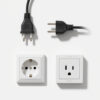 Plugs and Sockets Test Solutions
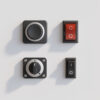 Power Switch Test Solutions
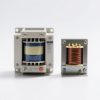 Transformer Test Solutions
 Electric Toys Test Solutions
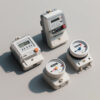 Energy Meter Test Solutions
 Motor-Operated Tool Test Solutions
Select an organization
to browse standards
Abstract
Overload faults of resistors and power components inside electrical and electronic equipment will generate high‑temperature heat sources. High temperature contacting surrounding plastic insulating parts may bring fire‑ignition safety risks. The IEC 60695‑2‑10 Glow Wire Test Method is a general fire‑hazard test standard formulated by the International Electrotechnical Commission. It simulates high‑temperature contact between overheated internal components and non‑metallic parts of appliances, and is a mandatory test procedure for safety certification of household appliances, lighting products and electrical components. The glow‑wire test apparatus is high‑precision testing equipment developed by LISUN for evaluating flame‑retardant performance of electrical & electronic products, household appliances, lighting devices and plastic components. By simulating the scenario of “high‑temperature contact from glow wire”, it tests ignitability, ignition temperature, flammability and glow‑wire flammability index of materials under specified thermal load, and provides critical data support for product fire‑safety design and compliance certification. Taking LISUN ZRS‑3H glow wire tester as the research object, this paper illustrates standard connotation, key instrument indicators, complete test procedures, result judgment and practical engineering points of the IEC 60695‑2‑10 Glow Wire Test Method. It delivers practical operation references for domestic manufacturers and third‑party testing laboratories to verify product fire safety.
During long‑term operation of household appliances, lighting luminaires, switches, sockets and consumer electronic products, once components suffer overload or short‑circuit faults, the component surface will produce high temperature of several hundred degrees Celsius. Heat transfers to surrounding plastic housings, insulating brackets and other non‑metallic parts, which may cause thermal decomposition and ignition of materials and further trigger whole‑product fire accidents. Since actual fault‑ignition scenarios are difficult to reproduce directly, the IEC 60695‑2‑10 Glow Wire Test Method proposes a standardized laboratory simulation solution. An electrically heated nichrome glow wire is adopted to simulate faulty high‑temperature heat source and act on specimen surface with controlled temperature, contact pressure and contact duration, so as to evaluate anti‑ignition capability of finished products or plastic materials.
The IEC 60695‑2‑10 Glow Wire Test Method itself does not specify independent pass‑fail criteria for products. It serves as the basic general procedure of the complete glow‑wire test system and needs to be used together with IEC 60695‑2‑11 finished‑product flammability test, IEC 60695‑2‑12 glow‑wire flammability index GWFI and IEC 60695‑2‑13 glow‑wire ignition temperature GWIT. Its Chinese equivalent standard is GB/T 5169.10‑2023. It is widely quoted by product safety standards including GB/T 4706.1 household appliance safety, GB 7000.1 luminaire safety and GB/T 2099.1 switch & socket safety, and becomes an important fire‑safety item for 3C, CQC, UL and other market‑access certifications. Enterprises conducting tests according to the IEC 60695‑2‑10 Glow Wire Test Method in R&D phase can screen flame‑retardant materials in advance, optimize internal structural layout of products and avoid subsequent certification failures as well as fire hazards in end‑user application.
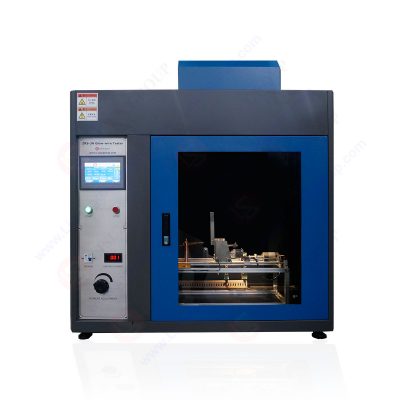
ZRS-3H Glow-wire Test Apparatus
LISUN ZRS‑3H glow wire tester is designed in strict accordance with hardware constraints specified by the IEC 60695‑2‑10 Glow Wire Test Method. This instrument can perform glow‑wire flammability test for finished products as well as material‑grade determination of GWFI and GWIT for engineering plastics. Equipped with closed‑loop temperature control system and armored K‑type thermocouple for temperature acquisition, it allows precise setting of glow‑wire contact pressure and heating duration. When heating time expires, the glow wire will automatically separate from specimens. It also supports automatic recording of ignition time and flame extinction time to reduce manual observation errors and guarantee repeatability of test data. ZRS‑3H series includes two variants: cabinet‑integrated ZRS‑3H and cabinet‑free ZRS‑3HS. Core technical parameters are shown in Table 1.
| Parameter Item | ZRS‑3H (with test cabinet) | ZRS‑3HS (without test cabinet) |
|---|---|---|
| Heating Temperature | Room temperature ~1100℃ continuously adjustable; temperature accuracy ±3℃, resolution ±1℃ | Room temperature ~1100℃ continuously adjustable; temperature accuracy ±3℃, resolution ±1℃ |
| Glow Duration Time | 0.1s~999.9s, accuracy ±0.1s | 0.1s~999.9s, accuracy ±0.1s |
| Ignition Time Recording | 0.1s~999.9s, automatic recording supported, manual pause available | 0.1s~999.9s, automatic recording supported, manual pause available |
| Flame Extinction Time Recording | 0.1s~999.9s, automatic recording supported, manual pause available | 0.1s~999.9s, automatic recording supported, manual pause available |
| Glow‑wire Pressure on Specimen | 0.95N±0.1N, penetration depth limit 7 mm | 0.95N±0.1N, penetration depth limit 7 mm |
| Glow‑wire Specification | φ4 mm diameter nichrome alloy (Ni 80%, Cr 20%) | φ4 mm diameter nichrome alloy (Ni 80%, Cr 20%) |
| Thermocouple Specification | φ1 mm armored K‑type NiCr/NiAl thermocouple | φ1 mm armored K‑type NiCr/NiAl thermocouple |
| Specimen Separation Function | Automatic specimen separation upon completion of glow duration | Automatic specimen separation upon completion of glow duration |
| Operation & Display | LCD touch screen + indicator lamps + remote control operation | LCD touch screen + indicator lamps + remote control operation |
| Gross Weight of Equipment | 180kg | 40kg |
According to mandatory requirements of the IEC 60695‑2‑10 Glow Wire Test Method, temperature measurement, contact‑pressure control and timing system of the instrument shall be periodically calibrated. The glow wire is a consumable part. Deformation and oxidation will occur after multiple high‑temperature tests. It must be replaced timely once obvious dimension change appears; otherwise deviation of temperature and contact conditions will directly cause distorted test results. ZRS‑3H adopts high‑temperature resistant coating for overall steel structure, suitable for long‑term continuous fire‑safety testing in laboratories.
Before formal test execution, operators shall fully study the IEC 60695‑2‑10 Glow Wire Test Method as well as corresponding product‑specific standards, confirm test temperature and glow contact duration, clarify whether this test is for finished‑product test or material‑grade test, and complete specimen preconditioning. Specimens shall be conditioned under temperature‑humidity conditions specified by standards to eliminate interference of ambient humidity on material flame‑retardant performance.
Step one: instrument inspection and temperature preheating. Check appearance of glow wire and installation status of thermocouple, confirm normal operation of pressure‑control mechanism and place underlying cotton padding. Set target test temperature of instrument and heat up the glow wire until temperature is fully stabilized. The IEC 60695‑2‑10 Glow Wire Test Method requires stable temperature before contacting specimens to avoid test‑condition drift caused by temperature fluctuation. Meanwhile verify normal function of automatic timing module and automatic separation mechanism.
Step two: specimen clamping and positioning. Fix specimen vertically onto sample fixture and determine contact point of glow wire. This contact point shall simulate real heat‑source contact location inside product instead of specimen edges, holes or other special positions. Adjust mechanical travel to ensure glow wire can apply vertical pressure onto specimen surface.
Step three: apply glow‑wire contact. Start test procedure, move glow wire forward to contact specimen and maintain standard‑specified contact pressure as well as contact duration; default contact time is generally 30s. During whole contact process and post‑contact observation period, record whether specimen ignites, ignition time, flame duration and observe whether molten drips can ignite cotton padding placed underneath. When glow timing finishes, instrument automatically retracts glow wire and continue to observe subsequent burning or smoldering phenomena of specimen.
Step four: post‑test recording and retest. Brand‑new specimens shall be adopted for each test group. Repeated test on carbonized burnt position is prohibited. Fully record all phenomena including flame existence, flame duration, whether cotton padding is ignited and persistent smoldering of specimen. If GWFI or GWIT material test is performed, multiple test groups with gradient temperature adjustment shall be implemented to finally obtain glow‑wire flammability index or glow‑wire ignition temperature of tested material.

The IEC 60695‑2‑10 Glow Wire Test Method only defines instrument requirements and general operating procedures. Pass/fail conclusion shall refer to corresponding product standards. Taking common finished‑product test for household appliances as an example, two major judgment dimensions are adopted. First, after glow wire is retracted, specimen flame shall self‑extinguish within 30 seconds. Second, molten drips from specimen shall not ignite bottom cotton padding. If both conditions are satisfied, the test under current temperature is regarded as passed. If specimen keeps burning beyond specified time or drips ignite cotton padding, the test is deemed failed, which means corresponding component has fire risk under fault high temperature.
For material‑grade testing, GWFI and GWFI parameters are obtained through multi‑gradient temperature tests. GWFI indicates that three specimens all meet extinction requirements under such temperature; GWIT refers to temperature at which material just avoids ignition. During product design, enterprises shall select materials with GWFI level higher than actual fault temperature according to risk level of components inside complete equipment to reduce fire risk from material source.
Glow‑wire test apparatus is widely used for electrical‑electronic products, household appliances, lighting equipment, switches & sockets, automotive electronics and third‑party testing laboratories. Test temperatures vary for different products. Low‑risk components generally adopt 550℃ or 650℃. Plastic parts adjacent to power heating components and fault‑current loops often require high‑temperature tests of 750℃, 850℃ or even 960℃. A common misunderstanding among many enterprises is that they only focus on GWFI parameters from material data‑sheets while ignoring finished‑product verification following the IEC 60695‑2‑10 Glow Wire Test Method. Qualified material sample does not guarantee assembled component can pass test. Assembly gaps, mechanical stress and thickness variation may change actual flame‑retardant performance.
During testing, laboratories shall implement ventilation and fire‑protection measures. Although instrument is equipped with test cabinet, fire extinguishing devices shall still be prepared. Glow wire and thermocouple are consumable parts which should be inspected after each test and calibrated periodically to ensure instrument hardware continuously meets requirements of the IEC 60695‑2‑10 Glow Wire Test Method. Remote‑control function of LISUN ZRS‑3H allows operators to stay away from high‑temperature test chamber and improves operational safety for long‑time continuous testing.
The IEC 60695‑2‑10 Glow Wire Test Method is a fundamental and important test specification in global electrical product fire‑safety domain. It establishes standardized laboratory method for simulating ignition risks caused by appliance internal overheating. The glow‑wire test apparatus is high‑precision testing equipment developed by LISUN for evaluating flame‑retardant performance of electrical & electronic products, household appliances, lighting devices and plastic components. LISUN ZRS‑3H glow wire tester fully implements all technical requirements of the standard regarding temperature, pressure, timing and mechanical actions. It can complete finished‑product flammability test as well as material‑grade determination of GWFI and GWIT. In phases of product R&D, component selection and certification submission, enterprises who correctly understand and comply with the IEC 60695‑2‑10 Glow Wire Test Method can effectively identify fire hazards of non‑metallic components, optimize material selection and structural design, improve fire‑safety level of electrical products and guarantee end‑users’ safety in practical application.
Tags:ZRS-3HYour email address will not be published. Required fields are marked *

 English
 中文简体
 English
 Русский
 Español
 Português
 Türkçe
 العربية
 Deutsch
 Polski
 Italiano
 Français
 한국어
 ไทย
 Tiếng Việt
 日本語