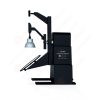
LM-79 Moving Detector Goniophotometer (Mirror Type C)
LSG-6000
High Precision Rotation Luminaire Goniophotometer
LSG-1890B
High Precision Rotation Luminaire Goniospectroradiometer
LSG-1890BCCD

Goniophotometer for Automotive and Signal Lamps
LSG-1950
Goniophotometer for Traffic Signal Lamps
LSG-1950S
VAD Fire Alarm Visual Alert Device Goniophotometer
LSG-1930
Compact Goniophotometer
LSG-1200A
LED Goniophotometer
LSG-1100
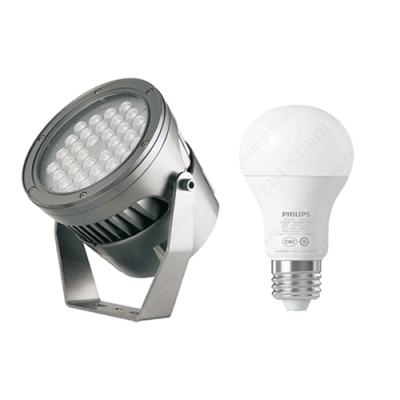 LEDs and Luminaire Test Solutions
 LM-79 and LM-80 Test Solutions
 LED Driver Test Solutions
 Household Appliances Test Solutions
 Mobile and Network Test Solutions
 Automotive Electronics Test Solutions
 Audio-Video and IT Test Solutions
 Cable and Wire Test Solutions
 Plugs and Sockets Test Solutions
 Power Switch Test Solutions
 Transformer Test Solutions
 Electric Toys Test Solutions
 Energy Meter Test Solutions
 Motor-Operated Tool Test Solutions
Select an organization
to browse standards
Abstract: For lighting products such as LED lights, plant grow lights, outdoor street lights and floodlights exported overseas and applied in engineering projects, complete spatial light distribution data is essential. As a globally universal standard data carrier for luminaire light distribution, IES testing documents serve as core technical files for lighting simulation, product certification and project acceptance. The LISUN LSG-6000 rotating-probe vertical goniophotometer (full-space goniophotometer) is a professional photometric testing instrument compliant with LM-79, CIE, EN and Chinese national standards. It can automatically complete scanning of 3D luminous intensity distribution curves with customizable testing distances, supporting testing of a wide range of light sources including LED sources, HID sources, plant grow lights, indoor and outdoor lighting, street lights and floodlights. After testing, compliant IES testing documents can be generated directly, together with multi-format data such as LDT and CIE files, forming a complete data chain covering luminaire R&D, optical optimization, lighting design and overseas certification. Taking the LISUN LSG-6000 LM-79 vertical goniophotometer system as the research object, this paper introduces the structural principle of the equipment and differences among various models, analyzes its technical advantages and multi-industry application scenarios for generating IES testing documents, and provides references for lighting manufacturers and third-party testing institutions to select light distribution testing solutions.
With the rapid development of solid-state lighting industry, optical design for LED street lights, plant grow lights, industrial floodlights and indoor commercial lighting luminaires has become increasingly refined. Total luminous flux alone cannot fully evaluate the spatial lighting performance of luminaires. The IES testing document format formulated by the Illuminating Engineering Society of North America (IESNA) standardizes the storage of core optical parameters of luminaires, including full-space luminous intensity distribution, beam angle, luminous flux and UGR glare value. These data can be directly imported into professional lighting design software such as Dialux and AGi32 for lighting simulation of indoor spaces, roads and factories. Meanwhile, IES testing documents are mandatory materials required for North American DLC, ENERGY STAR certification, EU lighting certification and domestic municipal lighting project acceptance.
Traditional horizontal goniophotometers suffer from thermal balance drift caused by luminaire rotation, limitations on installation of large-sized luminaires, and unstable output of standard IES testing documents, failing to meet the full-space photometric measurement requirements specified in Clause 7.3.1 of LM-79-19 and LM-79-24 standards. The LISUN LSG-6000 rotating-probe vertical goniophotometer is a newly upgraded full-space testing device adopting the “stationary luminaire + surrounding probe scanning” structure. It automatically collects 3D luminous intensity distribution curves with customizable testing distances to adapt to various light sources and luminaires. Equipped with standardized algorithms built into testing software, the system can export compliant IES testing documents with one click. Widely deployed in R&D laboratories, production line quality inspection stations and third-party optical testing institutions of lighting enterprises, it solves common industry challenges including incomplete collection of light distribution data, non-standard IES testing document formats and poor compatibility with various luminaire types.
Equipment Structure and Testing Principle
The complete LSG-6000 system consists of vertical mechanical scanning frame, Mitsubishi servo drive module, Class L high-precision constant-temperature photometric probe, cross laser alignment assembly and bilingual PC measurement & control software. It can be upgraded to LSG-6000CCD spatial spectral radiance testing system with optional LPCE-2 spectroradiometer, which simultaneously measures spatial color temperature, PAR/PPF plant photosynthetic parameters and generates IES testing documents embedded with spectral information.
Core structural advantages of the equipment:
1. Stationary luminaire during operation: Near-field probes and reflectors rotate circularly around the luminaire while the luminaire remains fixed. Temperature drift of light sources caused by rotational disturbance is avoided, ensuring authentic and stable 3D luminous intensity distribution data and guaranteeing the data accuracy of IES testing documents.
2. High-precision angle control system: Equipped with Japanese Mitsubishi servo motors and high-precision German decoders, it achieves angular accuracy of 0.05° and resolution of 0.001°. The γ-axis supports full-space blind-spot-free scanning within ±180° (0~360°), capturing subtle variations of luminous intensity at different angles and completing luminous intensity arrays at vertical and horizontal angles inside IES testing documents.
3. Cross laser positioning and calibration: Rapidly centers luminaires of different dimensions, eliminates light distribution errors induced by installation offset, and ensures repeatability of IES testing documents generated in each measurement.
4. Customizable testing distance: The optical path length can be customized according to customer darkroom space and luminaire specifications, meeting differentiated testing demands for small spotlights, large floodlights and extra-high street lights.

Figure: Type C goniophotometer
Specification Comparison Table of LISUN LSG-6000 Series Models
Luminaires with different sizes and power ratings correspond to segmented models. All models support automatic generation of standard IES testing documents. The specifications are listed as follows:
| LISUN Model | Max. Luminaire Dimension (Diameter × Thickness) | Max. Load Capacity | Electrical Test Spec. | Minimum Required Darkroom Height | Application Scenarios & Features for IES Testing |
| LSG-6000 (Standard Type) | Φ1600×600mm | 50kg | 600V/10A AC/DC | 4.1m | LED indoor lights, panel lights, medium & small street lights, basic standard IES testing document output |
| LSG-6000S (Compact Type) | Φ1200×500mm | 40kg | 600V/10A AC/DC | 3.0m | Spotlights, plant grow lights, low-power HID light sources, lightweight fast generation of IES testing documents |
| LSG-6000B (Large Type) | Φ1800×800mm | 60kg | 600V/10A AC/DC | 4.7m | Industrial high bay lights, garden lights, medium floodlights, complete light distribution IES testing documents for large luminaires |
| LSG-6000L (Extra Large Type) | Φ2000×900mm | 80kg | 600V/10A AC/DC | 5.2m | High-power projectors, tunnel lights, high-mast street lights, high-precision IES testing documents for full-space wide-angle measurement |
| CCD Spectral Version of Each Model | Consistent with corresponding base model | Corresponding load capacity | 600V/10A AC/DC | Corresponding height | Supports export of extended IES testing documents embedded with spatial spectrum and PPF photosynthetic parameters |
As shown in the table, all models of LSG-6000 series support automatic scanning of 3D luminous intensity curves and standardized export of IES testing documents. Enterprises can select appropriate models based on luminaire dimensions and darkroom conditions. One single set of equipment is capable of light distribution testing for all types of lighting products without additional instruments.
Core Technical Support for Generating Standard IES Testing Documents
1. Built-in multi-standard algorithms: The software integrates calculation logics of LM-79-19, LM-79-24, CIE 121, EN13032-1, GB/T 24824 and other standards. It automatically calculates luminous intensity, zonal luminous flux, beam angle, UGR glare, upward/downward luminous flux ratio and other parameters. All data are written into IES testing documents complying with IESNA specifications to satisfy document audit requirements of North American DLC and ENERGY STAR certification.
2. Synchronous multi-format output: Upon completion of one scanning cycle, IES testing documents, LDT, CIE and CSV raw data files can be exported simultaneously. The IES testing documents can be directly imported into mainstream lighting design software including DiaLux, Relux and AGi32 without secondary format conversion.
3. Extended IES testing documents dedicated for plant lighting: The LSG-6000CCD version synchronously measures spatial distribution of PAR, PPF and PPFD, embedding photosynthetic photon flux data into IES testing documents to meet overseas testing requirements of plant factories and greenhouse grow lights.
4. Expansion for UV light sources: Matched with PHOTO-UVA/UVB/UVC photometric probes, the system can test UV disinfection luminaires and generate special IES testing documents for UV light distribution, applicable to medical and disinfection lighting testing scenarios.
R&D Testing for LED Indoor and Commercial Lighting
During the R&D phase of panel lights, downlights, track spotlights and magnetic track lights, engineers adopt LSG-6000 to scan 3D luminous intensity distribution and automatically generate IES testing documents for import into lighting simulation software. It simulates illuminance uniformity and UGR glare level in offices, shopping malls and classrooms, realizing early optimization of reflectors and lens light distribution structures. Standard IES testing documents generated by testing can be used as tender materials for domestic municipal projects and meet acceptance requirements of GB/T 22907 luminaire photometric testing standard, avoiding tender failure caused by non-standard light distribution documents.
Testing for Outdoor Lighting such as Street Lights, Floodlights and Tunnel Lights
Road lighting and industrial projectors impose strict requirements on beam angle, isolux curve and maximum height-spacing ratio. LSG-6000 completes full-space scanning to collect complete 0~360° luminous intensity data, and the generated IES testing documents accurately restore road lighting attenuation and light spot diffusion effect. Before submitting samples to third-party laboratories, enterprises can obtain compliant IES testing documents via pre-testing on this equipment, rapidly rectify non-compliant light distribution problems and smoothly pass LM-79 North American export certification to reduce repeated testing costs.
Testing for Plant Lighting and Special HID Light Sources
There lacks unified light distribution reference standards for plant grow lights, full-spectrum supplementary lights and metal halide HID light sources. LSG-6000CCD can simultaneously collect spatial distribution of photon flux and generate customized IES testing documents embedded with PPF parameters, providing digital support for lighting scheme design of greenhouses and plant factories. For high-power HID high bay lights, full-angle scanning eliminates missing data in IES testing documents caused by blind scanning zones of traditional instruments.
Third-party Optical Testing and Certification Laboratories
Third-party certification bodies such as CQC, TÜV and SGS are widely equipped with LSG-6000 systems. The IES testing documents generated by the equipment fully conform to international standard formats specified by LM-79 and possess legal validity together with test reports, directly supporting global market access including CE, FCC and DLC certification. Supported by visualized 3D luminous intensity curves, the equipment helps enterprises locate light distribution defects and provide technical services for lens and reflector optimization, expanding value-added business of testing institutions.

1. Standardized data connecting design and certification: Automatic scanning generates compliant IES testing documents, eliminating manual sorting of light distribution data and format conversion. 3D luminous intensity curves and IES testing documents are output as a complete set, realizing consistent data for R&D, design and certification and greatly shortening product launch cycles.
2. Compatibility with full-range luminaire types to lower equipment investment: One instrument covers indoor lights, street lights, plant lights, UV disinfection lights and HID light sources. Multiple models adapt to luminaires of different sizes. A single system completes light distribution testing for full product lines without purchasing multiple goniophotometers for IES testing document generation.
3. Avoid risks in certification and project acceptance: The equipment collects data strictly in accordance with LM-79 and CIE standards. IES testing documents feature complete parameters and standard formats, preventing rejection by overseas certification institutions and non-acceptance in domestic engineering projects, and minimizing rework and after-sales losses for enterprises.
4. High-precision data supporting optical optimization: Angular accuracy of 0.05° fully restores details of 3D luminous intensity distribution. Massive luminous intensity arrays inside IES testing documents can reversely locate light distribution defects such as light spot offset, excessive glare and inconsistent beam angles, guiding iterative optimization of optical structures.
Against the backdrop of increasingly strict optical regulations in the global lighting industry, IES testing documents have become an indispensable standardized data carrier for luminaire R&D, engineering implementation and overseas certification. Featuring stationary luminaire scanning structure, high-precision servo control system and built-in multi-standard algorithms, the LISUN LSG-6000 rotating-probe vertical goniophotometer (full-space goniophotometer) can automatically complete measurement of 3D luminous intensity distribution curves with customizable testing distances. It supports all types of products including LED sources, plant grow lights, HID sources, indoor & outdoor lighting, street lights and floodlights, and exports compliant IES testing documents and multi-format light distribution data with one click. Suitable for R&D centers, production inspection stations of lighting manufacturers and third-party optical testing institutions, the equipment can accurately collect full-space photometric parameters and output universally adopted standardized IES testing documents. It fundamentally solves challenges including distorted light distribution data, non-standard document formats and poor compatibility for multi-type luminaire testing, delivering outstanding value for industrial promotion and engineering applications. With market expansion of special lighting such as plant lighting and UV disinfection lighting, LSG-6000CCD model with spectral testing capability, which generates extended IES testing documents embedded with spectral parameters, will become mainstream testing equipment for high-end special lighting.
Tags:LSG-6000Your email address will not be published. Required fields are marked *
 English
 中文简体
中文简体 English
 Русский
 Español
 Português
 Türkçe
 العربية
 Deutsch
 Polski
 Italiano
 Français
 한국어
한국어 ไทย
ไทย Tiếng Việt
 日本語
日本語