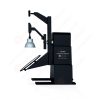
LM-79 Moving Detector Goniophotometer (Mirror Type C)
LSG-6000
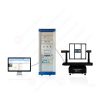
High Precision Rotation Luminaire Goniophotometer
LSG-1890B
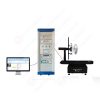
High Precision Rotation Luminaire Goniospectroradiometer
LSG-1890BCCD

Goniophotometer for Automotive and Signal Lamps
LSG-1950

Goniophotometer for Traffic Signal Lamps (Economical Model)
LSG-1950S
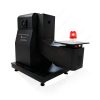
VAD Fire Alarm Visual Alert Device Goniophotometer
LSG-1930
Goniophotometer for Airfield Lighting
LSG-1940

Compact Goniophotometer
LSG-1200A
LED Goniophotometer
LSG-1100
Near Field Moving Detector Goniophotometer
LSG-1900B
 LEDs and Luminaire Test Solutions
 LM-79 and LM-80 Test Solutions
 LED Driver Test Solutions
 Household Appliances Test Solutions
 Mobile and Network Test Solutions
 Automotive Electronics Test Solutions
 Audio-Video and IT Test Solutions
 Cable and Wire Test Solutions
 Plugs and Sockets Test Solutions
 Power Switch Test Solutions
 Transformer Test Solutions
 Electric Toys Test Solutions
 Energy Meter Test Solutions
 Motor-Operated Tool Test Solutions
Select an organization
to browse standards
Abstract:
With the rapid development of new energy vehicles, energy storage power stations and consumer lithium battery industries, the safety, consistency and life assessment of battery cells and battery packs have become the industry’s key concerns. Internal resistance and DC voltage are the two core parameters characterizing battery health status. Battery test equipment can achieve synchronous acquisition of battery resistance and voltage data, completing test tasks in production sorting, laboratory R&D, operation and maintenance detection and other scenarios. Focusing on the LISUN LS5562 high-voltage, high-precision battery internal resistance tester, this paper analyzes the technical principles, key parameters, standard compliance and engineering application scenarios of battery test equipment, compares the technical indicators of the same product series, and discusses the practical value of high-voltage battery test equipment in the testing of power batteries, energy storage batteries and fuel cells, providing a reference basis for battery production quality inspection and R&D test equipment selection.
Introduction:
Against the background of the rapid expansion of the new energy industry, the output of energy storage devices such as lithium-ion batteries, hydrogen fuel cells, lead-acid batteries and supercapacitors continues to rise. From single cells to assembled PACKs, battery products place higher requirements on the testing stage. Battery internal resistance can reflect problems such as internal electrode aging, electrolyte degradation and welding defects; open-circuit voltage directly reflects the battery state of charge. The combination of the two is an important basis for judging battery quality. Traditional two-wire detection schemes are prone to introducing lead resistance and contact resistance. For low internal resistance batteries in the milliohm range, the measurement error is large, making it impossible to meet the testing requirements of high-voltage power batteries and high-speed production lines.
As the core instrument for battery quality control, battery test equipment is widely used in cell factory-out sorting, cycle life tests, battery pack maintenance detection, failure analysis and other tasks. The AC four-terminal (Kelvin) measurement technique is the mainstream high-precision battery internal resistance testing method. It makes the current excitation loop and voltage sampling loop independent of each other, eliminating the measurement deviation caused by test leads, achieving micro-ohm-level internal resistance measurement, while synchronously collecting DC voltage data to meet the test requirements of domestic and international standards such as GB/T 31484-2015 and IEC 62133-1:2017. The LISUN LS5562 high-voltage, high-precision battery internal resistance tester is battery test equipment developed for the battery industry. It can simultaneously complete resistance and voltage parameter detection, support automatic production line networking, and adapt to testing needs of high-voltage series-connected battery packs, button batteries, supercapacitors, fuel cells and other samples. For details, please refer to the product link: [https://www.lisungroup.cn/products/8724.html](https://www.lisungroup.cn/products/8724.html).
1 Technical Principle of Battery Internal Resistance and Voltage Synchronous Detection
Battery test equipment adopts the AC four-terminal measurement (Kelvin four-wire method) for internal resistance testing. The test excitation is a 1kHz AC small signal: one pair of terminals outputs the AC excitation current, and the other pair collects the voltage signal at both ends of the battery. The input impedance of the voltage sampling loop is extremely high, and almost no current flows through the loop, so the resistance caused by test leads and probe contact is not included in the measured battery internal resistance, achieving accurate measurement at the milliohm or even micro-ohm level. The instrument synchronously collects the battery DC voltage, enabling synchronous output of the two parameters, resistance R and voltage V.
The internal resistance indicator can sensitively reflect the internal state of the battery: when the battery ages, the electrolyte decays, or the tab welding is defective, the internal resistance value rises significantly; voltage is used to judge cell consistency. If the voltage dispersion of single cells in a multi-cell battery pack is too large, it will shorten the life of the whole pack and pose a risk of thermal runaway safety hazards. Only when battery test equipment acquires both internal resistance and voltage data at the same time can it complete HI/IN/LO grading judgment and distinguish qualified, slightly high and unqualified samples. An ordinary multimeter can only complete voltage measurement and has insufficient internal resistance measurement accuracy, so it cannot replace dedicated battery test equipment for quality judgment.
The LS5562 battery test equipment integrates AC internal resistance measurement and DC voltage measurement. It is built in with a comparator and supports 10-gear sorting. It can make independent threshold judgment on resistance and voltage, and can also realize comprehensive logic judgment combining the two parameters, outputting PASS/FAIL results and adapting to automated production line sorting. It also has a test lead contact check function. When the probes are in poor contact, the abnormality can be identified to avoid erroneous test data on the production line and improve the reliability of batch detection.
2 Technical Parameter Analysis of the LISUN LS5562 Battery Test Equipment
The LISUN LS5562 belongs to the high-voltage, high-precision battery test equipment, and the same series includes the LS5560 and LS5562A models. The LS5562A supports up to 300VDC high-voltage input and is suitable for high-voltage battery module testing, while the rated input voltage of the LS5560 and LS5562 is 60VDC. The instrument is equipped with a 4.3-inch color LCD screen, displaying resistance R and voltage V simultaneously; the minimum resolution of internal resistance can reach 0.1μΩ, the voltage resolution is up to 10μV, and the fastest test speed is 100 times/second, meeting the requirements of high-speed mass production line sampling and sorting.
Table 1 Comparison of main specification parameters of LISUN LS5560, LS5562 and LS5562A
| Parameter | LS5560 | LS5562 | LS5562A |
| Test parameters | RV/R/V (R: AC resistance, V: DC voltage) | RV/R/V (R: AC resistance, V: DC voltage) | RV/R/V (R: AC resistance, V: DC voltage) |
| Test method | AC four-terminal measurement (1kHz) | AC four-terminal measurement (1kHz) | AC four-terminal measurement (1kHz) |
| Maximum input DC voltage | 60VDC | 60VDC | 300VDC |
| Resistance range gears | 5 gears (3mΩ~30Ω) | 7 gears (3mΩ~3000Ω) | 7 gears (3mΩ~3000Ω) |
| Voltage range | DC6V, DC60V two gears | DC6V, DC60V two gears | DC6V, DC60V, DC300V three gears |
| Minimum internal resistance resolution | 0.1μΩ | 0.1μΩ | 0.1μΩ |
| Minimum voltage resolution | 10μV | 10μV | 10μV (6V gear), 1mV (300V gear) |
| Fastest test rate | 100 times/sec | 100 times/sec | 100 times/sec |
| Communication interfaces | RS232 (optional RS485), USB, HANDLER I/O | RS232 (optional RS485), USB, HANDLER I/O | RS232 (optional RS485), USB, HANDLER I/O |
| Storage capacity | 50 setting files in instrument, 500 in U-disk | 50 setting files in instrument, 500 in U-disk | 50 setting files in instrument, 500 in U-disk |
| Overall dimensions | 215mm×87mm×335mm | 215mm×87mm×335mm | 215mm×87mm×335mm |
| Overall weight | 3.6kg | 3.6kg | 3.6kg |
From the parameter comparison, it can be seen that compared with the LS5560, the LS5562 expands the resistance range with two additional gears of 300Ω and 3000Ω, so it can test both the milliohm-level low internal resistance of power batteries and part of high internal resistance energy storage batteries and battery assemblies; the LS5562A is oriented to high-voltage series-connected modules, with a 300V DC voltage input capability, adapting to the detection needs of multi-series lithium battery packs for electric vehicles.
The instrument is configured with four sampling speed gears: EX.FAST (4ms), FAST (12ms), MEDIUM (42ms) and SLOW (157ms). The high-speed mode is used for fast screening of large batches on production lines, while the slow-speed mode further improves measurement stability and is suitable for laboratory R&D tests. In terms of measurement accuracy, the low-resistance range of 3mΩ-30mΩ is ±0.5%rdg.±10dgt; the accuracy of the 30mΩ-3000Ω range is ±0.5%rdg.±5dgt; the DC voltage measurement accuracy reaches ±0.01%rdg.±3dgt, meeting high-precision detection requirements.
At the communication level, SCPI and Modbus-RTU protocols are supported. The HANDLER sorting interface directly connects to automatic sorting equipment without additional software, and test results can be directly uploaded to the computer via USB. The instrument parameter configuration supports saving 50 settings in the instrument and 500 in the U-disk, allowing quick recall of test schemes for different types of batteries and reducing production line commissioning time. The test lead contact check function can identify virtual connection or looseness of the probes, reducing invalid data in batch testing from the hardware level, which has high practical value for automated production lines.

Battery Tester LS5562 AL3
3 Compliant Industry Standards and Application Scenarios
This battery test equipment supports test conditions of multiple domestic and international battery standards, including GB/T 31484-2015 “Cycle Life Requirements and Test Methods for Traction Battery of Electric Vehicles”, GB/T 31485-2015 “Safety Requirements and Test Methods for Traction Battery of Electric Vehicles”, GB/T 18287-2013 “General Specification of Lithium-ion Batteries and Battery Packs for Mobile Phones”, GB/T 22473-2013 “General Requirements for Lithium-ion Batteries and Battery Packs Used in Energy Storage”, and is also compatible with the international standards IEC 61960-1:2017 and IEC 62133-1:2017, and can be used for laboratory standard tests and factory quality inspection.
The main application scenarios of the LS5562 battery test equipment are:
1. Mass production quality inspection of lithium batteries: high-speed sorting of consumer lithium batteries and button batteries at factory-out, synchronously collecting internal resistance and voltage, screening cells with qualified consistency, and eliminating cells with welding defects and internal abnormalities;
2. Power battery and high-voltage battery pack testing: internal resistance and voltage measurement of electric vehicle lithium battery modules and multi-cell series high-voltage lithium batteries to evaluate the consistency of individual cells after assembly;
3. Energy storage and UPS battery testing: degradation assessment of lead-acid batteries and energy storage lithium batteries, periodic operation and maintenance detection, and prediction of battery life decay;
4. Special battery testing: resistance and voltage testing of fuel cell stacks and hydrogen fuel cells; ESR equivalent series internal resistance testing of supercapacitors;
5. Laboratory R&D and failure analysis: tracking internal resistance and voltage changes during battery cycle aging, studying battery decay laws, and diagnosing failed samples;
6. Automated system integration: cooperating with automatic sorting mechanisms to build fully automatic battery test stations, realizing unattended detection of mass products, with automatic storage and archiving of test results.
In actual production, if sorting relies only on voltage, some defective cells with abnormal internal resistance but normal voltage will flow into the next process; relying only on internal resistance cannot identify overcharged or under-voltage cells. Battery test equipment must realize synchronous measurement of internal resistance and voltage, and only through joint judgment of the two dimensions can reliable screening be achieved and the risk of downstream PACK failures be reduced.
4 Key Points for Battery Test Equipment Selection and Use
When selecting battery test equipment, it is necessary to comprehensively consider the maximum voltage range, internal resistance range and production line speed requirements of the tested battery. For single cells or low-voltage modules within 60V, the LS5562 can cover from milliohm-level power batteries to kilo-ohm-level battery assemblies; for high-voltage battery modules, the LS5562A model should be selected to meet the 300VDC withstand voltage.
In actual testing, although AC four-terminal battery test equipment can eliminate lead resistance, oxidation, insufficient pressure and surface contamination of the probes will cause unstable contact. The instrument’s own contact check function should be used properly to identify contact abnormalities in time. In EX.FAST high-speed mode, additional digit errors will be added to the measurement accuracy, so for R&D tests, the MEDIUM or SLOW mode is recommended to ensure data accuracy. When used on automated production lines, the instrument should be calibrated regularly and the test probes maintained regularly to guarantee the data repeatability of long-term batch testing.
At the same time, this type of battery test equipment completes AC internal resistance testing, which is different from DC discharge internal resistance. The physical meanings of the two are different, so during testing it is necessary to distinguish the test methods specified in the standards and match the corresponding test conditions.
5 Conclusion
Under the background of the high-quality development of the new energy battery industry, battery test equipment is an indispensable tool to ensure the consistency and safety of battery products. Internal resistance and voltage, as the two key indicators of batteries, must be detected synchronously to fully evaluate the battery state. The LISUN LS5562 high-voltage, high-precision battery internal resistance tester adopts the AC four-terminal measurement technique, has micro-ohm-level resolution, multiple range coverage, high-speed testing and rich communication interfaces, is compatible with multiple national and international standards, and takes into account both laboratory R&D and factory production line automated testing. It can be used for testing of various energy storage devices such as lithium batteries, energy storage batteries, fuel cells and supercapacitors.
As battery technology continues to iterate, high-voltage and large-capacity batteries are becoming more and more common, placing higher requirements on the withstand voltage, accuracy, anti-interference and automation capabilities of battery test equipment. In actual selection and application, the matching specification of battery test equipment should be selected according to the voltage, internal resistance range and application scenario of the tested object, and the operation procedures should be standardized, so as to give full play to the value of internal resistance-voltage synchronous detection, reduce battery safety hazards and help improve the quality of battery products.
Tags:LS5562Your email address will not be published. Required fields are marked *

 English
 中文简体
 English
 Русский
 Español
 Português
 Türkçe
 العربية
 Deutsch
 Polski
 Italiano
 Français
 한국어
 ไทย
 Tiếng Việt
 日本語