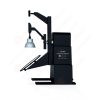
LM-79 Moving Detector Goniophotometer (Mirror Type C)
LSG-6000
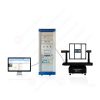
High Precision Rotation Luminaire Goniophotometer
LSG-1890B
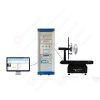
High Precision Rotation Luminaire Goniospectroradiometer
LSG-1890BCCD

Goniophotometer for Automotive and Signal Lamps
LSG-1950
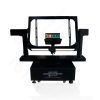
Goniophotometer for Traffic Signal Lamps
LSG-1950S
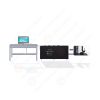
Compact Goniophotometer
LSG-1200A
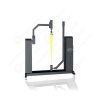
Near Field Moving Detector Goniophotometer
LSG-1900B
 LEDs and Luminaire Test Solutions
 LM-79 and LM-80 Test Solutions
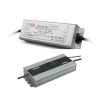 LED Driver Test Solutions
 Household Appliances Test Solutions
 Mobile and Network Test Solutions
 Automotive Electronics Test Solutions
 Audio-Video and IT Test Solutions
 Cable and Wire Test Solutions
 Plugs and Sockets Test Solutions
 Power Switch Test Solutions
 Transformer Test Solutions
 Electric Toys Test Solutions
 Energy Meter Test Solutions
 Motor-Operated Tool Test Solutions
Select an organization
to browse standards
With the upgrading of the lighting industry and increasingly stringent energy efficiency regulations, the precision and stability of light output have become core competitiveness of lighting products. Lumen (lm) is the legal unit of luminous flux, which represents the total visible light emitted by a light source per unit time. Lumen measurement is the key basis for evaluating light brightness, luminous efficacy and energy efficiency grade. Traditional testing equipment has shortcomings such as insufficient precision, poor compatibility and low data consistency, which cannot meet the mass detection requirements of various light sources including energy-saving lamps, HID lamps and LED lamps.
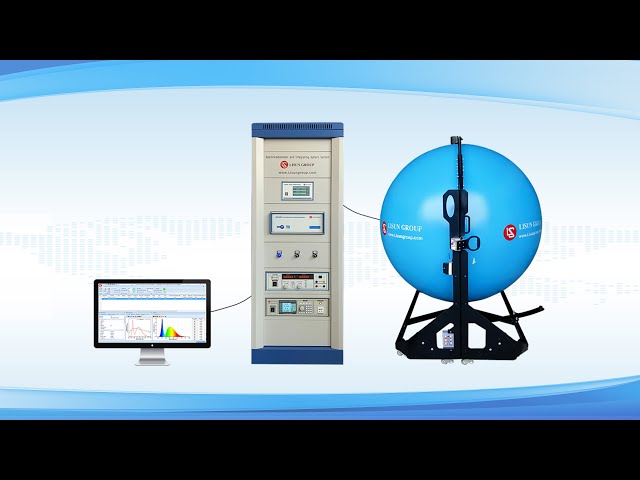
Integrated with high-precision CCD spectrometer, one-piece integrating sphere and professional electrical parameter measuring unit, the LISUN LPCE-2(LMS-9000) system can simultaneously complete the measurement of chromaticity, photometry and electrical parameters, covering all mainstream lighting sources. Its test results conform to international and domestic standards such as CIE177, LM-79-19 and GB/T 24824, providing an integrated solution for lumen measurement and full-parameter quality evaluation.

LPCE 2(LMS 9000) Spectrophotometer & Integrating Sphere Test System
Basic Principle of Lumen Measurement
Luminous flux is the physical quantity obtained by weighting the radiant flux of a light source with the human eye spectral luminous efficiency function V(λ), with the unit of lumen (lm). In lumen measurement, the integrating sphere collects the full-space optical radiation of the light source. The spectrometer analyzes the spectral distribution, and calculates core photometric parameters including total luminous flux, luminous efficacy and radiant power.
Testing Standard System
The system strictly complies with the following standards to ensure the authority of lumen measurement:
• Photometric standards: CIE-84 Measurement of Luminous Flux, IESNA-LM-63-2
• Chromaticity standards: CIE13.3, CIE177, ANSI-C78.377
• LED specific standards: LM-79-19, LM-79-24, LM-80, GB/T 24824
• Energy efficiency regulations: (EU)2019/2015 ErP Energy Efficiency Labeling Requirements
Composition of the Testing System
Core configuration of LISUN LPCE-2(LMS-9000):
• LMS-9000C high-precision CCD spectrometer
• One-piece integrating sphere (IS-1.5MA/IS-0.3M)
• Digital electrical parameter analyzer, AC/DC power supply
• Standard light source, optical fiber and standard cabinet
• Bilingual control software in Chinese and English, compatible with Windows 7 to Windows 11, with certified USB driver
Key Technical Parameters
| Parameter Item | Specification |
| Wavelength range | 350–800nm |
| Wavelength accuracy | ±0.3nm |
| Chromaticity coordinate accuracy | ±0.002 (Standard A light source) |
| Color temperature range & accuracy | 1500K–100000K, ±0.3% |
| Luminous flux range | 0.01–200000lm |
| Photometric linearity | ±0.5% |
| Stray light | <0.015% (600nm), <0.03% (435nm) |
| Integral time | 0.1–10000ms |
| Lumen measurement methods | Spectral method, photometric method, spectral-photometric method |
Test Samples and Procedure
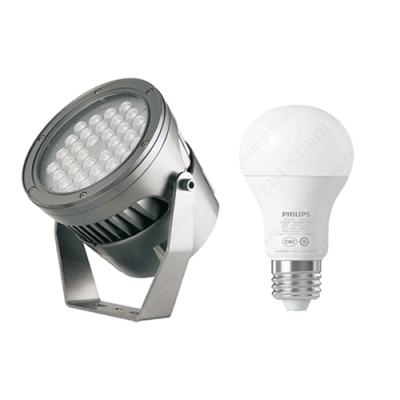
Test Samples: energy-saving lamps, fluorescent lamps, HID lamps (high-pressure sodium lamps, high-pressure mercury lamps), cold cathode fluorescent lamps, various LED light sources (bulbs, modules, COB).
Test Procedure:
• Preheat and calibrate the equipment with standard light source verification;
• Install the sample and keep it stably operating for 30 minutes;
• Start lumen measurement, and simultaneously collect luminous flux, luminous efficacy, color temperature, color rendering index, power and power factor;
• Conduct self-absorption correction and temperature compensation;
• Export LM-79 standard test report and archive experimental data.
Test Data of Typical Light Sources
| Light Source Type | Power (W) | Lumen Measurement Value (lm) | Luminous Efficacy (lm/W) | Color Temperature (K) | Color Rendering Index Ra | Power Factor |
| Energy-saving lamp | 18 | 1260 | 70.0 | 4100 | 82 | 0.98 |
| T5 fluorescent lamp | 28 | 2660 | 95.0 | 4000 | 85 | 0.97 |
| High-pressure sodium lamp | 100 | 10500 | 105.0 | 2100 | 23 | 0.99 |
| High-pressure mercury lamp | 125 | 5250 | 42.0 | 5600 | 48 | 0.95 |
| Cold cathode fluorescent lamp | 6 | 360 | 60.0 | 6000 | 80 | 0.96 |
| LED bulb | 10 | 1100 | 110.0 | 3000 | 92 | 0.98 |
| LED module | 50 | 5800 | 116.0 | 5000 | 90 | 0.97 |
Result Analysis
• Consistency of lumen measurement: The one-piece integrating sphere greatly reduces splicing errors. With photometric linearity of ±0.5%, the relative standard deviation of repeated multi-light-source tests is less than 1%.
• Luminous efficacy comparison: LED products generally achieve luminous efficacy above 110 lm/W, which is superior to traditional light sources. HID lamps own high luminous flux but poor color rendering performance.
• Chromaticity stability: LED features less than 1.5% color temperature drift and Ra>90, suitable for high-quality lighting scenarios.
• Electrical parameters: The system synchronously detects voltage, current, harmonic and power factor, fully meeting the requirements of energy efficiency label application.
• High-precision lumen measurement: Refrigerated CCD and low stray light design ensure full-range precision for both low-power and high-power light sources.
• Multi-light-source compatibility: It covers traditional gas discharge lamps and solid-state lighting, realizing multi-purpose detection to reduce testing cost.
• Standard compliance: The system can directly generate LM-79, LM-80 and ErP certification reports, adapting to global export and certification detection.
• Long-term reliability: It supports LM-82 luminous flux maintenance test, and can be matched with temperature-controlled integrating sphere and multi-channel temperature inspection system.
With lumen measurement as the core function, the LISUN LPCE-2(LMS-9000) system realizes automatic integrated detection of opto-electrical parameters for energy-saving lamps, fluorescent lamps, HID lamps, cold cathode fluorescent lamps and LED lamps. Its indicators including wavelength, color temperature, luminous flux and chromaticity coordinate reach internationally advanced level, fully meeting global standards and certification requirements. As an efficient, stable and high-precision testing platform for enterprise R&D, production quality control and third-party inspection, the system is of great engineering value for improving lighting product quality and promoting industrial standardization.
Tags:LPCE-2 (LMS-9000)Your email address will not be published. Required fields are marked *

 English
 中文简体
中文简体 English
 Русский
 Español
 Português
 Türkçe
 العربية
 Deutsch
 Polski
 Italiano
 Français
 한국어
한국어 ไทย
ไทย Tiếng Việt
 日本語
日本語