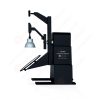
LM-79 Moving Detector Goniophotometer (Mirror Type C)
LSG-6000
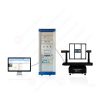
High Precision Rotation Luminaire Goniophotometer
LSG-1890B
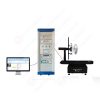
High Precision Rotation Luminaire Goniospectroradiometer
LSG-1890BCCD

Goniophotometer for Automotive and Signal Lamps
LSG-1950
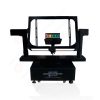
Goniophotometer for Traffic Signal Lamps (Economical Model)
LSG-1950S
VAD Fire Alarm Visual Alert Device Goniophotometer
LSG-1930
Goniophotometer for Airfield Lighting
LSG-1940
Compact Goniophotometer
LSG-1200A
LED Goniophotometer
LSG-1100
Near Field Moving Detector Goniophotometer
LSG-1900B
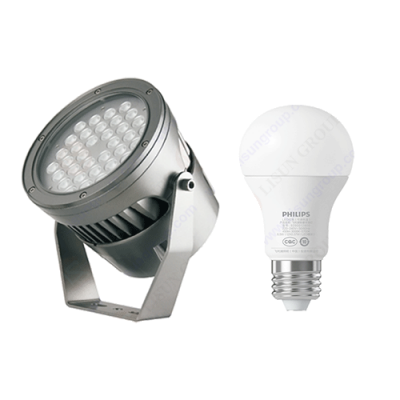 LEDs and Luminaire Test Solutions
 LM-79 and LM-80 Test Solutions
 LED Driver Test Solutions
 Household Appliances Test Solutions
 Mobile and Network Test Solutions
 Automotive Electronics Test Solutions
 Audio-Video and IT Test Solutions
 Cable and Wire Test Solutions
 Plugs and Sockets Test Solutions
 Power Switch Test Solutions
 Transformer Test Solutions
 Electric Toys Test Solutions
 Energy Meter Test Solutions
 Motor-Operated Tool Test Solutions
Select an organization
to browse standards


Product No: LMS-9500C
LMS-9500C Scientific Grade CCD Spectroradiometer is a high-precision spectral testing instrument designed for third-party testing laboratories, corporate R&D centers, and metrology institutes. It utilizes a concave holographic diffraction grating paired with a cooled, back-illuminated CCD detector. Equipped with features such as stray-light suppression, a wide linear dynamic range, high-precision CCD driving circuitry, and matrix-based spectral correction algorithms, the instrument enables scientific-grade measurements of photometric, colorimetric, and spectral power distribution parameters for various light sources—including LEDs, energy-saving lamps, HID lamps, halogen lamps, and tungsten filament lamps. The measurement data are traceable to the National Institute of Metrology (NIM) in China and the National Institute of Standards and Technology (NIST) in the United States, ensuring the authoritative data required for laboratory accreditation reports.
When integrated with an IS-*MA series integrating sphere (featuring a built-in test platform), an SLS-50W standard lamp and other auxiliary equipment, the LMS-9500C forms the comprehensive LPCE-2 (LMS-9500C) High Precision CCD Spectroradiometer, color, and electrical testing system. This system provides a one-stop solution for measuring luminous flux, luminous efficacy, chromaticity coordinates, color temperature, color rendering index, and electrical parameters, while also enabling the direct generation of standard LM-79 test reports.
Standards:
| Standards No. | Standards Name |
| CIE 13.3:1995 | Method of measuring and specifying colour rendering properties of light sources |
| CIE 177:2007 | Colour rendering of white LED light sources |
| CIE 84:1989 | The measurement of luminous flux |
| ANSI C78.377-2024 | Specifications for the chromaticity of solid-state lighting products |
| ANSI IES LM‑79‑24 | Approved Method: Optical and Electrical Measurements of Solid-State Lighting Products |
| ANSI/IES LM-80-21 | Approved Method: Measuring maintenance of light output characteristics of solid-state light sources |
| (EU) 2019/2015 | Ecodesign requirements for light sources and separate control gears |
| GB/T 5702-2019 | 光源显色性评价方法 |
| GB/T 24824-2022 | 普通照明用 LED 模块测试方法 |
Specifications:
| LISUN Model | LMS‑9500C | LMS‑9500CUV‑VIS | LMS‑9500CVIS‑NIR | LMS‑9500CSWIR |
| Detector | HAMAMATSU TE-cooling array CCD; temperature controlled at -10 °C ±0.05 °C | InGaAs Near-infrared detector | ||
| Spectral Wavelength Range | 350~800 nm | 200~800 nm | 350~1050 nm | 800~1700 nm |
| Wavelength Accuracy | ±0.2 nm | |||
| Wavelength Resolution | 0.1 nm | |||
| Scan Interval | 0.1 nm(Adjustable) | |||
| Chromaticity Coordinate Accuracy |
Δx、Δy ≤ ±0.0015 | |||
| Correlated Color Temperature Range |
1,500 K~100,000 K | |||
| Color Temperature Accuracy | ±0.2 % | |||
| Color Rendering Index | 0~100.0,accuracy ±(0.3 % rd ±0.3) | |||
| Luminous Flux Test Range | 0.01~200,000 lm(Depends on the size of the integrating sphere) | |||
| Photometric Linearity | ±0.2 % | |||
| Stray Light | <0.015 %@600 nm;<0.03 %@435 nm | |||
| Integration Time | 0.1 ms~60 s | |||
| Luminous Flux Calculation Model |
Spectroscopic methods, photometric methods, and combined spectroscopic-photometric correction methods | |||
| PC Software | Software available in Chinese and English; compatible with Win7/Win8/Win10/Win11; allows exporting of spectral curves and reports in PDF/Excel format. | |||
| Applications | Routine LED Lighting Testing | UV-LED and Ultraviolet Light Source Testing | Infrared Fill Light and Plant Lighting Testing | Short-wave infrared (SWIR) light source testing |
LISUN LPCE-2(LMS-9500C) High Precision Spectroradiometer Integrating Sphere System – After-sales Frequently Asked Questions (FAQ).
LISUN LPCE-2(LMS-9500C) High Precision Spectroradiometer Integrating Sphere System were in the market for more than 10 years, LISUN engineers service team already summary the most of the After Sales Questions and Answers in the above link. Please read it carefuly, you can solve the most of the problems by yourself if you have some questions while using the instruments. LISUN will be continue to update this pages and more FAQ can be found in this topic link.
Radiometry professionals may be familiar with the theories of light and color measurement; the...
 English
 中文简体
 English
 Русский
 Español
 Português
 Türkçe
 العربية
 Deutsch
 Polski
 Italiano
 Français
 한국어
 ไทย
 Tiếng Việt
 日本語