LM-79 Moving Detector Goniophotometer (Mirror Type C)
LSG-6000
High Precision Rotation Luminaire Goniophotometer
LSG-1890B
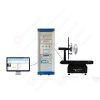
High Precision Rotation Luminaire Goniospectroradiometer
LSG-1890BCCD

Goniophotometer for Automotive and Signal Lamps
LSG-1950
Goniophotometer for Traffic Signal Lamps
LSG-1950S
VAD Fire Alarm Visual Alert Device Goniophotometer
LSG-1930
Compact Goniophotometer
LSG-1200A
LED Goniophotometer
LSG-1100
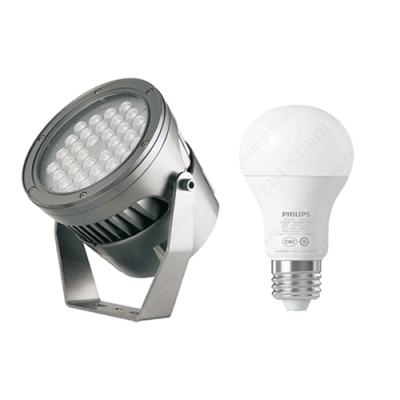 LEDs and Luminaire Test Solutions
 LM-79 and LM-80 Test Solutions
 LED Driver Test Solutions
 Household Appliances Test Solutions
 Mobile and Network Test Solutions
 Automotive Electronics Test Solutions
 Audio-Video and IT Test Solutions
 Cable and Wire Test Solutions
 Plugs and Sockets Test Solutions
 Power Switch Test Solutions
 Transformer Test Solutions
 Electric Toys Test Solutions
 Energy Meter Test Solutions
 Motor-Operated Tool Test Solutions
Select an organization
to browse standards
Abstract:
UV aging test chamber is a core instrument for material weatherability testing. Based on the principle of simulated environment accelerated aging, it uses UV lamps to simulate natural sunlight radiation and condensed moisture to reproduce rain and dew environments. Combined with temperature control, it realizes alternating cycles of light exposure and humidity.This paper takes LISUN UV-263LS UV aging test chamber as the research object, elaborates its working principle of accelerated aging, core technical parameters and standardized testing process in detail, analyzes its application value in various industries, and provides technical reference for material weatherability evaluation and product development.
1 Introduction
When materials are used outdoors, long-term exposure to natural factors such as solar ultraviolet radiation, rain, dew, and temperature-humidity changes will lead to aging phenomena such as fading, chalking, cracking and performance degradation, which directly affect the service life and safety of products.Traditional outdoor natural aging tests take months or even years, which can hardly meet the efficient requirements of enterprise R&D and quality inspection.As a professional instrument for artificial accelerated aging testing, UV aging test chamber constructs an accelerated aging system by accurately simulating key aging factors in the natural environment, and can obtain material weatherability data within days to weeks, becoming an important tool for material screening and formula optimization in coatings, plastics, rubber, automotive and other industries.Among them, LISUN UV-263LS UV aging test chamber is widely used in industrial testing due to its standardized testing system and precise parameter control capability.
2 Core Principle of Simulated Environment Accelerated Aging in UV Aging Test Chamber
The accelerated aging test of UV aging test chamber is based on the principles of photochemical aging and synergistic action of environmental factors.The core is to artificially simulate key factors in the natural environment such as ultraviolet radiation, temperature, humidity, condensation and spraying, amplify the aging intensity, and accelerate the deterioration of material molecular structure.Its core principle can be divided into three dimensions:
Simulation and Acceleration of Ultraviolet RadiationSpecial UV fluorescent lamps are used to simulate the ultraviolet band of sunlight. LISUN UV-263LS is equipped with UVA-340C lamps as standard, with a wavelength range of 315~400nm and a peak wavelength of 340nm, which is highly consistent with the spectral distribution of ultraviolet light in natural sunlight and can accurately simulate the radiation effect of outdoor sunlight.At the same time, the instrument supports adjustable radiation intensity from 0.35 to 1.0 W/㎡. By increasing the radiation intensity, the photochemical reaction of material molecular chains is accelerated, realizing a multiple compression of the aging process.
Condensation Simulation of Rain and DewA high-humidity environment is constructed through a condensation and water spraying system. When a temperature difference forms inside the test chamber, condensed water is generated on the inner wall of the chamber, simulating dew condensation on the material surface. Meanwhile, the water spraying function can restore the rain scouring effect.Condensed moisture can penetrate into the material interior and cause hydrolysis and delamination together with ultraviolet radiation, reproducing the aging corrosion of materials by moisture in the natural environment.
Cyclic Synergistic Aging of Light and MoistureMaterials are placed in an alternating cycle program of light exposure at high temperature and condensation at high humidity, such as the industry common modes of 4h light + 4h condensation or 8h light + 4h condensation, simulating the dynamic process of day-night alternation and weather changes in nature.At specific temperatures (50~70℃ in light stage, 50℃ in condensation stage), the three factors of ultraviolet radiation, temperature and humidity act synergistically to accelerate the aging process of materials, making the test results closer to the actual aging law of materials in use.
In short, through the multi-factor synergy of “ultraviolet radiation + temperature-humidity control + condensation cycle”, the UV aging test chamber realizes the artificial simulation and acceleration of the natural aging environment, and finally obtains weatherability data of materials quickly, providing a scientific basis for material performance evaluation.
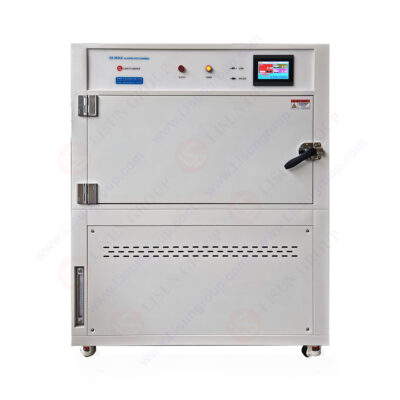
UV-263LS_AL
3 Core Technical Parameters and Testing Standards of LISUN UV-263LS UV Aging Test Chamber
3.1 Core Technical Parameters
LISUN UV-263LS UV aging test chamber adopts a square inner chamber structure made of S304 stainless steel, with precise parameter control and stable testing performance.The following table shows the comparison of its core technical parameters with similar products, highlighting its advantages in irregular sample testing and parameter adjustability:
| Item | UV-263LS | UV-263LV | UV-263LT |
| Chamber Structure | Square inner chamber | Trapezoidal inner chamber | Benchtop chamber |
| Inner Chamber Size (WDH) | 5501140450mm | 4501140500mm | 500400400mm |
| UV Lamp Specification | 3 pcs, domestic 20W each | 8 pcs, ATLAS US 40W each | – |
| Wavelength Range | Standard UVA-340C, optional UVB-313C | Standard UVA-340, optional UVB-313/UVA-351 | – |
| Irradiance | 0.35~1.0 W/㎡ adjustable | 0.35~1.2 W/㎡ adjustable | – |
| Distance Between Sample and Lamp | 70~300mm adjustable | Fixed at 70mm | Fixed at 50mm |
| Sample Adaptation | Irregular samples | 48 pcs standard 70*150mm samples | 18 pcs standard 70*150mm samples |
| Temperature Range | RT+10℃~70℃ (general) | RT+10℃~70℃ | RT+10℃~70℃ |
| Humidity Range | ≥75%RH (general) | ≥75%RH | ≥75%RH |
The instrument is equipped with an LCD programmable controller, which can simulate various test states including ultraviolet radiation, high temperature, high humidity, rain, condensation and darkness.The test time is adjustable from 0 to 9999H/M/S to meet personalized testing requirements of different materials.It also integrates an irradiance tester for real-time calibration and precise control of radiation intensity, ensuring the accuracy of test data.
3.2 Applicable Testing Standards
LISUN UV-263LS UV aging test chamber complies with many domestic and international standardized testing requirements, covering various material types such as plastics, coatings and rubbers.The core reference standards include GB/T 14522-2008, GB/T 16422.3-2014, ASTM D3794, ISO 4892-3:2013, SAE J2020, etc., providing a standardized basis for domestic and international certification and quality inspection of enterprise products.
4 Standardized Testing Process of UV Aging Test Chamber
Taking LISUN UV-263LS UV aging test chamber as an example, its simulated environment accelerated aging test follows a standardized process with 7 steps to ensure the standardization of the test process and the repeatability of test results:
• Sample Preparation: Cut representative samples according to standards. Test and record initial indicators such as color difference, glossiness and tensile strength using a spectrophotometer, gloss meter and tensile testing machine. Pack samples properly to avoid contamination.
• Equipment Inspection: Confirm that the instrument appearance and component connections are intact. Check the normal operation of the condensation and water spraying systems. Ensure qualified water quality in the water tank (conductivity < 5us/cm) and calibrate the irradiance device.
• Condition Setting: Select lamp type and set irradiance (usually 0.55 W/㎡/nm), light/condensation temperature, humidity (e.g. 95%RH) and cycle period according to material type and testing requirements.
• Sample Placement: Fix samples on the test rack facing the UV lamps. Seal unfilled areas with black panels to ensure uniform environment inside the chamber.
• Test Operation: Close the chamber door and start the instrument. Monitor parameters such as temperature and humidity regularly during operation. Take photos of sample appearance every 250 hours.
• Sample Testing: Take out samples midway or after the test, repeat the initial testing steps, and measure various performance indicators of aged samples.
• Result Evaluation: Compare the appearance (chalking, cracking, fading) and performance (tensile strength, glossiness) data before and after aging to evaluate the aging degree and weatherability grade of materials.

5 Industrial Application and Value of UV Aging Test Chamber
With its fast and accurate accelerated aging testing capability, UV aging test chamber is widely used in basic material industries such as coatings, resins, plastics and rubbers, as well as terminal application fields including automotive, electronics, construction and medicine.Its core application value is reflected in three aspects:
Material R&D and Formula: OptimizationIn the development of new materials, UV aging test chamber is used to quickly test the weatherability of materials with different formulas and screen components with excellent anti-aging performance.For example, the automotive coating industry optimizes the proportion of light stabilizers through testing, extending the anti-aging life of coatings to more than 10 years.
Product Quality Inspection: As a core instrument for factory quality inspection and third-party testing institutions, it conducts weatherability tests on raw materials and finished products to ensure products meet industry standards and customer requirements, avoiding quality problems caused by material aging.
Product Service Life Evaluation: Based on accelerated aging test data and combined with natural aging laws, the outdoor service life of materials and products can be estimated, providing a scientific basis for product design and application scenario selection, such as life evaluation of outdoor electronic equipment casings and building waterproof materials.
Taking the automotive industry as an example, UV aging test chamber can conduct aging resistance tests on automotive interior and exterior parts (bumpers, dashboards, sealing strips), simulating outdoor exposure and rain scouring to ensure no obvious aging or deformation during the vehicle service life.In the construction industry, it can test exterior wall coatings and plastic door-window profiles to prevent chalking and cracking caused by ultraviolet radiation and rain, improving construction engineering quality.
6 Conclusion
As a core instrument for simulated environment accelerated aging testing, UV aging test chamber accurately restores material aging factors in the natural environment through the synergy of UV lamps, condensation system and temperature-humidity control, realizing artificial acceleration of the aging process and solving the problems of long cycle and low efficiency of traditional natural aging tests.LISUN UV-263LS UV aging test chamber has become a preferred instrument for material weatherability testing in various industries due to its standardized testing system, precise parameter control and wide sample adaptability.
In industrial production and R&D, UV aging test chamber not only provides a fast and scientific testing method for material screening and formula optimization, but also lays a foundation for product quality control and life evaluation, which is of great significance for improving outdoor service performance and extending service life of products.In the future, with the development of material industry, UV aging test chamber will develop towards more accurate spectral simulation, more intelligent parameter control and wider material adaptability, further promoting the upgrading and improvement of material weatherability testing technology.
Tags:UV-263LSYour email address will not be published. Required fields are marked *

 English
 中文简体
中文简体 English
 Русский
 Español
 Português
 Türkçe
 العربية
 Deutsch
 Polski
 Italiano
 Français
 한국어
한국어 ไทย
ไทย Tiếng Việt
 日本語
日本語