LM-79 Moving Detector Goniophotometer (Mirror Type C)
LSG-6000
High Precision Rotation Luminaire Goniophotometer
LSG-1890B
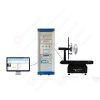
High Precision Rotation Luminaire Goniospectroradiometer
LSG-1890BCCD

Goniophotometer for Automotive and Signal Lamps
LSG-1950
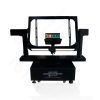
Goniophotometer for Traffic Signal Lamps
LSG-1950S
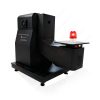
VAD Fire Alarm Visual Alert Device Goniophotometer
LSG-1930
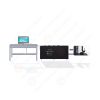
Compact Goniophotometer
LSG-1200A
LED Goniophotometer
LSG-1100
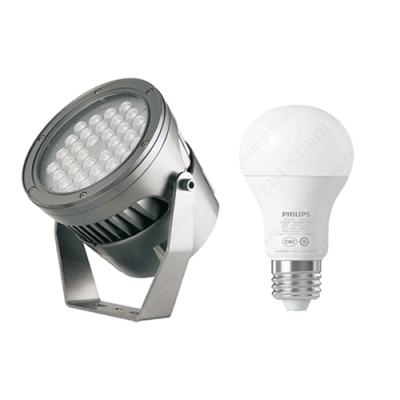 LEDs and Luminaire Test Solutions
 LM-79 and LM-80 Test Solutions
 LED Driver Test Solutions
 Household Appliances Test Solutions
 Mobile and Network Test Solutions
 Automotive Electronics Test Solutions
 Audio-Video and IT Test Solutions
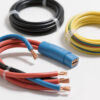 Cable and Wire Test Solutions
 Plugs and Sockets Test Solutions
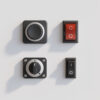 Power Switch Test Solutions
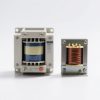 Transformer Test Solutions
 Electric Toys Test Solutions
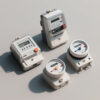 Energy Meter Test Solutions
 Motor-Operated Tool Test Solutions
Select an organization
to browse standards
Salt testing equipment has emerged as an essential instrument for evaluating the corrosion resistance of metallic materials and protective coatings across diverse industrial applications. This comprehensive study examines the fundamental principles, standardized methodologies, and engineering practices associated with accelerated corrosion testing using specialized salt testing equipment. The research analyzes key testing parameters including solution concentration, temperature control, and fog collection rates as specified by international standards ASTM B117 and IEC 60068-2-11.
Through systematic investigation of neutral salt spray (NSS) testing protocols, this paper presents critical insights into test chamber design, specimen preparation procedures, and evaluation methodologies. The findings demonstrate that properly calibrated salt testing equipment can effectively simulate marine and industrial corrosive environments, enabling manufacturers to assess material durability and identify potential protection defects.
Corrosion represents one of the most significant challenges in materials engineering, causing billions of dollars in economic losses annually across automotive, aerospace, electronics, and construction industries. The global cost of corrosion has been estimated at approximately 3.4% of global GDP, highlighting the critical need for effective corrosion prevention and testing methodologies. Traditional atmospheric exposure testing often requires years of observation to generate meaningful results, creating substantial delays in product development cycles.
This limitation has driven the widespread adoption of accelerated testing methods using salt testing equipment in industrial quality control processes. Manufacturers increasingly rely on standardized testing procedures to validate material protection strategies and optimize product durability in corrosive environments.
This research aims to provide a comprehensive analysis of accelerated corrosion testing methodologies, focusing on the technical principles, standardization requirements, and practical applications of modern salt testing equipment. The study examines the evolution of testing standards from their inception in 1939 to current implementations, evaluating the scientific basis for test parameters and their correlation with real-world corrosion behavior.
Additionally, this paper investigates the engineering considerations for equipment selection, calibration procedures, and result interpretation methodologies. Through systematic analysis, this research seeks to establish a framework for understanding how advanced testing systems enable manufacturers to validate material protection strategies using salt testing equipment.
The ASTM B117 standard, first published in 1939, represents the oldest and most widely recognized specification for salt spray testing methodology. Developed by the American Society for Testing and Materials (now ASTM International), this standard established the foundational parameters for creating and maintaining controlled corrosive environments within test chambers.
The standard has undergone continuous revision, with the current version ASTM B117-26 reflecting over eight decades of technical refinement and practical experience in salt testing equipment operation. This evolution demonstrates the ongoing commitment to improving testing accuracy and reproducibility across different laboratory environments.
The International Electrotechnical Commission (IEC) published IEC 60068-2-11, which specifies Test Ka for salt mist testing of electrotechnical products. The fourth edition, released in 2021, incorporates significant technical modifications including updated solution preparation procedures and temperature measurement protocols.
This standard maintains equivalence with the Chinese national standard GB/T 2423.17-2008, facilitating international harmonization of salt testing equipment requirements. The alignment between standards enables manufacturers to conduct testing that meets multiple regulatory frameworks simultaneously.
Both standards establish rigorous requirements for test apparatus, solution preparation, and environmental control in salt testing equipment. The specifications mandate specific sodium chloride concentration levels of 5% ± 1% by mass, prepared using Type IV reagent-grade water as defined in ASTM D1193.
Solution pH must be maintained within a narrow neutral range of 6.5 to 7.2, requiring careful control of dissolved carbon dioxide content and temperature effects during atomization. The testing chamber must maintain a constant temperature of 35°C ± 2°C, with humidity levels exceeding 95% relative humidity to ensure consistent fog generation.
Modern salt testing equipment employs sophisticated chamber designs to achieve uniform fog distribution and stable environmental conditions. The YWX/Q-010 series exemplifies contemporary engineering approaches, utilizing corrosion-resistant materials such as high-density polyvinyl chloride (PVC) and stainless steel for structural components.
The chamber geometry must prevent condensation from dripping onto specimens, with design features including sloped ceilings and strategically positioned collection channels in professional salt testing equipment. These engineering considerations ensure test validity and reproducibility across different specimen configurations.
The atomization system represents a critical component, employing Bernoulli principle-based nozzles to generate fine, uniform fog particles. These nozzles, typically constructed from special glass materials, produce atomized droplets with controlled spray patterns and volumes in salt testing equipment chambers.
The system maintains fog collection rates between 1.0 and 2.0 mL per hour per 80 cm² of horizontal collecting area, ensuring consistent exposure conditions across the specimen workspace. This precision is essential for generating reliable corrosion resistance data.
Temperature regulation in salt testing equipment requires precise control mechanisms to maintain the specified 35°C ± 2°C operating condition. Direct heating systems using corrosion-resistant titanium heating elements provide rapid temperature rise and stable maintenance of set points.
The heating control automatically transitions to constant temperature mode upon reaching target conditions, minimizing energy consumption while ensuring test reproducibility. Advanced salt testing equipment incorporates digital temperature controllers with precision monitoring capabilities.
The air supply system conditions compressed air through a saturation tower, where air passes through heated water to achieve proper humidification. This process prevents salt concentration at nozzle tips and maintains fog quality throughout extended test durations.
Air pressure regulation operates in two stages: coarse adjustment at approximately 2 kg/cm² and fine adjustment at 1 kg/cm², providing stable atomizing pressure within the required 0.7 to 1.4 bar range for optimal salt testing equipment performance.
Proper specimen preparation constitutes a critical factor in obtaining meaningful test results from salt testing equipment. Test specimens must undergo thorough cleaning to remove oils, greases, and surface contaminants that could interfere with corrosion processes.
Cleaning methods should be selected based on surface condition and contaminant type, typically employing solvents such as ethanol or acetone without using abrasive materials that could alter surface characteristics. Proper handling with clean gloves prevents recontamination after preparation.
For specimens cut from larger components, cut edges require protection using appropriate materials such as paint, wax, or adhesive tape to prevent edge corrosion from dominating test results. This protection ensures that observed corrosion reflects the performance of the primary coating system.
Specimen positioning within salt testing equipment significantly influences exposure uniformity and result reproducibility. Standards specify that specimens should be supported or suspended at angles between 15° and 30° from the vertical plane, with 20° being the preferred orientation.
This positioning allows solution runoff while maintaining adequate surface contact with the salt fog generated by salt testing equipment. Specimens must not contact each other, the chamber walls, or any metallic materials during testing.
Support structures should be constructed from inert materials such as glass, plastic, or rubber-coated materials to prevent galvanic effects. The arrangement must permit unobstructed fog circulation around all specimen surfaces.
The YWX/Q-010 series provides comprehensive testing capabilities for diverse industrial applications. The salt testing equipment supports both continuous and periodic spray modes, accommodating various test protocols specified in international standards.
Temperature control precision achieves ±0.5°C fluctuation and ±2°C uniformity across the workspace, ensuring test reproducibility with this advanced equipment. The system incorporates multiple safety features including over-temperature protection and water level monitoring.
Table 1: Technical Parameters for YWX/Q-010 Salt Testing Equipment
| Parameter | Specification | Tolerance |
| Temperature Range | Room Temp to 55°C | ±2°C |
| Salt Solution Concentration | 5% NaCl | ±1% |
| pH Value (NSS) | 6.5-7.2 | – |
| Fog Collection Rate | 1.0-2.0 mL/80cm²/h | – |
| Atomizing Pressure | 0.7-1.4 bar | – |
Salt testing equipment serves critical quality assurance functions across multiple industrial sectors. Automotive manufacturers utilize accelerated corrosion testing to evaluate body panel coatings, fastener treatments, and underbody protection systems.
Test durations ranging from 96 hours for basic quality control to 1000 hours for advanced coating development provide data for material selection and process optimization. Electronics manufacturers employ salt mist testing to verify the corrosion resistance of component coatings and enclosure protection systems.
The IEC 60068-2-11 standard specifically addresses electrotechnical product applications, providing test protocols for assessing component reliability in marine and industrial environments using salt testing equipment. Aerospace applications demand stringent testing requirements with extended exposure durations.
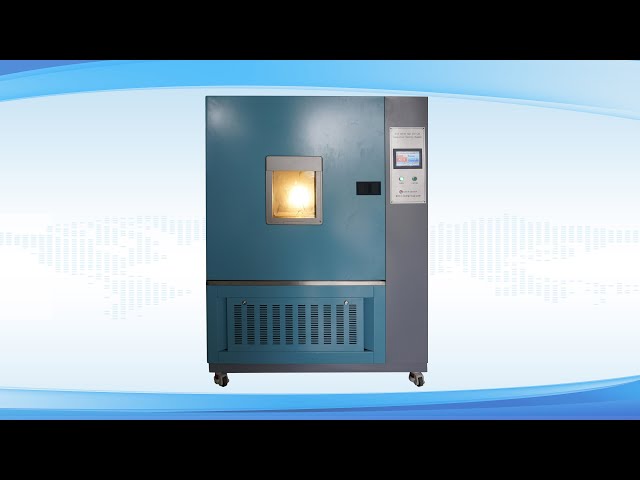
Selecting appropriate salt testing equipment requires careful evaluation of multiple factors including chamber capacity, temperature range, control precision, and compliance with relevant standards. Small-scale laboratories may find compact chambers with 100-200 liter volumes suitable for routine quality control testing.
Large manufacturing facilities often require salt testing equipment with 800-1200 liter capacities to accommodate production volumes. Equipment material selection significantly impacts long-term durability and maintenance requirements.
Chambers constructed from PVC materials offer excellent corrosion resistance but may have temperature limitations compared to stainless steel alternatives. The selection should also consider specimen handling requirements including support rack adjustability and access door design.
Table 2: Comparison of International Salt Spray Testing Standards
| Test Standard | Test Type | Temperature | pH Range |
| ASTM B117 | Neutral Salt Spray (NSS) | 35°C | 6.5-7.2 |
| IEC 60068-2-11 | Salt Mist (Ka) | 35°C | 6.5-7.2 |
| ISO 9227 | NSS/AASS/CASS | 35-50°C | 3.1-7.2 |
| GB/T 2423.17 | Salt Mist | 35°C | 6.5-7.2 |
Calibration and maintenance of salt testing equipment require systematic protocols to ensure consistent test conditions over time. Daily verification of solution pH and collection rate, combined with weekly checks of temperature uniformity, maintain test validity.
Nozzle maintenance prevents crystallization that could affect spray patterns, while saturation tower water levels require regular monitoring to maintain proper air humidification in salt testing equipment systems. Proper maintenance extends equipment service life and ensures data reliability.
Result interpretation must consider the accelerated nature of salt spray testing and its limitations for predicting real-world corrosion behavior. Salt testing equipment provides excellent comparative data for evaluating coating systems and identifying manufacturing defects.
However, test results do not directly correlate with service life in natural environments. Engineers should supplement test data with additional testing methods such as cyclic corrosion testing when developing products for specific environmental conditions.
The evolution of salt testing equipment continues toward increased automation, improved environmental control, and integration with digital monitoring systems. Modern chambers incorporate programmable controllers enabling automatic test cycle management and data logging.
These advances reduce operator intervention requirements while improving test reproducibility and documentation quality. Remote monitoring capabilities enable real-time tracking of test parameters and early detection of potential issues.
Hybrid testing systems combining salt spray with humidity, drying, and controlled temperature cycling better simulate complex environmental conditions encountered in service. These cyclic corrosion testing approaches provide improved correlation with field performance.
The integration of multiple test methods within single chamber systems represents a significant advancement in corrosion testing technology. Future salt testing equipment will likely incorporate artificial intelligence for automated result analysis and prediction.
This comprehensive analysis demonstrates that salt testing equipment serves as an essential tool for accelerated corrosion resistance evaluation across industrial applications. The standardized methodologies established by ASTM B117 and IEC 60068-2-11 provide rigorous frameworks for test execution.
These standards ensure reproducibility and comparability of results across laboratories and manufacturers using salt testing equipment. Critical parameters including solution concentration, temperature control, and fog collection rates must be maintained within narrow tolerances.
The engineering principles underlying modern test chamber design enable precise environmental simulation of marine and industrial corrosive conditions through advanced salt testing equipment. Proper specimen preparation, positioning, and evaluation methodologies contribute significantly to test validity.
While accelerated corrosion testing provides valuable comparative data for coating evaluation and quality control, engineers must recognize its limitations for predicting real-world service performance. Advances in automation and digital monitoring continue to enhance the utility and precision of salt testing equipment.
As industries increasingly demand reliable methods for validating material protection strategies, properly calibrated and maintained salt testing equipment remains fundamental to ensuring product durability and safety in corrosive environments.
Tags:YWX/Q-010Your email address will not be published. Required fields are marked *

 English
 中文简体
中文简体 English
 Русский
 Español
 Português
 Türkçe
 العربية
 Deutsch
 Polski
 Italiano
 Français
 한국어
한국어 ไทย
ไทย Tiếng Việt
 日本語
日本語