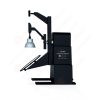
LM-79 Moving Detector Goniophotometer (Mirror Type C)
LSG-6000
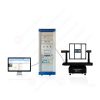
High Precision Rotation Luminaire Goniophotometer
LSG-1890B
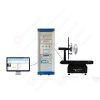
High Precision Rotation Luminaire Goniospectroradiometer
LSG-1890BCCD

Goniophotometer for Automotive and Signal Lamps
LSG-1950
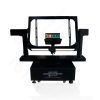
Goniophotometer for Traffic Signal Lamps (Economical Model)
LSG-1950S
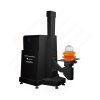
Goniophotometer for Airfield Lighting
LSG-1940
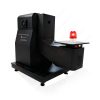
VAD Fire Alarm Visual Alert Device Goniophotometer
LSG-1930
Compact Goniophotometer
LSG-1200A
LED Goniophotometer
LSG-1100
Near Field Moving Detector Goniophotometer
LSG-1900B
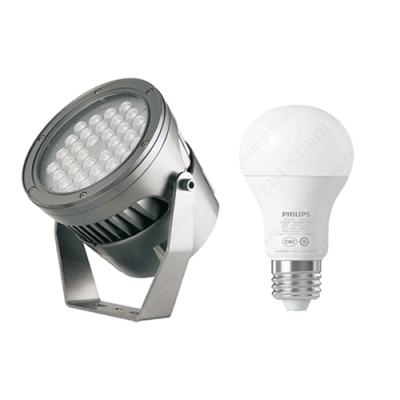 LEDs and Luminaire Test Solutions
 LM-79 and LM-80 Test Solutions
 LED Driver Test Solutions
 Household Appliances Test Solutions
 Mobile and Network Test Solutions
 Automotive Electronics Test Solutions
 Audio-Video and IT Test Solutions
 Cable and Wire Test Solutions
 Plugs and Sockets Test Solutions
 Power Switch Test Solutions
 Transformer Test Solutions
 Electric Toys Test Solutions
 Energy Meter Test Solutions
 Motor-Operated Tool Test Solutions
Select an organization
to browse standards
With the rapid popularization of LED lighting, plant lighting, smart lighting and road lighting, precise measurement of luminous intensity distribution has become a key link in product design, performance evaluation and market access. Luminous intensity distribution (namely light distribution curve) describes the luminous intensity distribution of a light source or luminaire in all directions in three‑dimensional space, which directly affects road surface illuminance uniformity, indoor lighting comfort, glare grade and energy utilization efficiency. Conventional testing equipment suffers from low angular precision, limited testing range and poor adaptability to light sources, failing to meet strict testing requirements of modern lighting products.
Adopting a synchronous motion design of rotating probe and reflector while keeping the luminaire stationary during operation, the LISUN LSG‑6000 rotating‑probe vertical goniophotometer can fully automatically acquire full‑space 3D luminous intensity distribution curves with flexible customized testing distances. It comprehensively covers testing of various light sources such as LEDs, plant lights, HID lamps, street lamps and floodlights, fully complying with mainstream international standards including LM‑79‑19/24, CIE and EN 13032‑1, making it an ideal solution in the field of luminous intensity distribution testing.
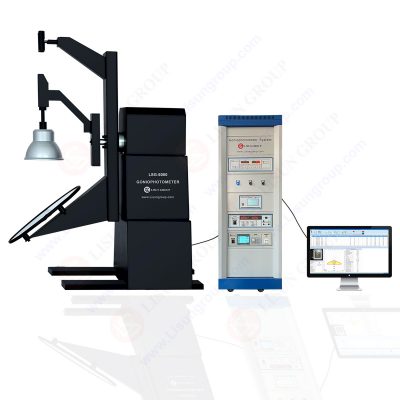
LM-79 Moving Detector Goniophotometer (Mirror Type C)
Scientifically defined, luminous intensity distribution refers to the luminous flux emitted by a light source or luminaire per unit solid angle in three‑dimensional space, measured in candelas (cd), and its spatial distribution pattern is called the luminous intensity distribution (light distribution curve). A goniophotometer obtains full‑angle luminous intensity data of the luminaire through precise angular control and photometric detection, so as to reconstruct a 3D luminous intensity distribution model.
The LISUN LSG‑6000 adopts a vertical structure with rotating probes to realize high‑precision measurement of luminous intensity distribution:
• Linkage of near‑field probe and reflector: The near‑field photometric probe and reflector move circularly around the tested luminaire, while the far‑field probe and reflector rotate synchronously to ensure stable and error‑free optical paths.
• Stationary luminaire during operation: The luminaire remains absolutely stationary during testing to maintain a real burning state, avoiding thermal balance deviation and mechanical disturbance caused by luminaire rotation and ensuring authenticity of luminous intensity distribution data.
• Full‑angle coverage: The reflector/moving probe realizes 360° full‑angle scanning along the γ‑axis, completely acquiring luminous intensity distribution data within a 2π solid angle without measurement blind zones.
• High‑precision angular control: Equipped with Mitsubishi servo motors from Japan and German encoders, it achieves an angular accuracy of 0.05° and angular resolution of 0.001°, capturing subtle luminous intensity changes at tiny angles and restoring real details of luminous intensity distribution.
This structure fully meets requirements of CIE and IESNA standards, and can automatically generate professional charts such as 3D luminous intensity distribution curves, iso‑intensity diagrams and iso‑illuminance diagrams, providing intuitive data support for lighting design and product optimization.

The LSG‑6000 series goniophotometer provides multiple specifications for different application scenarios, applicable to luminous intensity distribution testing from small indoor lamps to large street lamps and floodlights. Its core parameters are shown in the table below:
| Model | Max. Luminaire Size (ΦE × Thickness F) | Max. Load‑bearing Capacity | Measurable Electrical Specifications | Min. Darkroom Height |
|---|---|---|---|---|
| LSG‑6000/S/CCD (Small‑sized) | Φ1200×500 mm | 40 kg | 600 V/10 A AC/DC | 3.0 m |
| LSG‑6000/B/CCD (Large‑sized) | Φ1800×800 mm | 60 kg | 600 V/10 A AC/DC | 4.7 m |
| LSG‑6000/L/CCD (Extra‑large‑sized) | Φ2000×900 mm | 80 kg | 600 V/10 A AC/DC | 5.2 m |
| LSG‑6000/CCD (Standard Type) | Φ1600×600 mm | 50 kg | 600 V/10 A AC/DC | 4.1 m |
Table: Core Specifications of LISUN LSG‑6000 Series Vertical Goniophotometers
Other key technical indicators:
• Photometric probe: Class L grade, f1′<1.5%, with constant‑temperature compensation, complying with DIN5032‑6/CIE standards;
• Testing distance: Customizable flexibly according to customer site and testing requirements, adapting to luminaires of various sizes;
• Data output: Supports formats such as CIE, IES and LDT, directly importable into lighting design software such as DiaLux;
• Extended functions: Can be combined with the LPCE‑2 spectroradiometer to form the LSG‑6000CCD system for synchronous testing of spatial spectrum, color temperature, PAR/PPF/PPFD, meeting luminous intensity distribution and photosynthetic photon flux distribution testing for plant lighting.
Strictly complying with authoritative domestic and international standards to ensure global mutual recognition of luminous intensity distribution testing results, the LSG‑6000 mainly meets the following standards:
• North American Standards: LM‑79‑19, LM‑79‑24 Methods for Measuring Photometric and Electrical Properties of Solid‑State Lighting Products, specifying testing methods for luminous intensity distribution, luminous flux and luminous efficacy;
• International Standards: CIE S025, CIE 121 Photometry of Luminaires and Goniophotometry, defining geometric structures and data formats for luminous intensity distribution testing;
• European Standards: EN 13032‑1 Clause 6.1.1.3, requirements for Type 4 goniophotometers;
• Other Standards: SASO 2902, IS 16106, GB/T 24824, (EU) 2019/2015, etc.
All standards take luminous intensity distribution as a core testing item, requiring equipment with full‑angle scanning, high‑precision angular control and stable photometric detection capabilities. The LSG‑6000 fully satisfies the above requirements, and testing data can be directly used for international certifications including DLC, Energy Star and CE.
Automatic Measurement of 3D Luminous Intensity Distribution
The equipment automatically completes 360° scanning along the γ‑axis without manual intervention, rapidly generating a 3D luminous intensity distribution model to intuitively present spatial light distribution characteristics of luminaires and greatly improving testing efficiency.
Customizable Testing Distance
Testing distance can be tailored according to customer laboratory space, luminaire size and testing standard requirements, balancing near‑field testing precision and far‑field testing accuracy to adapt to various scenarios.
Compatibility with All Types of Light Sources
It is perfectly compatible with LED light sources, plant growth lights, HID light sources, indoor downlights, panel lights, outdoor street lamps, floodlights, projectors, etc. UVA/UVB/UVC dedicated probes are optional for UV light sources to expand the scope of luminous intensity distribution testing.
Highly Realistic Testing Status
The luminaire burns in a stationary state, maintaining its actual service posture and thermal balance, avoiding luminous intensity fluctuations caused by rotation and ensuring consistency between luminous intensity distribution data and real‑world performance.
Intelligent Operation and Data Management
Equipped with professional Chinese‑English software compatible with Win7/Win10/Win11 systems, it displays real‑time luminous intensity distribution curves and automatically calculates parameters such as luminous flux, luminous efficacy, UGR glare and utilization factor with traceable and exportable data.
R&D and Formula Optimization of Lighting Products
Through luminous intensity distribution testing, researchers can accurately analyze optical design defects of luminaires, optimize reflector and lens structures, improve uniformity of luminous intensity distribution, reduce dark areas and glare, and enhance luminous efficacy and lighting quality.
Road and Outdoor Lighting Design
The luminous intensity distribution of street lamps and floodlights directly determines road surface illuminance uniformity and glare grade. IES luminous intensity distribution files provided by the LSG‑6000 can be directly imported into lighting design software to optimize luminaire layout and reduce energy consumption and installation costs.
Efficacy Evaluation of Plant Lighting
The LSG‑6000CCD system enables synchronous testing of luminous intensity distribution and spatial distribution of PAR/PPF/PPFD, providing data support for light distribution design of plant lights and optimization of lighting uniformity to improve plant photosynthetic efficiency.
Product Quality Inspection and International Certification
As professional equipment complying with LM‑79 standards, luminous intensity distribution test reports issued by the LSG‑6000 are essential technical documents for lighting products to enter European, American, Middle Eastern and Southeast Asian markets, helping enterprises obtain certifications rapidly.
High‑precision Testing for Third‑party Testing Institutions
With excellent angular precision, photometric precision and stability, it is the preferred equipment for third‑party testing institutions to conduct luminous intensity distribution testing and issue authoritative reports.
Luminous intensity distribution is a core performance indicator of lighting products, and its precise measurement is key to promoting lighting technology progress and enhancing product competitiveness. Featuring advanced structural design, ultra‑high testing precision, flexible testing distance configuration and full compatibility with various light sources, the LISUN LSG‑6000 rotating‑probe vertical goniophotometer can automatically test 3D luminous intensity distribution curves, perfectly meeting luminous intensity distribution testing requirements for various light sources including LEDs, plant lights, HID lamps, street lamps and floodlights, and fully complying with international standards such as LM‑79, CIE and EN.
Against the background of high‑quality development and global competition in the lighting industry, conducting luminous intensity distribution testing with the LSG‑6000 has irreplaceable engineering value and application significance for improving product performance, shortening R&D cycles, reducing market risks and obtaining international certifications
Tags:LSG-6000Your email address will not be published. Required fields are marked *

 English
 中文简体
中文简体 English
 Русский
 Español
 Português
 Türkçe
 العربية
 Deutsch
 Polski
 Italiano
 Français
 한국어
한국어 ไทย
ไทย Tiếng Việt
 日本語
日本語