LM-79 Moving Detector Goniophotometer (Mirror Type C)
LSG-6000
High Precision Rotation Luminaire Goniophotometer
LSG-1890B
High Precision Rotation Luminaire Goniospectroradiometer
LSG-1890BCCD

Goniophotometer for Automotive and Signal Lamps
LSG-1950
Goniophotometer for Traffic Signal Lamps
LSG-1950S
VAD Fire Alarm Visual Alert Device Goniophotometer
LSG-1930
Compact Goniophotometer
LSG-1200A
LED Goniophotometer
LSG-1100
 LEDs and Luminaire Test Solutions
 LM-79 and LM-80 Test Solutions
 LED Driver Test Solutions
 Household Appliances Test Solutions
 Mobile and Network Test Solutions
 Automotive Electronics Test Solutions
 Audio-Video and IT Test Solutions
 Cable and Wire Test Solutions
 Plugs and Sockets Test Solutions
 Power Switch Test Solutions
 Transformer Test Solutions
 Electric Toys Test Solutions
 Energy Meter Test Solutions
 Motor-Operated Tool Test Solutions
Select an organization
to browse standards
Abstract
The flammability performance of automotive interior materials is directly related to vehicle fire risks and occupant escape safety, serving as a core indicator of vehicle passive safety. As special testing equipment for evaluating the combustion characteristics of interior materials, the automotive interior material flammability test chamber can simulate flame exposure in a controlled environment and accurately measure key parameters including combustion rate, flame spread length and self-extinguishing performance. Taking the LISUN ZRS-4H automotive interior combustion tester as the research object, this paper elaborates on the working principle, structural design, technical parameters, applicable standards and application scenarios of the automotive interior material flammability test chamber. Combined with measured data, the flammability performance of different interior materials is compared. It provides references for equipment selection and test methods for vehicle manufacturers, component suppliers and third-party testing institutions, and helps improve the overall safety level of automotive interiors.
1. Introduction
With the rapid development of the automotive industry and the popularization of intelligent cockpits, a large number of non-metallic interior materials such as fabrics, leather, plastics and foams are widely used inside vehicles. While improving comfort and aesthetics, these materials also bring potential fire hazards. Vehicle collisions, circuit short circuits, external ignition sources and other incidents may ignite interior materials. If the materials feature a fast combustion rate, poor self-extinguishing performance, and produce toxic smoke or molten drips, the fire will spread rapidly, shorten the escape time, and cause severe casualties and property losses.
Mandatory standards including GB 8410-2006 Combustion Characteristics of Automotive Interior Materials, FMVSS 302 and ISO 3795 have set strict requirements for the flammability of interior materials worldwide. Accordingly, the automotive interior material flammability test chamber has become essential equipment for compliance inspection and quality control. The LISUN ZRS-4H automotive interior combustion tester is a professional automotive interior material flammability test chamber designed for flammability assessment. It integrates precise flame control, automatic timing, wind protection and heat insulation functions, which can stably reproduce standard test conditions and ensure accurate and reliable test data.
2. Working Principle and Core Functions of Automotive Interior Material Flammability Test Chamber
The core operating logic of the automotive interior material flammability test chamber is to ignite standard test specimens with specified flame height, flame application duration and specimen placement angle in a closed, wind-free and constant-temperature environment. After removing the ignition source, the combustion behavior is recorded to quantify and judge the flammability grade of materials.
2.1 Basic Working Principle
The ZRS-4H adopts an integrated combustion chamber to build a stable test environment. Test specimens are fixed on fixtures at an angle of 30°. The propane flame is calibrated to a standard height of 20±2 mm through flow meters and scales. The flame acts on the end of the specimen for 15 seconds and then retracts automatically. The system conducts real-time timing and records flame spread distance, self-extinguishing time and whether molten drips ignite absorbent cotton. Finally, the combustion rate is calculated to determine whether the material complies with relevant standards.
2.2 Core Functions
• Precise Flame Control: It is equipped with an imported premixed burner with a nozzle diameter of 9.5±0.5 mm. The gas flow rate is adjustable from 0.1 L/min to 1 L/min. The flame height is calibrated in dual modes. The temperature 20 mm away from the nozzle reaches above 820 ℃ and keeps stable within 1 minute, meeting the thermal intensity requirements of relevant standards.
• Automatic Timing Control: The combustion time is continuously adjustable within 0~999.9 s, with a default setting of 15 s. The device supports automatic ignition, automatic flameout and high-precision timing with a resolution of 0.1 s, effectively eliminating errors caused by manual operation.
• Accurate Specimen Positioning: The angle of metal fixtures is adjustable with a default standard angle of 30°. It adapts to standard specimens with dimensions of 356±2 mm × 100±2 mm and a maximum thickness of 13 mm, featuring high positioning accuracy and convenient clamping.
• Wind Protection, Heat Insulation and Safety Observation: Built-in windproof structures inside the combustion chamber eliminate airflow interference. A high-temperature resistant glass observation window is installed on the front side, together with a residue collection tank for real-time observation and subsequent analysis. The reserved smoke exhaust port can be connected to external pipelines to ensure laboratory operation safety.
3. Technical Parameters and Applicable Standards of ZRS-4H Automotive Interior Material Flammability Test Chamber
As a high-performance automotive interior material flammability test chamber, the ZRS-4H is fully compliant with mainstream domestic and international standards. Its detailed specifications are shown below.
3.1 Main Technical Parameters
| Item | Technical Details |
| Overall Size of Combustion Chamber | 1000mm×500mm×800mm |
| Specimen Fixing Angle | Adjustable, default 30° (standard angle) |
| Specimen Specification | Length: 356±2 mm, Width: 100±2 mm, Max Thickness: 13 mm |
| Ignition Source | Propane burner, nozzle diameter: 9.5±0.5 mm |
| Flame Height | 20±2 mm, calibrated by flow meter and scale |
| Flame Temperature | ≥820 ℃ at 20 mm from nozzle, stable within 1 minute |
| Timing Range | 0~999.9 s (continuously adjustable), default 15 s |
| Fuel Gas | Propane (purity ≥95%), flow rate: 0.1~1 L/min |
| Measurement Accuracy | Scale: 1 mm, Timing: 0.1 s |
| Power Supply | AC 230V±10%, 50/60Hz |
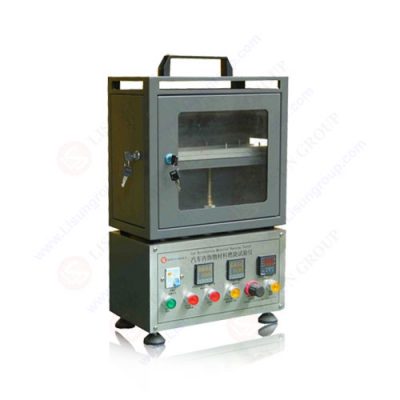
ZRS-4H Car Accessories Material Burning Tester
3.2 Applicable Standards
The ZRS-4H complies with a series of mandatory and widely adopted standards at home and abroad, satisfying certification requirements for different regions:
• Domestic Standards: GB 8410-2006, GB/T 27904-2011
• International Standards: FMVSS 302, ISO 3795, ASTM D5132, BS 6853, DIN 75200
4. Test Procedures of Automotive Interior Material Flammability Test Chamber (Taking ZRS-4H as Example)
• Specimen Preparation: Cut specimens in accordance with standard requirements, ensuring clean surface, no wrinkles or damages. Record material type, thickness and production information, and conduct conditioning treatment before testing.
• Equipment Preparation: Connect propane gas source and power supply, and inspect air tightness. Calibrate the flame height to 20±2 mm and set the flame application time to 15 s. Close the chamber door and confirm the normal operation of wind protection and smoke exhaust systems.
• Specimen Clamping: Fix the specimen on the fixture at 30°. Place absorbent cotton 300 mm below the specimen to detect ignition risks caused by molten drips.
• Ignition and Testing: Start the automatic program. The flame acts on the end of the specimen for 15 seconds and retracts automatically. The system starts timing synchronously. Observe the whole combustion process, flame spread, self-extinguishing behavior and dripping condition.
• Data Recording and Calculation: Record combustion duration, flame spread length, self-extinguishing time and whether the absorbent cotton is ignited. Calculate the combustion rate with the formula below: Combustion Rate (mm/min) = Combustion Distance (mm) / Combustion Time (min)
• Result Judgment: In accordance with GB 8410-2006, the material is qualified if the combustion rate is no more than 100 mm/min, the material self-extinguishes within 30 seconds after the flame is removed, and no drips ignite the absorbent cotton.
5. Test Results and Analysis of Flammability Performance of Different Interior Materials
Common automotive interior materials were tested by using the ZRS-4H automotive interior material flammability test chamber, and the test data are listed in the table below.
| Material Type | Combustion Distance (mm) | Combustion Time (s) | Combustion Rate (mm/min) | Self-extinguishing Time (s) | Drip Ignition | Judgment Result |
| Ordinary Knitted Fabric | 185 | 68 | 163.24 | — | Yes | Unqualified |
| Flame-retardant Knitted Fabric | 82 | 35 | 140.57 | 22 | No | Qualified |
| Flame-retardant PU Synthetic Leather | 65 | 28 | 139.29 | 18 | No | Qualified |
| Flame-retardant Modified PP Plastic | 42 | 19 | 132.63 | 12 | No | Qualified |
| EVA Foam Foot Pad | 128 | 52 | 147.69 | — | Yes | Unqualified |
It can be seen from the data that ordinary fabrics and unqualified foam materials have a combustion rate exceeding 100 mm/min and produce ignitable drips, which fail to meet national standards. By contrast, flame-retardant fabrics, leather and modified plastics present a low combustion rate, excellent self-extinguishing performance and no ignitable drips, fully meeting safety specifications. The automotive interior material flammability test chamber can effectively distinguish the flammability grade of different materials and provide reliable basis for material selection and formula optimization.
6. Application Fields of Automotive Interior Material Flammability Test Chamber
6.1 Automobile OEM and Component Industry
The equipment is applied to incoming inspection and type tests for seats, instrument panels, door panels, ceilings, carpets and other interior parts. It ensures that all materials comply with GB 8410 and FMVSS 302 requirements including combustion rate ≤ 100 mm/min and self-extinguishing within 30 seconds, preventing unqualified materials from being put into production.
6.2 Material R&D and Production
Fabric, leather, plastic and foam manufacturers adopt the automotive interior material flammability test chamber to verify the effect of flame-retardant coatings and modification formulas, so as to iterate production processes rapidly and satisfy the technical specifications of vehicle manufacturers.
6.3 Third-party Testing and Certification Institutions
Authoritative testing organizations use the ZRS-4H to conduct compliance tests and issue official reports, helping enterprises obtain CCC, EPA, ECE and other certifications and expand global markets.
6.4 Rail Transit and Special Vehicles
In accordance with BS 6853 and DIN 75200, the equipment is used to test interior materials of high-speed trains, subways and new energy commercial vehicles. It improves fire safety under thermal runaway conditions of batteries and meets the high safety standards for special equipment.
7. Conclusion and Prospect
The automotive interior material flammability test chamber is pivotal testing equipment for automobile safety inspection, and plays an irreplaceable role in controlling fire risks and protecting occupant safety. As a high-performance model, the LISUN ZRS-4H automotive interior material flammability test chamber features precise flame control, automatic sequence control, wind and heat resistance and multi-standard compatibility. With stable and accurate test results, it fully supports the whole process of R&D, production, testing and certification.
With the popularization of new energy vehicles and continuous upgrading of intelligent cockpits, stricter requirements will be put forward for the flammability of automotive interior materials. The automotive interior material flammability test chamber will develop towards higher automation, intelligence and multi-parameter integration, and realize integrated detection of combustion rate, smoke density, toxic gas and heat release in the future. Continuously optimizing equipment performance, improving test methods and promoting the implementation of relevant standards are of great significance to enhance the overall safety of automobiles and drive the high-quality development of the industry.
Tags:ZRS-4HYour email address will not be published. Required fields are marked *

 English
 中文简体
中文简体 English
 Русский
 Español
 Português
 Türkçe
 العربية
 Deutsch
 Polski
 Italiano
 Français
 한국어
한국어 ไทย
ไทย Tiếng Việt
 日本語
日本語