LM-79 Moving Detector Goniophotometer (Mirror Type C)
LSG-6000
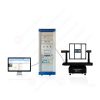
High Precision Rotation Luminaire Goniophotometer
LSG-1890B
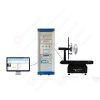
High Precision Rotation Luminaire Goniospectroradiometer
LSG-1890BCCD

Goniophotometer for Automotive and Signal Lamps
LSG-1950
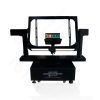
Goniophotometer for Traffic Signal Lamps (Economical Model)
LSG-1950S
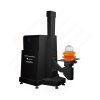
Goniophotometer for Airfield Lighting
LSG-1940
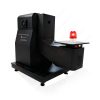
VAD Fire Alarm Visual Alert Device Goniophotometer
LSG-1930
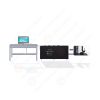
Compact Goniophotometer
LSG-1200A
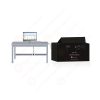
LED Goniophotometer
LSG-1100
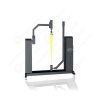
Near Field Moving Detector Goniophotometer
LSG-1900B
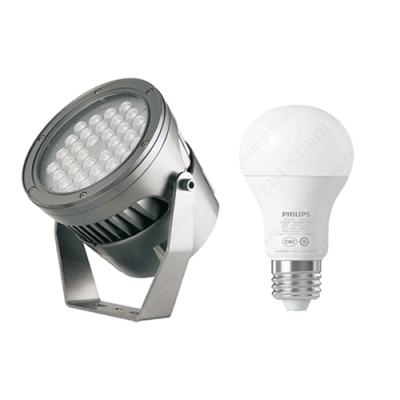 LEDs and Luminaire Test Solutions
 LM-79 and LM-80 Test Solutions
 LED Driver Test Solutions
 Household Appliances Test Solutions
 Mobile and Network Test Solutions
 Automotive Electronics Test Solutions
 Audio-Video and IT Test Solutions
 Cable and Wire Test Solutions
 Plugs and Sockets Test Solutions
 Power Switch Test Solutions
 Transformer Test Solutions
 Electric Toys Test Solutions
 Energy Meter Test Solutions
 Motor-Operated Tool Test Solutions
Select an organization
to browse standards
Abstract:With the acceleration of global industrialization, the ability of electronic, automotive, and lighting equipment to withstand extreme climatic conditions has become a core measure of product quality. The IEC 60529:2013 standard, globally recognized as the benchmark for evaluating Ingress Protection (IP Code) ratings, strictly defines the test conditions for IPX5 (water jets) and IPX6 (powerful water jets).
This paper aims to examine the issue of consistency in physical parameters during water jet testing, focusing on the analysis of nozzle geometric accuracy, linear flow control, and the mechanical dynamics of the test platform. Through an empirical analysis of the LISUN JL-56 Waterproof Jet Test Device, this paper demonstrates the necessity of a high-precision closed-loop control system for reducing experimental uncertainty and provides standards compliance guidelines for laboratories and manufacturers.
In modern industrial design and quality inspection, the Ingress Protection (IP) rating has become the “universal language” for electronic and electrical equipment entering the international market. Particularly in reliability assessments for outdoor lighting, communication base stations, and new energy vehicle components, IPX5 (water jet) and IPX6 (powerful water jet) tests are critical experiments for verifying the sealing performance of equipment under heavy rain or high-pressure washing conditions.
However, the credibility of test results relies heavily on the precision of the testing equipment. Minor deviations in nozzle aperture, fluctuations in flow rate, or unstable pressure output can lead to uneven test stress, resulting in inaccurate judgments. This paper provides an in-depth analysis, from an academic perspective, on achieving IEC-compliant IPX5/6 testing through precision equipment.
According to Clauses 14.2.5 and 14.2.6 of the IEC 60529:2013 standard, IPX5 and IPX6 fall under the category of “protection against water jets.” Their fundamental difference lies in the kinetic energy density of the jet stream:

Standard Figure 6 details the internal structure of the nozzle. This design is not a simple conduit but a precisely calculated contraction chamber. The contraction angle of its internal flow path and the length of the straight section must ensure that the water flow forms a stable “main jet zone” upon exiting the nozzle, rather than a chaotic atomized spray. This geometric precision directly determines the pressure distribution per unit of impact area.
To establish an accurate testing model, it is essential to understand the momentum transfer process when a water jet impacts a surface. According to the momentum theorem in fluid mechanics, the total impact force F generated by the nozzle can be calculated using the following formula:
F = ρ * Q * v = (ρ * Q²) / A
Where:
The formula shows that the impact force F is proportional to the square of the flow rate Q. This means any minor fluctuation in flow rate will have an exponentially amplified effect on the impact force. If the test equipment’s flow control lacks sufficient precision, impact forces exceeding the standard may cause instantaneous elastic deformation of seals (such as gaskets or sealants), potentially leading to false indications of leakage. Therefore, a high-precision closed-loop flow control system is a core performance indicator for testing apparatus.
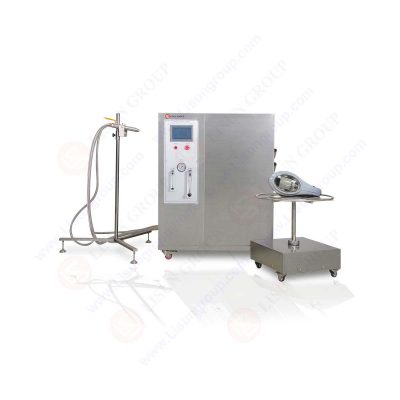
The LISUN JL-56 waterproof testing apparatus, an industrial-grade device designed to strictly comply with IEC standards, achieves a high degree of parametric determinism in its system architecture.
| Parameter Item / LISUN Model | WB2675A | WB2675B | WB2675C | WB2675D | Selection Guidance |
| Test Current Range | 0~2mA / 20 mA | 0~2mA / 20 mA | 0~2mA / 20 mA | 0~2mA / 20 mA | The entire series covers standard testing needs for appliances, luminaires, etc. |
| Accuracy | ±5% | ±5% | ±5% | ±5% | Meets the basic requirements for measurement accuracy in safety tests. |
| Test Time Setting | 1~99s (timed/manual) | 1~99s (timed/manual) | 1~99s (timed/manual) | 1~99s (timed/manual) | Supports automated timed testing, improving production line efficiency. |
| Isolation Transformer Capacity | 500 VA | 1000 VA | 2000 VA | 5000 VA | Key selection criterion. Choose based on the maximum rated power of the product under test: |
| • 500VA: Suitable for small appliances (e.g., kettles, hair dryers). | |||||
| • 1000VA: Suitable for most household appliances, small/medium luminaires. | |||||
| • 2000VA: Suitable for higher-power equipment, e.g., commercial appliances. | |||||
| • 5000VA: Suitable for high-power industrial equipment, large lighting systems, etc. | |||||
| Typical Application Scenario | R&D, sampling for low-power appliances | Production line & lab for medium appliances, luminaires | Testing for high-power appliances, commercial equipment | Testing for industrial equipment, large system integration | Capacity should have at least 20%-30% margin to ensure stable test voltage. |
The JL-56 system addresses the challenge of pressure fluctuations during high-to-low pressure switching through an integrated high-performance pump and variable frequency control technology. When conducting IPX6 tests, the system must handle a water flow rate as high as 100 liters per minute, placing extreme demands on the structural strength of the water tank and the recirculation/filtration system. The JL-56 utilizes an SUS304 stainless steel water tank, ensuring long-term water cleanliness and preventing accuracy loss caused by nozzle inner diameter wear due to impurities.
To ensure the sample is inspected from all angles, the JL-56 is equipped with an adjustable-speed test turntable. For a turntable with a maximum load capacity of 50 kg, rotational stability is crucial. Vibration of the turntable under high-pressure water jet impact would alter the water jet’s angle of incidence, thereby affecting the conversion of dynamic pressure to static pressure and compromising the repeatability of experimental data.
Prior to formal testing, laser distance measurement must be used to calibrate the nozzle-to-sample distance, ensuring it falls within the compliant range of 2.5 m to 3.0 m. Simultaneously, using the system’s digital interface, a zero-point calibration of the flow meter should be performed to ensure the output deviation for 12.5 L/min or 100 L/min remains within the ±5% tolerance range.
The sample should be placed at the center of the turntable, and the nozzle’s elevation angle should be adjusted according to the sample’s shape. For large outdoor luminaires, extended spraying should focus on areas such as cable entries, sealing gaskets, and fastening bolts. The test duration must strictly adhere to the principle of “not less than 1 minute per square meter, with a total minimum of 3 minutes.”
In practical applications, such as with precision optical instruments like goniophotometers and spectrometers, even minor leakage can not only cause electrical short circuits but also lead to lens fogging or electrochemical corrosion due to increased internal humidity. Utilizing automated, standards-compliant equipment like the JL-56 provides enterprises with multidimensional value:
IPX5/6 waterproof testing is not merely a simple environmental test but a comprehensive discipline involving fluid mechanics, materials science, and electromechanical control. The LISUN JL-56 Waterproof Jet Test Device accurately interprets the technical requirements of the IEC 60529:2013 standard through its high-precision nozzle design, rigorous closed-loop flow control, and robust mechanical structure. In the current pursuit of high-quality product development, selecting test equipment with significant technical depth is not only a compliance requirement but also a core competitive strength for brands targeting the international market.
Tags:JL-XYour email address will not be published. Required fields are marked *

 English
 中文简体
中文简体 English
 Русский
 Español
 Português
 Türkçe
 العربية
 Deutsch
 Polski
 Italiano
 Français
 한국어
한국어 ไทย
ไทย Tiếng Việt
 日本語
日本語