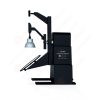
LM-79 Moving Detector Goniophotometer (Mirror Type C)
LSG-6000
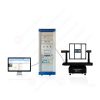
High Precision Rotation Luminaire Goniophotometer
LSG-1890B
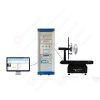
High Precision Rotation Luminaire Goniospectroradiometer
LSG-1890BCCD

Goniophotometer for Automotive and Signal Lamps
LSG-1950
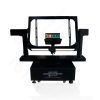
Goniophotometer for Traffic Signal Lamps (Economical Model)
LSG-1950S
VAD Fire Alarm Visual Alert Device Goniophotometer
LSG-1930
Goniophotometer for Airfield Lighting
LSG-1940
Compact Goniophotometer
LSG-1200A
LED Goniophotometer
LSG-1100
Near Field Moving Detector Goniophotometer
LSG-1900B
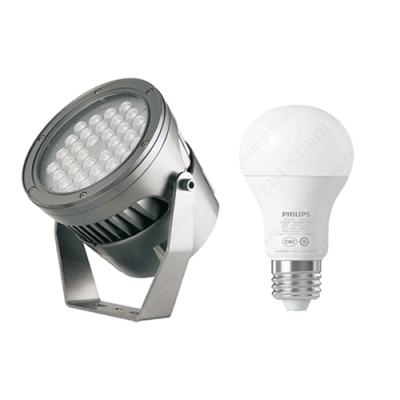 LEDs and Luminaire Test Solutions
 LM-79 and LM-80 Test Solutions
 LED Driver Test Solutions
 Household Appliances Test Solutions
 Mobile and Network Test Solutions
 Automotive Electronics Test Solutions
 Audio-Video and IT Test Solutions
 Cable and Wire Test Solutions
 Plugs and Sockets Test Solutions
 Power Switch Test Solutions
 Transformer Test Solutions
 Electric Toys Test Solutions
 Energy Meter Test Solutions
 Motor-Operated Tool Test Solutions
Select an organization
to browse standards
The goniophotometer working principle is based on the photometric inverse square law and CIE standard C-γ spatial coordinate system. Its core objective is to collect luminous intensity of light sources at all spatial angles, construct a 3D luminous intensity matrix and derive all photometric parameters.
• Theoretical Formula: Luminous intensity I=E×d², where E stands for illuminance measured by probe and d represents measuring distance. Total luminous flux is calculated via full-space solid angle integration Φ=∫IdΩ, which serves as the fundamental calculation basis for light distribution curves, glare values, beam angles and other parameters.
• Main Structural Classification: Two mainstream structures are lamp-rotating type and vertical probe-rotating type. LISUN LSG-6000 adopts Type C vertical rotating probe architecture. Different from traditional equipment, its core logic is that the tested lamp remains static, while near-field probe and mirror synchronously rotate around the lamp for scanning. This avoids measurement errors caused by heat dissipation deviation, gravity shift and airflow disturbance during lamp rotation, fully complying with LM-79 and EN13032-1 Type 4 equipment standards.
• Spatial Scanning Logic: The γ angle covers ±180° (0~360° vertical space), and C-plane realizes full sampling within 360° horizontal range. High-precision servo system controls probe stepping accurately. Each group of (C, γ) angles corresponds to a set of luminous intensity data. The software automatically splices data to form complete 3D luminous intensity distribution curves, and supports customizable measuring distance to meet far-field measurement standards of lamps with different specifications.

Mechanical and Detection System Design
As an upgraded model of LSG-5000, LISUN LSG-6000 optimizes hardware fully in accordance with the goniophotometer working principle. It is equipped with Mitsubishi servo motors from Japan and high-precision decoders from Germany, featuring angular accuracy of 0.05° and resolution of 0.001° with stable start-stop operation without jitter. Class L constant-temperature photometric probes with f1′<1.5% are equipped to meet high-precision photometric testing requirements of DIN5032-6 and CIE No.69. Cross laser calibration device quickly aligns the luminous center of lamps to eliminate positioning deviation.
The system supports customized measuring distance, which can adjust far-field detection position according to the luminous surface size of lamps to satisfy far-field measurement specifications for large-size street lamps and mini LED modules. Optional UVA/UVB/UVC Class A dedicated probes expand testing capacity for ultraviolet light distribution. When matched with LPCE-2 spectroradiometer, LSG-6000CCD system can simultaneously collect spatial color temperature, PAR and PPF spectral parameters for plant growth lighting.
Full Series Specification Parameters of LISUN LSG-6000
| Model | Max Lamp Size (Diameter × Thickness) | Max Load Capacity | Electrical Test Specification | Min Darkroom Height | Applicable Light Sources |
|---|---|---|---|---|---|
| LSG-6000S (Small Type) | Φ1200×500mm | 40kg | 600V/10A AC/DC | 3.0m | Mini LED bulbs, household lighting, small plant lights |
| LSG-6000 (Standard Type) | Φ1600×600mm | 50kg | 600V/10A AC/DC | 4.1m | Indoor lamps, common LED modules, medium-small flood lights |
| LSG-6000B (Large Type) | Φ1800×800mm | 60kg | 600V/10A AC/DC | 4.7m | Mining lamps, large plant growth lights, tunnel lights |
| LSG-6000L (Extra Large Type) | Φ2000×900mm | 80kg | 600V/10A AC/DC | 5.2m | High-power street lamps, stadium flood lights, large HID light sources |
Supported by mature goniophotometer working principle, LISUN LSG-6000 realizes fully automatic full-space scanning without manual lamp posture adjustment. One-click data collection via software automatically generates 3D luminous intensity distribution curves, iso-candela curves and iso-illuminance diagrams. It supports export of IES, LDT and CIE format files which can be directly imported into DiaLux lighting design software.
The equipment is compatible with testing requirements of all types of lighting sources:
• LED Light Sources: Compliant with LM-79-19/24 solid-state lighting standards, it accurately tests luminous flux, UGR glare and luminous efficacy of LED modules, panel lights and downlights;
• Plant Growth Lights: LSG-6000CCD version can test spatial PPF and PPFD distribution to quantify spatial photosynthetically active radiation for plants;
• HID Light Sources: Realizes stable burning test for high-power gas discharge lamps such as metal halide lamps and high-pressure sodium lamps, eliminating arc offset errors caused by lamp shaking on rotating equipment;
• Outdoor Lighting: For street lamps, flood lights and tunnel lights, it can generate bat-wing light distribution curves and calculate spacing-height ratio, upward and downward luminous flux;
• Indoor Lighting: For spotlights, pendant lamps and grille lamps, it outputs key indoor design parameters including luminance limiting curves and utilization factors.
The supporting software is compatible with Win7 ~ Win11 systems, equipped with Chinese & English bilingual interface, dual RS485/USB communication ports. It supports batch storage of multiple test reports and standardized testing procedures for third-party laboratories.

Figure: Type C goniophotometer
The complete LISUN LSG-6000 system is constructed strictly following the goniophotometer working principle, with test results recognized by authoritative institutions. It complies with mainstream domestic and international photometric standards including North American LM-79-19, LM-79-24, European EN13032-1, (EU)2019/2015, international CIE S025, CIE121 and Chinese GB/T 24824.
Compared with traditional lamp-rotating goniophotometers, its “static lamp + rotating probe” structure has prominent advantages: No posture shift occurs during long-time burning test of high-power and high-temperature lamps, and repeated test error of luminous intensity is lower than 1%. The angular resolution reaches 0.001°, capturing complete details for narrow-beam spotlights and narrow-distribution flood lights. Customizable measuring distance flexibly adapts to darkrooms of different sizes and reduces laboratory reconstruction costs.
The goniophotometer working principle serves as the core technical foundation of LISUN LSG-6000 vertical rotating probe goniophotometer. Equipped with C-γ coordinate full-space synchronous scanning, static tested object structure and high-precision servo detection system, the equipment realizes automatic acquisition of 3D luminous intensity distribution curves with customizable measuring distance. The full product series covers size and load requirements from small LED lights to high-power outdoor lamps, compatible with photometric testing of LED, plant growth lights, HID lamps, street lamps, flood lights and other full-category light sources. It can be expanded with ultraviolet and spatial spectrum testing functions, meeting standardized photometric testing demands of enterprise R&D, third-party testing and quality inspection institutions. It is a high-versatility and high-precision device for photometric performance detection of solid-state lighting and traditional light sources.
Tags:LSG-6000Your email address will not be published. Required fields are marked *

 English
 中文简体
中文简体 English
 Русский
 Español
 Português
 Türkçe
 العربية
 Deutsch
 Polski
 Italiano
 Français
 한국어
한국어 ไทย
ไทย Tiếng Việt
 日本語
日本語