LM-79 Moving Detector Goniophotometer (Mirror Type C)
LSG-6000
High Precision Rotation Luminaire Goniophotometer
LSG-1890B
High Precision Rotation Luminaire Goniospectroradiometer
LSG-1890BCCD

Goniophotometer for Automotive and Signal Lamps
LSG-1950
Goniophotometer for Traffic Signal Lamps
LSG-1950S
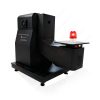
VAD Fire Alarm Visual Alert Device Goniophotometer
LSG-1930
Compact Goniophotometer
LSG-1200A
LED Goniophotometer
LSG-1100
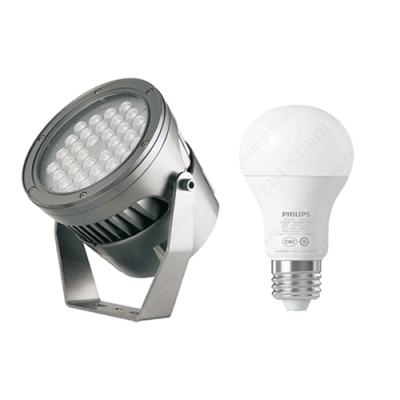 LEDs and Luminaire Test Solutions
 LM-79 and LM-80 Test Solutions
 LED Driver Test Solutions
 Household Appliances Test Solutions
 Mobile and Network Test Solutions
 Automotive Electronics Test Solutions
 Audio-Video and IT Test Solutions
 Cable and Wire Test Solutions
 Plugs and Sockets Test Solutions
 Power Switch Test Solutions
 Transformer Test Solutions
 Electric Toys Test Solutions
 Energy Meter Test Solutions
 Motor-Operated Tool Test Solutions
Select an organization
to browse standards
Abstract
In hazardous operation scenarios such as military industry, chemical engineering, oil and gas exploitation, powder materials, flammable‑explosive liquids, electro‑explosive devices and related electronic components tend to accumulate static electricity during production, transportation and storage. Tiny electrostatic sparks may trigger major safety accidents including combustion and explosion. The Explosive ESD Test System can simulate high‑voltage electrostatic discharge pulses under real‑world working conditions and quantitatively obtain electrostatic discharge sensitivity thresholds of energetic materials and fuze devices, providing test data support for safety design, quality inspection and compliance certification of hazardous materials and components. This paper takes LISUN ESD‑ES30KV Explosive ESD Test System as the research object. It discusses the working principle, hardware configuration, standard compliance, technical parameters and engineering application scenarios of the Explosive ESD Test System, evaluates assessment methods for electrostatic risks under hazardous working conditions, and delivers a complete reference for controlled electrostatic discharge tests in oil & gas, chemical, military, aerospace and other industries.
Static electricity is generated through friction, contact‑separation and electric‑field induction between objects. In ordinary industrial environments, static electricity mostly only causes damage to electronic components. In special working conditions with explosives, combustible powders and flammable‑explosive media, once the spark energy released by static discharge reaches the ignition threshold of substances, uncontrolled combustion and explosion accidents will occur. Throughout processing, transportation and storage of pyrotechnic fuzes, industrial detonators and flammable‑explosive powder raw materials, human activities, equipment friction and material conveying continuously generate static electricity. Quite a number of safety accidents are induced by invisible electrostatic sparks. Conventional safety inspection methods mainly focus on anti‑static grounding and anti‑static consumable checks for environments, which can hardly directly measure the electrostatic discharge tolerance limit of materials and components themselves.
Also known as electrostatic ignition, fuze and spark sensitivity electrostatic discharge test system, the explosive ESD test system is specially designed for ESD testing of powders, liquids, fuzes and electronic devices. It delivers a maximum output voltage up to 50 kV and generates high‑voltage electrostatic discharge pulses with high precision and favorable repeatability to accurately assess the electrostatic discharge sensitivity of explosive materials and devices. The Explosive ESD Test System can simulate various real‑world electrostatic excitation conditions such as human‑body electrostatic discharge and equipment contact discharge, making up for deficiencies of traditional safety inspection approaches. It serves as an indispensable test instrument for controlled electrostatic discharge tests in hazardous‑risk industries.
LISUN ESD‑ES series Explosive ESD Test System includes two models: ESD‑ES30KV and ESD‑ES50KV. Both adopt modular plug‑gable resistance‑capacitance modules with dual‑slot structure supporting parallel combination of RC modules, enabling testers to rapidly switch discharge loop parameters according to different requirements of national military standards, US military standards and European standards. The complete system integrates safety interlock mechanism and real‑time high‑voltage monitoring function to minimize operational risks during high‑voltage tests. A 5‑inch IPS touch screen is adopted for human‑machine interaction, supporting intuitive parameter setting and status monitoring with simple operation procedures. The equipment features stable pulse output with low dispersion among repeated tests under identical conditions. Custom modification of RC parameters and external test chambers is also supported to meet test requirements for samples in diverse forms. Core technical parameters of the two models are summarized in the table below.
| Parameter Item | ESD‑ES30KV | ESD‑ES50KV |
|---|---|---|
| Output Voltage Range | ±300V ~ ±30 kV | ±500V ~ ±50 kV |
| Voltage Step | 10V | 10V |
| Voltage Accuracy | < ±5% | < ±5% |
| Standard Discharge Resistance Module | 500Ω, optional 0Ω, 20Ω, 5kΩ, 100kΩ | 500Ω, optional 0Ω, 20Ω, 5kΩ, 100kΩ |
| Standard Discharge Capacitance Module | 2000pF, optional 100pF, 250pF, 500pF, 1000pF, 5000pF | 2000pF, optional 100pF, 250pF, 500pF, 1000pF, 5000pF |
| Pulse Interval | ≥0.1s | ≥0.1s |
| Operating Ambient Condition | -10℃ ~ +40℃, 0~80%RH | -10℃ ~ +40℃, 0~80%RH |
The plug‑gable RC module design provides high flexibility. Different standards impose divergent requirements on capacitance and resistance loops for electro‑explosive device tests. Test loops can be quickly switched by replacing modules without modifying main hardware of the equipment. The safety interlock function prohibits high‑voltage output when the test chamber door is not fully closed or protective devices are abnormal. The real‑time high‑voltage monitoring module continuously collects output voltage and performs protective cutoff promptly in case of abnormal voltage offset to secure safety of operators and samples. The operating temperature and humidity range covers most domestic laboratory environments, and conventional electrostatic sensitivity tests can be carried out without additional complex temperature‑control accessories.
The Explosive ESD Test System ESD‑ES series is fully compliant with domestic military standards, United States Department of Defense standards and relevant European standards for civil explosives. Chinese military standards include GJB 736.11 Test methods for pyrotechnics‑Part 11: Electrostatic sensitivity test, GJB 5309.1 Test methods for electrostatic sensitivity of ammunition‑Part 1: Electro‑explosive devices, GJB 5891.27 Test methods for fuze environment and performance‑Part 27: Electrostatic discharge test, and GJB 8142 Design criteria for electrostatic safety of ammunition. US military standards cover MIL‑STD‑331C, MIL‑STD‑331D, MIL‑STD‑464D, MIL‑STD‑1751A, MIL‑STD‑1576, MIL‑DTL‑23659 and multiple other weapon‑related test specifications. It is also compatible with EN 13763‑13:2025 European standard for verification of electrostatic discharge resistance of electric detonators for civil explosives. With comprehensive standard compliance, test results generated by the equipment can be directly adopted in R&D verification and third‑party certification reports.
The Explosive ESD Test System addresses demands for controlled electrostatic discharge tests across multiple industries. Its primary application lies in electrostatic discharge sensitivity testing for electro‑explosive devices (EED). Threshold measurement is implemented for various electric detonators and ignition devices to obtain firing probability and critical voltage of samples under different RC discharge loops, so as to guide structural design and optimization of protection schemes for pyrotechnics. Secondly, it can perform simulation tests of personnel electrostatic discharge (PESD), reproducing real‑world conditions of static electricity released by operators contacting devices and evaluating threat levels of human‑body static electricity to hazardous components. For product compliance certification, the equipment conducts safety compliance tests for military and civil blasting products and generates credible test data. At manufacturing sites, it supports quality control during production by sampling incoming materials and finished products to screen out products with excessive electrostatic sensitivity. Besides, it can assess electrostatic risks during material storage and transportation, and evaluate electrostatic ignition risks of combustible powders and flammable‑explosive liquids in conveying and storage processes. It also supports R&D verification of electrostatic protection for explosives and special electronic devices, comparing anti‑static‑shock performance of different protection structures and materials. The Explosive ESD Test System is applicable to industries including oil & gas, electronics manufacturing, chemical engineering, military industry, automotive, medical and aerospace sectors.
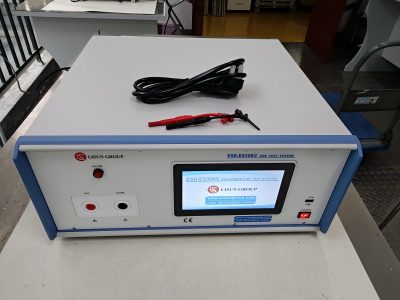
Explosive ESD Test System
When conducting tests with the Explosive ESD Test System, apart from equipment accuracy, ambient conditions, sample pre‑treatment and selection of RC loop parameters will significantly influence test results. Ambient temperature and humidity shall be kept within the allowable operating range of the equipment. Materials tend to accumulate more static electricity under low‑humidity conditions, which will change actual test responses of samples. Samples shall be pre‑treated in accordance with corresponding standards to eliminate interference caused by residual surface charges. RC loop parameters must strictly match corresponding standards, since static‑source models defined by different standards differ from each other. Incorrect resistance‑capacitance configuration will directly lead to distorted measurement of sensitivity thresholds. Meanwhile, regular voltage calibration shall be performed for the equipment to ensure output voltage errors stay within allowable ranges specified by standards.
From the perspective of engineering value, the Explosive ESD Test System converts qualitative electrostatic risk assessment into quantitative threshold measurement. At the R&D stage, researchers can optimize electrostatic protection design for fuzes and energetic components based on test data to reduce accidental triggering risks from the source. For quality inspection, it is used for batch product screening to prevent products with high electrostatic sensitivity from entering circulation links. For safety assessment, it provides test basis for formulating safety specifications for material storage and transportation and mitigates potential safety hazards induced by electrostatic sparks in hazardous working environments.
Static electricity represents a concealed and high‑frequency safety risk in hazardous working environments. Reliance merely on anti‑static protection measures cannot fully confirm electrostatic tolerance of explosives and electro‑explosive devices. The Explosive ESD Test System can accurately reproduce various high‑voltage electrostatic discharge conditions and quantitatively determine electrostatic discharge sensitivity of hazardous materials and components, delivering reliable test basis for safety design, product quality inspection and risk evaluation. LISUN ESD‑ES30KV Explosive ESD Test System features modular hardware architecture, comprehensive safety protection and extensive standard compliance, satisfying demands for controlled electrostatic discharge tests in military, chemical, oil‑gas, aerospace and other industries. When carrying out safety management, hazardous‑risk industries shall attach sufficient importance to electrostatic sensitivity tests and incorporate the Explosive ESD Test System into reliability verification systems. Test data shall be adopted to support full‑lifecycle electrostatic safety management of hazardous materials and components and lower occurrence probability of major accidents triggered by electrostatic sparks.
Tags:ESD-ES30KVYour email address will not be published. Required fields are marked *

 English
 中文简体
中文简体 English
 Русский
 Español
 Português
 Türkçe
 العربية
 Deutsch
 Polski
 Italiano
 Français
 한국어
한국어 ไทย
ไทย Tiếng Việt
 日本語
日本語