LM-79 Moving Detector Goniophotometer (Mirror Type C)
LSG-6000
High Precision Rotation Luminaire Goniophotometer
LSG-1890B
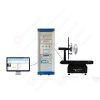
High Precision Rotation Luminaire Goniospectroradiometer
LSG-1890BCCD

Goniophotometer for Automotive and Signal Lamps
LSG-1950
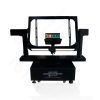
Goniophotometer for Traffic Signal Lamps
LSG-1950S
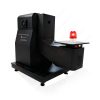
VAD Fire Alarm Visual Alert Device Goniophotometer
LSG-1930
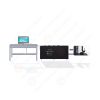
Compact Goniophotometer
LSG-1200A
LED Goniophotometer
LSG-1100
 LEDs and Luminaire Test Solutions
 LM-79 and LM-80 Test Solutions
 LED Driver Test Solutions
 Household Appliances Test Solutions
 Mobile and Network Test Solutions
 Automotive Electronics Test Solutions
 Audio-Video and IT Test Solutions
 Cable and Wire Test Solutions
 Plugs and Sockets Test Solutions
 Power Switch Test Solutions
 Transformer Test Solutions
 Electric Toys Test Solutions
 Energy Meter Test Solutions
 Motor-Operated Tool Test Solutions
Select an organization
to browse standards
Abstract
In the field of EMC pre-compliance testing, anechoic chambers serve as the traditional standard test site, yet their high construction costs and large floor space create substantial barriers for small and medium-sized electronics manufacturers. GTEM Cell Chamber is a new type of EMC test equipment developed based on TEM cells. It adopts an asymmetric tapered rectangular structure to simulate free space and stably generate uniform transverse electromagnetic (TEM) waves inside the chamber, representing a mature lightweight measurement technology emerging in the EMC industry over the past decade. This paper takes LISUN GTEM-2 GTEM Cell Chamber as the core research object, compares GTEM Cell Chamber with traditional anechoic chambers from four dimensions including cost, space occupation, test efficiency and standard compliance, and demonstrates the core advantages of adopting GTEM Cell Chamber during the R&D phase of small IoT devices, PCB modules, wearable electronics and small household appliances. Combined with standards such as IEC 61000-4-20 and GB/T 17626.3, this paper verifies the validity of its test data and provides technical references for enterprises to select EMC laboratory equipment.
GTEM stands for Gigahertz Transverse Electromagnetic Cell. Essentially, it is an upgraded and expanded product of conventional TEM cells. Traditional TEM cells feature a low upper bandwidth limit and are only applicable to low-frequency testing. In contrast, GTEM Cell Chamber spatially extends the coaxial structure, expands the inner conductor into a metal septum and takes the outer shell as the outer conductor. The overall structure is an asymmetric tapered rectangular cavity equipped with matched resistor arrays and wave-absorbing materials at the tail to realize 50-ohm broadband impedance matching. It can simulate reflection-free free space within a closed chamber and stably generate full-band TEM waves.
In terms of structure, LISUN GTEM-2 GTEM Cell Chamber has an overall dimension of 1950×950×700mm. An N-type RF feed connector is installed at the front end of the chamber, and a shielding door with an observation window is reserved in the middle. A uniform 3dB test zone of 200×200×100mm is arranged inside, which can accommodate equipment under test (EUT) with a maximum size of 260×400×130mm, fully covering the outline dimensions of most small electronic products. The core electric field strength can be accurately calculated by inputting RF power and septum spacing, with field strength ranging from 0 to 200V/m to meet all levels of radiated immunity test requirements of 1~30V/m specified in IEC 61000-4-3.
In terms of functions, GTEM Cell Chamber boasts wideband performance covering DC to microwave frequency bands. A single unit can complete two core EMC test items: RF electromagnetic field radiated immunity (EMS) test and radiated emission limit (EMI) pre-compliance test. A complete automatic test system can be built by matching LS-SMB100B signal generator, LS-PA series power amplifier, LS-PB60 field probe and EMI-9KC receiver. The system supports full-process automatic testing via software without repeated manual adjustment of antennas and turntables, greatly shortening test cycles.
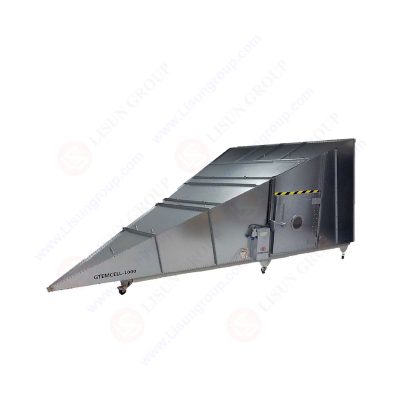
GTEM-2 GTEM Cell Chamber
Greatly Reduced Construction and Operation & Maintenance Costs
A conventional 3-meter semi-anechoic chamber requires an independent dedicated laboratory, shielded steel structure, ferrite wave-absorbing materials covering all walls, ground turntables and multiple groups of broadband transmitting and receiving antennas. The total investment of civil engineering and equipment is 4 to 10 times that of a GTEM Cell Chamber with equivalent specifications.
• Initial Investment: The complete EMC test system of LISUN GTEM-2 includes GTEM cavity, signal generator, power amplifier, field strength monitoring equipment and automatic test software. Its overall procurement cost only accounts for 15%~25% of a small semi-anechoic chamber. No factory renovation or special shielding civil engineering is required, and it can be placed in standard workshops and R&D offices.
• Energy Consumption: Anechoic chambers radiate electromagnetic waves through external antennas. When testing at the same 30V/m field strength, they require much higher power amplifier output than GTEM Cell Chamber. GTEM Cell Chamber directly couples uniform electric fields via the internal septum, improving RF power utilization by more than 80% and significantly cutting long-term electricity expenses.
• Long-term Maintenance: The wave-absorbing materials of anechoic chambers need overall replacement every 3 to 5 years, and antennas and turntables require annual calibration. GTEM Cell Chamber adopts an integrated metal welded cavity with a typical VSWR of ≤1.5, free of consumable wave-absorbing materials. Only annual port impedance calibration is needed, reducing maintenance workload by 70%.
Minimal Space Occupancy, Suitable for R&D Sites of Small and Medium-sized Enterprises
Anechoic chambers have rigid far-field distance requirements. A 3-meter chamber needs at least 25 square meters of independent closed space, while a 10-meter chamber covers more than 50 square meters. Most small and medium-sized electronics enterprises lack supporting site conditions.
GTEM Cell Chamber features an integrated compact box structure. Taking GTEM-2 as an example, the whole machine volume is only 1.3 cubic meters, which can be fully loaded into a 40HQ container for transportation and put into commission within 1 to 3 days after delivery. Multiple GTEM units can be placed side by side for parallel pre-testing of multiple product lines without RF crosstalk. Its flexible space layout brings prominent advantages to small electronic product R&D featuring frequent iterations and simultaneous batch testing of multiple prototypes.
Higher Test Efficiency to Support Rapid Iteration in R&D Stage
The R&D cycle of small electronic products is short, requiring frequent PCB and structural component revisions as well as repeated EMI/EMS pre-tests. The test procedure of anechoic chambers is cumbersome:
– Anechoic chamber testing involves moving EUT, adjusting turntable angles, switching transmit-receive antennas and calibrating antenna heights, with a single group of radiation tests taking 1 to 2 hours.
– For GTEM Cell Chamber, users only need to place the product into the internal 3dB uniform area, and switch EMI/EMS test modes with one click via software. A complete set of tests only takes 15 to 30 minutes. Dozens of prototypes can be screened per day to quickly locate sources of electromagnetic interference and shorten R&D revision cycles.
Compliant with International Standards with Referable Pre-test Data
Many engineers hold a misunderstanding that only data obtained from anechoic chambers can pass certification. However, IEC 61000-4-20 specially defines GTEM Cell Chamber as a compliant pre-test site, and its measurement results are also recognized by the corresponding national standard GB/T 17626.20 in China:
• Radiated Immunity (EMS): The GTEM test system fully complies with IEC 61000-4-3 and GB/T 17626.3. Third-party laboratories generally recognize pre-test data from GTEM Cell Chamber to avoid radiated immunity failures in advance.
• Radiated Emission (EMI): Matched with an EMI receiver, it simulates open area test site (OATS) environment through 3D mathematical modeling to complete pre-compliance tests of CISPR 11/22/25 series. Before sending samples to anechoic chambers for official certification, engineers can optimize excessive noise problems in advance and greatly reduce re-test costs for certification.
| Comparison Index | LISUN GTEM-2 GTEM Cell Chamber | Conventional 3m Semi-Anechoic Chamber | Advantages & Disadvantages for Small Electronic Products |
| Total Investment Cost | Low (Complete system at medium price range) | Extremely High (Civil engineering + equipment at million-level cost) | GTEM significantly lowers entry barriers for small and medium enterprises |
| Floor Space Occupied | 1.3m³, installable in ordinary workshops | ≥25㎡ independent shielded laboratory | GTEM fits factories and R&D offices without strict site restrictions |
| Installation Period | 1~3 days for delivery and debugging of the whole unit | 4~12 weeks for civil engineering and shielding construction | R&D projects can launch tests rapidly without delaying product schedules |
| Duration of Complete EMI+EMS Test | 15~30min | 60~120min | GTEM is suitable for rapid batch screening of prototypes |
| Maintenance Cycle of Consumables | No wave-absorbing consumables, only simple annual calibration | Full replacement of wave-absorbing materials every 3~5 years, annual calibration for antennas and turntables | GTEM generates lower long-term operation and maintenance costs |
| Maximum Applicable EUT Size | 260×400×130mm | No size limit | Fully covers dimensions of small electronics without space waste |
| Applicable Standards | IEC 61000-4-20, IEC 61000-4-3, CISPR pre-compliance standards | Full set of CISPR/IEC official certification standards | GTEM meets demands for R&D pre-tests; anechoic chambers are still required for mass production certification |
| RF Power Demand | Low, amplifier power only 1/5 of that for anechoic chambers under identical field strength | High, requiring high-power amplifiers with extra supporting costs | Further reduces procurement costs of supporting instruments |
Core Applicable Scenarios of GTEM Cell Chamber
• R&D of consumer small electronics: smart bracelets, Bluetooth earphones, sensor modules, small power adapters, smart home controllers;
• Industrial small electronic control units: PCB control boards, low-voltage acquisition modules, portable testing instruments;
• Pre-test laboratories of universities and third-party testing institutions: for teaching and sample preliminary screening to cut costs of booking formal anechoic chambers;
• Radiated immunity preliminary testing for small military and power components, complying with pre-compliance requirements of IEC and national standards.
Limitation Explanation
GTEM Cell Chamber is equipment for R&D pre-tests and cannot fully replace anechoic chambers. For official product launch and third-party certification reports, formal certification tests must be completed in semi or full anechoic chambers. For large equipment exceeding 1300×2000×650mm in size, though compatible with GTEM-8 model, it delivers lower cost performance than anechoic chambers and is not recommended.
Developed from TEM cells with an asymmetric tapered structure, GTEM Cell Chamber simulates free-space TEM waves inside a closed cavity. As a lightweight EMC testing technology, it perfectly matches pre-test demands during the R&D phase of small electronic products. Compared with traditional anechoic chambers, LISUN GTEM-2 series GTEM Cell Chamber features five core strengths: low cost, minimal footprint, fast deployment, high test efficiency and compliance with international EMC pre-test standards, solving two major pain points of small and medium-sized electronics enterprises when building EMC laboratories: limited capital and insufficient site space.
For manufacturers focusing on small IoT devices, wearable equipment, PCB modules and small household appliances, deploying GTEM Cell Chamber in product R&D, prototype revision and batch preliminary testing can eliminate electromagnetic interference risks in advance and drastically reduce time and capital costs of sending samples to external anechoic chambers for certification. If enterprises need official compliance certification reports, they can adopt a combined solution of GTEM pre-test plus final testing at third-party anechoic chambers to balance cost performance and regulatory compliance.
Tags:GTEM-2Your email address will not be published. Required fields are marked *

 English
 中文简体
中文简体 English
 Русский
 Español
 Português
 Türkçe
 العربية
 Deutsch
 Polski
 Italiano
 Français
 한국어
한국어 ไทย
ไทย Tiếng Việt
 日本語
日本語