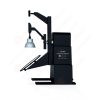
LM-79 Moving Detector Goniophotometer (Mirror Type C)
LSG-6000
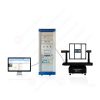
High Precision Rotation Luminaire Goniophotometer
LSG-1890B
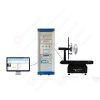
High Precision Rotation Luminaire Goniospectroradiometer
LSG-1890BCCD

Goniophotometer for Automotive and Signal Lamps
LSG-1950
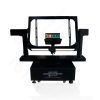
Goniophotometer for Traffic Signal Lamps (Economical Model)
LSG-1950S
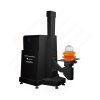
Goniophotometer for Airfield Lighting
LSG-1940
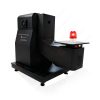
VAD Fire Alarm Visual Alert Device Goniophotometer
LSG-1930
Compact Goniophotometer
LSG-1200A
LED Goniophotometer
LSG-1100
Near Field Moving Detector Goniophotometer
LSG-1900B
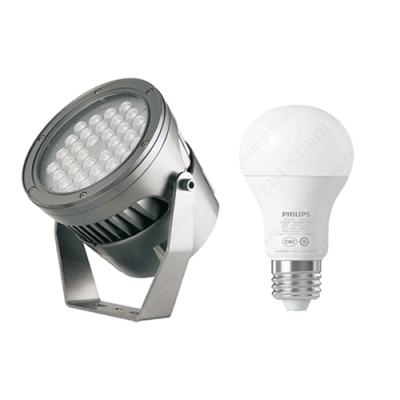 LEDs and Luminaire Test Solutions
 LM-79 and LM-80 Test Solutions
 LED Driver Test Solutions
 Household Appliances Test Solutions
 Mobile and Network Test Solutions
 Automotive Electronics Test Solutions
 Audio-Video and IT Test Solutions
 Cable and Wire Test Solutions
 Plugs and Sockets Test Solutions
 Power Switch Test Solutions
 Transformer Test Solutions
 Electric Toys Test Solutions
 Energy Meter Test Solutions
 Motor-Operated Tool Test Solutions
Select an organization
to browse standards
Abstract:
The LM-79 Moving Detector Goniophotometer (Mirror Type C) is core equipment for optical parameter measurement in the lighting industry, specially designed for full-space luminous intensity distribution and related optical performance testing. As an upgraded flagship model in this series, the LISUN LSG-6000 Rotating Probe Vertical Goniophotometer (Full‑Space Goniophotometer) fully meets multiple authoritative international and domestic standards, including LM-79-24, LM-79-19, Clause 6.1.1.3 of EN13032-1 (Type 4 Goniophotometer), CIE S025, SASO 2902, IS 16106 and GB standards for optical parameter testing. It can satisfy testing requirements for various light sources such as LED light sources, grow lights, HID light sources, indoor and outdoor lighting, street lamps and floodlights. This paper comprehensively analyzes the system from standard compliance, core technical design, key performance parameters and industrial applications, verifying its accuracy, stability and applicability in optical parameter testing. Research shows that this system features high test accuracy, comprehensive functions and strong compatibility, providing scientific and reliable detection support for lighting product R&D, quality control and market access, making it an indispensable core testing instrument in the lighting industry.
1. Introduction
With the rapid development of lighting technology, new lighting products such as LED light sources, horticultural grow lights and smart lighting are constantly emerging. Their optical parameters, including luminous intensity distribution, luminous flux, luminous efficacy and glare rating, directly determine the lighting effect, energy-saving performance and user experience, serving as key evaluation indicators for product R&D, production quality control and market access. Traditional optical parameter testing equipment suffers from limited measurement range, insufficient accuracy and poor compatibility, which can no longer meet the diverse and high-precision testing requirements of modern lighting products.
As special equipment for full‑space optical parameter measurement, the LM-79 Moving Detector Goniophotometer (Mirror Type C) accurately obtains luminous intensity distribution curves and various derived optical parameters by simulating the full‑space radiation characteristics of light sources, becoming a core support for standardized testing in the lighting industry. The LISUN LSG-6000 LM-79 Moving Detector Goniophotometer (Mirror Type C) is a full‑space goniophotometer upgraded and developed based on LM-79-19, achieving comprehensive breakthroughs in test accuracy, functional coverage and light source adaptability, and fully complying with multiple authoritative international and domestic standards. Taking this system as the research object, this paper deeply analyzes its technical advantages and application value, providing a reference for equipment selection by lighting enterprises and testing institutions.
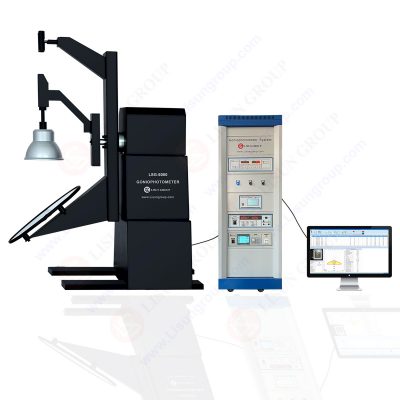
LM-79 Moving Detector Goniophotometer (Mirror Type C)
2. Core Standards and Testing Value of the LM-79 Moving Detector Goniophotometer (Mirror Type C)
2.1 Core Compliance Standard System
The R&D and production of the LISUN LSG-6000 LM-79 Moving Detector Goniophotometer (Mirror Type C) strictly follow mainstream international and domestic lighting testing standards, forming a comprehensive standard compliance system: 1. International standards: LM-79-24, LM-79-19 *Electrical and Photometric Measurements of Solid-State Lighting Products*; Clause 6.1.1.3 of EN13032-1 *Lamps and lighting — Measurement and presentation of photometric data of lamps and luminaires — Part 1: Measurement and file format*; CIE S025 *Test methods for LED lamps, LED luminaires and LED modules*; CIE 121 *Photometry of Luminaires and Goniophotometry*, ensuring international universality of test results. 2. Regional and national standards: Compatible with regional standards such as SASO 2902 and IS 16106, as well as national GB standards, meeting testing requirements for market access in different regions. 3. Industry regulations: Compliant with relevant IESNA standards and EU energy efficiency regulations such as (EU) 2019/2015, providing compliant testing support for product energy efficiency certification.
2.2 Core Value of Optical Parameter Testing
The core value of the LM-79 Moving Detector Goniophotometer (Mirror Type C) lies in realizing comprehensive, accurate and quantitative testing of optical parameters of lighting products, with test results applied throughout the product life cycle: 1. R&D stage: Optimize optical design, improve lighting uniformity, reduce glare and shorten R&D cycles through full‑space luminous intensity distribution testing. 2. Production quality control: Batch-test key parameters such as luminous flux and luminous efficacy to ensure performance consistency between product batches and reduce non-conforming products entering the market. 3. Market access: Provide authoritative test reports for products to obtain certifications such as 3C, CE and ENERGY STAR, meeting compliance requirements for market access. 4. Engineering application: Export files in standard formats such as CIE, IES and LDT, which can be directly imported into lighting design software such as DiaLux, providing accurate data support for architectural lighting, road lighting and other engineering designs.

3. Core Technologies and Performance Parameters of LISUN LSG-6000 LM-79 Moving Detector Goniophotometer (Mirror Type C)
3.1 Innovative Technical Design
1. Dual-probe synchronous measurement structure: The system adopts a near-field probe and far-field probe with a reflecting mirror. The probe and mirror rotate around the luminaire while the test luminaire remains completely stationary, ensuring the probe accurately senses light source radiation and avoiding test errors caused by luminaire movement. 2. High-precision drive system: Equipped with Mitsubishi servo motors and German encoders for high-precision and stable operation without jitter during start and stop, providing core guarantee for angle control accuracy. 3. Cross laser calibration device: Equipped with a special cross laser calibration system to quickly and accurately fix the installation position of the tested light source, reducing positioning errors affecting test results. 4. Spectral expansion function: The LSG-6000CCD model can be combined with the LPCE-2 high-precision rapid spectroradiometer & integrating sphere system to form a spatial spectral radiation distribution goniophotometer, realizing spatial distribution testing of correlated color temperature and spectral color parameters, suitable for PAR, PPF and PPFD spatial distribution testing of horticultural lighting.
3.2 Key Performance Parameters
The core performance parameters of the LISUN LSG-6000 LM-79 Moving Detector Goniophotometer (Mirror Type C) reach industry-leading levels, ensuring test accuracy and stability: – Angle control: Rotation range of mirror/moving probe ±180° (or 0~360°), angle accuracy 0.05°, angle resolution 0.001°, capable of accurately capturing full‑space luminous intensity changes. – Probe accuracy: Adopts Class L thermostatic photometric probe, f1′ < 1.5%, compliant with DIN5032-6 / CIE Pub. No. 69, ensuring accuracy of luminous intensity detection. – Test parameters: Fully measures luminous intensity, luminous intensity distribution, zonal luminous flux, luminous efficacy, luminance distribution, utilization factor, glare rating (UGR), maximum spacing‑height ratio, isolux diagram, effective beam angle, EEI and other indicators, covering core optical performance evaluation of lighting products. – Data output: Supports export in multiple standard formats including CIE, IES, LDT, compatible with mainstream lighting design software for convenient engineering application. – Software compatibility: Bilingual Chinese‑English software runs on Win7 to Win11, communicating with computers via RS-485/USB interface for easy operation.
3.3 Multi‑Model Adaptability
The system provides multiple models for flexible configuration according to the size, weight and test environment of the tested luminaire. Detailed parameter comparison is shown in Table 1.
Table 1 Parameter Comparison of LISUN LSG-6000 Series LM-79 Moving Detector Goniophotometer (Mirror Type C)
| Model | Test Luminaire Size (Diameter E × Thickness F) | Max. Weight | Test Power | Min. Darkroom Height | Core Application Scenarios |
|---|---|---|---|---|---|
| LSG-6000 / LSG-6000CCD (Standard) | max Φ1600×600 mm | 50 kg | max 600V/10A, AC/DC | 4.1 m | General LED luminaires, indoor lighting, small & medium street lamps |
| LSG-6000L / LSG-6000LCCD (Extra Large) | max Φ2000×900 mm | 80 kg | max 600V/10A, AC/DC | 5.2 m | Large floodlights, high-power LED street lamps, industrial lighting |
| LSG-6000B / LSG-6000BCCD (Large) | max Φ1800×800 mm | 60 kg | max 600V/10A, AC/DC | 4.7 m | Medium street lamps, landscape lighting, high-power HID luminaires |
| LSG-6000S / LSG-6000SCCD (Small) | max Φ1200×500 mm | 40 kg | max 600V/10A, AC/DC | 3.0 m | Small LED luminaires, grow lights, household lighting |
In addition, the system can be equipped with special photometric probes such as PHOTO-UVA-A, PHOTO-UVB-A and PHOTO-UVC-A to realize light distribution testing of UV light sources in 320~400 nm (UVA), 275~320 nm (UVB) and 200~270 nm (UVC) bands, further expanding application scenarios.
4. Industrial Application and Practical Value of LISUN LSG-6000 LM-79 Moving Detector Goniophotometer (Mirror Type C)
4.1 Application for Various Light Sources
With strong compatibility, this LM-79 Moving Detector Goniophotometer (Mirror Type C) meets testing requirements for all types of lighting sources, covering major application scenarios in the lighting industry: 1. LED light sources and luminaires: Including indoor LED products such as bulbs, spotlights, panel lights and tubes, as well as outdoor LED products such as street lamps, tunnel lamps and floodlights, with accurate full‑space luminous intensity distribution and energy efficiency testing. 2. Horticultural lighting: LSG-6000CCD supports spatial distribution testing of PAR, PPF and PPFD, suitable for optical performance detection of plant growth lights, providing data support for R&D and optimization of horticultural lighting products. 3. HID light sources: Including high-pressure sodium lamps, metal halide lamps and other traditional high-intensity discharge lamps, meeting quality control and energy efficiency evaluation requirements of traditional lighting products. 4. Special lighting: Suitable for optical parameter testing of landscape lighting, explosion-proof lighting, emergency lighting and other special lighting equipment, ensuring products meet application requirements in specific scenarios.
4.2 Core Value in Industrial Practice
1. Improve test efficiency and accuracy: Compared with traditional equipment, the system realizes fully automatic testing without manual intervention, greatly shortening test cycles. Angle accuracy of 0.05° and Class L probe ensure accuracy and repeatability of test data, reducing human error.
2. Support innovative product R&D: Through full‑space luminous intensity distribution curves, glare ratings, isolux diagrams and other data, R&D personnel can accurately locate optical design defects, optimize light distribution curves and enhance product market competitiveness.
3. Ensure product quality and compliance: Strictly following authoritative standards such as the LM-79 series, test results are credible and can meet factory inspection and third-party certification testing needs, helping products smoothly enter global markets.
4. Comprehensive after-sales support: With more than 10 years of market application, LISUN has established a professional engineer service team with a complete set of after-sales solutions, providing timely technical support and equipment maintenance to ensure long-term stable operation.
5. Conclusion
Through comprehensive analysis of standard compliance, core technologies, performance parameters and industrial applications of the LISUN LSG-6000 LM-79 Moving Detector Goniophotometer (Mirror Type C), this paper draws the following conclusion: as a high-end device for full‑space optical parameter testing, the system fully meets multiple authoritative international and domestic standards including LM-79-24, LM-79-19 and EN13032-1. Adopting innovative designs such as servo motor drive, dual-probe synchronous measurement and cross laser calibration, it achieves ultra-high test accuracy with angle precision of 0.05° and Class L photometric probe. It fully covers core optical parameter tests such as luminous intensity distribution, luminous flux and luminous efficacy. With multi-model configuration and optional UV probes, it adapts to testing of LED sources, grow lights, HID sources and other products, providing an integrated solution for R&D, production and testing in the lighting industry.
As lighting technology develops toward intelligence, energy efficiency and customization, testing requirements for optical parameters of lighting products will become more complex, placing higher demands on accuracy, functional scalability and intelligence of testing equipment. In the future, the LM-79 Moving Detector Goniophotometer (Mirror Type C) will develop in three directions: first, intelligent upgrading, realizing cloud storage, remote monitoring and intelligent analysis of test data through IoT and big data; second, functional integration, further integrating spectral analysis, energy efficiency calculation and other functions to achieve multi-parameter integrated testing; third, miniaturization and portability, developing compact devices for on-site testing to meet engineering acceptance and field quality control.
As a developer of lighting testing equipment, LISUN will continue to focus on technological innovation of the LM-79 Moving Detector Goniophotometer (Mirror Type C), optimize product performance, expand application scenarios and adapt to testing needs of more emerging lighting products. With continuous technological progress, the LM-79 goniophotometer system will play a more important role in the high-quality development of the lighting industry, providing solid technical support for performance improvement of lighting products and implementation of industry standards.
Tags:LSG-6000Your email address will not be published. Required fields are marked *

 English
 中文简体
中文简体 English
 Русский
 Español
 Português
 Türkçe
 العربية
 Deutsch
 Polski
 Italiano
 Français
 한국어
한국어 ไทย
ไทย Tiếng Việt
 日本語
日本語