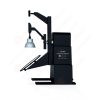
LM-79 Moving Detector Goniophotometer (Mirror Type C)
LSG-6000
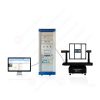
High Precision Rotation Luminaire Goniophotometer
LSG-1890B
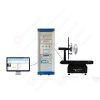
High Precision Rotation Luminaire Goniospectroradiometer
LSG-1890BCCD

Goniophotometer for Automotive and Signal Lamps
LSG-1950
Goniophotometer for Traffic Signal Lamps (Economical Model)
LSG-1950S
VAD Fire Alarm Visual Alert Device Goniophotometer
LSG-1930
Goniophotometer for Airfield Lighting
LSG-1940
Compact Goniophotometer
LSG-1200A
LED Goniophotometer
LSG-1100
Near Field Moving Detector Goniophotometer
LSG-1900B
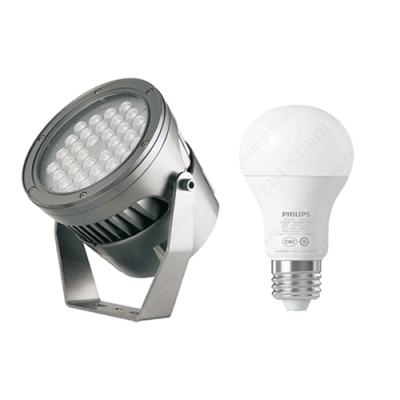 LEDs and Luminaire Test Solutions
 LM-79 and LM-80 Test Solutions
 LED Driver Test Solutions
 Household Appliances Test Solutions
 Mobile and Network Test Solutions
 Automotive Electronics Test Solutions
 Audio-Video and IT Test Solutions
 Cable and Wire Test Solutions
 Plugs and Sockets Test Solutions
 Power Switch Test Solutions
 Transformer Test Solutions
 Electric Toys Test Solutions
 Energy Meter Test Solutions
 Motor-Operated Tool Test Solutions
Select an organization
to browse standards
Abstract
With the rapid development of aerospace, rail transit and new‑energy equipment industries, the reliability verification of product mechanical environments puts forward higher requirements for laboratory hardware, data traceability and standard compliance. A CNAS Certified Vibration Test System serves as the core hardware complying with laboratory accreditation criteria. The Electrodynamic Vibration Generator System simulates various complex vibration conditions based on the electromagnetic excitation principle to evaluate the vibration reliability of components and finished products. Taking the LISUN LVD‑AT01 CNAS Certified Vibration Test Systeml, this paper analyzes the necessity of a CNAS Certified Vibration Test System for modern testing laboratories by referring to the characteristics of the LVD‑AT10 Electrodynamic Vibration Shaker Test System (CNAS Certified Version). It describes the structural composition, technical features, applicable industries and testing capacity of the Electrodynamic Vibration Generator System, compares the application scope between pre‑certified equipment and CNAS certified instruments, and explains the practical significance of hardware selection, equipment calibration and data traceability for laboratory CNAS scope expansion and accredited report issuance, which provides a reference for third‑party inspection agencies and in‑house enterprise laboratories to carry out vibration environmental tests.
Vibration is a common mechanical environment for industrial products during transportation, installation and service. Sustained sine vibration, random vibration and shock loads may lead to structural loosening, solder joint failure, component displacement and drift of electrical performance. The core purpose of vibration testing is to reproduce real mechanical stress under laboratory conditions so as to assess the vibration resistance, structural stability and operational reliability of products throughout their life cycle. Ordinary pre‑certified vibration equipment can only be used for internal R&D screening tests of enterprises, yet it fails to meet the strict CNAS laboratory accreditation requirements for measurement accuracy, data traceability and metrological calibration. Modern third‑party testing laboratories and enterprise‑owned laboratories that need to issue CNAS‑accredited reports must be equipped with a compliant CNAS Certified Vibration Test System.
The Electrodynamic Vibration Generator System represents the mainstream vibration testing hardware at present. It converts electric energy into mechanical energy according to Ampere’s law. When the moving coil placed in the magnetic gap is energized, electromagnetic excitation force is generated to output various vibration waveforms including sine, random and shock. The LISUN LVD‑AT10 Electrodynamic Vibration Shaker Test System (CNAS Certified Version) offers many advantages such as wide frequency bandwidth, simple operation and convenient maintenance. The thrust can be optionally configured from 1 kN to 60 kN. The product series covers LVD‑AT01, LVD‑AT10, LVD‑AT30 and LVD‑AT60, which are widely deployed in mechanical environmental tests for aerospace, shipbuilding, rail transit, new‑energy and other industries. The complete Electrodynamic Vibration Generator System consists of a shaker body, power amplifier, forced cooling unit, horizontal‑vertical expansion slip table, control system with dedicated test software, customized fixtures and high‑low‑temperature acceleration sensors. The integrated hardware architecture supports vibration fatigue tests, resonance search tests, dynamic characteristic measurements, sensor calibration and other test items.
The energy conversion core of the Electrodynamic Vibration Generator System is the moving‑coil assembly. The winding of the moving coil is placed inside the magnetic gap with high magnetic flux density. Signals generated by the control system are amplified by the power amplifier and transmitted to the moving coil. The current‑carrying conductor generates electromagnetic force in the magnetic field, driving the shaker table and test specimens mounted on it to produce reciprocating mechanical vibration. The control system integrates a computer with dedicated software for test parameter editing and waveform control. It also collects and stores all raw test data. The cooling system continuously dissipates heat generated during equipment operation so as to guarantee stable performance under long‑duration high‑power test conditions. Horizontal and vertical expansion tables enable vibration loading along three orthogonal X/Y/Z axes to satisfy multi‑axis vibration requirements defined in various standards.
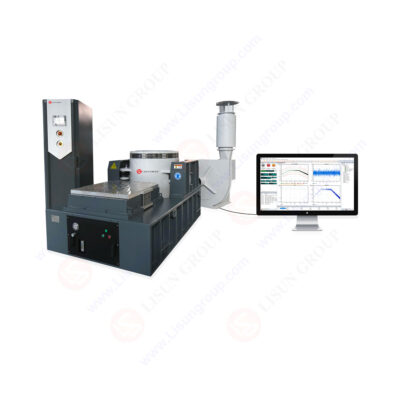
Electrodynamic Vibration Generator System (CNAS certified)
The LISUN LVD‑AT series CNAS Certified Vibration Test System forms a complete product portfolio ranging from low‑thrust to high‑thrust models to accommodate different specimen weights and test severity levels. The table below summarizes the key technical specifications of the Electrodynamic Vibration Generator System in the LVD‑AT series.
| Parameter Item | LVD‑AT01 | LVD‑AT10 | LVD‑AT30 | LVD‑AT60 | Supplementary Description |
|---|---|---|---|---|---|
| Maximum Specimen Load (kg) | 100 | 300 | 500 | 800 | Total weight of specimen plus fixtures |
| Rated Sine Thrust (kN) | 1 | 10 | 30 | 60 | Thrust options cover small‑to‑large test articles |
| Rated Random Thrust (kN) | 1 | 10 | 30 | 60 | Supports random‑vibration environment simulation |
| Rated Shock Thrust (kN) | 2 | 20 | 60 | 120 | Capable of shock‑based mechanical tests |
| Frequency Range (Hz) | 5‑6000 | 5‑4000 | 5‑3000 | 5‑2700 | Wide bandwidth to satisfy multi‑industry standards |
| Rated Peak‑to‑Peak Displacement (mm) | 25 | 51 | 51 | 76 | Low‑frequency large‑displacement testing capacity |
| System Power Supply (kVA) | 3 | 21 | 46 | 96 | Power capacity configured according to model |
| Signal‑to‑Noise Ratio (dB) | ≥65 | ≥65 | ≥65 | ≥65 | Reduces signal noise interference with measurement accuracy |
The CNAS laboratory accreditation system imposes mandatory requirements on testing instruments. Measurement accuracy shall be traceable, test procedures shall be reproducible, raw data shall be completely archived, and periodic metrological calibration shall be performed. Even if pre‑certified vibration equipment can output vibration waveforms, it lacks a complete metrological traceability chain. Test results generated by such instruments cannot be used for issuing CNAS‑accredited reports and are only valid for internal R&D assessment.
First, the Electrodynamic Vibration Generator System equipped for a CNAS Certified Vibration Test System meets formal hardware specifications. It is fully compatible with domestic and international vibration standards including GB/T13309‑91, JJG189‑97, IEC 60068, GB/T 2423, GB/T 4857 and ASTM D999. The instrument is delivered with a calibration certificate and supports continuous periodic metrology. Its performance indicators satisfy the hardware requirements for laboratory assessment. When third‑party testing institutions undertake commissioned projects from aerospace, rail transit and new‑energy sectors, customers generally require reports with CNAS accreditation. Laboratories without a compliant CNAS Certified Vibration Test System are unable to accept such assignments.
Second, the control system of a CNAS Certified Vibration Test System provides comprehensive data management functions. The software of the Electrodynamic Vibration Generator System fully records test parameters, time‑history curves and raw vibration data. Operation trails are auditable and stored data cannot be tampered arbitrarily, complying with CNAS regulations on test records and data traceability. Compared with pre‑certified devices, CNAS certified systems adopt stricter specifications for random‑vibration spectrum fitting precision, closed‑loop feedback control and measurement repeatability under variable‑load conditions to prevent result distortion caused by control deviation.
Third, market access for high‑end industrial equipment imposes mandatory requirements on accredited test reports. Vibration environmental test reports issued by CNAS‑recognized laboratories are commonly required for type approval and market authorization of aerospace components, on‑board rail‑transit equipment and new‑energy battery modules. Laboratories building test platforms with the LISUN LVD‑AT series CNAS Certified Vibration Test System can perform sine vibration, resonance sweep testing, random vibration and shock tests. A combined environmental chamber for temperature‑humidity‑vibration testing can be optionally integrated to simulate comprehensive service conditions. The pre‑certified LVD‑100KG model is applicable for preliminary R&D screening but cannot replace a CNAS Certified Vibration Test System for accreditation‑oriented inspection work.
Fourth, long‑term stability and equipment maintenance support. The LVD‑AT10 Electrodynamic Vibration Shaker Test System (CNAS Certified Version) delivers convenient maintenance services. The full range of the Electrodynamic Vibration Generator System features a high‑degree‑of‑standardization design with sufficient spare‑part supply. Laboratory instruments usually run continuously over long periods. Easy‑to‑maintain hardware reduces later‑stage operational costs and ensures business continuity. Custom shaker tables are also available to flexibly adapt to specimens with special dimensions and weights, expanding the laboratory service portfolio.
Laboratories configuring a CNAS Certified Vibration Test System shall select a suitable Electrodynamic Vibration Generator System model according to their business scope. First, calculate the weight of typical test specimens. The total mass of the specimen plus fixtures shall not exceed the maximum load capacity. Second, confirm thrust demand, frequency bandwidth and peak displacement based on applicable test standards. The LVD‑AT01 is recommended for small‑size parts and lighting fixtures. The LVD‑AT10 is suitable for medium‑sized assemblies and battery packs. The LVD‑AT30 or LVD‑AT60 high‑thrust models shall be adopted for large‑scale rail‑transit and aerospace components.
After equipment procurement, laboratories shall establish instrument files and implement regular metrological calibration with calibration certificates retained to satisfy document verification during CNAS assessment. Clear boundaries shall be defined in laboratory quality management documents between pre‑certified and CNAS certified equipment. Pre‑certified instruments are restricted to internal R&D evaluation and shall not be used to produce CNAS‑accredited reports. Operators shall master the software functions of the Electrodynamic Vibration Generator System and design rigid fixtures for specimen mounting to avoid unexpected resonance introduced by fixture deformation. When conducting combined environmental tests, a matched temperature‑humidity chamber shall be selected to realize synchronous loading of temperature, humidity and vibration.
For modern testing laboratories, whether third‑party inspection organizations or enterprise‑owned laboratories with accreditation requirements, a CNAS Certified Vibration Test System constitutes essential hardware for compliant vibration reliability testing. The Electrodynamic Vibration Generator System reproduces various mechanical vibration environments via electromagnetic principles. Beyond hardware performance, the CNAS certified version fully meets laboratory accreditation requirements in terms of metrological traceability, data integrity and measurement repeatability. The LISUN LVD‑AT series CNAS Certified Vibration Test System covers multiple thrust grades including LVD‑AT01, LVD‑AT10, LVD‑AT30 and LVD‑AT60. The LVD‑AT10 Electrodynamic Vibration Shaker Test System (CNAS Certified Version) presents advantages of wide frequency bandwidth, simple operation and convenient maintenance. Its thrust can be configured from 1 kN to 60 kN for mechanical environmental tests across aerospace, shipbuilding, rail transit, new‑energy and other industries. Proper equipment selection, metrological management and operator training help maximize the value of a CNAS Certified Vibration Test System, deliver credible vibration measurement data and support reliability verification for domestic high‑end equipment products.
Tags:LVD-AT01Your email address will not be published. Required fields are marked *

 English
 中文简体
中文简体 English
 Русский
 Español
 Português
 Türkçe
 العربية
 Deutsch
 Polski
 Italiano
 Français
 한국어
한국어 ไทย
ไทย Tiếng Việt
 日本語
日本語