LM-79 Moving Detector Goniophotometer (Mirror Type C)
LSG-6000
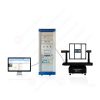
High Precision Rotation Luminaire Goniophotometer
LSG-1890B
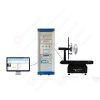
High Precision Rotation Luminaire Goniospectroradiometer
LSG-1890BCCD

Goniophotometer for Automotive and Signal Lamps
LSG-1950
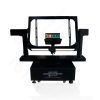
Goniophotometer for Traffic Signal Lamps (Economical Model)
LSG-1950S
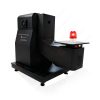
VAD Fire Alarm Visual Alert Device Goniophotometer
LSG-1930
Goniophotometer for Airfield Lighting
LSG-1940
Compact Goniophotometer
LSG-1200A
LED Goniophotometer
LSG-1100
Near Field Moving Detector Goniophotometer
LSG-1900B
 LEDs and Luminaire Test Solutions
 LM-79 and LM-80 Test Solutions
 LED Driver Test Solutions
 Household Appliances Test Solutions
 Mobile and Network Test Solutions
 Automotive Electronics Test Solutions
 Audio-Video and IT Test Solutions
 Cable and Wire Test Solutions
 Plugs and Sockets Test Solutions
 Power Switch Test Solutions
 Transformer Test Solutions
 Electric Toys Test Solutions
 Energy Meter Test Solutions
 Motor-Operated Tool Test Solutions
Select an organization
to browse standards
Abstract: Withstand voltage testing, also known as high insulation strength testing, is a core method for evaluating the safety of electrical equipment, electronic instruments, and insulating materials. By applying a voltage higher than the rated operating voltage of the equipment, the withstand voltage test aims to verify whether the insulation system possesses sufficient electrical strength to withstand transient overvoltages.
This paper systematically analyzes the physical mechanisms of withstand voltage testing, the characteristic differences between AC/DC testing, and relevant international and national standards (such as IEC 60664-1, GB/T 1408.1, etc.). Meanwhile, combining the technical characteristics of LISUN HIPOT series power frequency withstand voltage test equipment, this paper discusses the key role of autotransformer regulation, cascade connection technology, and overcurrent protection in improving test accuracy and safety.
In electrical engineering and quality assurance systems, engineers often face a core question: What is a hipot test used for? Simply put, it is the ultimate check to measure whether electrical products can operate safely under extreme voltage stress. Whether it is precision optical measurement equipment or large power transformers, the reliability of their insulation system is directly related to personal safety and asset protection.
With the continuous evolution of global electrical standards, withstand voltage testing has evolved from a simple “breakdown check” in the early days to a comprehensive testing method integrating leakage current analysis, corona discharge monitoring, and insulation coordination assessment. This paper will deeply analyze the theoretical foundation of withstand voltage testing and the technical advantages of LISUN HIPOT series equipment based on academic and engineering practice.
The primary purpose of withstand voltage testing is to verify the electrical strength of the dielectric (insulating material) by simulating an overvoltage environment. Under the action of electric field force, charged particles inside the insulating material will undergo directional movement. If the electric field strength E exceeds the breakdown threshold E_b of the material, an ionization avalanche will occur, leading to insulation failure.
In actual production, even with a perfect design, minor process flaws (such as burrs on wire edges, solder slag, bubbles inside the insulating material, or moisture residues) can cause local electric field distortion. High-voltage testing can force these weak points to be exposed in a controlled laboratory environment, thereby preventing catastrophic failure of products at the user end.
Withstand voltage testing not only focuses on the instantaneous result of “breakdown” but also pays attention to the leakage current level throughout the entire pressurization process. By monitoring microampere-level current changes, the changing trend of insulation resistance can be inferred, thereby judging whether the insulation system has signs of aging or moisture absorption.
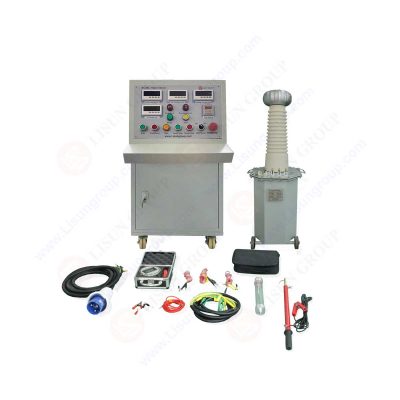
LISUN HIPOT series equipment (such as HIPOT10-100KV) has AC/DC dual testing capabilities to adapt to loads with different physical properties.
AC testing simulates the stress state of equipment in a real 50Hz/60Hz power grid. Its electric field direction changes periodically, which can simultaneously test both the resistive and capacitive components of the insulation layer.
DC testing is mainly used for high-capacitance loads, such as ultra-long power cables or large-capacity generator windings.
LISUN HIPOT series equipment strictly follows the following international and national standards during the design and calibration process to ensure the test results have global credibility:
LISUN’s HIPOT series power frequency withstand voltage test equipment achieves full coverage from laboratory level to industrial field level through in-depth optimization of autotransformer regulation technology and cascade connection technology.
As the main model of this series, HIPOT10-100KV can output up to 100kV AC high voltage and 140kV DC high voltage through a precisely designed test transformer.
LISUN HIPOT Series Main Specifications Comparison Table:
| Model | Capacity (kVA) | Output Voltage (kV) AC/DC | Output Current (mA) AC/DC | Rated Input Voltage (V) | Rated Input Current (A) |
| HIPOT2-10KV | 2 | 10 / N/A | 200 / N/A | 200 | 10 |
| HIPOT5-50KV | 5 | 50 / 70 | 100 / 15 | 200 | 25 |
| HIPOT10-100KV | 10 | 100 / 140 | 100 / 50 | 200 | 50 |
| HIPOT50-100KV | 50 | 100 / 140 | 500 / 100 | 380 | 132 |
| HIPOT100-100KV | 100 | 100 / 140 | 1000 / 100 | 380 | 250 |
| HIPOT50-150KV | 50 | 150 / 210 | 333 / 100 | 380 | 132 |
| HIPOT100-150KV | 100 | 150 / 210 | 667 / 100 | 380 | 263 |
LISUN equipment smoothly changes the input voltage of the test transformer by manually or automatically adjusting the autotransformer. This regulation method avoids the high-frequency harmonic interference caused by electronic voltage regulation, ensuring the output waveform is a pure power frequency sine wave, thereby guaranteeing the objectivity of test results. Operators can read experimental data in real time and intuitively through the built-in high-voltage side voltmeter and low-voltage side ammeter.
This series of products has a core technical advantage—200V cascade tap. Through cascade technology, two or three units can be connected in series. For example, cascading two 100kV units can form an ultra-high voltage output of AC 200kV; cascading three units can even reach AC 300kV. This flexible configuration greatly reduces the initial cost for enterprises to purchase large ultra-high voltage equipment and improves equipment reuse rate.
High-voltage testing is a high-risk operation. LISUN HIPOT series equipment adopts multiple redundant protection measures in its design:
Due to complex windings and harsh operating environments, high-voltage motors have extremely high insulation strength requirements. LISUN can extract 5-15kV medium voltage taps from the high-voltage windings according to user needs, specifically for power frequency withstand voltage tests of motor stator windings to prevent partial discharge of the insulation layer under high voltage.
Scientific research institutions use HIPOT series equipment to conduct destructive tests on new composite materials. By continuously adjusting the boosting voltage, the critical voltage value at the moment of material breakdown is recorded, providing basic data support for insulation design.
As an indispensable part of electrical product development and production, withstand voltage testing is essentially an in-depth exploration of product safety boundaries. For every quality control engineer, a deep understanding of What is a hipot test used for? Not only helps to correctly implement test standards but also guides product structure optimization through test feedback.
LISUN HIPOT series high-voltage withstand voltage test equipment, with its excellent cascade expansion capability, strict standard compliance, and multiple safety protection mechanisms, provides global customers with reliable, efficient, and safe insulation evaluation solutions. In the future wave of electrification, LISUN will continue to be committed to improving high-voltage detection accuracy, helping the industry cross the safety red line.
Tags:HIPOT10-100KVYour email address will not be published. Required fields are marked *

 English
 中文简体
中文简体 English
 Русский
 Español
 Português
 Türkçe
 العربية
 Deutsch
 Polski
 Italiano
 Français
 한국어
한국어 ไทย
ไทย Tiếng Việt
 日本語
日本語