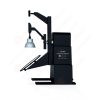
LM-79 Moving Detector Goniophotometer (Mirror Type C)
LSG-6000
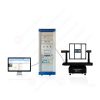
High Precision Rotation Luminaire Goniophotometer
LSG-1890B
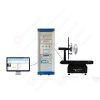
High Precision Rotation Luminaire Goniospectroradiometer
LSG-1890BCCD

Goniophotometer for Automotive and Signal Lamps
LSG-1950
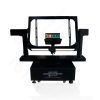
Goniophotometer for Traffic Signal Lamps (Economical Model)
LSG-1950S
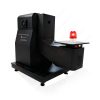
VAD Fire Alarm Visual Alert Device Goniophotometer
LSG-1930
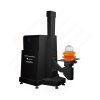
Goniophotometer for Airfield Lighting
LSG-1940

Compact Goniophotometer
LSG-1200A
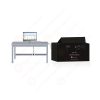
LED Goniophotometer
LSG-1100
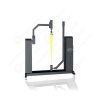
Near Field Moving Detector Goniophotometer
LSG-1900B
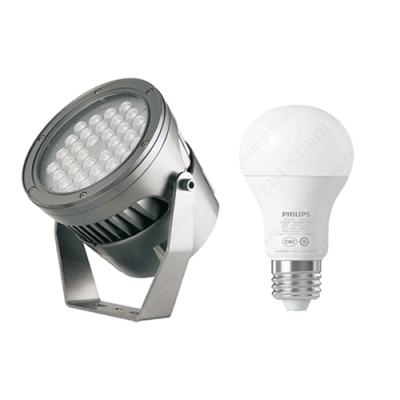 LEDs and Luminaire Test Solutions
 LM-79 and LM-80 Test Solutions
 LED Driver Test Solutions
 Household Appliances Test Solutions
 Mobile and Network Test Solutions
 Automotive Electronics Test Solutions
 Audio-Video and IT Test Solutions
 Cable and Wire Test Solutions
 Plugs and Sockets Test Solutions
 Power Switch Test Solutions
 Transformer Test Solutions
 Electric Toys Test Solutions
 Energy Meter Test Solutions
 Motor-Operated Tool Test Solutions
Select an organization
to browse standards
Abstract
With continuous iteration and upgrading of modern automotive electronic systems, the quantity of on‑board ECUs, sensors and actuators keeps rising, and the scale of vehicle‑wide wire harness circuits expands accordingly. During actual vehicle operation, wire harnesses are exposed to vibration shock, high‑low temperature cycling, insulation aging and abrasion, which easily cause electrical faults such as open circuit, short circuit and transient connector interruption. On‑board electronic components must pass rigorous fault‑injection tests to verify the reliability of internal protection circuits and fault‑diagnosis strategies, so as to prevent device burnout, functional failure and even vehicle‑level safety accidents caused by harness faults. The Automotive Wire Harness Open Short Simulator is dedicated simulation equipment for automotive electronic and electrical testing and R&D. It can simulate standardized operating conditions including open circuit, short circuit, short‑to‑power, short‑to‑ground and connector interruption for signal lines and load circuits, and meets stringent test requirements for circuit reliability and protection performance specified in GB national standards, ISO international standards and specifications of mainstream automobile manufacturers. Traditional manual‑wiring and manual short‑circuit fault‑testing methods suffer from poor timing accuracy and insufficient test consistency, which can hardly satisfy standardized and automated testing requirements of modern laboratories. Taking LISUN LIS‑LSCS‑1730 Automotive Wire Harness Open Short Simulator as the research object, this paper illustrates its working principle and core functions, analyzes its engineering value in automotive wire‑harness fault‑testing scenarios, and provides references for compliance verification of on‑board electronic components.
Existing Problems in Automotive Wire Harness Open‑Short Testing
In accordance with GB/T 28046.2‑2011, GB/T 45120‑2024, ISO 16750‑2:2023 and corporate standards of OEMs including Volkswagen, SAIC, Leapmotor and Seres, on‑board electronic components shall complete a series of tests such as open‑circuit, short‑circuit and connector‑interruption for signal lines and load loops, so as to examine the behaviors of equipment under test under various wire‑harness fault conditions. The tests need to reproduce complex working conditions including different fault durations, multiple cyclic faults and synchronous faults of multiple loops.
In early‑stage laboratories, wire‑harness fault simulation was mostly implemented manually by plugging and unplugging terminals, connecting external short‑circuit wires and manually disconnecting circuits. This approach has many disadvantages. Fault duration depends on manual timing, millisecond‑level fault timing cannot be precisely controlled, fault conditions are difficult to keep consistent in each test, and test reproducibility is low. When multi‑channel synchronous fault tests are carried out, manual operations are cumbersome and prone to wiring errors, which may damage samples under test. Durability cyclic tests require long‑time operator attendance, bringing high labor costs and low test efficiency. Meanwhile, it cannot be connected to automated test platforms, which impedes large‑batch test tasks. With continuous updating of automotive electronic test standards, enterprises impose higher requirements on test data traceability and automatic report generation. Traditional manual testing modes can no longer adapt to industrial development, and the Automotive Wire Harness Open Short Simulator has become critical hardware to solve such testing pain points.
Working Principle and Core Capabilities of Automotive Wire Harness Open Short Simulator
The Automotive Wire Harness Open Short Simulator is built on high‑speed power electronic switch topology and equipped with multiple mutually independent test channels. Each channel can be connected to signal lines or load loops of equipment under test. Different fault modes can be independently configured for each channel, including circuit open, direct short circuit, short‑to‑ground, short‑to‑power supply and transient connector interruption. It supports independent action of single channel or synchronous action of multiple channels. After one‑time wiring, all test items can be switched without repeated modification of external wiring, reducing systematic errors caused by manual operations.
The Automotive Wire Harness Open Short Simulator supports programmable configuration of fault duration, cycle times and test steps. Fault holding time ranges from 20 ms to 10000 s, and up to 255 test sequences are available. Complex composite fault scenarios with successive multiple wire‑harness faults in real vehicles can be edited. Equipped with a 10.1‑inch Chinese‑English Android capacitive touch‑screen for local parameter configuration, the device is also fitted with LAN, USB and RS485 communication interfaces to receive upper‑computer instructions for integration into automated test systems. A built‑in real‑time voltage and current monitoring module records electrical data during testing and automatically generates test reports upon test completion for data archiving and traceability. The loop resistance of internal switches is controlled at a low level to minimize interference brought by switch‑intrinsic impedance on fault‑simulation results and reproduce real electrical status of vehicle wire‑harness faults.
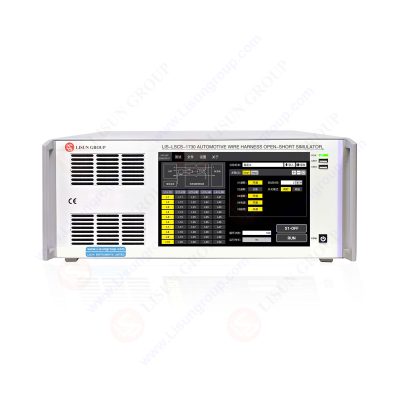
LISUN LIS‑LSCS‑1730 Automotive Wire Harness Open Short Simulator is a mainstream model of this series. It has 30 independent test channels with 10 A maximum current per channel and 50 A total maximum current for the whole unit. It supports 60 VDC or 220 VAC test voltage and adapts to fault‑injection tests for most electronic and electrical components of 12 V and 24 V passenger cars and commercial vehicles. Its key technical parameters are shown in Table 1.
| Parameter Item | Specification |
|---|---|
| Number of Switching Channels | 30 channels |
| Maximum Voltage | 60 VDC / 220 VAC |
| Maximum Current | 10 A per channel, max. 50 A for whole unit |
| Switch Loop Resistance for Open‑Close Operation | <20 mΩ @10 A |
| Switch Loop Resistance for Short‑Circuit Operation | <20 mΩ @10 A |
| Power‑Supply Switch Loop Resistance | <5 mΩ @50 A |
| Open / Short Action Time | 20 ms ~ 10000 s |
| Cycle Times | 1~10000 cycles |
| Test Steps | 1~255 steps |
| Communication Interfaces | LAN, USB, RS485 |
| Control System | 10.1‑inch Chinese‑English Android capacitive touch screen |
| Operating Power Supply | 110~250 VAC, 50/60 Hz |
| Overall Dimension | 460*180*550 mm |
| Unit Weight | Approx. 8 kg |
Practical Application Scenarios of Automotive Wire Harness Open Short Simulator
The Automotive Wire Harness Open Short Simulator covers wire‑harness fault‑test clauses defined in GB/T 45120‑2024, GB/T 28046.2‑2011, ISO 16750‑2:2023 and corporate standards of FAW, Leapmotor, Seres, SAIC, Volkswagen and Nissan. It is widely applied in R&D exploration, third‑party certification testing and production‑line quality control for ECUs, various sensors and actuators.
In signal‑line open‑circuit tests, the Automotive Wire Harness Open Short Simulator simulates wire breakage and connector disconnection faults of wire harnesses. Operators observe whether the ECU under test identifies faults and stores diagnostic trouble codes, and meanwhile confirm no false output or false alarm occurs. In short‑to‑ground and short‑to‑power tests, the device short‑circuits tested loops to ground or vehicle power supply respectively and maintains fault duration as specified in standards, to verify whether internal protection logic of devices under test takes effect and whether fuses and driver chips perform protection actions as designed. Permanent damage of components shall be inspected after tests. The connector‑interruption working condition simulates transient connector disconnection caused by vehicle jolting. Millisecond‑level fault duration can be set to reproduce occasional real‑vehicle faults and verify functional recovery capability after wire disconnection.
Multi‑channel synchronous testing is a prominent advantage of the Automotive Wire Harness Open Short Simulator. Different fault conditions can be applied to multiple signal loops simultaneously to simulate extreme scenarios with simultaneous faults of multiple harness circuits in vehicles, which fully verifies the completeness of component fault‑diagnosis systems. Cooperating with upper‑computer software, the device automatically executes complete test sequences, collects voltage and current data synchronously and outputs test reports automatically to facilitate failure analysis for testers. When building a complete on‑board electrical test system, the Automotive Wire Harness Open Short Simulator is usually used together with four‑quadrant bipolar voltage simulators and transient pulse generators to complete full electrical‑load tests.
Comparative Analysis of New and Traditional Test Scheme
Compared with traditional manual fault‑injection methods, the Automotive Wire Harness Open Short Simulator enables programmable storage of all fault parameters. The same set of test project files can be called repeatedly. When different operators perform tests, fault type, fault duration and cycle times remain consistent, which greatly improves test reproducibility and reduces test errors introduced by manual operations. After initial wiring is completed, various fault modes can be switched without modifying external circuits, lowering sample‑damage risks caused by frequent wiring and shortening test preparation cycles.
The Automotive Wire Harness Open Short Simulator supports long‑time cyclic durability tests. It automatically performs thousands of fault‑injection cycles without continuous operator attendance, which is suitable for reliability‑validation projects. Connected to automated test platforms via communication interfaces, wire‑harness fault injection, power‑supply condition control and status reading of equipment under test can be integrated into one test script to realize full‑process automation and improve overall laboratory test efficiency. In practical operation, operators shall pay attention to upper limits of channel current. For high‑power load‑loop tests, rated current parameters of the device shall not be exceeded to avoid overload damage of internal switching components.
Conclusion
With continuous advancement of automotive intelligence, the quantity of on‑board electrical and electronic components keeps growing, and industry pays increasing attention to vehicle‑level functional risks brought by wire‑harness faults. The Automotive Wire Harness Open Short Simulator can accurately reproduce various wire‑harness electrical faults under real‑vehicle conditions and perform fault‑injection tests including open circuit, short circuit and connector interruption for signal lines and load circuits, complying with test specifications of national GB standards, ISO standards and various OEM corporate standards. As a mature commercial device, LISUN LIS‑LSCS‑1730 Automotive Wire Harness Open Short Simulator features multi‑channel independent control, programmable timing, upper‑computer remote control and automatic report generation. It effectively solves pain points of traditional manual fault simulation such as poor reproducibility and cumbersome operations, and plays an important role in component R&D verification, third‑party certification testing and component quality control. As on‑board electronic and electrical test systems keep improving in the future, the Automotive Wire Harness Open Short Simulator will cooperate with other power‑supply simulation devices to further improve the complete reliability‑verification system for on‑board electronic components.
Your email address will not be published. Required fields are marked *

 English
 中文简体
中文简体 English
 Русский
 Español
 Português
 Türkçe
 العربية
 Deutsch
 Polski
 Italiano
 Français
 한국어
한국어 ไทย
ไทย Tiếng Việt
 日本語
日本語