LM-79 Moving Detector Goniophotometer (Mirror Type C)
LSG-6000
High Precision Rotation Luminaire Goniophotometer
LSG-1890B
High Precision Rotation Luminaire Goniospectroradiometer
LSG-1890BCCD

Goniophotometer for Automotive and Signal Lamps
LSG-1950
Goniophotometer for Traffic Signal Lamps
LSG-1950S
VAD Fire Alarm Visual Alert Device Goniophotometer
LSG-1930
Compact Goniophotometer
LSG-1200A
LED Goniophotometer
LSG-1100
 LEDs and Luminaire Test Solutions
 LM-79 and LM-80 Test Solutions
 LED Driver Test Solutions
 Household Appliances Test Solutions
 Mobile and Network Test Solutions
 Automotive Electronics Test Solutions
 Audio-Video and IT Test Solutions
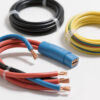 Cable and Wire Test Solutions
 Plugs and Sockets Test Solutions
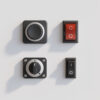 Power Switch Test Solutions
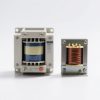 Transformer Test Solutions
 Electric Toys Test Solutions
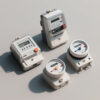 Energy Meter Test Solutions
 Motor-Operated Tool Test Solutions
Select an organization
to browse standards
Abstract
Mechanical properties of materials serve as critical evidence for product design, quality control and failure analysis. As an essential testing instrument in material laboratories, the Double Columns Tensile Testing Machine is widely adopted to evaluate the mechanical performance of metals, polymers, textiles, cables and other specimens. Tensile testing machines are also known as Electronic Universal Testing Machines or Electronic Universal Tensile Testers. Adopting a computer‑controlled mode, the equipment can conduct mechanical property tests on a variety of materials and finished products. It collects test data through high‑precision force sensors with adjustable test speed control to realize multiple test modes including tension, compression, peeling, shearing, tearing and bending. Centered on the LISUN PULL‑2000KG tensile testing machine, this paper illustrates the system composition, working principle, core technical parameters, main test modes, applicable standards and industrial application scenarios of the Double Columns Tensile Testing Machine. It compares the application scope of models with different load specifications and introduces operational guidelines and precautions, providing practical references for material R&D laboratories, manufacturing quality inspection departments and third‑party testing institutions to carry out mechanical tests.
In the development workflow of modern industrial products, mechanical parameters such as tensile strength, yield strength, elongation at break, peel strength and compressive modulus directly determine the service safety and service life of products. Different materials may fracture, deform, delaminate or yield under external force. Reliable performance data can only be obtained through standardized testing equipment to support material formula optimization, structural design, incoming inspection and finished‑product quality verification.
The Double Columns Tensile Testing Machine is a mainstream type of Electronic Universal Testing Machine. The dual‑column frame delivers high structural rigidity to withstand larger test loads, and the moving crossbeam runs more stably than single‑column models, making it suitable for various static mechanical tests under medium‑to‑high load conditions. Tensile testing machine | Electronic Universal Testing Machine | Electronic Universal Tensile Tester adopts computer control to complete mechanical performance tests for diverse materials and finished articles. High‑precision force sensors capture test data, while adjustable test speed control enables multiple test modes including tension, compression, peeling, shearing, tearing and bending. During testing, the machine automatically records force and displacement data, generates load‑displacement and stress‑strain curves, and calculates mechanical indicators automatically in accordance with current standards. By replacing different fixtures, a single Double Columns Tensile Testing Machine can accommodate specimens of various forms such as metal, rubber, plastic, paper and fabric. As a typical Double Columns Tensile Testing Machine, the LISUN PULL‑2000KG complies with multiple domestic and international material testing standards and has been widely deployed in manufacturing and testing laboratories.
The Double Columns Tensile Testing Machine mainly consists of the main frame, servo drive unit, force sensing unit, moving crossbeam, fixture assembly and computer measurement‑control software. The double columns form the load‑bearing frame of the main unit, ensuring minimal frame deformation during loading and preventing frame distortion from interfering with displacement measurement. Servo motors receive instructions from computer software and drive ball screws through transmission mechanisms to lift or lower the moving crossbeam steadily, applying tensile or compressive force to specimens. High‑precision force sensors mounted on the crossbeam collect real‑time load signals from specimens and transmit converted data to the computer. Operators set test speed, termination conditions and protection thresholds on the software interface. The software synchronously captures force and displacement signals and draws test curves in real time. The machine can automatically stop once the material breaks or collapses, and the crossbeam can return to the initial position automatically under certain working conditions.
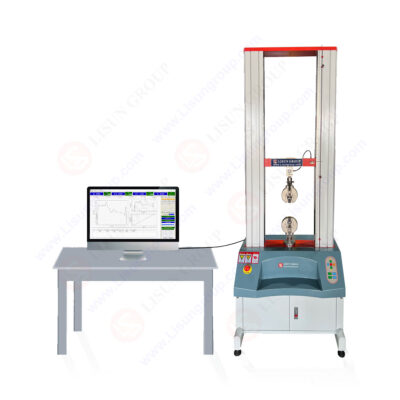
Double Columns Tensile Testing Machine
The LISUN PULL‑2000KG Double Columns Tensile Testing Machine is equipped with Taiwan‑brand servo motors and servo controllers. The test speed is infinitely adjustable from 0.001 to 500 mm/min, the displacement resolution reaches 0.001 mm, and the force sensor is a class 0.5 high‑precision tension‑compression sensor with test force indication accuracy better than ±0.5% and a force resolution of 1/300000. The multi‑language software supports Chinese, English, Russian and Spanish for laboratories in different regions. Multiple protection mechanisms including overload, over‑current, over‑voltage, under‑voltage, overspeed and upper/lower travel limits reduce risks of equipment damage caused by misoperation. The table below lists the core parameters of major models of the LISUN PULL‑series Double Columns Tensile Testing Machine.
| Parameter Item | PULL‑30T | PULL‑20T | PULL‑10T | PULL‑5000KG | PULL‑2000KG | Supplementary Description |
|---|---|---|---|---|---|---|
| Maximum Tensile Force | 30T | 20T | 10T | 5T | 2000KG | Dual‑column type, larger load can be customized |
| Effective Test Width | 400mm | 400mm | 400mm | 400mm | 400mm | Customizable according to specimen dimensions |
| Test Stroke (with fixtures) | 800mm | 800mm | 800mm | 800mm | 800mm | Extended stroke is available on request |
| Test Force Accuracy Class | Class 0.5 | Class 0.5 | Class 0.5 | Class 0.5 | Class 0.5 | Indication accuracy better than ±0.5% |
| Test Speed Range | 0.001‑500 mm/min | 0.001‑500 mm/min | 0.001‑500 mm/min | 0.001‑500 mm/min | 0.001‑500 mm/min | Stepless speed regulation, speed accuracy ±0.5% |
| Power Supply | 220‑240V Single‑phase | 220‑240V Single‑phase | 220‑240V Single‑phase | 220‑240V Single‑phase | 220‑240V Single‑phase | 60Hz version can be customized |
Flexible combinations of software and fixtures enable the Double Columns Tensile Testing Machine to complete tension, compression, peeling, shearing, tearing and bending tests. Tensile tests are used to obtain tensile strength, yield strength and elongation at break for plastic, metal wire and film specimens. Compression tests evaluate the compressive performance of rubber, foam and small building material samples. Peel tests focus on the bonding strength of adhesive tapes and composite materials. Shear tests measure the anti‑shear failure capacity of materials. Tear tests apply to easily torn materials such as films and non‑woven fabrics. Bending tests determine flexural strength and flexural modulus.
The LISUN PULL‑2000KG Double Columns Tensile Testing Machine complies with multiple domestic and international standards, including GB/T 16491‑2022 Electronic Universal Testing Machine, GB/T 16825‑2024 Verification of Tensile Testing Machines, GB/T 1040.1‑2021 Plastics‑Determination of Tensile Properties, ASTM D638:2022 Standard Test Method for Tensile Properties of Plastics, DIN EN ISO 527‑1:2019 Plastics‑Determination of Tensile Properties and other specifications. Laboratories shall set test speed, specimen size and data acquisition frequency according to the standard corresponding to the test material to ensure standardized test procedures. Standard fixtures support the collection of basic parameters such as maximum force and breaking force. Custom fixtures and extensometers can be equipped to obtain advanced indicators including elastic modulus, upper and lower yield strength and average peel force.
The Double Columns Tensile Testing Machine serves manufacturing industries, research institutes and third‑party testing organizations. In the plastic and rubber sector, it completes tensile tests for plastic sheets, pipes, films and rubber seals. Metal processing industries conduct tensile and yield strength inspection for metal wires, foils, plates and bars. Textile and non‑woven fabric manufacturers test breaking strength and elongation of fabrics, fibers and non‑woven materials. Wire and cable factories examine the tensile and peel performance of cable jackets and insulation layers. Waterproof material laboratories carry out mechanical tests for waterproof membranes and coatings. Adhesive product manufacturers test peel strength and shear strength of tapes and adhesives. Paper factories measure the tensile strength of paper and cardboard. Electronic component manufacturers test pull‑out force for connectors and pins. Construction material labs perform tension and compression tests for thermal insulation materials and small‑size building components. Third‑party testing institutions use the Double Columns Tensile Testing Machine to deliver compliant mechanical property inspection services for clients.
Compared with single‑column testers, the Double Columns Tensile Testing Machine features higher frame rigidity, larger load capacity and better crossbeam stability. Double‑column configurations are preferred for heavy specimens and high‑force tests. The PULL‑2000KG is a medium‑load Double Columns Tensile Testing Machine suitable for non‑metallic materials and small‑to‑medium metal samples, delivering high cost‑performance for comprehensive laboratories. Users may upgrade to PULL‑10T, PULL‑20T or PULL‑30T for higher test force, while single‑column tensile testers are recommended for low‑force and compact‑sample testing.
When purchasing a Double Columns Tensile Testing Machine, laboratories shall define the maximum test force of routine specimens with a reasonable safety margin. Long‑term full‑load operation is not recommended. Specimen dimensions shall be checked against the test stroke and effective width of the machine, and customized frames or fixtures shall be arranged for oversized samples. Accuracy class is a critical indicator. Laboratories issuing formal test reports shall select Class 0.5 equipment that supports periodic metrological verification to ensure traceable measurement results. Software functions including curve types, parameter calculation and report export should be confirmed, and multi‑language software brings convenience for laboratories with overseas business.

During daily operation of the Double Columns Tensile Testing Machine, specimens shall be firmly clamped and aligned concentrically. Improper clamping directly leads to test deviation. Operators shall check fixture tightness and verify protection functions before testing. Regular sensor calibration and equipment maintenance are required. Debris on fixtures should be cleaned and lead‑screw transmission parts shall be properly lubricated. Operators shall stay away from the moving crossbeam during testing and stop the machine immediately in case of abnormalities. Test speed must follow the requirements of corresponding material standards; arbitrary modification of speed parameters will distort test results.
The Double Columns Tensile Testing Machine is an indispensable instrument for evaluating material mechanical performance. Tensile testing machine | Electronic Universal Testing Machine | Electronic Universal Tensile Tester adopts a computer‑controlled mode to complete mechanical performance tests for a wide range of materials and finished articles. High‑precision force sensors collect test data with adjustable test speed control to realize multiple test modes including tension, compression, peeling, shearing, tearing and bending. The LISUN PULL‑2000KG Double Columns Tensile Testing Machine is equipped with complete hardware configuration, multi‑language software and comprehensive safety protection. It meets numerous domestic and international material testing standards to satisfy most test requirements for material R&D and quality inspection. Laboratories shall select the appropriate Double Columns Tensile Testing Machine according to specimen types, load ranges and standard requirements. Standardized specimen clamping, parameter setting and equipment maintenance help obtain accurate mechanical test data to support product research and quality management.
Tags:PULL-2000KGYour email address will not be published. Required fields are marked *


 English
 中文简体
中文简体 English
 Русский
 Español
 Português
 Türkçe
 العربية
 Deutsch
 Polski
 Italiano
 Français
 한국어
한국어 ไทย
ไทย Tiếng Việt
 日本語
日本語