LM-79 Moving Detector Goniophotometer (Mirror Type C)
LSG-6000
High Precision Rotation Luminaire Goniophotometer
LSG-1890B
High Precision Rotation Luminaire Goniospectroradiometer
LSG-1890BCCD

Goniophotometer for Automotive and Signal Lamps
LSG-1950
Goniophotometer for Traffic Signal Lamps (Economical Model)
LSG-1950S
Goniophotometer for Airfield Lighting
LSG-1940
VAD Fire Alarm Visual Alert Device Goniophotometer
LSG-1930
Compact Goniophotometer
LSG-1200A
LED Goniophotometer
LSG-1100
Near Field Moving Detector Goniophotometer
LSG-1900B
 LEDs and Luminaire Test Solutions
 LM-79 and LM-80 Test Solutions
 LED Driver Test Solutions
 Household Appliances Test Solutions
 Mobile and Network Test Solutions
 Automotive Electronics Test Solutions
 Audio-Video and IT Test Solutions
 Cable and Wire Test Solutions
 Plugs and Sockets Test Solutions
 Power Switch Test Solutions
 Transformer Test Solutions
 Electric Toys Test Solutions
 Energy Meter Test Solutions
 Motor-Operated Tool Test Solutions
Select an organization
to browse standards
With the continuous upgrading of the EU RoHS Directive and the increasing requirements for environmental compliance of electronic and electrical products worldwide, rapid and accurate hazardous substance testing has become critical to industrial development. The EDX-2 series energy dispersive X-ray fluorescence spectrometer developed by LISUN is based on the analysis of the wavelength and intensity of characteristic X-rays emitted by samples, realizing efficient screening in RoHS lab testing. It can also be extended to applications such as alloy analysis and coating thickness measurement. This paper systematically expounds the testing principle of the instrument series, analyzes its technical advantages, parameter characteristics and practical application value in RoHS lab testing, and provides technical references for environmental compliance testing in the electronic and electrical industry combined with specific model parameters and RoHS directive limits.
RoHS lab testing is an essential compliance procedure for electronic and electrical products entering the EU and many global markets. Its core purpose is to accurately restrict the content of six hazardous elements including lead, mercury and cadmium in products. The EU RoHS Directive was officially implemented in 2006, and RoHS 2.0 (2011/65/EU) further expanded its scope to include medical devices and monitoring equipment, requiring manufacturers to retain compliance declarations and technical documents for at least ten years. This has raised higher requirements for the efficiency, accuracy and adaptability of equipment used in RoHS lab testing.
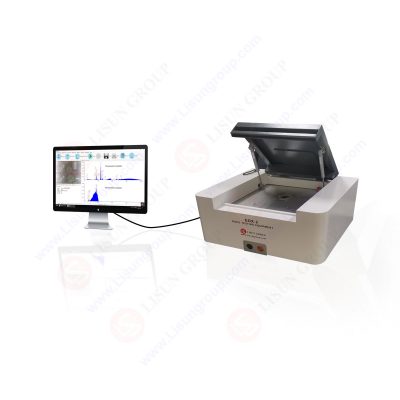
EDX-2_Rohs test equipment
Energy dispersive X-ray fluorescence (XRF) spectrometry is recommended as a rapid screening method for RoHS hazardous elements in Testing Methods for Toxic and Hazardous Substances in Electronic Information Products (SJ/T 11365-2006) due to its advantages such as no sample pretreatment, non-destructive testing and fast detection speed. As a core application device of this method, the LISUN EDX-2 series energy dispersive X-ray fluorescence spectrometer realizes element detection within a wide content range of 2 ppm to 99.99% relying on characteristic X-ray analysis technology, fully meeting industry demands for RoHS lab testing and becoming key testing equipment in electronic manufacturing, component production and other fields.
The RoHS lab testing function of the EDX-2 series energy dispersive X-ray fluorescence spectrometer relies on the analysis of the wavelength and intensity of characteristic X-rays of elements. Its testing logic consists of three processes: X-ray excitation, characteristic ray emission and signal analysis, realizing qualitative and quantitative detection of hazardous elements in samples.
The instrument emits high-energy X-rays toward the sample through an X-ray source. When X-rays interact with atoms in the sample, inner-shell electrons of the atoms are excited and jump, and outer-shell electrons fill the inner vacancies, releasing characteristic X-rays with specific energy. Different elements have fundamentally different atomic structures, nuclear charges and electron shell arrangements, so the wavelengths of their emitted characteristic X-rays are unique. This forms the basis of qualitative detection: by analyzing the wavelength of characteristic X-rays emitted by the sample, the instrument accurately identifies the elements contained in the sample, including lead, mercury, cadmium, chromium, bromine and other target elements required in RoHS lab testing.
On the basis of qualitative detection, the instrument achieves quantitative detection by comparing the intensity of spectral lines of different elements. The intensity of characteristic X-rays of an element is positively correlated with its content in the sample. The built-in calibration system of the instrument, combined with calibration data from EU standard samples, converts the intensity signal of characteristic X-rays into specific element content values, finally realizing accurate determination of hazardous element contents in RoHS lab testing. Its content analysis range can reach 2 ppm to 99.99%, fully covering the limit requirements of the RoHS Directive.
This testing principle fundamentally ensures the accuracy of RoHS lab testing. Meanwhile, since digestion, dissolution and other sample pretreatment steps are not required, the testing cycle is greatly shortened, making it suitable for batch screening in industrial production.

The EDX-2 series spectrometer includes multiple models such as EDX-2A, EDX-2AC, EDX-2AB, EDX-2ABC and EDX-2T. All models are equipped with standard RoHS lab testing functions. Different models feature differentiated designs in detection efficiency, testing environment and function expansion to meet the RoHS lab testing needs of different enterprises. Among them, the basic model EDX-2A is specially developed for RoHS lab testing and is the preferred equipment for basic compliance testing in electronic enterprises. The core parameters and adaptability for RoHS lab testing are shown in the table below.
| Specification | EDX-2A (Basic RoHS lab testing model) | EDX-2AC (RoHS + coating testing model) | EDX-2T (Full-function model) |
| RoHS lab testing environment | Atmospheric (non-vacuum) | Non-vacuum / vacuum optional | Non-vacuum / vacuum optional |
| Testing time | 200 sec | 100 sec | 100 sec |
| Detector type | Si-PIN (resolution 149 eV) | SDD (resolution 129 eV) | SDD (resolution 129 eV) |
| Applicable sample types | Solid, liquid, powder | Non-vacuum: solid, liquid, powder; Vacuum: solid | Non-vacuum: solid, liquid, powder; Vacuum: solid |
| Sample chamber size | 610×320×100 mm | 510×310×120 mm (non-vacuum); Φ100×70 mm (vacuum) | 510×310×120 mm (non-vacuum); Φ100×70 mm (vacuum) |
| Core advantages in RoHS lab testing | Cost-effective, easy to operate, suitable for basic batch screening | Fast testing, high resolution, accurately identifies trace cadmium | Strong light element analysis, suitable for complex sample RoHS lab testing |
It can be seen from the parameters that the RoHS lab testing function of the EDX-2 series spectrometer has three adaptability characteristics: wide sample applicability, qualified testing accuracy and controllable testing efficiency. It can directly test solid, liquid and powder samples, covering plastic casings, components, solder paste, plastic particles and other common objects in electronic and electrical products without additional sample processing. The resolution of all models can meet the detection requirements of trace hazardous elements in RoHS lab testing. Models equipped with SDD detectors can accurately distinguish element spectral lines with adjacent wavelengths, reducing detection errors for low-limit elements such as cadmium. The basic model’s testing speed of 200 seconds per sample meets conventional batch screening, while vacuum models with 100 seconds per sample support rapid testing for high-production enterprises.
In addition, all models are equipped with a 50 kV / 600 μA X-ray tube voltage and current that can be automatically set. The instrument automatically adjusts testing parameters according to sample type, avoiding manual operation errors and further ensuring the stability of RoHS lab testing results.
5.1 Accurately Meets RoHS Directive Limit Requirements
The RoHS Directive sets strict content limits for six hazardous elements: cadmium is limited to 100 ppm, and other elements to 1000 ppm. The EDX-2 series has a detection range of 2 ppm to 99.99%, with a detection limit far below RoHS requirements. It can accurately identify trace hazardous elements in samples and avoid misjudgment of compliance caused by insufficient accuracy. The instrument is equipped with pure silver reference samples and EU standard samples, with EU calibration certificates, so test results can directly support international RoHS compliance and provide reliable data support for product export.
5.2 Easy Operation and High Visualization
The instrument is equipped with a high-definition camera and internal lighting. During RoHS lab testing, operators can view the testing position in real time, avoiding errors caused by improper sample placement. Even non-professional users can operate it quickly. The proprietary RoHS lab testing software developed by LISUN supports automatic parameter setting, real-time monitoring and automatic report generation, greatly reducing labor costs and improving the standardization of RoHS lab testing.
5.3 High Safety and Stability
RoHS lab testing is often performed in workshops and laboratories, so equipment safety and stability are critical. The EDX-2 series features reliable overcurrent and short-circuit protection to prevent interruptions due to equipment failure. Imported core components ensure high durability, supporting long-term continuous batch RoHS lab testing and adapting to high-intensity industrial scenarios.
5.4 Non-Destructive Testing Reduces Costs
Unlike atomic absorption spectrometry, gas chromatography and other destructive methods, the EDX-2 series uses non-destructive testing. Tested samples can be reused in production, eliminating material waste. No chemical pretreatment saves reagent and time costs, significantly reducing per-sample expenses in RoHS lab testing, especially for small and medium-sized enterprises.
5.5 Expandable Functions for Multi-Purpose Use
In addition to core RoHS lab testing, models such as EDX-2AC, EDX-2ABC and EDX-2T support coating thickness measurement and alloy analysis, realizing integrated “RoHS lab testing + material composition analysis”. For example, while testing RoHS compliance of electronic components, the instrument can simultaneously analyze coating thickness and alloy composition, obtaining multiple data in one test and improving equipment utilization.
The RoHS lab testing function of the EDX-2 series is widely used across the entire industrial chain of the electronic and electrical industry, from upstream component production and plastic raw material processing to midstream assembly and downstream export inspection.
In electronic component manufacturing, EDX-2A is used for batch RoHS lab testing of resistors, capacitors, connectors and other components. Components are placed directly into the sample chamber, and a single test is completed within 200 seconds. The instrument automatically determines whether element content exceeds limits and generates Pass/Fail results, quickly eliminating unqualified products.
In plastic raw material processing, the EDX-2 series directly performs RoHS lab testing on plastic particles and sheets, accurately detecting brominated flame retardants (PBBs, PBDEs) to control environmental compliance from the source.
In third-party export testing, the EDX-2T full-function model conducts precise RoHS lab testing under vacuum conditions for complex samples such as magnesium-aluminum alloy casings and electronic auxiliary materials. Combined with alloy analysis, it verifies material composition and issues RoHS lab testing reports meeting EU requirements, helping enterprises avoid trade barriers due to non-compliance.
The LISUN EDX-2 series energy dispersive X-ray fluorescence spectrometer realizes qualitative and quantitative analysis in RoHS lab testing based on the wavelength and intensity of characteristic X-rays. Its wide detection range, multi-sample adaptability and non-destructive nature perfectly match the RoHS compliance requirements of the electronic and electrical industry. Differentiated models provide cost-effective basic solutions for SMEs and comprehensive solutions for large enterprises and laboratories.
With stricter global environmental regulations, the scope and limits of RoHS lab testing may be further tightened, demanding higher accuracy and multi-element analysis capabilities. Future upgrades of the EDX-2 series may optimize detector technology and software algorithms to enhance detection of phthalates and other restricted substances in RoHS 2.0, and integrate IoT technology for cloud data storage and sharing to support digital quality control.
As core equipment for RoHS lab testing, the EDX-2 series not only provides reliable technical support for environmental compliance but also promotes the popularization of XRF technology in industrial testing, contributing significantly to the green development of the electronic and electrical industry.
Tags:EDX-2AYour email address will not be published. Required fields are marked *

 English
 中文简体
中文简体 English
 Русский
 Español
 Português
 Türkçe
 العربية
 Deutsch
 Polski
 Italiano
 Français
 한국어
한국어 ไทย
ไทย Tiếng Việt
 日本語
日本語