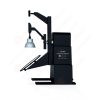
LM-79 Moving Detector Goniophotometer (Mirror Type C)
LSG-6000
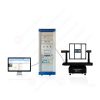
High Precision Rotation Luminaire Goniophotometer
LSG-1890B
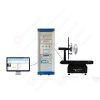
High Precision Rotation Luminaire Goniospectroradiometer
LSG-1890BCCD

Goniophotometer for Automotive and Signal Lamps
LSG-1950
Goniophotometer for Traffic Signal Lamps
LSG-1950S
VAD Fire Alarm Visual Alert Device Goniophotometer
LSG-1930
Compact Goniophotometer
LSG-1200A
LED Goniophotometer
LSG-1100
 LEDs and Luminaire Test Solutions
 LM-79 and LM-80 Test Solutions
 LED Driver Test Solutions
 Household Appliances Test Solutions
 Mobile and Network Test Solutions
 Automotive Electronics Test Solutions
 Audio-Video and IT Test Solutions
 Cable and Wire Test Solutions
 Plugs and Sockets Test Solutions
 Power Switch Test Solutions
 Transformer Test Solutions
 Electric Toys Test Solutions
 Energy Meter Test Solutions
 Motor-Operated Tool Test Solutions
Select an organization
to browse standards
Abstract:
Color temperature is a core photometric and colorimetric parameter in the fields of lighting sources, display devices, horticultural lighting, and healthy lighting. Accurately measure color temperature directly determines the lighting quality, visual comfort, and photobiological safety of products. This paper takes the LISUN LMS-6000 series handheld CCD spectroradiometer as the research object, systematically expounds the principle, technical specifications, multi-model adaptability, test methods, and engineering applications to measure color temperature. Combined with measured data and standard specifications, it verifies the reliability of this series of instruments in fast and high-precision measure color temperature on site, providing a technical reference for color temperature detection and quality control in the lighting and display industries.
1. Introduction
In scenarios such as LED lighting, backlight displays, film and television lighting, plant factories, and medical lighting, color temperature (CCT) is a key indicator describing the color of light sources, which directly affects visual perception, color reproduction, physiological rhythm, and product consistency. Traditional methods to measure color temperature rely on benchtop spectroradiometers or integrating sphere systems, which have limitations such as large size, complex wiring, and difficulty in on-site deployment. Handheld CCD spectroradiometers have become the mainstream solution for on-site measure color temperature due to their advantages of portability, speed, and simultaneous multi-parameter testing.
The LISUN LMS-6000 series portable spectroradiometer adopts a long-focus cross asymmetric CT spectroscopic system and high-sensitivity CCD array, enabling high-precision spectral collection in the visible and extended bands. It supports to measure color temperature, chromaticity coordinates, color rendering index, TM-30, illuminance, luminance, blue light hazard, flicker, horticultural lighting parameters, etc., covering full-scene requirements to measure color temperature. Compliant with CIE-13.3, CIE-177, GB/T 20145 and other domestic and international standards, it provides an integrated solution for measure color temperature in engineering sites and laboratories.
2. Basic Principle to Measure Color Temperature
Color temperature is based on the theory of blackbody radiation. The light color of an ideal blackbody under thermal radiation gradually changes from red → yellow → white → blue with temperature, and this temperature is defined as color temperature in Kelvin (K). Most actual light sources are non-blackbodies, so Correlated Color Temperature (CCT) is used for characterization: in the CIE 1960 UCS uniform chromaticity diagram, the temperature corresponding to the closest point from the light source chromaticity coordinate to the blackbody locus is the correlated color temperature.
The core process to measure color temperature:
• Collect the Spectral Power Distribution (SPD) of the light source in 380–780 nm (or extended bands);
• Calculate tristimulus values X, Y, Z according to the CIE standard observer function, and derive chromaticity coordinates (x, y) or (u’, v’);
• Match the blackbody locus and isotherms to calculate CCT and blackbody deviation Duv;
• Synchronously output parameters such as color rendering index CRI, TM-30, color tolerance, and spectrogram.
The LMS-6000 has a built-in professional colorimetric algorithm that automatically completes the whole process to measure color temperature and outputs stable results within 1 second, meeting the needs of rapid testing.
3. Core Performance and Model Configuration of LMS-6000 Series to Measure Color Temperature
3.1 Core Technical Specifications (Special Indexes to Measure Color Temperature)
| Parameter Item | Index Value | Significance for Measuring Color Temperature |
| Wavelength Range | 380–780 nm (standard); 350–800/950 nm (extended) | Covers the full visible band to ensure the integrity of color temperature calculation |
| Wavelength Accuracy | ±0.5 nm | Reduces color temperature errors caused by spectral shift |
| Chromaticity Coordinate Accuracy | Δx, Δy ±0.005 | Directly determines the accuracy to measure color temperature |
| Color Temperature Range | 1500 K ~ 100000 K | Covers the full range of warm white, neutral white, cool white, and special light sources |
| Color Temperature Accuracy | ±0.6% | High precision meets certification and production line quality control |
| Photometric Linearity | ±0.6% | Stable performance to measure color temperature under strong/weak light |
| Stray Light | <0.015% (600 nm); <0.03% (435 nm) | Suppresses stray light and improves color temperature accuracy at low illuminance |
| Integration Time | 0.1 ms – 5 s | Adapts to measure color temperature of light sources with different brightness |
3.2 LMS-6000 Series Models and Adaptability to Measure Color Temperature
| Model | Wavelength Range | Ability to Measure Color Temperature | Extended Functions | Application Scenarios |
| LMS-6000 | 380–780 nm | Standard high-precision CCT, Duv, chromaticity coordinates | CRI, TM-30, spectrogram | General lighting measure color temperature |
| LMS-6000C | 380–780 nm | Basic CCT, Duv, chromaticity coordinates | No TM-30/PC software | Economic on-site sampling inspection |
| LMS-6000F | 380–780 nm | Standard CCT measurement | Flicker test | Color temperature + flicker of dimmable light sources |
| LMS-6000L | 380–780 nm | High-precision CCT | Luminance test | Display/panel measure color temperature |
| LMS-6000B | 350–800 nm | Compatible with CCT + blue light hazard | Retinal blue light hazard | Healthy lighting color temperature detection |
| LMS-6000P | 350–850 nm | CCT + horticultural lighting parameters | PAR, PPFD | Horticultural lamps measure color temperature |
| LMS-6000S | 350–950 nm | CCT + blue light hazard + horticultural parameters | Full-band spectrum | High-end lighting/scientific research |
| LMS-6000TLCI | 380–780 nm | Professional CCT measurement | TLCI for film & television | Film and television lighting measure color temperature |
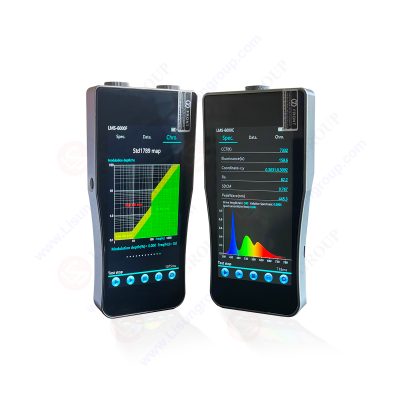
LMS-6000 Portable CCD Spectroradiometer
4. Test Methods and Procedures of LMS-6000 to Measure Color Temperature
4.1 Standard Test Conditions
• Environment: No direct light or reflection interference, temperature 25±2℃, relative humidity 45%–75%;
• Light source preheating: LED ≥ 30 min, fluorescent lamp ≥ 15 min, to reach thermal stability;
• Instrument calibration: Calibrated with standard A light source to ensure traceable results to measure color temperature.
4.2 Measurement Steps
• Power on and preheat for 3–5 minutes, enter the color temperature/spectrum test mode;
• Calibrate dark current and optical standard to eliminate system errors;
• Align the probe vertically to the center of the light source, with an adjustable distance of 5–50 cm to avoid spot overflow;
• Automatic integration, obtain spectrum, CCT, Duv, x/y coordinates within 1 second;
• Measure 3 times continuously and take the average, save data and spectrogram;
• Export to PC software to generate reports, supporting CIE 1931/1976 chromaticity diagram and color tolerance analysis.
4.3 Example Data to Measure Color Temperature (Typical LED Light Sources)
| Light Source Type | Nominal Color Temperature | Measured CCT (K) | Duv | Chromaticity Coordinate x | Chromaticity Coordinate y | Ra | Judgment |
| Warm White LED | 3000 K | 2986 | 0.0012 | 0.4352 | 0.4012 | 95.2 | Qualified |
| Neutral White LED | 4000 K | 4015 | -0.0008 | 0.3825 | 0.3768 | 96.5 | Qualified |
| Cool White LED | 6500 K | 6489 | 0.0021 | 0.3128 | 0.3305 | 94.8 | Qualified |
The results show that the error of LMS-6000 to measure color temperature is <1%, meeting the requirements of GB/T 39394, CIE-15 and other standards.
5. Engineering Applications of LMS-6000 to Measure Color Temperature
5.1 Lighting Production Line Quality Control
Batch measure color temperature to quickly screen products with color difference, ensure color temperature consistency of the same batch, and reduce defective rate.
5.2 On-Site Acceptance and Inspection
Quickly measure color temperature in shopping malls, schools, hospitals, stadiums and other places to verify compliance with design and health standards.
5.3 Display and Backlight Testing
LMS-6000L synchronously measure color temperature and luminance, suitable for color calibration of screens, TVs and vehicle-mounted displays.
5.4 Healthy and Film & Television Lighting
LMS-6000B/BF measure color temperature + blue light hazard; LMS-6000TLCI meets dual tests of color temperature and TLCI for film and television lighting.
5.5 Horticultural Lighting R&D
LMS-6000P/S measure color temperature + PPFD/PAR/YPFD to optimize spectral ratio and improve light energy utilization.
6. Advantages and Conclusion
6.1 Core Advantages
High Precision: Color temperature accuracy ±0.6%, chromaticity coordinates ±0.005, meeting certification-level measure color temperature;
Full Scenarios: Multiple models cover needs to measure color temperature in general, health, film and television, horticulture, industry and other fields;
Portable and Efficient: Handheld design, 5-inch touch screen, 4000 mAh long battery life, instant measurement on site;
Standard Compliance: Compliant with CIE, IEEE, GB/T series standards, reports can be directly used for testing and certification.
6.2 Conclusion
With advanced optical system, stable CCD detection and professional colorimetric algorithm, the LISUN LMS-6000 series handheld CCD spectroradiometer realizes high precision, high efficiency and high adaptability to measure color temperature. It can simultaneously output spectrum, illuminance, color rendering index, TM-30, blue light hazard, flicker, horticultural parameters and more, solving the pain points of inconvenient on-site use and single function of traditional equipment. In the fields of lighting, display, health, horticulture, film and television, this instrument is an ideal tool for measure color temperature and photometric color quality control, providing a standardized, portable and integrated testing solution for the industry.
Your email address will not be published. Required fields are marked *

 English
 中文简体
中文简体 English
 Русский
 Español
 Português
 Türkçe
 العربية
 Deutsch
 Polski
 Italiano
 Français
 한국어
한국어 ไทย
ไทย Tiếng Việt
 日本語
日本語