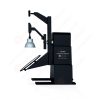
LM-79 Moving Detector Goniophotometer (Mirror Type C)
LSG-6000
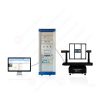
High Precision Rotation Luminaire Goniophotometer
LSG-1890B
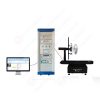
High Precision Rotation Luminaire Goniospectroradiometer
LSG-1890BCCD

Goniophotometer for Automotive and Signal Lamps
LSG-1950
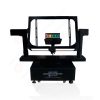
Goniophotometer for Traffic Signal Lamps (Economical Model)
LSG-1950S
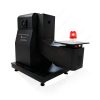
VAD Fire Alarm Visual Alert Device Goniophotometer
LSG-1930
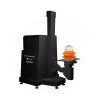
Goniophotometer for Airfield Lighting
LSG-1940
Compact Goniophotometer
LSG-1200A
LED Goniophotometer
LSG-1100
Near Field Moving Detector Goniophotometer
LSG-1900B
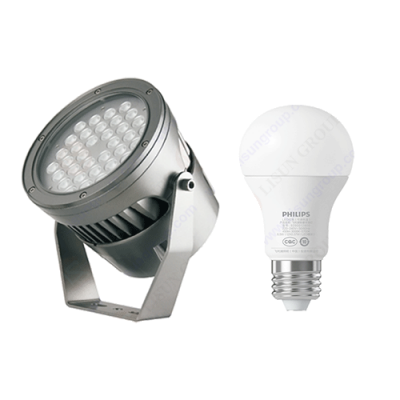 LEDs and Luminaire Test Solutions
 LM-79 and LM-80 Test Solutions
 LED Driver Test Solutions
 Household Appliances Test Solutions
 Mobile and Network Test Solutions
 Automotive Electronics Test Solutions
 Audio-Video and IT Test Solutions
 Cable and Wire Test Solutions
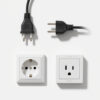 Plugs and Sockets Test Solutions
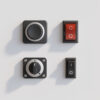 Power Switch Test Solutions
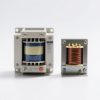 Transformer Test Solutions
 Electric Toys Test Solutions
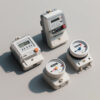 Energy Meter Test Solutions
 Motor-Operated Tool Test Solutions
Select an organization
to browse standards
Abstract:
For a long time, rapid inspection of on-site lighting and light source quality relies on traditional illuminance meters and color temperature meters. These devices can only output macroscopic values of illuminance and color temperature, and cannot restore the spectral power distribution. Thus, they cannot support the evaluation of refined indicators such as color rendering index, peak wavelength and color tolerance. Taking the LISUN LMS-6000 handheld spectroradiometer as the core, this paper systematically elaborates the working principle, key parameters and serialized expansion capability of this type of instrument to measure wavelength. Adopting a long-focus crossed asymmetric CT spectroscopic system, the instrument covers a wavelength range of 380–780 nm with wavelength accuracy of ±0.5 nm. It can acquire full-spectrum data within 380–780 nm in one measurement with an integration time ranging from 0.1 ms to 5 s. Based on the spectrum, dozens of photometric and colorimetric parameters including illuminance, correlated color temperature (CCT), color rendering index (CRI), TM-30 (Rg/Rf), peak wavelength and dominant wavelength can be calculated. It complies with test requirements of CIE-13.3, CIE-177 and GB/T 24826, serving as an ideal portable tool for laboratory quality control and on-site inspection.
1. Introduction
Quality control of light source products, acceptance of lamp energy efficiency and light environment evaluation are ultimately based on spectrum, the fundamental physical quantity. The spectral power distribution (SPD) determines the chromaticity, color rendering, color temperature and peak characteristics of a light source, which acts as an objective basis for judging light source performance. Traditional filter-type illuminance meters only provide weighted illuminance readings without identifying spectral profiles. Although bench-top spectrometers with spectroscopic design deliver high accuracy, they are bulky and require computers and darkrooms, making them difficult to carry for field work. Therefore, the instrument to measure wavelength with both high precision and portability, namely the handheld spectroradiometer, has become an essential tool for quality inspection departments, lighting manufacturers and third-party testing organizations for on-site operations. LISUN LMS-6000 is a handheld CCD spectroradiometer developed to meet such demands. Combined with its structural principle and measured parameters, this paper discusses its application value in portable on-site spectral testing.
2. Overall Structure and Working Principle
LMS-6000 adopts a long-focus crossed asymmetric Czerny-Turner (CT) spectroscopic system. Incident light passes through the slit for collimation, gets dispersed by the grating, and then the CCD array receives full-spectrum signals at one time. Compared with scanning monochromators that measure point by point, this “one exposure, full-spectrum imaging” method shortens the test time to millisecond level, which is especially suitable for on-line inspection and batch sampling.
The instrument is equipped with a 5-inch high-definition IPS capacitive touch screen (480×854 resolution). The spectral curve, CIE chromaticity diagram, color tolerance diagram and various parameters can be displayed in real time, so measurement can be completed independently without connecting to a computer. Meanwhile, it supports communication with computers. Under Windows 7/8/10/11 systems, professional software can be used for data export, report generation and secondary analysis. The whole unit weighs about 0.3 kg with dimensions of 135 mm × 80 mm × 23 mm. It is equipped with a 4000 mAh rechargeable lithium battery, supporting up to 20 hours of continuous operation to satisfy long-time outdoor work.
3. Key Performance Parameters of the Instrument to Measure Wavelength
As a kind of instrument to measure wavelength, the core advantages of LMS-6000 lie in wavelength accuracy, dynamic range and stray light suppression, as shown in Table 1.
Table 1 Core Spectral and Photometric Performance Parameters of LMS-6000
| Item | Specification |
| Spectral optical system | Long-focus crossed asymmetric CT spectroscopic system |
| Wavelength range | 380–780 nm |
| Wavelength accuracy | ±0.5 nm |
| Spectral resolution | ±0.2 nm |
| Sampling interval | ±0.1 nm |
| Chromaticity coordinate accuracy (Δx, Δy) | ±0.005 |
| Correlated color temperature range | 1,500 K–100,000 K (accuracy ±0.6%) |
| Illuminance range | 0.1–500,000 lx (±0.1 lx) |
| Color rendering index range | 0–100.0 (accuracy ±(0.3%rd±0.3)) |
| Photometric linearity | ±0.6% |
| Stray light | <0.015% @600 nm; <0.03% @435 nm |
| Integration time | 0.1 ms–5 s |
| Storage | 8 GB, stores 5,000–100,000 test reports |
As shown in Table 1, its illuminance dynamic range covers six orders of magnitude, enabling direct measurement from dim environment of 0.1 lx to high-brightness light sources up to 500,000 lx. The wavelength accuracy of ±0.5 nm can reliably locate peak wavelength and dominant wavelength. Chromaticity precision of ±0.005 meets acceptance judgment requirements for lamp chromaticity coordinates, while stray light as low as 0.015% ensures authentic restoration of spectra in dark response regions.
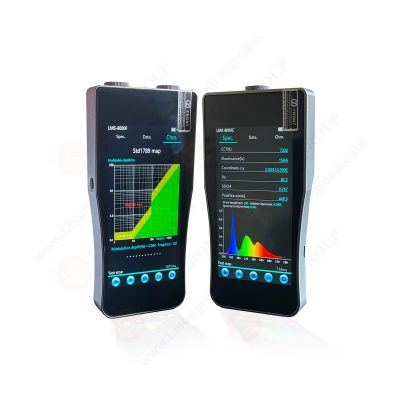
LMS-6000 Portable CCD Spectroradiometer
4. Serial Version Expansion
To cater to demands from different industries, the LMS-6000 series covers ultraviolet, visible and near-infrared bands. Users can select models according to the wavelength range of test objects and additional indicators, as shown in Table 2.
Table 2 LMS-6000 Series Models and Wavelength Coverage
| Model | Positioning | Wavelength Range | Featured Functions |
| LMS-6000 | Standard Version | 380–780 nm | Full parameters including illuminance, CCT, CRI, TM-30 |
| LMS-6000C | Economy Version | 380–780 nm | Without TM-30 and PC software |
| LMS-6000UV | UV Version | 200–400 nm | UVA/UVB/UVC, ultraviolet hazard irradiance |
| LMS-6000F | Flicker Version | 380–780 nm | Additional flicker test |
| LMS-6000L | Luminance Version | 380–780 nm | Luminance 0.1–500,000 cd/m² |
| LMS-6000B | Blue Light Version | 350–800 nm | Retinal blue light hazard, compliant with GB/T20145, CIE S009 |
| LMS-6000P | Horticulture Version | 350–850 nm | PAR, PPFD, YPFD, blue-violet / red-orange irradiance |
| LMS-6000S | Horticulture + Blue Light Version | 350–950 nm | Combined horticulture lighting and blue light hazard test |
| LMS-6000SF | Full-Function Version | 350–950 nm | Horticulture + blue light + flicker parameters |
| LMS-6000TLCI | Film & Television Version | 380–780 nm | Additional TLCI test |
| LMS-6000I | Industrial Version | 380–780 nm | I/O control, RS485 interface |
It can be seen from Table 2 that the UV variant extends the detection lower limit of this instrument to measure wavelength to the ultraviolet region of 200 nm, and the horticulture lighting version expands the upper boundary to near-infrared band at 950 nm. Equipped with optional functional modules, one single device can support field tests in multiple scenarios such as UV curing, plant supplementary lighting, film lighting and photobiological safety screening.
5. Application Scenarios and Standard Compliance
LMS-6000 is widely used in R&D sampling inspection of LED light sources, factory quality inspection of lamps, acceptance of road and venue lighting, white balance calibration of display screens, light formula verification for horticulture lighting and photobiological safety screening. The test results comply with CIE-13.3 Method of measuring and specifying colour rendering properties of light sources, CIE-177 Colour rendering of white LED light sources, IEEE 1789 recommended practice for modulating current in high-brightness LEDs, and support the measurement of indicators specified in GB/T 24826-2016 national standard. It can be adopted for internal quality judgment of enterprises. For official reports with third-party validity, detailed test data shall be submitted to ILAC-MRA accredited laboratories for verification.
6. Conclusion
The core of portable on-site spectral testing lies in whether an instrument to measure wavelength can stably restore spectral distribution and output reliable photometric and colorimetric parameters without laboratory conditions. With CT spectroscopic architecture and CCD array detector, LISUN LMS-6000 realizes full-spectrum acquisition in one exposure. It achieves ±0.5 nm wavelength accuracy and six-order illuminance dynamic range within 380–780 nm. Through 11 serialized variants, its detectable wavelength band is extended to 200–950 nm. Practical tests and engineering applications prove that its precision and portability satisfy both laboratory quality control and on-site inspection requirements. It is a cost-effective solution replacing traditional illuminance meters and upgrading field detection to spectral-level measurement.
Tags:LMS-6000Your email address will not be published. Required fields are marked *

 English
 中文简体
 English
 Русский
 Español
 Português
 Türkçe
 العربية
 Deutsch
 Polski
 Italiano
 Français
 한국어
 ไทย
 Tiếng Việt
 日本語