LM-79 Moving Detector Goniophotometer (Mirror Type C)
LSG-6000
High Precision Rotation Luminaire Goniophotometer
LSG-1890B
High Precision Rotation Luminaire Goniospectroradiometer
LSG-1890BCCD

Goniophotometer for Automotive and Signal Lamps
LSG-1950
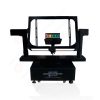
Goniophotometer for Traffic Signal Lamps (Economical Model)
LSG-1950S
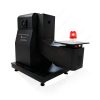
VAD Fire Alarm Visual Alert Device Goniophotometer
LSG-1930
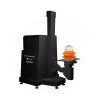
Goniophotometer for Airfield Lighting
LSG-1940
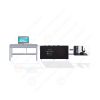
Compact Goniophotometer
LSG-1200A
LED Goniophotometer
LSG-1100
Near Field Moving Detector Goniophotometer
LSG-1900B
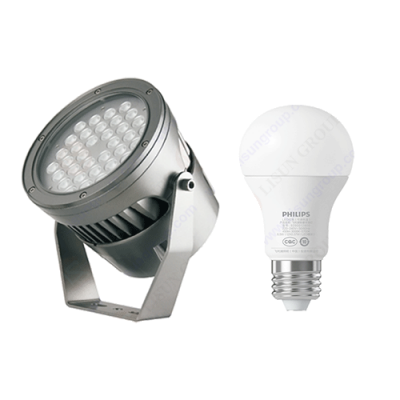 LEDs and Luminaire Test Solutions
 LM-79 and LM-80 Test Solutions
 LED Driver Test Solutions
 Household Appliances Test Solutions
 Mobile and Network Test Solutions
 Automotive Electronics Test Solutions
 Audio-Video and IT Test Solutions
 Cable and Wire Test Solutions
 Plugs and Sockets Test Solutions
 Power Switch Test Solutions
 Transformer Test Solutions
 Electric Toys Test Solutions
 Energy Meter Test Solutions
 Motor-Operated Tool Test Solutions
Select an organization
to browse standards
Abstract
Light lux measurement serves as a basic testing item in lighting engineering, indoor light environment evaluation, LED light source quality inspection and other fields. Traditional single lux meters can only output lux values and fail to obtain supporting parameters such as spectrum, correlated color temperature and color rendering index simultaneously, which may easily cause spectral mismatch errors. The portable spectrometer integrates spectral splitting technology and photoelectric detection. While completing light lux measurement, it collects complete visible spectrum information, balancing portability and the capability of synchronous multi-parameter detection. Taking the LISUN LMS-6000 portable spectrometer as the research object, this paper illustrates its principle of light lux measurement and core technical specifications, compares performance differences with traditional lux meters, analyzes the application advantages of this instrument in on-site light lux measurement scenarios, and provides references for on-site light environment detection and light source quality evaluation in engineering.
1. Introduction
In scenarios such as lighting product R&D, acceptance of building indoor light environment, on-site road lighting detection and cultural relic lighting assessment in museums, light lux measurement is an indispensable testing procedure. Ordinary photoelectric lux meters collect illuminance relying on silicon photocells combined with filters matching the CIE photopic luminosity function. They feature simple structure and low cost but have inherent drawbacks: when the spectrum of the measured light source differs greatly from that of the calibration light source, spectral mismatch will occur and reduce the accuracy of light lux measurement. Moreover, they cannot obtain key chromaticity parameters including light source spectrum curve, correlated color temperature and color rendering index. The lighting quality cannot be fully evaluated merely by lux values.
With the large-scale popularization of new light sources such as LEDs and OLEDs, on-site detection requires synchronous acquisition of photometric and chromaticity data in a single measurement. Portable spectroradiometers (portable spectrometers) emerge as required. They disperse light by grating and collect spectral irradiance at different wavelengths via CCD array detectors. The lux value is calculated through integrating the spectral irradiance weighted by the CIE standard photopic luminosity function, realizing the integration of **light lux measurement and spectrum analysis**. The LISUN LMS-6000 portable spectrometer is a handheld optical instrument developed for on-site detection. It meets the requirements of laboratory sampling inspection and on-site light lux measurement for engineering projects. Product details: [https://www.lisungroup.cn/products/722.html](https://www.lisungroup.cn/products/722.html).
2. Principle of Light Lux Measurement for Portable Spectrometers
Illuminance is defined as the luminous flux received per unit area, with the unit lx. Traditional lux meters convert photocurrent directly into lux readings. The light lux measurement of portable spectrometers adopts the spectral integration method. After light enters the optical window of the instrument, it passes through the slit and gets dispersed by the grating into monochromatic light of different wavelengths. The CCD detector collects spectral irradiance of each wavelength within the 380–780 nm visible band. The built-in algorithm of the instrument performs wavelength-by-wavelength weighting and integration on spectral irradiance with the CIE V(λ) photopic luminosity function, and finally calculates the lux value.
The advantage of this measurement method lies in complete recording of spectral information without spectral mismatch caused by fixed filters. For light sources of various spectra such as incandescent lamps, fluorescent lamps and LEDs, the results of light lux measurement have higher reliability. Meanwhile, chromaticity indicators including correlated color temperature, chromaticity coordinates, CRI and TM-30 can be output synchronously to realize multi-parameter detection in one test. The LISUN LMS-6000 uses a CCD linear array detector with adaptive adjustable integration time, suitable for light lux measurement in low-light to high-light environments.
3. Core Parameter Table of LISUN LMS-6000 Portable Spectrometer
Table 1 Core optical parameters and specifications for light lux measurement of LMS-6000 portable spectrometer
| Item | Technical Specification |
| Light lux measurement range | 0.1 lx ~ 500000 lx |
| Light lux measurement accuracy | ±0.1 lx |
| Spectral wavelength range | 380 nm ~780 nm (visible light) |
| Wavelength accuracy | ±0.5 nm |
| Spectral resolution | 0.2 nm |
| Synchronously measurable parameters | Correlated color temperature Tc, Duv, chromaticity coordinates x,y, CRI, TM30 Rf/Rg, peak wavelength, irradiance |
| Screen | 5-inch IPS capacitive touch screen |
| Battery life | 4000mAh lithium battery, about 20 hours of continuous operation |
| Storage capacity | 8GB local storage, supports saving tens of thousands of sets of spectrum and light lux measurement data |
Table 2 Performance comparison between LMS-6000 portable spectrometer and traditional lux meter
| Comparison Item | LISUN LMS-6000 Portable Spectrometer | Traditional Photoelectric Lux Meter |
| Principle of light lux measurement | Spectral weighted integration method | Filter-based photoelectric conversion |
| Spectral mismatch error | Low, applicable to various light sources | High; significant error when spectrum differs greatly |
| Output per measurement | Lux + full spectrum + complete chromaticity parameters | Only light lux value |
| Applicable scenarios | Laboratory light source test, comprehensive on-site light environment assessment | Simple light lux screening only |
| Equipment size | Handheld and portable | Small handheld |
| Cost | Relatively high | Low |
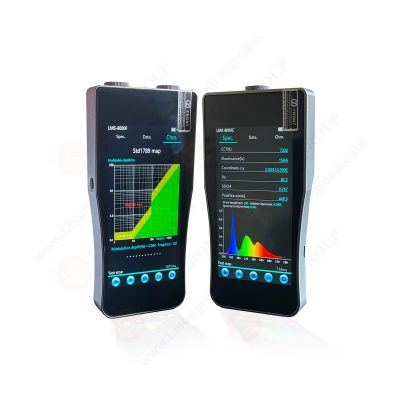
LMS-6000 Portable CCD Spectroradiometer
4. Application of LMS-6000 in Light Lux Measurement Scenarios
First, on-site sampling inspection of LED lighting products. During lamp factory inspection and engineering acceptance, not only light lux measurement is required, but also correlated color temperature and color rendering performance need to be verified synchronously. The LMS-6000 can perform measurements directly in assembly workshops and construction sites, save spectrum curves and lux data in real time and export reports, avoiding changes of light source parameters caused by sample transportation for testing.
Second, indoor light environment inspection for buildings. The acceptance of lighting for offices, classrooms, hospitals and other places requires multi-point light lux measurement as well as evaluation of light color quality. Featuring portability and long battery life, the instrument supports continuous multi-point data collection on site to quickly judge whether the illuminance of working surfaces meets national lighting standards.
Third, lighting inspection for museums and art galleries. Cultural relics are sensitive to lux level and spectral composition. Light lux measurement needs to control the irradiation of blue band at the same time. While acquiring lux values, the LMS-6000 can check spectral distribution to protect exhibits.
Fourth, on-site road lighting detection. Outdoor lighting environments are complex with mixed natural light and artificial light and variable spectral composition. Traditional lux meters produce large errors. The spectral-integration-based light lux measurement method of LMS-6000 greatly reduces measurement deviation induced by spectral mismatch.
5. Measurement Precautions and Error Analysis
When conducting light lux measurement with the LMS-6000, external interference shall be avoided to guarantee measurement accuracy. Firstly, the probe shall face the measured light source perpendicularly to prevent stray reflected light from entering the optical window. Secondly, the instrument shall be calibrated regularly with standard light sources, as long-term operation will cause response drift of the detector. Thirdly, the integration time should be controlled under strong light to prevent CCD saturation; under weak light, integration time can be extended to improve signal-to-noise ratio.
Main error sources include environmental stray light, probe angle deviation, temperature drift and calibration deviation of standard light sources. Compared with traditional lux meters, portable spectrometers have smaller systematic errors in light lux measurement under light sources with complex spectra, which is their core advantage.
6. Conclusion
Light lux measurement is the foundation of lighting quality evaluation, but a single lux indicator is insufficient to fully describe light source characteristics. The LISUN LMS-6000 portable spectrometer realizes high-precision light lux measurement via spectral integration, and collects complete spectrum and chromaticity parameters simultaneously. It solves the spectral mismatch defect of traditional lux meters while taking into account portability and multi-parameter detection capability. This portable spectrometer has prominent advantages in on-site detection scenarios such as LED light source quality inspection, building lighting acceptance and cultural relic lighting assessment. As lighting testing standards impose higher requirements on photometric and chromaticity parameters, instruments for light lux measurement based on spectral methods will gradually become mainstream equipment in the field of light environment detection.
Tags:LMS-6000Your email address will not be published. Required fields are marked *

 English
 中文简体
 English
 Русский
 Español
 Português
 Türkçe
 العربية
 Deutsch
 Polski
 Italiano
 Français
 한국어
 ไทย
 Tiếng Việt
 日本語