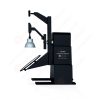
LM-79 Moving Detector Goniophotometer (Mirror Type C)
LSG-6000
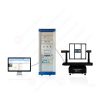
High Precision Rotation Luminaire Goniophotometer
LSG-1890B
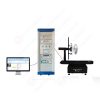
High Precision Rotation Luminaire Goniospectroradiometer
LSG-1890BCCD

Goniophotometer for Automotive and Signal Lamps
LSG-1950
Goniophotometer for Traffic Signal Lamps (Economical Model)
LSG-1950S
VAD Fire Alarm Visual Alert Device Goniophotometer
LSG-1930
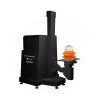
Goniophotometer for Airfield Lighting
LSG-1940
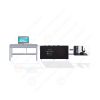
Compact Goniophotometer
LSG-1200A
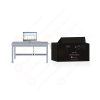
LED Goniophotometer
LSG-1100
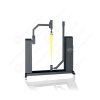
Near Field Moving Detector Goniophotometer
LSG-1900B
 LEDs and Luminaire Test Solutions
 LM-79 and LM-80 Test Solutions
 LED Driver Test Solutions
 Household Appliances Test Solutions
 Mobile and Network Test Solutions
 Automotive Electronics Test Solutions
 Audio-Video and IT Test Solutions
 Cable and Wire Test Solutions
 Plugs and Sockets Test Solutions
 Power Switch Test Solutions
 Transformer Test Solutions
 Electric Toys Test Solutions
 Energy Meter Test Solutions
 Motor-Operated Tool Test Solutions
Select an organization
to browse standards
Abstract:
Luminous intensity is the most fundamental photometric parameter of lighting products, and the instrument that measures light intensity is an indispensable testing equipment for luminaire light distribution performance evaluation, product R&D and export certification. Conventional photometric testing equipment usually suffers from limitations such as incomplete test angles, limited adaptability to luminaire types and fixed test distances. This paper takes the LISUN LSG-6000 LM-79 vertical goniophotometer system as the research object. This instrument that measures light intensity can automatically complete scanning and acquisition of 3D light intensity distribution curves. The test distance can be custom-designed according to customer requirements, and it can meet the test requirements of various light sources such as LED light sources, plant growth lights, HID light sources, indoor and outdoor lighting, street lights and floodlights. This paper elaborates the working principle, hardware architecture and key technical indicators of the instrument, compares the adaptability of different sub-models, sorts out the domestic and international standard systems it complies with, analyzes the application effect of this instrument that measures light intensity in different categories of light sources combined with actual test scenarios, and provides technical references for equipment selection of light distribution laboratories for lighting enterprises and third-party testing institutions.
Introduction:
With the rapid iteration of solid-state lighting technology, LED, plant growth lights, high-power floodlights and road street light products have been widely launched into the market. Luminaires no longer only focus on luminous flux and power. The three-dimensional spatial light intensity distribution directly determines the spot shape, irradiation range, glare level and illuminance uniformity, which is the core basis for lighting optical design, engineering simulation and domestic and foreign certification. Standards such as LM-79-19, LM-79-24, EN13032-1 and CIE121 clearly require that solid-state lighting products need complete full-space light intensity distribution test data to generate IES and LDT format light distribution files, which can be imported into lighting simulation software such as Dialux for engineering simulation calculation.
There are many types of instrument that measures light intensity. Ordinary single-point photometers can only measure light intensity in a single direction and cannot obtain complete three-dimensional light distribution. Traditional lamp-rotating goniophotometers rotate the tested luminaire together with the mechanism. During the rotation of high-power and heavy-weight luminaires, temperature drift and posture offset will occur, introducing test errors. Adopting the C-type Class 4 goniophotometer architecture of “stationary luminaire and rotating probe”, the LISUN LSG-6000 LM-79 vertical goniophotometer system solves the above pain points and realizes automatic acquisition of 3D light intensity distribution curves. The test distance can be customized according to customers’ darkroom conditions and standard requirements, covering the testing of multiple types of light sources, and it has been widely used in lighting detection laboratories around the world.
1 Working Principle and Hardware Features of the Instrument that measures light intensity — LSG-6000 System
The LSG-6000 rotating-probe vertical goniophotometer is a full-space instrument that measures light intensity. Its core mechanism is as follows: the tested luminaire keeps absolutely stationary when working; the near-field probe and mirror rotate circularly around the tested luminaire, while the far-field probe and mirror move synchronously. The probe continuously collects light intensity signals of the light source at each solid angle. The system collects photometric data at all angular nodes to build a three-dimensional light intensity database, automatically output 3D light intensity distribution curves, and simultaneously calculate full sets of photometric parameters including regional luminous flux, luminous efficacy, UGR glare rating, iso-illuminance curves and effective beam angle.
Key hardware configurations of this instrument that measures light intensity:
1. Drive System: Adopts Mitsubishi servo motors equipped with German decoders for smooth mechanical start and stop without jitter, ensuring high angular positioning accuracy; the angular accuracy is 0.05° and angular resolution reaches 0.001°, the γ scanning angle range is ±180° (0-360°), realizing full-space dead-angle-free scanning test.
2. Photometric Probe: Standard equipped with Class L constant-temperature photometric probe, complying with DIN5032-6 / CIE pub1.No.69 with f1′<1.5%; optional UVA, UVB, UVC dedicated UV probes are available to complete light distribution test of ultraviolet light sources.
3. Positioning Calibration: Cross laser calibration device to quickly complete the optical center positioning of the tested light source and reduce systematic errors caused by manual clamping.
4. Expansion Module LSG-6000CCD: Matched with LPCE-2 high-precision CCD spectroradiometer, it can be upgraded to a spatial spectral radiation distribution goniophotometer. In addition to light intensity, it can also test spatial correlated color temperature distribution, PAR, PPF and spatial distribution parameters of PPFD for plant lighting.
5. Software & Interface: RS-485/USB communication, bilingual software compatible with Win7-Win11 operating systems; test results can be exported in CIE, IES and LDT standard formats for direct connection with lighting simulation software.
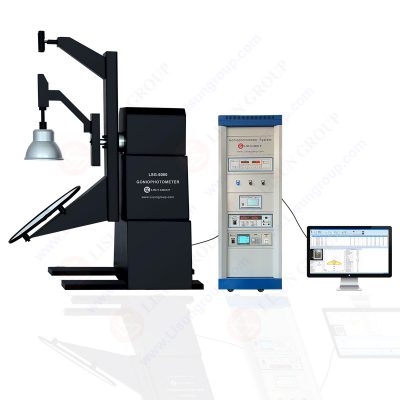
LM-79 Moving Detector Goniophotometer (Mirror Type C) AL
2 LSG-6000 Series Model Specification Parameters
For luminaires of different sizes and weights, this instrument that measures light intensity is divided into 4 specification versions to adapt to different darkroom site conditions. The core parameters of each model are shown in Table 1.
Table 1 Parameters of LSG-6000 Series Vertical Goniophotometer
| LISUN Model | Tested Luminaire Size (Diameter E × Thickness F) | Max. Load of Tested Luminaire | Measurable Power AC/DC | Minimum Darkroom Height | Typical Application Scenarios |
| LSG‑6000 / LSG‑6000CCD (Standard Type) | max Φ1600×600mm | 50kg | max600V/10A | 4.1m | Ordinary LED luminaires, indoor lighting, medium & small plant lights, HID light sources |
| LSG‑6000B / LSG‑6000BCCD (Large Type) | max Φ1800×800mm | 60kg | max600V/10A | 4.7m | Medium street lights, large plant growth lights, venue luminaires |
| LSG‑6000L / LSG‑6000LCCD (Extra-Large Type) | max Φ2000×900mm | 80kg | max600V/10A | 5.2m | High-power street lights, high-mast floodlights, industrial projectors |
| LSG‑6000S / LSG‑6000SCCD (Small Type) | max Φ1200×500mm | 40kg | max600V/10A | 3.0m | Small-size modules, downlights and spotlights, small LED light sources, small darkrooms with limited space |
Meanwhile, the instrument has no fixed test distance. It can be custom-designed in combination with customers’ darkroom space and the requirements of LM-79 and CIE standards for test distance to meet the requirements of different certification standards.
3 Compliant Domestic and International Standard Systems
This instrument that measures light intensity fully complies with multiple international and domestic photometric test standards, serving as an important hardware foundation for product export certification:
1. North American Standards: LM-79-19, LM-79-24 *Method for the Measurement of Photometric and Electric Quantities of Solid State Lighting Products*, the core test conditions for ENERGY STAR certification of LED lighting products;
2. European Standards: EN13032-1 Clause 6.1.1.3 for Class 4 goniophotometer requirements, (EU)2019/2015;
3. CIE International Specifications: CIE S025, CIE-121 *Photometry of luminaires and goniophotometry*;
4. Other International Standards: SASO2902 Saudi Standard, IS16106 Indian Standard;
5. Domestic Standards: GB/T24824, GB/T9468, GB/T22907 and other national standards related to luminaire photometric measurement.
The tested 3D light intensity distribution data and light distribution files can be used for reports from domestic third-party testing institutions, as well as product compliance testing for markets in the Middle East, Europe, America, Southeast Asia.
4 Multi-Type Light Source Test Application of the Instrument that measures light intensity LSG-6000
4.1 Test of LED Light Sources and Indoor Lighting Luminaires
LED downlights, panel lights, spotlights and other indoor lighting luminaires need to obtain parameters such as light intensity distribution, UGR glare value, upward/downward luminous flux and effective beam angle. This instrument that measures light intensity automatically scans to acquire complete 3D light intensity distribution curves. Light intensity data can be used to calculate iso-illuminance diagrams and luminance limiting curves to evaluate whether the glare of indoor luminaires exceeds the standard, helping R&D personnel optimize the optical structure of reflectors and lenses. The exported LDT and IES files can be imported into Dialux software to complete indoor lighting simulation calculation for offices and classrooms.
4.2 Plant Growth Light Test
Plant lighting has strict requirements on photosynthetically active radiation (PAR), PPF and spatial distribution of PPFD. The LSG-6000CCD instrument that measures light intensity equipped with CCD spectral module can not only test the three-dimensional distribution of visible light intensity, but also directly test the spatial distribution of photosynthetic parameters and export standard light distribution files for light scheme simulation in greenhouses and plant factories. It solves the defect of ordinary photometers that can only measure total PPF but cannot obtain spatial distribution.
4.3 HID Light Source Test
Metal halide lamps, high-pressure sodium lamps and other HID light sources feature high power and high heat generation. During the test of this instrument, the light source remains stationary, so the thermal posture of the luminaire will not be disturbed by mechanical rotation, eliminating thermal offset errors caused by rotation in traditional turntable equipment, and accurately collecting full-space light intensity distribution of high-power gas discharge light sources to meet the testing requirements of traditional industrial lighting and mining luminaires.
4.4 Test of Street Lights, Floodlights and Other Outdoor Lighting
Road street lights and square floodlights have a wide irradiation angle range. Complete 3D light intensity data is required to calculate the maximum allowable height-spacing ratio and road surface illuminance uniformity. The extra-large version LSG-6000L can accommodate large-size high-power street lights and floodlights. The test distance can be customized on demand, full-space light intensity can be collected, and light distribution files can be exported for road lighting engineering simulation, while meeting the detection requirements related to LB/T001 measuring method for integrated LED street lights.
5 Test Parameter Output and Data Value
As a professional instrument that measures light intensity, LSG-6000 can calculate and output a full set of photometric parameters based on the raw data of 3D light intensity distribution: luminous intensity, light intensity distribution, regional luminous flux, luminous efficacy, luminance distribution (optional), utilization factor, luminance limiting curve, UGR glare rating, maximum allowable height-spacing ratio, iso-illuminance diagram, upward and downward luminous flux, iso-illuminance curve, iso-candela curve, effective beam angle, EEI, etc.
Raw light intensity data is the foundation of all derived parameters. The 3D light intensity distribution curve intuitively shows the luminous intensity in all directions of the luminaire. R&D personnel can quickly locate defects in optical design. Standardized format files realize data interconnection between test data and lighting design software, forming a complete chain of “product test – optical simulation – engineering application”.

6 Conclusion
The instrument that measures light intensity is critical equipment for lighting product quality control, optical R&D and domestic & overseas certification. The LISUN LSG-6000 LM-79 vertical goniophotometer system adopts C-type probe rotation architecture. The luminaire under test remains stationary to eliminate temperature and posture errors caused by rotation. It can automatically perform tests of 3D light intensity distribution curves with customizable test distances for customers. It covers multiple types of luminaires including LED light sources, plant growth lights, HID light sources, indoor and outdoor lighting, street lights and floodlights. It features high multi-angle precision and supports UV test and spatial spectrum expansion, fully complying with LM-79, CIE, EN, GB and other domestic and international standard systems.
LSG-6000 has multiple versions including S, Standard, B and L to adapt to different luminaire sizes, weights and darkroom sites. It is suitable for both third-party testing laboratories and R&D quality inspection departments of lighting enterprises. With continuously rising requirements for spatial light distribution performance of lighting products, the instrument that measures light intensity with automatic 3D light intensity distribution acquisition and customizable test distance will become mainstream configuration in lighting laboratories. Further research can be carried out on measurement repeatability and uncertainty analysis of the equipment under different environmental conditions to optimize the test process and improve the reliability of light distribution test data.
Tags:LSG-6000Your email address will not be published. Required fields are marked *
 English
 中文简体
 English
 Русский
 Español
 Português
 Türkçe
 العربية
 Deutsch
 Polski
 Italiano
 Français
 한국어
 ไทย
 Tiếng Việt
 日本語