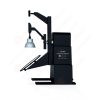
LM-79 Moving Detector Goniophotometer (Mirror Type C)
LSG-6000
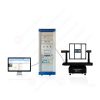
High Precision Rotation Luminaire Goniophotometer
LSG-1890B
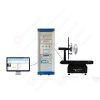
High Precision Rotation Luminaire Goniospectroradiometer
LSG-1890BCCD

Goniophotometer for Automotive and Signal Lamps
LSG-1950
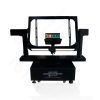
Goniophotometer for Traffic Signal Lamps
LSG-1950S
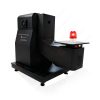
VAD Fire Alarm Visual Alert Device Goniophotometer
LSG-1930
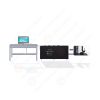
Compact Goniophotometer
LSG-1200A
LED Goniophotometer
LSG-1100
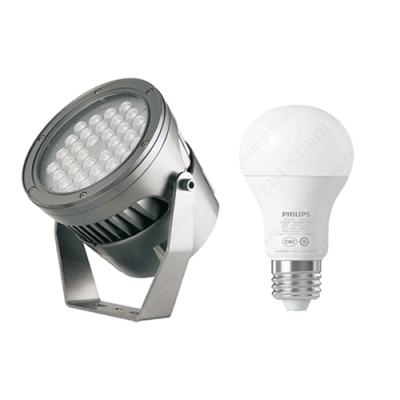 LEDs and Luminaire Test Solutions
 LM-79 and LM-80 Test Solutions
 LED Driver Test Solutions
 Household Appliances Test Solutions
 Mobile and Network Test Solutions
 Automotive Electronics Test Solutions
 Audio-Video and IT Test Solutions
 Cable and Wire Test Solutions
 Plugs and Sockets Test Solutions
 Power Switch Test Solutions
 Transformer Test Solutions
 Electric Toys Test Solutions
 Energy Meter Test Solutions
 Motor-Operated Tool Test Solutions
Select an organization
to browse standards
In industries such as automotive, construction, electronics, coatings and plastics, outdoor materials and components are continuously affected by natural environments. Among all environmental factors, ultraviolet light is the primary cause of degradation and failure of polymer materials. Natural aging tests usually take months to years, which cannot meet the timeliness requirements of product R&D iteration and quality control. The UV aging test chamber artificially simulates key environmental factors including solar UV radiation, condensed dew, water spray, high temperature and high humidity to build controllable accelerated aging cycles. It can reproduce long-term outdoor aging phenomena of materials within days or weeks, making it one of the most widely used weather resistance testing devices.
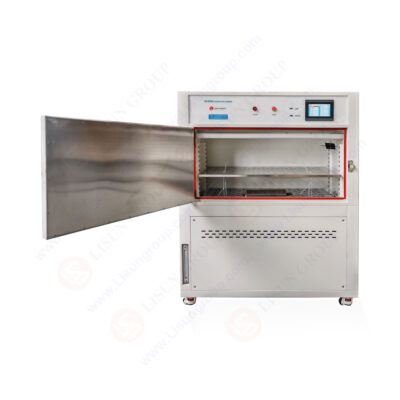
UV-263LS_UV aging Test Chamber
Adopting a standardized design, the LISUN UV‑263LS UV aging test chamber complies with multiple authoritative domestic and international test standards. With precise control over irradiation, temperature-humidity and cycles, it can stably reproduce aging environments. Widely used in new material screening, formula improvement, product certification and reliability verification, it serves as key equipment for improving outdoor durability of products.
The testing principle of the UV aging test chamber is based on simulated environmental accelerated aging. Multiple factors work synergistically to trigger and amplify natural aging processes of materials, with core mechanisms as follows:
UV Radiation Simulation
Special fluorescent UV lamps are used as light sources to precisely replicate UV bands (280–400 nm) of sunlight that cause the strongest damage to materials. They directly break polymer chains and induce photo-oxidation reactions, resulting in discoloration, chalking, embrittlement and mechanical property degradation, fundamentally simulating aging effects of sunlight.
Condensed Moisture Simulation
Water vapor is generated by heating the water tank at the bottom of the chamber and condenses on sample surfaces to simulate nighttime dew. Combined with the water spray system to reproduce rain washing and infiltration, it accelerates water penetration, hydrolysis and dissolution, expanding micro-cracks caused by UV light.
Alternating Cycles of Light and Moisture
Samples are subjected to alternating cycles of light exposure and condensation. Light exposure simulates high-temperature and high-UV daytime environments, while condensation simulates high-humidity nighttime dew environments. Periodic switching between the two states highly recreates day-night environments and significantly improves aging acceleration effects.
Temperature-Assisted Acceleration
Tests are conducted at specific temperatures (normally 50–70 ℃) to increase molecular motion rates and photochemical reaction rates, further shortening aging time and enabling rapid acquisition of weather resistance data.
This principle uses purely physical simulation without additional chemical reagents, closely matching natural aging mechanisms. Test results feature good repeatability and correlation, which can effectively predict outdoor service life of materials.

Structural Features
The LISUN UV‑263LS UV aging test chamber adopts a square inner chamber design. Both inner and outer chambers are made of S304 stainless steel, featuring corrosion resistance, easy cleaning and long-term deformation-free performance. It is equipped with 8 pieces of 40 W American ATLAS UV lamps with stable light sources and a service life up to 1000 hours. An LCD programmable controller is integrated to freely edit multi-segment cycles of light exposure, condensation, spraying, temperature and humidity. A built-in irradiance tester monitors and stabilizes irradiation intensity in real time. Multiple safety protections including over-temperature protection, water shortage alarm and leakage protection ensure stable and reliable operation.
Core Technical Parameters
Key parameters of LISUN UV series UV aging test chambers are shown in the table below:
| Model | Chamber Structure | Inner Chamber Size (W×D×H) | Outer Chamber Size (W×D×H) | Lamp Configuration | Irradiation Intensity | Temperature Range | Humidity Range |
| UV‑263LV | Trapezoidal Inner Chamber | 450×1140×500 mm | 600×1325×1500 mm | 8 pcs UVA‑340, 40 W | 0.35~1.2 W/㎡ | RT+10 ℃~70 ℃ | ≥75%RH |
| UV‑263LS | Square Inner Chamber | 550×1140×450 mm | 650×1300×1750 mm | 8 pcs UVA‑340, 40 W | 0.35~1.2 W/㎡ | RT+10 ℃~70 ℃ | ≥75%RH |
| UV‑263LT | Bench-top Chamber | 500×400×400 mm | 930×460×630 mm | 3 pcs UVA‑340C, 20 W | 0.35~1.0 W/㎡ | RT+10 ℃~70 ℃ | ≥75%RH |
Table: Core Technical Parameters of LISUN UV Series UV Aging Test Chambers
Key control indicators:
• Temperature fluctuation ≤±1 ℃, temperature uniformity ≤±2 ℃ to ensure consistent internal environment;
• Optional lamp wavelengths: UVA‑340 (315~400 nm, simulating outdoor sunlight), UVB‑313 (280~315 nm, severe acceleration);
• Test time adjustable from 0 to 9999 h/m/s, supporting continuous cyclic operation;
• Distance between samples and lamps adjustable from 70 to 300 mm, adapting to testing requirements of different samples.
The UV aging test chamber must strictly comply with domestic and international standards to ensure authority and mutual recognition of test results. Mainstream standards covered by LISUN UV‑263LS are as follows:
• Chinese National Standards: GB/T 14522‑2008, GB/T 16422.3‑2014, GB/T 16585‑1996;
• American Standards: AATCC TM186, ASTM D3794, ASTM D4329, ASTM G151/G154, ASTM G53;
• International Standards: ISO 11507, ISO 4892‑3:2013, DIN 53384;
• Industry Standards: JIS D0205, SAE J2020 (non-metallic materials for automotive interiors).
Different standards vary slightly in cycle period, irradiation intensity and temperature-humidity settings. LISUN engineers can provide precisely matched parameter solutions.
Sample Preparation
Cut representative samples according to standards (e.g., 70×150 mm plastic/coating panels). Test and record initial indicators including color difference, gloss and tensile strength with dedicated LISUN instruments to ensure comparability of pre- and post-test data.
Equipment Inspection and Calibration
Inspect the appearance, pipelines, spraying and condensation systems of the UV aging test chamber, ensuring qualified water quality (purified/distilled water) in the water tank. Calibrate irradiation intensity to guarantee light source output meets standard requirements.
Test Condition Setting
Select lamp type (UVA‑340 for regular testing / UVB‑313 for severe testing); set irradiation intensity at about 0.55 W/㎡, light exposure temperature at 50~70 ℃ (commonly 60 ℃), condensation temperature at 50 ℃; common cycle modes include 4 h light exposure + 4 h condensation or 8 h light exposure + 4 h condensation.
Sample Installation and Operation
Fix samples on the sample rack evenly facing the lamps, and close empty positions with black panels to ensure environmental uniformity. Close the chamber door and start the program; the equipment automatically performs cyclic aging, with status monitored regularly during operation.
Performance Testing and Result Evaluation
Take out samples during or after tests, test color difference, gloss and mechanical properties, observe phenomena such as discoloration, chalking, cracking and blistering, evaluate aging degree by comparing with initial data, and judge qualification according to standards.
• Accurate Light Source Simulation: Imported ATLAS lamps are adopted, with spectrum highly matching UV bands of sunlight. Test results are closer to natural aging and avoid distortion caused by excessive acceleration.
• Excellent Control Precision: Closed-loop precise control over irradiation intensity, temperature and humidity ensures stable cycle procedures and good data repeatability, meeting certification-level testing requirements.
• Intelligent and Convenient Operation: The LCD programmable controller supports multi-segment program storage and automatic operation, reducing manual intervention and improving testing efficiency.
• Durable and Reliable Structure: The all-stainless-steel chamber features corrosion resistance, and the modular design enables easy maintenance, suitable for long-term high-intensity laboratory use.
• Comprehensive Standard Coverage: One unit meets multiple domestic, American, ISO and DIN standards, adapting to global testing and certification demands.
The UV aging test chamber is essential equipment for reliability verification of industrial products. LISUN UV‑263LS is widely applied in:
• Coating and Ink Industry: Test weather resistance of exterior wall coatings, automotive paints and plastic paints, evaluating discoloration, chalking and gloss loss.
• Plastic and Rubber Industry: Detect aging embrittlement, cracking and strength degradation of PP, ABS, PVC, rubber and other materials.
• Automotive and Rail Transit: Verify durability of interior parts, exterior parts and seals under UV and high-humidity environments, complying with automotive manufacturer standards.
• Electronics and Building Materials Industry: Test outdoor aging resistance of electronic casings, photovoltaic backsheets, aluminum profile coatings and decorative materials.
• Third-party Testing and R&D: Provide compliant test data for testing institutions, supporting new material formula iteration and product certification of enterprises.
By simulating solar UV radiation, condensed dew, rain washing and temperature-humidity cycles, the UV aging test chamber realizes efficient accelerated evaluation of material weather resistance, serving as core technical equipment to solve the problem of long natural aging cycles. With precise simulation principles, stable control performance, comprehensive standard coverage and reliable structural design, the LISUN UV‑263LS UV aging test chamber can quickly and accurately obtain material weather resistance data, effectively identify aging defects, and provide key support for material formula optimization, product quality improvement and outdoor service life prediction.
Against the background of continuously increasing requirements for environmental adaptability and long-term reliability of industrial products, conducting accelerated aging tests with standardized UV aging test chambers is of important engineering value and application significance for shortening R&D cycles, reducing market risks and enhancing product competitiveness.
Tags:UV-263LSYour email address will not be published. Required fields are marked *

 English
 中文简体
中文简体 English
 Русский
 Español
 Português
 Türkçe
 العربية
 Deutsch
 Polski
 Italiano
 Français
 한국어
한국어 ไทย
ไทย Tiếng Việt
 日本語
日本語