LM-79 Moving Detector Goniophotometer (Mirror Type C)
LSG-6000
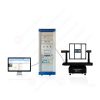
High Precision Rotation Luminaire Goniophotometer
LSG-1890B
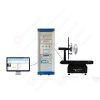
High Precision Rotation Luminaire Goniospectroradiometer
LSG-1890BCCD

Goniophotometer for Automotive and Signal Lamps
LSG-1950
Goniophotometer for Traffic Signal Lamps (Economical Model)
LSG-1950S
VAD Fire Alarm Visual Alert Device Goniophotometer
LSG-1930
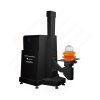
Goniophotometer for Airfield Lighting
LSG-1940
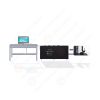
Compact Goniophotometer
LSG-1200A
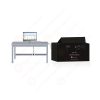
LED Goniophotometer
LSG-1100
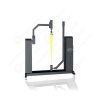
Near Field Moving Detector Goniophotometer
LSG-1900B
 LEDs and Luminaire Test Solutions
 LM-79 and LM-80 Test Solutions
 LED Driver Test Solutions
 Household Appliances Test Solutions
 Mobile and Network Test Solutions
 Automotive Electronics Test Solutions
 Audio-Video and IT Test Solutions
 Cable and Wire Test Solutions
 Plugs and Sockets Test Solutions
 Power Switch Test Solutions
 Transformer Test Solutions
 Electric Toys Test Solutions
 Energy Meter Test Solutions
 Motor-Operated Tool Test Solutions
Select an organization
to browse standards
Abstract
The impedance analyzer is a core instrument in the modern electronic testing field for accurately measuring key electrical parameters such as impedance, capacitance, inductance and resistance of electronic components, materials and circuits. It is widely applied in R&D, production quality inspection and material characteristic analysis of electronic components, as well as testing of ultrasonic devices. This paper discusses the measurement principle, technical advantages and application value of the impedance analyzer. Combined with the performance parameters and functional characteristics of LISUN LS90 impedance analyzer, this paper analyzes its practical performance in high-precision impedance measurement, so as to provide references for model selection and engineering application in related testing fields.
1. Introduction
With the rapid development of the electronic information industry, the accurate characterization of electrical properties of components, functional materials and circuit systems directly determines the reliability, stability and performance ceiling of products. As a core parameter in AC circuits, impedance is the combined result of resistance, inductance and capacitance, and its amplitude and phase change with frequency. Traditional multimeters can only measure DC resistance and fail to meet the requirements of wide-frequency, high-precision and multi-parameter synchronous measurement. Adopting vector testing and auto-balancing bridge technology, the impedance analyzer can quickly acquire impedance, capacitance, inductance, resistance, quality factor, loss factor and other critical parameters, and draw impedance-frequency characteristic curves, providing data support for R&D design, production quality control and failure analysis. Featuring wide frequency range, high measurement accuracy, integrated display and rich interfaces, LISUN LS90 impedance analyzer has become a preferred device for component and material testing. Taking this instrument as a case, this paper deeply discusses the technical value and practical application of the impedance analyzer.
2. Measurement Principle and Core Technology of Impedance Analyzer
2.1 Basic Measurement Principle
The impedance analyzer operates based on the principle of AC excitation and response measurement. It applies sinusoidal AC signals of specific frequencies to the device under test (DUT), and collects the amplitude and phase difference of voltage and current synchronously. According to the complex impedance formula Z=R+jX (R stands for resistance and X for reactance), it calculates impedance parameters and further derives parameters including capacitance C, inductance L, admittance Y, conductance G and susceptance B. Compared with conventional LCR meters, the impedance analyzer supports wide-band frequency sweep, which can fully present the electrical characteristics of devices at different frequencies and better conform to actual working conditions.
2.2 Core Technical Advantages
• Auto-balancing Bridge Technology: The four-terminal pair Kelvin test terminals eliminate the interference caused by test line resistance, contact resistance and parasitic parameters, greatly improving the measurement accuracy of low impedance and adapting to the testing within the range from micro-ohm to mega-ohm level.
• Vector Testing Principle: It measures amplitude and phase simultaneously to ensure the calculation accuracy of parameters. Multiple scanning modes such as R-X, Z-θ, Y-θ and G-B are available to directly reflect device characteristics.
• Wide Frequency Range and High Resolution: It covers low to high frequency bands with frequency accuracy up to millhertz level and phase resolution up to 0.01°, which meets the requirements for fine analysis of piezoelectric ceramics, inductors, capacitors, resonators and other devices.
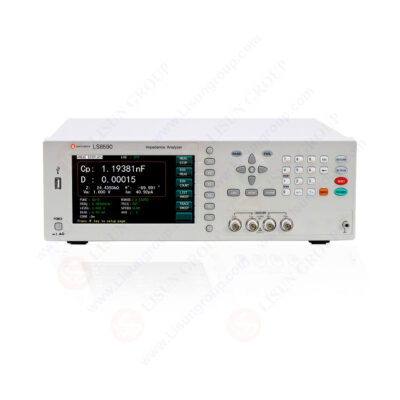
LS90_Impedance analyzer
3. Performance Parameters and Functional Features of LISUN LS90 Impedance Analyzer
LISUN LS90 impedance analyzer is a high-precision instrument for industrial quality inspection and scientific research testing. With a mature measurement architecture, it balances excellent accuracy, ease of use and cost performance. The detailed parameters are shown in the table below.
| Model | LS70A-200k | LS70A-1M | LS80A-2M | LS80A-5M | LS90-10M | LS90-15M |
| Frequency Range | 20Hz~200kHz | 20Hz~1MHz | 20Hz~2MHz | 20Hz~5MHz | 20Hz~10MHz | 20Hz~15MHz |
| Sweep Parameters | R-X, Z-θ, Y-θ, G-B | R-X, Z-θ, Y-θ, G-B | R-X, Z-θ, Y-θ, G-B | R-X, Z-θ, Y-θ, G-B | R-X, Z-θ, Y-θ, G-B | R-X, Z-θ, Y-θ, G-B |
| Basic Accuracy | 0.001 | 0.001 | 0.0005 | 0.0005 | 0.0005 | 0.0005 |
| Frequency Accuracy | 1mHz | 1mHz | 1mHz | 1mHz | 1mHz | 1mHz |
| Phase Resolution | 0.01° | 0.01° | 0.01° | 0.01° | 0.01° | 0.01° |
| Impedance Range | 0.01mΩ~99.99MΩ | 0.01mΩ~99.99MΩ | 0.01mΩ~99.99MΩ | 0.01mΩ~99.99MΩ | 0.01mΩ~99.99MΩ | 0.01mΩ~99.99MΩ |
| Display Screen | 4.3-inch TFT-LCD | 4.3-inch TFT-LCD | 7.0-inch TFT-LCD | 7.0-inch TFT-LCD | 7.0-inch TFT-LCD | 7.0-inch TFT-LCD |
| Interfaces | RS232C, USB, Handler, GPIB (Optional) | RS232C, USB, Handler, GPIB (Optional) | RS232C, USB, Handler, GPIB (Optional) | RS232C, USB, Handler, GPIB (Optional) | RS232C, USB, Handler, GPIB (Optional) | RS232C, USB, Handler, GPIB (Optional) |
Core Functional Highlights
• Wide Frequency Coverage and High Precision: The maximum operating frequency of LS90 series reaches 15MHz with a basic accuracy of 0.05%. It can accurately measure inductors, capacitors, resonators, piezoelectric ceramics and other devices, satisfying the dual demands of scientific research and production lines.
• Integrated Curve Display: The instrument can directly display impedance-frequency sweep curves without connecting an external computer, which improves the testing efficiency of production lines and reduces application costs.
• Multi-interface Compatibility: Equipped with RS232C, USB, Handler and optional GPIB interfaces, it is convenient for integration into automatic production lines and data uploading, suitable for batch quality inspection scenarios.
• Wide Impedance Measurement Range: The measuring range covers 0.01mΩ to 99.99MΩ, which is applicable to low-resistance conductors, high-resistance insulating materials and general impedance electronic components with strong universality.
4. Typical Applications of Impedance Analyzer in Electrical Parameter Measurement
4.1 Testing of Passive Electronic Components
The impedance analyzer can rapidly measure DC resistance, equivalent series resistance, capacitance, inductance, quality factor Q and loss factor D of resistors, capacitors and inductors, so as to screen defective products and verify component consistency. In the production of chip components and power devices, LISUN LS90 impedance analyzer captures the parasitic parameters of devices through high-frequency sweep, providing a basis for circuit matching design.
4.2 Analysis of Piezoelectric and Ultrasonic Devices
For ferroelectric crystals, piezoelectric ceramics, ultrasonic transducers and other products, the impedance analyzer can measure resonant frequency, anti-resonant frequency, electromechanical coupling coefficient, mechanical quality factor and other key parameters. It can also draw admittance circles and impedance curves to identify internal defects of devices and optimize the design and assembly process of transducers.
4.3 Electrical Property Characterization of Functional Materials
It is able to measure the changes of impedance, dielectric constant and magnetic permeability of dielectric materials, conductive materials and magnetic materials with frequency and temperature, evaluate the applicability of new materials, and support the R&D of new energy, electronic ceramics, 5G base materials and other fields. With wide frequency band and high stability, LISUN LS90 can acquire reliable intrinsic parameters of materials and minimize testing errors.
4.4 Quality Control Inspection on Production Lines
LISUN LS90 impedance analyzer supports fast frequency sweep and parameter judgment. It is applied to batch detection of liquid crystal displays, varactor diodes, transformers and other devices, automatically judging product qualification, improving production line efficiency and product consistency, and reducing manual error rate.
5. Technical Value and Industrial Significance of Impedance Analyzer
The application of impedance analyzer promotes the transformation of electronic testing from single-point, low-frequency and single-parameter testing to wide-frequency, high-speed and integrated multi-parameter testing. In the R&D stage, accurate test data shortens the design cycle. In the production stage, efficient quality control ensures product yield. In the material research field, complete impedance spectra facilitate the breakthrough of new materials. Featuring high precision, wide frequency range, easy operation and high cost performance, LISUN LS90 impedance analyzer lowers the access threshold of high-end testing equipment, accelerates the popularization of domestic instruments in electronic manufacturing, scientific research, education, industrial detection and other fields, and underpins the high-quality development of the electronic information industry.
6. Conclusion
The impedance analyzer is a vital device for measuring impedance, capacitance, inductance, resistance and other electrical parameters of components, materials and circuits. Its technological advancement directly improves the design and manufacturing level of electronic systems. Adopting auto-balancing bridge, vector testing and wide-band sweep technologies, LISUN LS90 impedance analyzer realizes high-precision measurement within the impedance range of 0.01mΩ ~ 99.99MΩ and frequency range of 20Hz ~ 15MHz, adapting to various scenarios including scientific research and production lines. As electronic devices develop towards high frequency, miniaturization and functional materials continue to iterate, impedance analyzers will evolve towards higher frequency, higher precision, automation and intelligence, and continuously provide crucial testing support for the electronic information industry.
Your email address will not be published. Required fields are marked *

 English
 中文简体
中文简体 English
 Русский
 Español
 Português
 Türkçe
 العربية
 Deutsch
 Polski
 Italiano
 Français
 한국어
한국어 ไทย
ไทย Tiếng Việt
 日本語
日本語