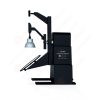
LM-79 Moving Detector Goniophotometer (Mirror Type C)
LSG-6000
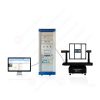
High Precision Rotation Luminaire Goniophotometer
LSG-1890B
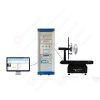
High Precision Rotation Luminaire Goniospectroradiometer
LSG-1890BCCD

Goniophotometer for Automotive and Signal Lamps
LSG-1950
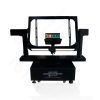
Goniophotometer for Traffic Signal Lamps (Economical Model)
LSG-1950S
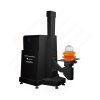
Aviation Ground Light Distribution Photometer Test System
LSG-1940
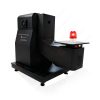
VAD Fire Alarm Visual Alert Device Goniophotometer
LSG-1930
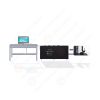
Compact Goniophotometer
LSG-1200A
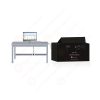
LED Goniophotometer
LSG-1100
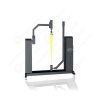
Near Field Moving Detector Goniophotometer
LSG-1900B
 LEDs and Luminaire Test Solutions
 LM-79 and LM-80 Test Solutions
 LED Driver Test Solutions
 Household Appliances Test Solutions
 Mobile and Network Test Solutions
 Automotive Electronics Test Solutions
 Audio-Video and IT Test Solutions
 Cable and Wire Test Solutions
 Plugs and Sockets Test Solutions
 Power Switch Test Solutions
 Transformer Test Solutions
 Electric Toys Test Solutions
 Energy Meter Test Solutions
 Motor-Operated Tool Test Solutions
Select an organization
to browse standards
Abstract:
The instrument for measuring intensity of light is a core device in the field of illumination optical detection. As a high-precision representative of such devices, the Type C rotating probe vertical goniophotometer plays a key role in the testing of lamp luminous intensity distribution and light distribution curves. Taking the LISUN LM-79 Vertical Goniophotometer System (LSG-6000) as the research object, this paper expounds the testing principle, technical standards, core parameters and product characteristics of the Type C rotating probe vertical goniophotometer, analyzes its application advantages in the detection of various light sources, and shows its specification differences through specific parameter tables, providing a reference for the selection and application of instruments for measuring intensity of light in the lighting industry.
1. Introduction
In the transformation of the lighting industry from traditional light sources to new light sources such as LED and plant lighting, the accurate detection of optical parameters such as luminous intensity, luminous flux and light distribution curve has become a core link in product research and development and quality control. As a basic device for optical detection, the instrument for measuring intensity of light directly determines the reliability of detection data with its precision and functions. Designed based on the C-γ measurement system, the Type C rotating probe vertical goniophotometer adopts a testing mode where the lamp is stationary and the probe and reflector rotate synchronously, which perfectly meets the requirements of international standards such as CIE and IESNA for the full-space measurement of luminous intensity, and has become a mainstream device for industrial-level luminous intensity detection. The LM-79 Vertical Goniophotometer System (LSG-6000) developed by LISUN, as a typical product of the Type C rotating probe vertical goniophotometer, fully complies with the latest standards such as LM-79-24 and LM-79-19, can realize the automatic testing of 3D luminous intensity distribution curves, and is suitable for the luminous intensity detection of various light sources such as LED, HID and plant lighting lamps. It is a representative of the instrument for measuring intensity of light with both mature technology and wide application.
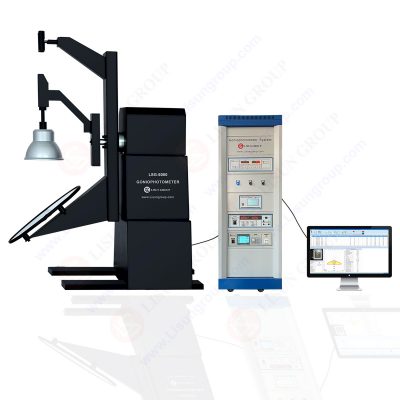
LM-79 Moving Detector Goniophotometer (Mirror Type C) AL
2. Testing Principle and Standard Basis of Type C Rotating Probe Vertical Goniophotometer
2.1 Core Testing Principle
The Type C rotating probe vertical goniophotometer adopts the measurement principle of the C-γ coordinate system, with the core feature that the ignition position of the tested lamp remains absolutely stationary. The near-field probe and reflector move circularly around the lamp, and the far-field probe and reflector rotate synchronously, enabling the probe to continuously sense the light radiation signals of the lamp in all spatial directions and realize the full-space luminous intensity collection at a γ angle of ±180° (or 0~360°). Compared with the horizontal goniophotometer, this mode avoids interference factors such as air flow and temperature change caused by lamp rotation, greatly improving the precision of luminous intensity measurement. At the same time, the precise positioning of the tested light source is realized through the cross laser calibration device, further reducing the system error.
2.2 Standard Basis
As a professional instrument for measuring intensity of light, the Type C rotating probe vertical goniophotometer must strictly follow international and domestic optical detection standards. Taking the LSG-6000 as an example, it fully complies with LM-79-24 and LM-79-19 Electro-optical Measurement Methods for Solid-State Lighting Products, the requirements of Type 4 goniophotometer in Clause 6.1.1.3 of EN13032-1, as well as CIE S025, CIE-121, GB/T 24824 and other standards. Its testing principle and data processing method are in line with the specifications of IESNA and CIE, ensuring the international universality and authority of the measured data.
3. Technical Characteristics of LISUN LSG-6000 Type C Rotating Probe Vertical Goniophotometer
The LISUN LSG-6000 is an upgraded product of the LM-79 Vertical Goniophotometer System, which has been fully optimized for the high-precision and multi-functional requirements of the instrument for measuring intensity of light. Its core product characteristics are reflected in the following aspects:
• High-precision transmission and detection system: It adopts Japanese Mitsubishi servo motors and German decoders to realize the high-precision and stable operation of the probe and reflector with no jitter during start and stop, with an angular accuracy of 0.05° and an angular resolution of 0.001°. It is equipped with a Class L constant temperature photometric probe with f1′<1.5%, complying with DIN5032-6/CIE pub1. No.69 standards, ensuring the accuracy of luminous intensity detection.
• Full-space optical parameter detection capability: It can realize the synchronous detection of core parameters such as luminous intensity, luminous intensity distribution, regional luminous flux and luminous efficiency, and also support the measurement of extended parameters such as brightness distribution, glare rating (UGR) and EEI, and can generate visual data such as isophote maps, isointensity curves and 3D luminous intensity distribution curves.
• Multi-scenario adaptability: The testing distance can be customized according to customer needs, suitable for the detection of various indoor and outdoor light sources such as LED light sources, plant lighting lamps, HID light sources, street lamps and floodlights. At the same time, UVA/UVB/UVC photometric probes can be optionally equipped to realize the luminous intensity distribution testing of ultraviolet light sources.
• Intelligent data processing and interaction: The test results can be saved in standard formats such as CIE, IES and LDT, which can be directly imported into lighting design software such as DiaLux. It communicates with the computer through RS-485/USB interface, and the Chinese and English operation software is compatible with the full system from Win7 to Win11, realizing the rapid transmission and analysis of data.
• Spectral radiation expansion function: The LSG-6000 can be combined with the LPCE-2 high-precision rapid spectroradiometer to form the LSG-6000CCD spatial spectral radiation goniophotometer, realizing the synchronous detection of spatial correlated color temperature and spectral color parameters. It also supports the testing of PAR, PPF and PPFD spatial distribution in plant lighting, breaking through the limitation of single parameter detection of the traditional instrument for measuring intensity of light.
4. Specification Parameters and UV Probe Configuration of LSG-6000 Series Products
4.1 Core Specifications of Series Products
As an instrument for measuring intensity of light, the LSG-6000 is designed into four models: standard, extra-large, large and small, according to the size of the tested lamp and application scenarios. The core parameters of each model are shown in Table 1, all supporting the maximum power detection of AC/DC 600V/10A, with differences only in the size of the tested lamp, load capacity and requirements for the minimum height of the dark room.
Table 1 Core Parameters of LSG-6000 Series Type C Rotating Probe Vertical Goniophotometer
| LISUN Model | Tested Lamp Size (Diameter*Thickness)/Load Capacity | Measurable Power | Minimum Dark Room Height |
| LSG-6000/LSG-6000CCD (Standard) | max Φ1600*600mm/50kg | max 600V/10A, AC/DC | 4.1m |
| LSG-6000L/LSG-6000LCCD (Extra-large) | max Φ2000*900mm/80kg | max 600V/10A, AC/DC | 5.2m |
| LSG-6000B/LSG-6000BCCD (Large) | max Φ1800*800mm/60kg | max 600V/10A, AC/DC | 4.7m |
| LSG-6000S/LSG-6000SCCD (Small) | max Φ1200*500mm/40kg | max 600V/10A, AC/DC | 3.0m |
4.2 UV Light Source Detection Probe Configuration
To meet the demand for luminous intensity distribution testing of ultraviolet light sources, the instrument can be optionally equipped with high-precision Class A UV photometric probes. The wavelength range and testing functions of each probe are shown in Table 2, which can realize the luminous intensity distribution detection of UVA, UVB and UVC bands respectively and generate standardized test reports.
Table 2 Parameters of Optional UV Photometric Probes
| Probe Model | Wavelength Range | Photometric Precision | Testing Function |
| PHOTO-UVA-A | 320~400nm | Class A | UVA light distribution test |
| PHOTO-UVB-A | 275~320nm | Class A | UVB light distribution test |
| PHOTO-UVC-A | 200~275nm | Class A | UVC light distribution test |
5. Application and Development Trend of the Instrument for Measuring Intensity of Light in the Lighting Industry
As a high-precision instrument for measuring intensity of light, the Type C rotating probe vertical goniophotometer has been widely used in scenarios such as lighting product research and development, production quality inspection and industry testing institutions: in the product research and development stage, the optical structure design of lamps can be optimized through 3D luminous intensity distribution curves to improve luminous efficiency and lighting uniformity; in the production quality inspection link, it can realize the batch detection of luminous intensity parameters and control the consistency of product quality; in testing institutions, its detection data in line with international standards can provide an authoritative basis for product certification and quality rating.
With the extension of the lighting industry to the fields of smart lighting, healthy lighting and plant lighting, the instrument for measuring intensity of light also presents a development trend of multi-function, integration and intellectualization. Products represented by the LSG-6000CCD combine luminous intensity detection with spectral radiation detection to realize the synchronous collection of multiple parameters; at the same time, the intelligent upgrading of the software system has greatly improved the efficiency of data processing and analysis, and the automatic generation of test reports has further reduced labor costs. In the future, the instrument for measuring intensity of light will be more suitable for the detection needs of new light sources, realizing the integrated detection of optical, color and electrical parameters, and providing technical support for the high-quality development of the lighting industry.

6. Conclusion
As an important instrument for measuring intensity of light, the Type C rotating probe vertical goniophotometer effectively improves the precision and reliability of luminous intensity detection with the testing mode of stationary lamp and rotating probe, and has become a core device for illumination optical detection. The LISUN LM-79 Vertical Goniophotometer System (LSG-6000) fully integrates the advantages of high-precision transmission, full-space detection and multi-scenario adaptability, strictly follows international and domestic standards, and can meet the detection needs of luminous intensity and extended optical parameters of various light sources. Its serialized models and optional probe design further improve the flexibility and applicability of the device.
Under the background of continuous innovation in the lighting industry, the instrument for measuring intensity of light needs to be continuously upgraded towards the direction of multi-function, integration and intellectualization to adapt to the detection needs of new light sources. Relying on its technical advantages and wide application, the Type C rotating probe vertical goniophotometer will continue to play an important role in the field of illumination optical detection in the future, providing accurate and authoritative detection data for product research and development and quality control, and promoting the technological progress and quality improvement of the lighting industry.
Tags:LSG-6000Your email address will not be published. Required fields are marked *

 English
 中文简体
中文简体 English
 Русский
 Español
 Português
 Türkçe
 العربية
 Deutsch
 Polski
 Italiano
 Français
 한국어
한국어 ไทย
ไทย Tiếng Việt
 日本語
日本語