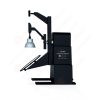
LM-79 Moving Detector Goniophotometer (Mirror Type C)
LSG-6000
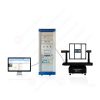
High Precision Rotation Luminaire Goniophotometer
LSG-1890B
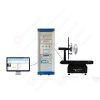
High Precision Rotation Luminaire Goniospectroradiometer
LSG-1890BCCD

Goniophotometer for Automotive and Signal Lamps
LSG-1950
Goniophotometer for Traffic Signal Lamps (Economical Model)
LSG-1950S
Goniophotometer for Airfield Lighting
LSG-1940
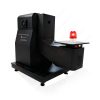
VAD Fire Alarm Visual Alert Device Goniophotometer
LSG-1930
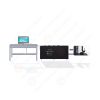
Compact Goniophotometer
LSG-1200A
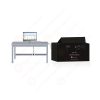
LED Goniophotometer
LSG-1100
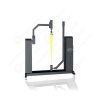
Near Field Moving Detector Goniophotometer
LSG-1900B
 LEDs and Luminaire Test Solutions
 LM-79 and LM-80 Test Solutions
 LED Driver Test Solutions
 Household Appliances Test Solutions
 Mobile and Network Test Solutions
 Automotive Electronics Test Solutions
 Audio-Video and IT Test Solutions
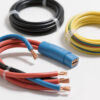 Cable and Wire Test Solutions
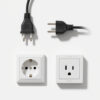 Plugs and Sockets Test Solutions
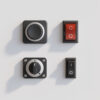 Power Switch Test Solutions
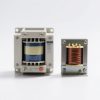 Transformer Test Solutions
 Electric Toys Test Solutions
 Energy Meter Test Solutions
 Motor-Operated Tool Test Solutions
Select an organization
to browse standards
Accurate lumen measurement is fundamental for lighting product development, quality control, and regulatory compliance. This paper presents a comprehensive analysis of seven essential lumen measurement methods, with particular emphasis on integrating sphere systems and spectroradiometer technology. The focus keyword lumen measurement establishes the framework for exploring both traditional and advanced photometric testing techniques. We examine the theoretical foundations of luminous flux measurement, including the integration of spatial and spectral characteristics of light sources. The LPCE-2(LMS-9000) high-precision spectroradiometer integrating sphere system serves as a primary reference for demonstrating state-of-the-art measurement capabilities. This study addresses key challenges in modern lumen measurement, such as self-absorption correction, spatial uniformity optimization, and colorimetric accuracy. The methodologies discussed are applicable to various light sources, including LED luminaires, traditional lamps, and solid-state lighting products. By understanding these measurement techniques, engineers and researchers can achieve reliable, reproducible results that meet international standards such as IES LM-79 and CIE S 025/E. The ultimate objective is to provide practitioners with actionable insights for implementing effective lumen measurement protocols in both laboratory and production environments.
The global lighting market has undergone a dramatic transformation with the widespread adoption of LED technology and solid-state lighting systems. According to industry reports, the LED lighting segment accounted for over 60% of total lighting sales in 2023, driven by energy efficiency requirements and regulatory mandates. This paradigm shift has created new challenges for photometric testing and lumen measurement, as LED sources exhibit different optical characteristics compared to traditional incandescent and fluorescent lamps. The complexity of modern light sources, including their directional emission patterns, spectral variations, and thermal dependencies, demands increasingly sophisticated measurement approaches. Traditional goniophotometry, while accurate, is often time-consuming and requires specialized facilities. Consequently, integrating sphere systems have emerged as the preferred solution for rapid, cost-effective lumen measurement in both research and production environments. The integration of advanced spectroradiometers with high-quality integrating spheres has enabled comprehensive optical characterization, including total luminous flux, chromaticity coordinates, correlated color temperature, and spectral power distribution measurements.
This paper aims to provide a comprehensive examination of lumen measurement methodologies, focusing on practical implementation and technical accuracy. The primary objectives include analyzing the fundamental principles of luminous flux measurement, evaluating the capabilities of integrating sphere systems, and presenting best practices for achieving reliable results. We specifically examine the LPCE-2(LMS-9000) high-precision spectroradiometer integrating sphere system as a representative example of advanced measurement technology. The secondary objectives involve comparing different measurement approaches, identifying common sources of error, and providing guidance for equipment selection and method optimization. By addressing these objectives, we seek to equip engineers and researchers with the knowledge necessary to implement effective lumen measurement protocols. The ultimate goal is to enhance the accuracy and reproducibility of photometric measurements across diverse applications, supporting product development, quality assurance, and regulatory compliance activities.

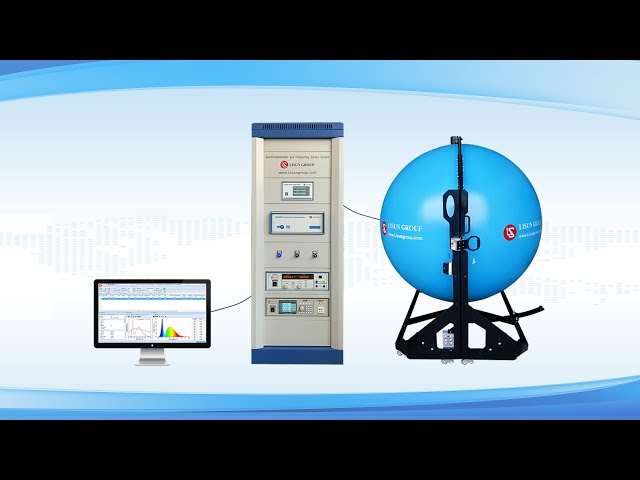
LPCE 2(LMS 9000) Spectrophotometer & Integrating Sphere Test System
The standardization of lumen measurement methods has evolved significantly over the past several decades, reflecting advances in lighting technology and measurement science. The International Commission on Illumination (CIE) published CIE Publication No. 84 in 1989, which established fundamental principles for measuring the luminous flux of light sources using integrating spheres. This document provided the theoretical foundation for modern integrating sphere design and measurement protocols. In 2008, the Illuminating Engineering Society (IES) introduced LM-79-08, titled “Electrical and Photometric Measurements of Solid-State Lighting Products,” which became the de facto standard for LED luminaire testing in North America. This standard was subsequently updated in 2019 as LM-79-19 to incorporate lessons learned from a decade of implementation. Meanwhile, the CIE published S 025/E:2015, titled “Test Methods for LED Lamps, LED Luminaires and LED Modules,” which provides international harmonization for LED photometric testing. These standards, along with IEC 62612 for LED self-ballasted lamps, form the regulatory framework for modern lumen measurement practices. The evolution of these standards demonstrates the ongoing effort to address the unique characteristics of solid-state lighting while maintaining consistency with traditional photometric principles.
Current standards establish stringent requirements for lumen measurement accuracy and reproducibility. IES LM-79-19 specifies that total luminous flux measurements must achieve an expanded uncertainty (k=2) of less than 5% for most applications. The standard mandates the use of integrating spheres with coating reflectance of at least 0.96 across the visible spectrum (400-700nm), with spectral uniformity within ±5%. The sphere design must include appropriate baffles to prevent direct viewing of the light source by the detector, and the detector must have a spectral response closely matching the CIE photopic observer function. CIE S 025/E:2015 adds additional requirements for LED-specific measurements, including the need for thermal stabilization before testing and consideration of driver-related effects on optical output. Both standards require regular calibration of measurement equipment using traceable standards and documentation of measurement uncertainty. The LPCE-2(LMS-9000) system exemplifies compliance with these requirements through its high-precision spectroradiometer, which provides accurate spectral measurements across the 380-780nm range. These standards collectively ensure that lumen measurement results are comparable across different laboratories and manufacturers, supporting fair competition and consumer confidence in lighting product performance claims.
The integrating sphere operates on the principle of multiple diffuse reflections, which spatially integrates the light emitted from a source placed inside the sphere. When a light source is introduced, photons undergo numerous reflections from the highly reflective inner surface coated with materials such as barium sulfate (BaSO4) or PTFE. Each reflection attenuates the light according to the sphere’s reflectance, but the multiple reflections create a uniform luminance distribution across the sphere’s interior surface. A detector, typically a photometer or spectroradiometer, views the sphere wall through a small port, measuring the integrated flux. The fundamental equation governing sphere behavior is Φ = (E × A × 4πR²) / ρ, where Φ is the total luminous flux, E is the measured illuminance, A is the sphere’s surface area, R is the sphere radius, and ρ is the effective reflectance. However, practical implementation requires corrections for factors such as self-absorption (where the light source absorbs some of its own reflected light), port losses (reduced reflectance due to measurement ports), and spatial non-uniformity. Modern spheres like the IS-*MA series from Lisun Group incorporate advanced features such as auxiliary lamps for self-absorption correction and optimized baffle designs to minimize systematic errors. The sphere size must be carefully selected based on the light source’s physical dimensions and power, typically maintaining a sphere-to-source volume ratio of at least 100:1 to ensure adequate integration.
Spectroradiometers have become the preferred detection technology for modern lumen measurement systems due to their ability to provide complete spectral information. Unlike photometers, which measure only luminous flux based on a single broad-band detector filtered to match the photopic response, spectroradiometers measure the spectral power distribution (SPD) across a range of wavelengths. The LMS-9000 high-precision CCD spectroradiometer, for instance, utilizes a charge-coupled device (CCD) array to capture the entire visible spectrum simultaneously, enabling rapid measurements with high spectral resolution (typically 1-5nm). This spectral data allows calculation of not only total luminous flux but also colorimetric parameters including chromaticity coordinates (x,y), correlated color temperature (CCT), color rendering index (CRI), and other advanced color quality metrics. Modern spectroradiometers achieve high accuracy through careful calibration of wavelength, linearity, and absolute spectral response. The LPCE-2(LMS-9000) system combines this advanced spectroradiometer with a high-quality integrating sphere, creating a comprehensive photometric and colorimetric measurement platform. The integration of CCD technology with precision optics and sophisticated software enables measurements with expanded uncertainties less than 2% for luminous flux and 0.001 for chromaticity coordinates, meeting the most demanding laboratory and production requirements.
Table 1: Technical Specifications of LMS-9000 Spectroradiometer
| Parameter | Specification | Unit | Standard | Application |
| Wavelength Range | 380-780 | nm | CIE 1931 | Visible Spectrum |
| Spectral Resolution | 1-5 | nm | IES LM-79 | LED Testing |
| Stray Light | <0.02 | % | CIE S 025 | Accuracy |
| Linearity Error | <0.5 | % | NVLAP | Precision |
| Integration Time | 10ms-65s | variable | CIE 84 | Flexibility |
Self-absorption represents one of the most significant sources of error in integrating sphere measurements, particularly when measuring large light sources or sources with dark-colored housings. The principle of self-absorption is that the light source itself absorbs a portion of the light reflected from the sphere walls, reducing the measured signal compared to the true total flux. The magnitude of this effect depends on the size, shape, and surface properties of the light source relative to the sphere dimensions. For accurate lumen measurement, self-absorption must be quantified and corrected using one of several established methods. The auxiliary lamp method involves mounting a small, stable light source inside the sphere and measuring its apparent brightness with and without the test light source present. The ratio of these measurements provides the self-absorption correction factor. The substitution method uses a reference lamp of known flux to calibrate the sphere with and without the test source. More advanced approaches involve computational modeling of the sphere-source geometry and Monte Carlo ray-tracing simulations to predict self-absorption effects. Modern systems like the LPCE-2(LMS-9000) incorporate automated self-absorption correction routines, ensuring accurate measurements across a wide range of source types and sizes. Proper implementation of self-absorption correction can reduce measurement uncertainty by 2-5%, which is critical for meeting the tight tolerances required by current standards and customer specifications.
Accurate lumen measurement requires rigorous calibration of the entire measurement system, including the integrating sphere, spectroradiometer, and associated electronics. The calibration process typically begins with a certified reference lamp of known luminous flux and spectral characteristics. This lamp is placed inside the sphere, and the system’s response is recorded, establishing the fundamental calibration factor. However, effective calibration extends beyond this basic step to include wavelength calibration using spectral line sources (such as mercury-argon lamps), linearity verification using neutral density filters or multiple lamp combinations, and verification of spectral response accuracy. Regular performance verification using check standards ensures ongoing measurement quality. The traceability chain must be maintained from the working standards back to national metrology institutes such as NIST (USA), PTB (Germany), or NIM (China). For the LPCE-2(LMS-9000) system, calibration intervals are typically established at 6-12 months depending on usage and stability requirements, with intermediate checks performed monthly or weekly for high-throughput production environments. The calibration process must be documented thoroughly, including calibration dates, reference standard traceability, environmental conditions, and uncertainty budgets. This documentation is essential for demonstrating compliance with ISO/IEC 17025 accreditation requirements and for maintaining customer confidence in measurement results.
The performance of an integrating sphere is fundamentally dependent on the optical properties of its inner coating material. Modern spheres use either barium sulfate (BaSO4) or polytetrafluoroethylene (PTFE) coatings, each offering specific advantages. Barium sulfate coatings, as specified in CIE Publication No. 84, provide high diffuse reflectance (ρ ≥ 0.96) across the visible spectrum (450-800nm) and good environmental stability. However, they exhibit slightly lower reflectance in the blue/violet region (ρ ≥ 0.92 for 380-450nm). PTFE coatings, such as Spectralon, offer even higher reflectance (up to 0.99) with excellent spectral uniformity and long-term stability, but at significantly higher cost. The coating thickness, application method, and surface preparation critically affect performance. Traditional spray-applied BaSO4 coatings can develop inconsistencies over time, leading to spatial non-uniformity errors. The IS-*MA series from Lisun Group utilizes A-molding technology, which creates a more uniform and durable coating surface compared to traditional methods. The coating must also maintain its properties under thermal stress, as the heat generated by high-power light sources can degrade optical performance. Environmental factors including humidity, dust accumulation, and chemical exposure must be controlled to preserve coating integrity. Regular maintenance, including gentle cleaning with appropriate materials and periodic recoating, ensures consistent sphere performance over the equipment’s operational lifetime.
The optical and mechanical design of an integrating sphere system involves numerous engineering trade-offs to optimize performance for specific applications. Key design considerations include sphere size, port configuration, baffle design, and detector placement. The sphere diameter must be selected based on the maximum size and power of the light sources to be tested, with typical ratios of 3:1 to 10:1 between sphere diameter and source maximum dimension. Larger spheres reduce self-absorption effects but increase cost and require more powerful reference lamps. Port design minimizes disruption of the sphere’s uniformity while providing access for sample insertion, detector viewing, and auxiliary lamps. Multiple ports may be incorporated for different measurement configurations or simultaneous connection of multiple instruments. The baffle, which prevents direct light from reaching the detector, must be carefully sized and positioned to balance effective blocking against minimal obstruction of the integrated light field. Modern systems often incorporate motorized baffles or multiple detector ports to accommodate different measurement scenarios. The mechanical structure must provide thermal stability, as temperature variations can affect both the sphere coating properties and the detector performance. Vibration isolation and electromagnetic shielding may be required for high-precision measurements. The LPCE-2(LMS-9000) exemplifies advanced design integration, combining a precision-machined sphere structure with optimized optical geometry and sophisticated thermal management to achieve measurement uncertainties suitable for the most demanding applications.
The LPCE-2(LMS-9000) High Precision Spectroradiometer Integrating Sphere System represents a state-of-the-art solution for comprehensive photometric and colorimetric testing of light sources and luminaires. This integrated system combines a high-quality integrating sphere with the LMS-9000 scientific-grade CCD spectroradiometer, creating a versatile measurement platform suitable for both laboratory research and production line quality control. The system is designed to meet the requirements of IES LM-79, CIE S 025/E, and other international standards for LED and traditional light source testing. The modular architecture allows configuration with different sphere sizes (typically ranging from 0.5m to 3.0m diameter) to accommodate various source types and power levels. The spectroradiometer provides full spectral analysis from 380nm to 780nm with 1nm resolution, enabling calculation of all standard photometric and colorimetric parameters. The system includes integrated power measurement capabilities for simultaneous electrical and optical characterization, essential for evaluating luminous efficacy. Advanced software packages automate test sequences, perform self-absorption corrections, and generate comprehensive test reports compliant with regulatory requirements. The LPCE-2(LMS-9000) is particularly well-suited for LED luminaire testing, where its spectral capabilities enable accurate measurement of color properties that are critical for modern lighting applications.
The technical specifications of the LPCE-2(LMS-9000) system demonstrate its capability for high-precision lumen measurement across a wide range of applications. The integrating sphere features a BaSO4 coating with reflectance ≥0.96 (450-800nm) and ≥0.92 (380-450nm), meeting CIE Publication No. 84 requirements. Sphere diameters from 0.5m to 3.0m are available, with port configurations optimized for different source types. The LMS-9000 spectroradiometer achieves a wavelength accuracy of ±0.3nm and photometric accuracy of ±2%, enabling traceable measurements to national standards. The system’s dynamic range exceeds 10^6, accommodating both low-power indicator LEDs and high-power street luminaires within the same platform. Stray light rejection is better than 0.02% at 435.8nm, ensuring accurate measurements of sources with strong spectral peaks. The integrated power meter measures voltage, current, power, and power factor with 0.1% accuracy, enabling complete energy efficiency analysis. Measurement repeatability is typically better than 0.5% for luminous flux under controlled conditions, supporting high-throughput production testing with minimal variability. The system’s thermal stability specifications allow operation in ambient temperatures from 15°C to 35°C with minimal performance drift, reducing the need for stringent environmental control in many applications.
Table 2: LPCE-2 System Performance Parameters
| Parameter | Value | Unit | Standard |
| Photometric Accuracy | ±2 | % | IES LM-79 |
| Colorimetric Accuracy | ±0.0015 | x,y | CIE S 025 |
| Measurement Repeatability | <0.5 | % | ISO 17025 |
| Wavelength Accuracy | ±0.3 | nm | CIE 1931 |
| Maximum Source Power | 2000 | W | IEC 62612 |
| Sphere Diameter Options | 0.5-3.0 | m | CIE 84 |
The LPCE-2(LMS-9000) system finds application across diverse segments of the lighting industry, supporting both research and development activities and production quality control. In LED luminaire manufacturers’ R&D laboratories, the system enables comprehensive characterization of new product designs, including total luminous flux, efficacy, color temperature, color rendering index, and spatial color uniformity. The spectral capabilities support development of tunable white lighting and advanced color quality metrics such as TM-30 Rf and Rg. For component manufacturers, the system facilitates LED package characterization, including spectral power distribution, luminous flux, and color bin verification. Production line implementations utilize the system’s rapid measurement capabilities (typically 5-10 seconds per test) for 100% inspection or statistical process control, ensuring consistent product quality and reducing warranty returns. Testing laboratories providing third-party certification services rely on the system’s accuracy and traceability for issuing Energy Star, DLC, and other compliance certifications. Academic research institutions employ the system for fundamental studies of light source physics, human vision research, and development of new measurement methodologies. The versatility of the LPCE-2(LMS-9000) makes it suitable for testing not only LEDs but also traditional light sources including incandescent, fluorescent, HID, and OLED technologies, providing a unified platform for diverse measurement needs.
Selecting the appropriate lumen measurement system requires careful evaluation of multiple factors beyond just initial cost and published specifications. The primary consideration is the range of light sources to be tested, including their physical size, power consumption, and optical characteristics. Systems with multiple sphere sizes or interchangeable spheres offer flexibility but may involve higher complexity and calibration burden. The required measurement accuracy and uncertainty budget must be clearly defined, as higher accuracy typically demands more sophisticated equipment and more stringent environmental control. Throughput requirements differ significantly between R&D applications (where accuracy and flexibility are paramount) and production testing (where speed and repeatability are critical). Regulatory compliance requirements may mandate specific capabilities such as spectral analysis for TM-30 color rendering metrics or flicker measurement for IEC TR 61547-1. Future technology trends, including the emergence of horticultural lighting with specific spectral requirements and circadian lighting with tunable spectra, should be considered when investing in measurement equipment. The LPCE-2(LMS-9000) system’s modular design and comprehensive spectral capabilities provide a future-proof platform that can adapt to evolving measurement needs. Total cost of ownership, including calibration, maintenance, and software updates, should be evaluated over the expected equipment lifetime, not just the initial purchase price.
Successful implementation of lumen measurement systems requires attention to both technical and procedural aspects. Environmental conditions significantly impact measurement accuracy, particularly temperature stability (±1°C recommended for high-precision work) and relative humidity control (40-60% RH). Vibration isolation and electromagnetic shielding may be necessary for laboratory environments with sensitive equipment. Operator training is critical, as proper sample mounting, thermal stabilization procedures, and measurement protocols directly affect result quality. Documentation of all procedures, including sample preparation, mounting methods, and measurement settings, ensures reproducibility and supports quality system requirements. Regular performance verification using check standards helps detect system drift or degradation before it impacts product decisions. For production environments, developing appropriate sampling plans and control limits based on measurement system capability studies (gauge R&R) ensures that the measurement system discriminates between acceptable and unacceptable product reliably. Software integration with manufacturing execution systems (MES) and quality management systems (QMS) streamlines data management and reporting. The LPCE-2(LMS-9000) system’s comprehensive software suite supports many of these best practices through automated test sequences, built-in verification routines, and configurable reporting templates.
Despite careful system design and implementation, several common error sources can compromise lumen measurement accuracy if not properly addressed. Thermal effects represent a significant challenge, particularly for LED sources whose output can vary 2-5% per °C. Implementing adequate thermal stabilization (typically 30 minutes for LED luminaires) and monitoring source temperature during measurement are essential. Spatial non-uniformity in the integrating sphere, caused by coating degradation, port obstructions, or asymmetric source placement, can introduce errors of 1-3%. Regular sphere mapping using a scanning detector and appropriate corrective algorithms mitigate this issue. Stray light, particularly from high-intensity sources or sources with narrow spectral peaks, can affect spectroradiometer accuracy. Proper baffling, optical filters, and stray light correction algorithms minimize this effect. Electrical measurement errors, including power factor effects and harmonic distortion, can impact efficacy calculations. True RMS measurement capabilities and appropriate current sensing configurations address these concerns. Operator errors, including improper sample mounting, incorrect sphere selection, or inadequate thermal stabilization, are common in production environments. Standardized work instructions, training programs, and automated measurement sequences reduce these human errors. Understanding these potential error sources and implementing appropriate mitigation strategies is essential for achieving reliable lumen measurement results in practical applications.
The field of lumen measurement continues to evolve in response to advances in lighting technology and changing application requirements. Emerging trends include the integration of goniophotometric capabilities with integrating sphere systems, enabling simultaneous measurement of total flux and spatial distribution without requiring separate instruments. Advances in detector technology, including scientific CMOS sensors and array spectroradiometers with improved dynamic range and reduced noise, are pushing the boundaries of measurement speed and accuracy. Artificial intelligence and machine learning algorithms are being applied to measurement optimization, automated error detection, and predictive maintenance of measurement equipment. The growing importance of human-centric lighting is driving demand for more sophisticated color quality metrics beyond traditional CRI, including TM-30 Rf and Rg, circadian action factor, and melanopic efficacy. Horticultural lighting applications require extended spectral range measurements into the ultraviolet and far-red regions, necessitating broader-band detection systems. Connectivity and data management are becoming increasingly important, with measurement systems integrated into Industry 4.0 frameworks and cloud-based data analytics platforms. The LPCE-2(LMS-9000) platform’s modular architecture and advanced software capabilities position it well to adapt to these evolving requirements through software updates and accessory additions. As measurement standards continue to evolve to address new technologies, maintaining flexibility and upgradeability in measurement systems will be essential for long-term value and compliance.
Accurate lumen measurement remains a cornerstone of modern lighting technology, supporting product development, quality assurance, and regulatory compliance across the global lighting industry. This paper has examined seven essential aspects of lumen measurement methodology, from fundamental integrating sphere principles to advanced spectroradiometer technology and practical implementation considerations. The LPCE-2(LMS-9000) high-precision spectroradiometer integrating sphere system exemplifies the state of the art in measurement technology, combining optical precision, spectral versatility, and operational efficiency to meet the diverse needs of today’s lighting professionals. As solid-state lighting continues to evolve with new form factors, color tuning capabilities, and application-specific spectra, measurement methodologies must adapt accordingly while maintaining the fundamental principles of accuracy, traceability, and reproducibility. The integration of comprehensive spectral analysis capabilities with traditional photometric measurements provides a complete picture of light source performance, enabling both compliance verification and product optimization. By understanding the technical principles, implementing best practices, and selecting appropriate measurement systems, lighting professionals can achieve reliable lumen measurement results that support informed decision-making and continuous product improvement. The ongoing evolution of both lighting technology and measurement standards ensures that lumen measurement will remain a dynamic and essential discipline, driving innovation and quality in the global lighting marketplace.
Tags:LPCE-2(LMS-9000)Your email address will not be published. Required fields are marked *

 English
 中文简体
中文简体 English
 Русский
 Español
 Português
 Türkçe
 العربية
 Deutsch
 Polski
 Italiano
 Français
 한국어
한국어 ไทย
ไทย Tiếng Việt
 日本語
日本語