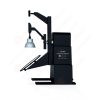
LM-79 Moving Detector Goniophotometer (Mirror Type C)
LSG-6000
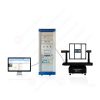
High Precision Rotation Luminaire Goniophotometer
LSG-1890B
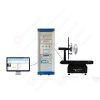
High Precision Rotation Luminaire Goniospectroradiometer
LSG-1890BCCD

Goniophotometer for Automotive and Signal Lamps
LSG-1950
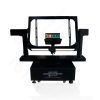
Goniophotometer for Traffic Signal Lamps
LSG-1950S
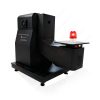
VAD Fire Alarm Visual Alert Device Goniophotometer
LSG-1930
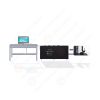
Compact Goniophotometer
LSG-1200A
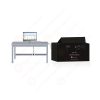
LED Goniophotometer
LSG-1100
 LEDs and Luminaire Test Solutions
 LM-79 and LM-80 Test Solutions
 LED Driver Test Solutions
 Household Appliances Test Solutions
 Mobile and Network Test Solutions
 Automotive Electronics Test Solutions
 Audio-Video and IT Test Solutions
 Cable and Wire Test Solutions
 Plugs and Sockets Test Solutions
 Power Switch Test Solutions
 Transformer Test Solutions
 Electric Toys Test Solutions
 Energy Meter Test Solutions
 Motor-Operated Tool Test Solutions
Select an organization
to browse standards
Abstract:
Artificial Network (Line Impedance Stabilization Network, LISN) is a core supporting device for electromagnetic compatibility (EMC) conducted disturbance testing. Cooperating with EMI receiver, it can accurately measure the conducted interference voltage at the terminal posts of equipment, providing reliable data for product compliance certification. Focusing on LISUN LISN‑C Artificial Network, this paper expounds the working principle, core functions, technical parameters and standard basis of Artificial Network, illustrates its specific application in voltage interference testing combined with actual measurement connection schemes, and compares the performance differences of products in the same series, providing references for the construction and equipment selection of EMI testing systems.
1. Introduction
With the development of high-frequency, miniaturization and densification of electrical and electronic equipment, power line conducted electromagnetic interference (EMI) has become a key factor affecting the stable operation of equipment and electromagnetic environment compatibility. Conducted disturbance voltage test is a mandatory item for CE, FCC, 3C and other certifications. Its core is to measure the interference voltage emitted by equipment to the power grid along power lines under unified and reproducible conditions. The actual power grid impedance fluctuates greatly with line length, load and frequency, and direct measurement will lead to discrete and incomparable results. Artificial Network (also known as Line Impedance Stabilization Network) solves the problem of test consistency by inserting a standard impedance network between the equipment under test (EUT) and the power grid, making it an indispensable part of the EMI conducted test system.
LISUN LISN‑C Artificial Network is specially designed for conducted testing of medium-power single-phase/three-phase equipment, with a frequency coverage of 150kHz–30MHz, complying with mainstream standards such as CISPR16-1, FCC, EN55015 and EN55022. It can stably match with EMI receiver to achieve accurate measurement of voltage interference at terminal posts. Taking this product as an example, this paper systematically discusses the technical characteristics and engineering application of Artificial Network.
2. Principle and Core Functions of Artificial Network
Artificial Network is essentially a low-pass filtering and impedance stabilization network, connected in series between the power grid and EUT. It supplies power with low loss at power frequency, presents standard impedance in the test frequency band, and couples the radio frequency interference generated by EUT to the EMI receiver. Its core functions are as follows:
• Stabilize test impedance: Provide standard impedance of 50Ω/50μH+5Ω or 50Ω/50μH in the frequency band of 9kHz–30MHz to ensure the comparability of test results in different laboratories and at different times.
• Bidirectional interference isolation: Prevent background noise of the power grid from entering the test link, and suppress EUT interference from backflowing into the power grid, ensuring that the measurement only reflects the disturbance of EUT itself.
• Interference signal coupling: Transmit the interference voltage at terminal posts to EMI receiver through coupling capacitors, avoiding damage to measuring instruments by power frequency high voltage.
• Compliant power supply support: Provide AC/DC compatible power supply, covering single-phase/three-phase and small-current to high-current scenarios, suitable for testing of lighting, IT, household appliances, industrial equipment and other products.
The typical connection between Artificial Network and EMI receiver is: the power grid is connected to the input of LISN, EUT is connected to the output of LISN, and the RF port of LISN is connected to EMI receiver via a matching cable. The receiver conducts spectrum analysis and limit judgment on the coupled interference voltage to directly obtain the interference level at terminal posts.
3. Technical Parameters and Performance Comparison of LISUN LISN‑C Artificial Network
LISUN provides a series of Artificial Networks to adapt to different current levels and phases. LISN‑C is a 16A three-phase/single-phase universal model, with core parameters shown in the table below:
| LISUN Model | Max. Output Current | Max. Output Voltage | Frequency Range | Impedance Characteristic | Phase/Wiring | Typical Application |
| LISN‑A | 5A | AC/DC 250V, 50/60Hz | 9kHz–30MHz | 50Ω/50μH+5Ω | Single-phase L/N/PE | Low-power electronics, adapters |
| LISN‑C | 16A | AC 400V/DC 600V, 50/60Hz | 150kHz–30MHz | 50Ω/50μH | Three-phase L1/L2/L3/N | Lighting, IT, household appliances, general electrical equipment |
| LISN‑H | 36A | — | — | — | Three-phase | Medium and high-power equipment |
| LISN50A‑T | 50A×4 | — | — | — | Three-phase four-channel | Industrial drives, high-power power supplies |
| LISN100A‑T | 100A×4 | — | — | — | Three-phase four-channel | Industrial equipment, charging piles |
| LISN200A‑T | 200A×4 | — | — | — | Three-phase four-channel | Heavy-duty power equipment |
Outstanding advantages of LISN‑C:
• Wide voltage compatibility with AC 400V/DC 600V, meeting power supply requirements of industrial and commercial equipment;
• 16A rated current covering most medium-power single-phase/three-phase products;
• 150kHz–30MHz frequency band accurately matching standards for lighting and IT equipment;
• 50Ω/50μH impedance strictly in accordance with CISPR16-1, with optimal impedance matching to EMI receiver and minimum measurement distortion.

Artificial Network | Line Impedance Stabilization Network LISN-C
4. Implementation of Testing Voltage Interference at Terminal Posts by Connecting Artificial Network with EMI Receiver
4.1 Composition of the Test System
The test system consists of Artificial Network, EMI Receiver, Equipment Under Test (EUT), standard power supply and grounding, and matching cables. The core is that Artificial Network provides standard impedance for EUT and couples the interference at terminal posts to the receiver.
4.2 Connection and Test Steps
• Grounding: Artificial Network is reliably connected to the earth to ensure shielding and common-mode interference discharge.
• Wiring: The power grid is connected to the power input of LISN‑C; the power terminals of EUT are connected to the load output of LISN‑C; the RF output of LISN‑C is connected to the RF input of EMI receiver via a 50Ω coaxial cable.
• Configuration: The receiver is set with test frequency band 9kHz–30MHz/150kHz–30MHz, peak/quasi-peak detection, bandwidth and limit lines (according to EN55015, EN55022, etc.).
• Power supply and measurement: EUT is powered on and runs stably, the receiver scans the spectrum, reads the interference voltage values of each terminal post (L1/L2/L3/N) at corresponding frequency points, and judges whether it is qualified by comparing with the limit.
4.3 Significance of the Test
This method directly obtains the conducted interference voltage at terminal posts, reflecting the actual emission level of the equipment power port, which is a direct basis for judging whether products can pass EMC certification. The impedance stability and isolation characteristics of Artificial Network make test results comparable in different occasions, supporting product design optimization and rectification verification.
5. Standard Basis and Compliance
LISUN LISN‑C Artificial Network complies with the following international and European standards:
• CISPR16-1: Core specification for radio interference measuring equipment and methods;
• CISPR15-2018/EN55015: Limits and measurement of radio disturbance of electrical lighting and similar equipment;
• EN55022: Limits and measurement of radio disturbance of information technology equipment;
• FCC related requirements: Mandatory EMI compliance standards of the Federal Communications Commission.
The above standards uniformly specify the impedance, frequency, isolation, coupling mode and other indicators of Artificial Network, ensuring mutual recognition of global certification tests.
6. Application Value and Engineering Significance
• Improve test consistency: Artificial Network eliminates the influence of power grid impedance fluctuation, realizes data comparability between laboratories, and reduces the cost of certification retesting.
• Protect test instruments: Isolate power frequency high voltage and strong interference, prolonging the service life of EMI receiver.
• Support R&D and rectification: Accurately locate the frequency points and amplitudes of terminal post interference, guiding the optimization of filtering, grounding and layout.
• Adapt to multiple scenarios: LISN‑C takes into account single-phase/three-phase, medium power and wide voltage, suitable for testing products in lighting, household appliances, IT, industry and other fields.
7. Conclusion
Artificial Network is the core basic equipment for conducted disturbance voltage test. Cooperating with EMI receiver, it can stably and accurately measure the voltage interference at equipment terminal posts. With 16A rated current, wide voltage range, standard impedance characteristics and full-standard compliance, LISUN LISN‑C Artificial Network has become the preferred solution for EMI testing of medium-power single-phase/three-phase products. Against the background of increasingly complex electromagnetic environment and stricter compliance requirements, the correct selection and application of Artificial Network are of great engineering value for improving the electromagnetic compatibility level of products, successfully passing domestic and foreign certifications, and ensuring the safe and reliable operation of equipment.
In the future, with the popularization of high-frequency and high-power equipment, Artificial Network will develop towards higher current, wider frequency band, integration and intelligence, continuously providing key support for EMC testing and certification.
Tags:LISN‑CYour email address will not be published. Required fields are marked *

 English
 中文简体
中文简体 English
 Русский
 Español
 Português
 Türkçe
 العربية
 Deutsch
 Polski
 Italiano
 Français
 한국어
한국어 ไทย
ไทย Tiếng Việt
 日本語
日本語