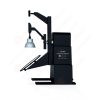
LM-79 Moving Detector Goniophotometer (Mirror Type C)
LSG-6000
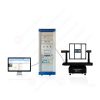
High Precision Rotation Luminaire Goniophotometer
LSG-1890B
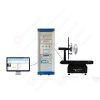
High Precision Rotation Luminaire Goniospectroradiometer
LSG-1890BCCD

Goniophotometer for Automotive and Signal Lamps
LSG-1950
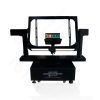
Goniophotometer for Traffic Signal Lamps
LSG-1950S
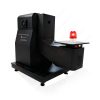
VAD Fire Alarm Visual Alert Device Goniophotometer
LSG-1930
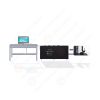
Compact Goniophotometer
LSG-1200A
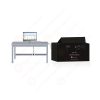
LED Goniophotometer
LSG-1100
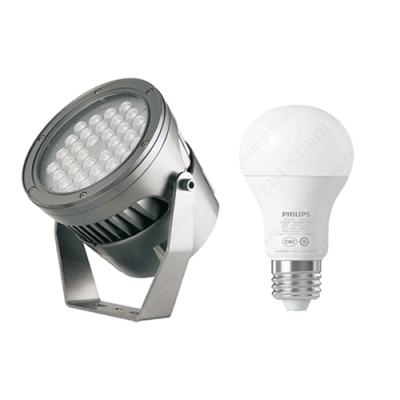 LEDs and Luminaire Test Solutions
 LM-79 and LM-80 Test Solutions
 LED Driver Test Solutions
 Household Appliances Test Solutions
 Mobile and Network Test Solutions
 Automotive Electronics Test Solutions
 Audio-Video and IT Test Solutions
 Cable and Wire Test Solutions
 Plugs and Sockets Test Solutions
 Power Switch Test Solutions
 Transformer Test Solutions
 Electric Toys Test Solutions
 Energy Meter Test Solutions
 Motor-Operated Tool Test Solutions
Select an organization
to browse standards
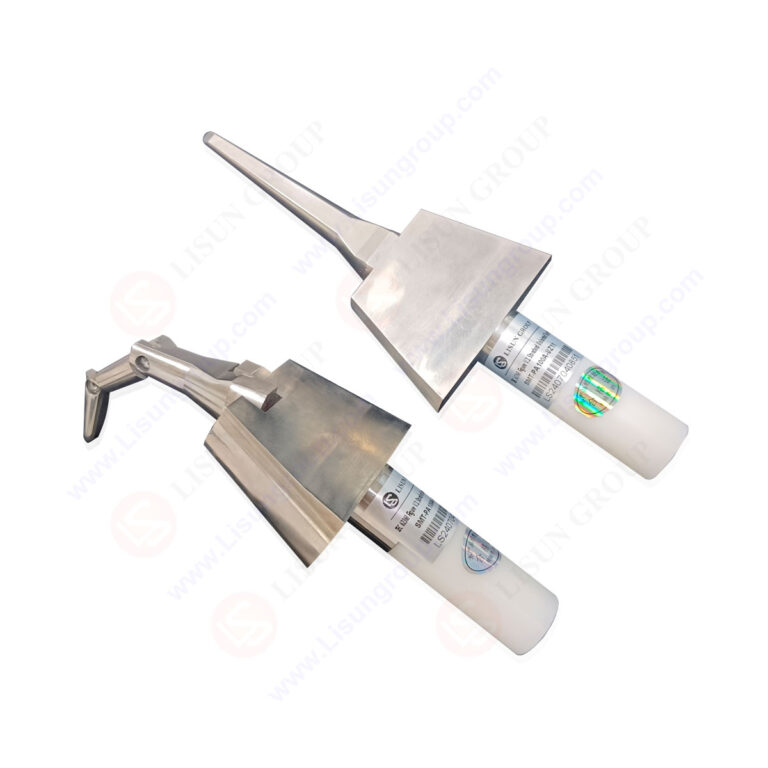
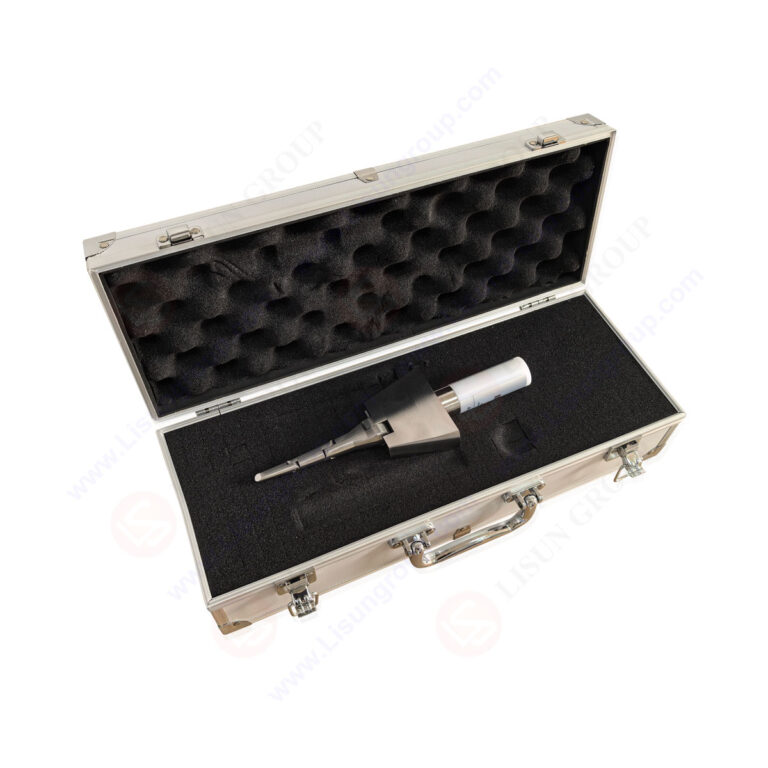
Product No: SMT-PA100A-UZ11
IEC 62368 Figure V.1 Standard Jointed Test Probe and Unjointed Test Probe – both designed to simulate human finger access for testing audio/video (AV) and information/communication technology (ICT) equipment. The jointed probe features two 90°-bendable joints (mimicking natural finger movement) for hard-to-reach gaps, while the unjointed version offers rigid access for straight openings. Both use corrosion-resistant stainless steel for durability and insulating nylon handles for safe grip, applying a precise 10N thrust. Aligned with global safety standards, they ensure hazardous live/mechanical parts stay inaccessible, critical for compliance checks.
Specifications:
• Probe Type : IEC 62368 Figure V.1 Standard Jointed Test Probe and Unjointed Test Probe
• Material:
– Probe Body: Stainless steel
– Handle: Nylon (insulating, non-slip) – Probe Body: Stainless steel
– Handle: Nylon (insulating, non-slip)
• Key Dimensions:
– Probe Diameter: 12 mm ± 0.1 mm
– Effective Length: 80 mm ± 0.2 mm
– Joint Bend Angle: 90° ± 10° (2 joints, same plane)
– Total Length: 180 mm ± 0.5 mm – Probe Diameter: 12 mm ± 0.1 mm
– Effective Length: 80 mm ± 0.2 mm
– Total Length: 180 mm ± 0.5 mm
• Applied Thrust: 10N ± 0.5N (simulates accidental finger pressure) 10N ± 0.5N (simulates accidental finger pressure)
• Core Function: Verifies hazard inaccessibility via curved/angled equipment gaps Verifies hazard inaccessibility via straight equipment openings
Test Procedures:
• Inspect both probes for damage (bent bodies, cracked handles, stuck joints on jointed version).
• Power on the AV/ICT equipment and let it reach normal operating mode.
• For jointed probe: Adjust joints to 90°; for unjointed: Use as-is—align with target openings.
• Apply steady 10N thrust to the probe toward potential hazardous parts.
• Check if either probe touches live components or moving parts.
• Record if the equipment meets safety requirements (pass/fail).
Applications:
• Safety testing of smart TVs (curved vents/joints) and soundbars per IEC 62368-1Figure V.1.
• Compliance checks for laptops (keyboard gaps) and tablets using the unjointed probe.
• Verification of Wi-Fi routers (rear port openings) with the jointed probe for hard-to-reach hazards.
• Quality control for office projectors (lens covers, vent slits) during manufacturing.
• Post-production audits of conference room AV systems (microphones, amplifiers) to meet global standards.
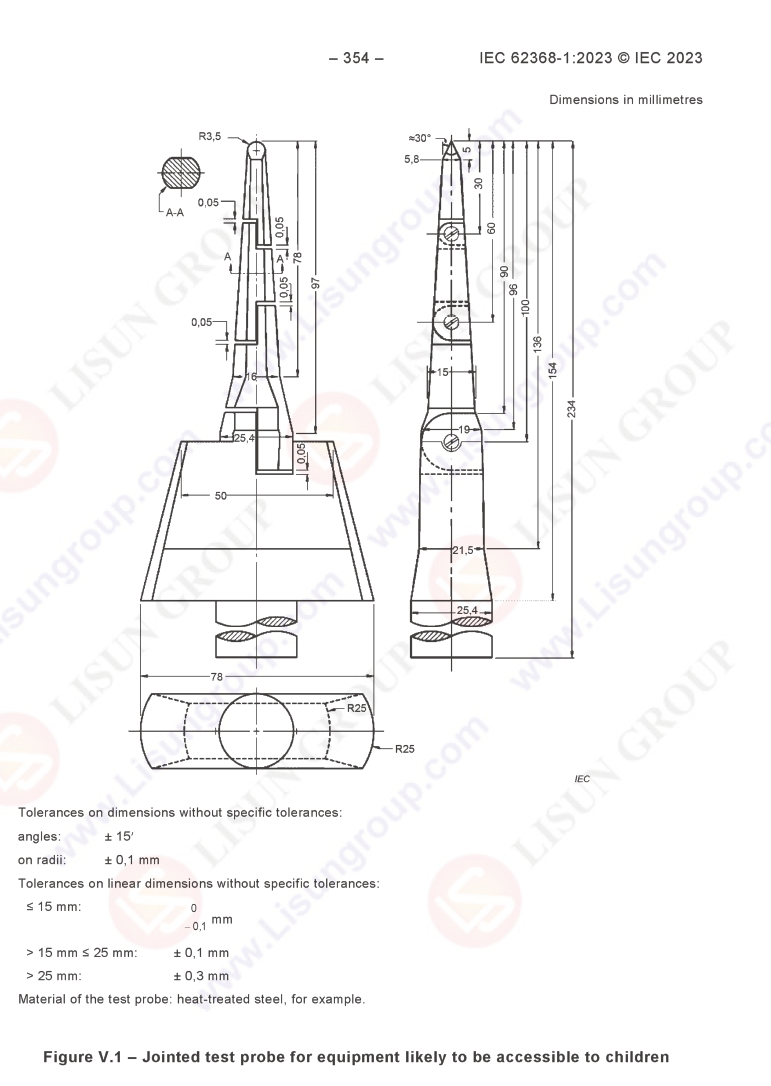
IEC 62368 Figure V.1 Standard Jointed Test Probe and Unjointed Test Probe

LISUN's electric toys test solutions are engineered to meet the stringent requirements of key...

LISUN's audio - video information communication testing solutions are designed to meet the...
 English
 中文简体
中文简体 English
 Русский
 Español
 Português
 Türkçe
 العربية
 Deutsch
 Polski
 Italiano
 Français
 한국어
한국어 ไทย
ไทย Tiếng Việt
 日本語
日本語