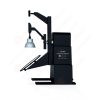
LM-79 Moving Detector Goniophotometer (Mirror Type C)
LSG-6000
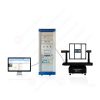
High Precision Rotation Luminaire Goniophotometer
LSG-1890B
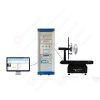
High Precision Rotation Luminaire Goniospectroradiometer
LSG-1890BCCD

Goniophotometer for Automotive and Signal Lamps
LSG-1950
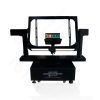
Goniophotometer for Traffic Signal Lamps
LSG-1950S
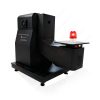
VAD Fire Alarm Visual Alert Device Goniophotometer
LSG-1930
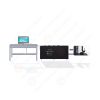
Compact Goniophotometer
LSG-1200A
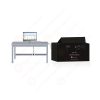
LED Goniophotometer
LSG-1100
 LEDs and Luminaire Test Solutions
 LM-79 and LM-80 Test Solutions
 LED Driver Test Solutions
 Household Appliances Test Solutions
 Mobile and Network Test Solutions
 Automotive Electronics Test Solutions
 Audio-Video and IT Test Solutions
 Cable and Wire Test Solutions
 Plugs and Sockets Test Solutions
 Power Switch Test Solutions
 Transformer Test Solutions
 Electric Toys Test Solutions
 Energy Meter Test Solutions
 Motor-Operated Tool Test Solutions
Select an organization
to browse standards
Accurate haze measurement is critical for quality control in industries ranging from automotive glass to optical displays and transparent packaging materials. This article presents a comprehensive technical analysis of modern haze measurement techniques, examining the theoretical foundations, international standards, and practical implementation using advanced instrumentation such as the HM-700 Haze Meter and Spectrophotometer. The discussion covers both traditional hazemeter approaches and modern spectrophotometric methods, with particular emphasis on achieving compliance with ASTM D1003 and ISO 14782 standards for precise optical performance assessment.
The optical properties of transparent and translucent materials play a fundamental role in determining product quality across diverse industries. In automotive applications, windshields must maintain exceptional clarity for driver safety. Optical displays require precise transparency characteristics for optimal visual performance. Packaging materials demand controlled transparency to showcase product appearance while maintaining protection. Central to these requirements is the concept of haze—the cloudiness or milkiness caused by light scattering as it passes through a material.
Visual assessment of optical clarity has historically relied on subjective human evaluation, leading to inconsistent results and potential quality disputes. The need for objective, quantifiable measurement systems has driven development of sophisticated instrumentation and standardized testing protocols. Industrial adoption of haze measurement technology has accelerated in recent decades as manufacturers seek to deliver consistent optical quality and meet increasingly stringent customer expectations.
This article aims to provide a detailed technical examination of haze measurement methodologies, equipment requirements, and industry standards. The analysis covers the theoretical principles of light scattering and transmission, comparison of measurement approaches, and practical considerations for implementing effective quality control systems. Special attention is given to the HM-700 Haze Meter and Spectrophotometer as a representative modern instrument combining traditional hazemetry with advanced spectrophotometric capabilities. The objective is to equip engineers and quality professionals with comprehensive knowledge for selecting appropriate measurement systems and ensuring compliance with international testing standards.
The standardization of haze measurement has evolved significantly over the past several decades. ASTM D1003, first published in 1961, established the fundamental framework for measuring haze and luminous transmittance in transparent plastics. The standard has undergone multiple revisions, with the most recent version D1003-21 representing the current state of knowledge and best practices. ISO 14782:2021 provides the international standard approach to haze determination in transparent materials, offering global harmonization of measurement methodologies. The convergence of these standards reflects industry consensus on measurement principles while accommodating regional preferences and historical testing practices.
Both ASTM D1003 and ISO 14782 specify precise geometric and spectral requirements for measurement systems. Key requirements include using CIE Standard Illuminants (typically C, A, or D65), maintaining photometric stability within 1% of incident flux, and employing integrating sphere systems with controlled port geometry. Standards define haze as the percentage of transmitted light scattered beyond 2.5 degrees from the incident beam path. Materials exhibiting haze values exceeding 30% are classified as diffusing and require alternative testing approaches. Measurement conditions specify environmental parameters of 23±2°C and 50±10% relative humidity, with specimens conditioned for minimum 40 hours prior to testing to ensure moisture equilibrium and dimensional stability.
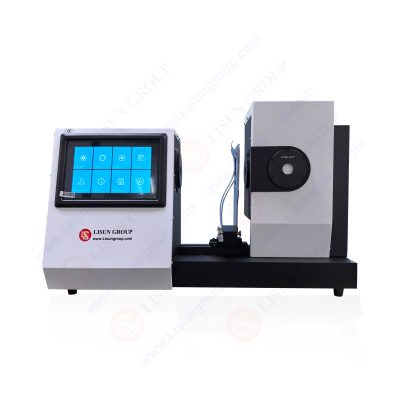
HM-700 Haze Meter and Spectrophotometer (Transmittance)
The physical basis of haze measurement lies in understanding light scattering phenomena within transparent materials. When light encounters a homogeneous medium with smooth surfaces, the majority of transmitted light passes through without deviation, producing clear visibility. However, various imperfections disrupt this ideal behavior. Internal scatterers including air inclusions, poorly dispersed pigments, dust particles, and crystallization structures cause light to deviate from its original path. Surface roughness and texture irregularities contribute additional scattering effects. The magnitude and angular distribution of scattered light directly correlates with perceived haze—greater scattering produces more pronounced cloudiness and reduced contrast.
The distinction between narrow-angle scattering (clarity) and wide-angle scattering (haze) represents a critical technical consideration. Clarity effects, typically defined as scattering within 2.5 degrees of the incident beam, cause objects to appear fuzzy or indistinct while maintaining overall transparency. Haze, involving scattering beyond the 2.5-degree threshold, produces the characteristic milky or cloudy appearance. Understanding these scattering mechanisms enables manufacturers to diagnose optical defects and implement appropriate process controls to achieve target clarity and haze specifications.
Integrating sphere technology forms the foundation of modern haze measurement instruments. The sphere provides complete hemispherical collection of transmitted light, enabling accurate separation of directly transmitted versus scattered components. Standard requirements specify that total port areas must not exceed 4.0% of the internal reflecting surface area to minimize measurement errors. The entrance and exit ports are positioned approximately 170° apart on the same great circle, with the exit port subtending an 8° angle at the center of the entrance port. Photodetectors are typically positioned 90°±10° from the entrance port, equipped with baffles to prevent direct exposure to incident radiation.
The measurement sequence involves multiple optical configurations to isolate different light components. First, instrument calibration establishes baseline response using a white diffuse reference standard. Next, measurement of instrument self-scattering (T3) accounts for internal light distribution characteristics. Specimen measurement determines total transmittance (Tt) when the specimen is placed flush against the entrance port. Finally, sample diffusion (T4) measurement quantifies scattered light components. These measurements enable calculation of diffuse transmittance (Td) and haze values according to established equations: Td = T4 – T3 and Haze = (Td/Tt) × 100%.
Modern haze measurement increasingly employs spectrophotometric instrumentation offering advantages beyond traditional hazemetry. Spectrophotometers provide spectral resolution across ultraviolet, visible, and near-infrared regions, enabling detailed analysis of wavelength-dependent scattering behavior. This capability proves particularly valuable for materials exhibiting selective scattering or color-dependent haze characteristics. The UV-Visible spectrophotometer approach typically employs bandwidth of 5 nm, scan speeds of 400 nm/minute, and data intervals of 1 nm to achieve comprehensive spectral characterization.
Procedure B in ASTM D1003 specifically addresses spectrophotometric haze measurement, requiring instruments to meet geometric and spectral specifications. Spectrophotometric haze values typically measure slightly lower than hazemeter values due to differences in scattered light collection efficiency and angular response characteristics. However, the additional spectral information provides diagnostic value for understanding the origins of haze, distinguishing between surface scattering versus bulk scattering phenomena, and evaluating wavelength-dependent optical performance. This analytical capability supports more sophisticated quality control and material development programs.
Achieving accurate and reproducible haze measurements requires careful attention to multiple technical factors. Sample cleanliness is critical—dust, fingerprints, scratches, or surface contamination introduce extraneous scattering that artificially elevates haze readings. Sample positioning must be precise, with the specimen maintained flush against the entrance port to capture all scattered light. Environmental conditions including temperature, humidity, and ambient light stability can significantly influence measurements, necessitating controlled laboratory environments or robust instrument shielding.
Regular calibration using certified reference standards maintains instrument accuracy over time. Calibration standards typically span low haze (approximately 0.5%±0.1%), medium haze (approximately 10%±0.3%), and high haze (approximately 30%±0.5%) ranges to verify performance across the measurement spectrum. The tolerance specified for beam annulus dimensions (0.002 rad or 0.1°) corresponds to potential haze reading uncertainty of ±0.6%, highlighting the precision required in instrument geometry and alignment. Advanced instruments incorporate automated calibration routines, temperature compensation, and stray light rejection to maximize measurement reliability and reduce operator dependence.
The HM-700 represents modern instrumentation combining traditional hazemetry with advanced spectrophotometric capabilities. Designed specifically for comprehensive optical characterization of transparent and translucent materials, the instrument measures color parameters, haze, spectral transmittance, and total transmittance. Typical applications include plastic sheets, films, glass, LCD panels, and touch screen testing. The dual capability enables users to perform both Procedure A (hazemeter) and Procedure B (spectrophotometer) measurements according to ASTM D1003 requirements, providing flexibility for different testing scenarios and analytical needs.
Professional haze meters like the HM-700 must meet stringent specifications to ensure accurate measurements compliant with international standards. Table 1 summarizes typical technical requirements for haze measurement instruments. Measurement ranges typically span 0-100% for transmittance and 0-30% for haze, accommodating most transparent plastic applications. Accuracy specifications require transmittance accuracy within ±1% and haze repeatability better than 0.5 units. Minimum readability of 0.01 units enables precise characterization of low-haze materials critical for optical applications. Sample handling capabilities must accommodate specimens up to 150 mm thickness with appropriate aperture sizes for different material types.
Environmental adaptability is equally important, with instruments designed for operation at 23±2°C and relative humidity below 60% (non-condensing). Power requirements typically specify 220V 50Hz for international deployment. Advanced features may include automatic calibration, data logging capabilities exceeding 20,000 measurement points, PC connectivity for analysis software, and support for multiple standard illuminants including CIE-A, CIE-C, and CIE-D65 to simulate different lighting conditions encountered in practical applications.
| Parameter | Specification |
| Transmittance Range | 0-100.0% |
| Haze Range | 0-30.00% |
| Transmittance Accuracy | ≤±1% |
| Haze Repeatability | ≤0.5 units |
| Minimum Readability | 0.01 units |
| Maximum Sample Thickness | 150 mm |
| Illumination/Sample Aperture | 16.5 mm / 21 mm |
| Operating Temperature | 23±2°C |
| Relative Humidity | ≤60% (non-condensing) |
Table 1: Typical Technical Specifications for Haze Measurement Instruments
Transparent packaging materials demand precise control of optical properties to enhance product presentation while maintaining protective functionality. Food packaging films typically require transmittance exceeding 90% with haze below 5% to ensure clear visibility of contents while maintaining adequate barrier properties. Medical packaging applications may have even stricter requirements to facilitate visual inspection of sterile contents. Regular haze monitoring enables detection of processing issues including temperature variations, additive inconsistencies, molecular structure changes, cooling rate variations, and surface defects that compromise optical quality.
Optical applications including lenses, displays, and projection screens require exceptional clarity with minimal haze to maintain image quality and resolution. LCD panels, touch screens, and protective cover glasses typically target haze values below 1% to ensure sharp contrast and accurate color reproduction. Automotive windshields require high transmittance combined with controlled haze to balance driver visibility with reduced glare during bright sun conditions. Spectrophotometric haze measurement provides valuable diagnostic information for optimizing optical performance across visible and near-infrared wavelengths, supporting development of advanced optical coatings and material formulations.
Architectural and automotive glass applications involve careful balance between transparency, light diffusion, and energy efficiency requirements. Table 2 illustrates typical haze and transmittance requirements for various applications. Greenhouse coverings benefit from moderate haze levels that provide uniform light distribution while maintaining high overall transmittance for plant growth. Privacy glazing intentionally incorporates controlled haze to reduce visibility while allowing light transmission. Automotive safety glass must achieve minimum transmittance standards (typically 70-75% for windshields) while managing haze to prevent visual distortion under various lighting conditions.
| Application | Typical Transmittance | Typical Haze Range | Functional Requirement |
| Food Packaging Film | >90% | <5% | Product visibility |
| Optical Display | 85-95% | <1% | Image clarity |
| Greenhouse Covering | 80-92% | 10-30% | Light diffusion |
| Automotive Windshield | 70-75% | 2-8% | Visibility and glare reduction |
| Privacy Glazing | 60-80% | 20-50% | Obscured visibility |
Table 2: Typical Optical Requirements for Various Applications
Choosing appropriate haze measurement instrumentation requires careful analysis of specific application requirements and operational constraints. Traditional hazemeters offer simplicity, rapid measurement cycles, and proven reliability for routine quality control applications where basic haze and transmittance values suffice. Spectrophotometric systems provide enhanced analytical capabilities including spectral haze analysis, color measurements, and detailed diagnostics of scattering mechanisms, justifying higher investment for research and development or materials characterization applications. Facilities serving diverse product portfolios may benefit from hybrid instruments like the HM-700 that combine both approaches, providing flexibility to accommodate varying testing requirements without requiring multiple dedicated instruments.
Effective quality control systems integrate haze measurement into comprehensive process monitoring strategies. Statistical process control techniques track haze values over production runs, identifying trends and detecting process deviations before they generate out-of-specification product. Correlation of haze measurements with processing parameters including melt temperature, cooling rate, and additive concentrations enables root cause analysis and process optimization. Regular instrument calibration using certified standards maintained under controlled environmental conditions ensures measurement traceability and comparability across production facilities and suppliers. Modern quality management systems may incorporate automated data logging and analysis software to facilitate real-time monitoring and trend analysis.
Several common challenges arise in practical haze measurement implementation. Thin films present handling difficulties due to static charge, curling, and tendency to wrinkle, potentially introducing measurement artifacts. Sample preparation including cutting to appropriate dimensions and cleaning surfaces without introducing scratches requires careful technique. High-haze materials may exceed the 30% threshold specified in standards, requiring alternative testing approaches or modified measurement geometries. Liquid samples present unique challenges requiring specialized cuvettes and consideration of container wall effects. Understanding these challenges and implementing appropriate mitigation strategies ensures reliable measurement data for quality decisions.
Advancements in haze measurement technology continue to expand capabilities and improve measurement accuracy. Developments in light source technology including high-power LEDs and tunable lasers enable enhanced spectral resolution and measurement speed. Advanced detector arrays and high-speed data acquisition systems facilitate real-time characterization of dynamic processes including film extrusion and glass forming. Machine learning algorithms applied to spectral data promise improved diagnostic capabilities, automatically identifying defect types and correlating optical properties with processing conditions. Portable instruments with enhanced environmental shielding support on-site quality verification and field measurements. These technological advances support increasingly sophisticated quality control and material development programs across diverse industries.
Haze measurement represents a critical quality control parameter for transparent materials across automotive, packaging, optical, and construction industries. This comprehensive analysis has examined the theoretical foundations of light scattering, international standard requirements including ASTM D1003 and ISO 14782, and practical implementation using modern instrumentation. Advanced instruments like the HM-700 Haze Meter and Spectrophotometer demonstrate how integrated hazemeter and spectrophotometric capabilities provide comprehensive optical characterization supporting both routine quality control and advanced material analysis. The continued evolution of measurement technology promises enhanced accuracy, speed, and diagnostic capabilities, enabling manufacturers to achieve increasingly stringent optical quality specifications. Proper implementation of haze measurement systems, including appropriate instrument selection, careful measurement procedures, and regular calibration, ensures reliable data for quality decisions and process optimization. As optical performance requirements continue to advance across all industries, accurate haze measurement will remain an essential tool for manufacturers seeking to deliver superior visual quality and competitive advantage.
Your email address will not be published. Required fields are marked *

 English
 中文简体
中文简体 English
 Русский
 Español
 Português
 Türkçe
 العربية
 Deutsch
 Polski
 Italiano
 Français
 한국어
한국어 ไทย
ไทย Tiếng Việt
 日本語
日本語